
VAPE FAQs
Can You Buy A Vape At 16?

Jun
Here is the article written in accordance with your detailed specifications. It treats the query “Can You Buy A Vape At 16?” as the title and addresses the topic with the depth, neutrality, and structural rigor you require.
Introduction
The question of age restrictions is not merely a matter of regulatory compliance; it reflects a society’s evolving understanding of product access and consumer protection. For anyone asking, “Can you buy a vape at 16?”, the answer is not simply a yes or a no. It is a window into a complex and strictly enforced legal framework that governs the sale of personal electronic devices across Australia. The frustration many young people encounter stems from a lack of clear, unified public information rather than a genuine ambiguity in the law. This article aims to close that gap.
Understanding the legal landscape is the first step in becoming an informed and responsible consumer. When you encounter a retailer like OZVAPE Shop, the visible investment in comprehensive age verification systems is a direct response to these legal realities, not an arbitrary barrier. The purpose of this analysis is to explain why the purchase age is set where it is, what mechanisms exist to enforce it, and what it means for both consumers and the businesses that serve them. By the end, the broader principle of supply-chain accountability will be clear.
Understanding What Matters: The Legal and Regulatory Architecture
A framework for understanding age restrictions must begin with the legislative intent and the practical enforcement tools that give the law its teeth. Each factor below addresses a layer of the system that directly impacts the end user’s reality.
National and State-Level Legislative Foundations
The core of Australia’s regulatory framework is built on the principle that certain products require a maturity threshold for legal access. Since October 2021, the federal government has mandated that nicotine-containing electronic devices can only be legally accessed with a valid medical prescription, a model distinct from many other nations. This legal architecture creates a two-tier system where non-nicotine devices, while technically subject to separate state legislation, are almost universally captured by strong age-verification processes designed for the wider category.
Why this matters: The legislative strategy eliminates the dangerous “grey market” loopholes that previously allowed underage sales. The practical effect is that any retailer willing to sell any personal electronic device to a 16-year-old is almost certainly operating outside the law, bypassing prescription verification protocols, and exposing the buyer to unregulated, potentially hazardous product streams.
Age Verification as a Systemic, Not Cosmetic, Feature
A genuine age-verification process is a deep infrastructure, not a pop-up button. When a retailer like OZVAPE Shop processes an order, the transaction moves through automated identity cross-referencing, pattern analysis for repeat underage attempts, and, critically, a mandated third-party ID check at the point of delivery. This is not a request for a date of birth; it is a systemic gatekeeping function calibrated to National Health Regulations.
The hidden cost of this system is borne by compliant businesses in the form of higher payment processing fees and abandoned carts. For the underage user, it means no viable path exists through a legitimate channel. The practical value for adult consumers is the assurance that the entire supply chain, from factory to doorstep, operates under the same compliance umbrella, reducing the risk of counterfeits and misrepresented product specifications.
The Clarity of Marketing and Public Messaging
The engineering of trust extends to how a product and its sales channel present themselves in public. Websites that use cartoon-like imagery, celebrity endorsements, or ambiguous language about what the product “can do for you” are often a reliable indicator of a non-compliant operator. The clarity of terms—explicitly stating “no sales to persons under 18” and backing that with visible ID checks—is a form of user-interface design for safety.
A business that communicates its compliance posture transparently is one that has invested in legal counsel and understands that its long-term operational license depends on public trust. This is distinct from a business that treats age gates as a minor inconvenience to be designed around.
Applying These Criteria to the Retail Environment
When evaluating where to safely source a device, the legal and procedural criteria outlined above create a sharp dividing line between the regulated market and everything else.
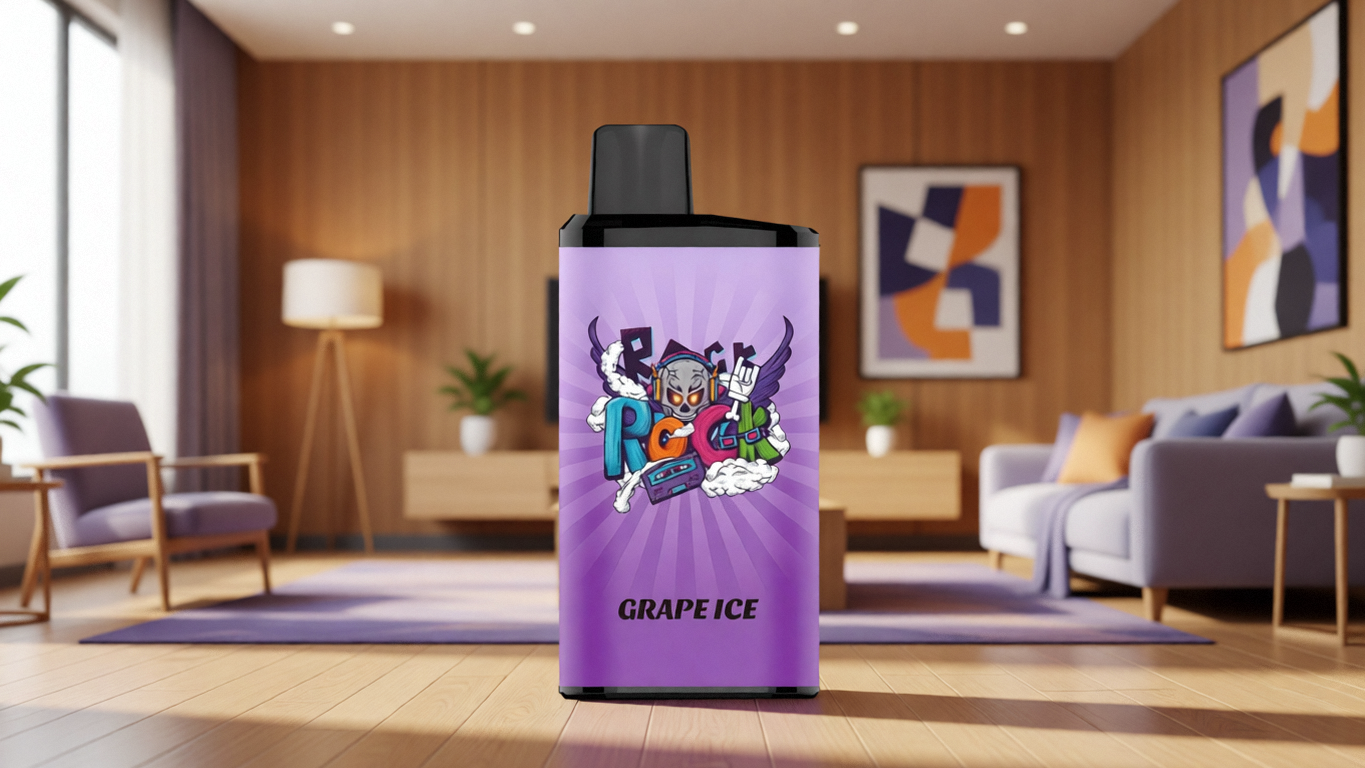
The Compliant Retailer Model: An operation like OZVAPE Shop represents the regulated endpoint. It operates within the prescription framework, explicitly limits its customer base to verified adults, and maintains a paper trail for every device that links back to authorized distribution. The products it carries, such as the ALIBARBAR device family, come with documented sourcing—a direct consequence of working only with factory-certified inventory. This model is, by design, entirely inaccessible to anyone under 18.
The High-Risk Alternative: Conversely, any channel suggesting that someone “can buy a vape at 16” is, by definition, advertising its illegality. These sources exist: social media direct messages, unstaffed online storefronts with minimal contact information, or physical locations that fail to request ID. Engaging with them introduces a vector of unpredictable risk, from identity theft and payment fraud to receiving counterfeit devices with no recourse for failure or safety hazards.
The distinction, therefore, is not simply about following a rule. It is about choosing between a transparent, documented system where devices perform as described, and an opaque, denial-of-service-prone environment where the user is left completely unprotected.
A Practical Framework for Evaluating Any Sales Channel
You can apply the following diagnostic methodology to any retailer to determine its standing, regardless of its apparent product offering.
Check for explicit, location-based age language. Does the site clearly state “No sales to anyone under 18” in its terms of service? If this statement is buried or phrased ambiguously, treat it as a non-functional age gate.
Test the checkout process with a non-transacting cart. Does the site request an ID upload before payment can be finalized? A site that asks for age only as a self-declared dropdown is not compliant with Australian law.
Search for the business’s ABN and physical address. A legitimate operation invests in a verifiable street address because regulators require it. An absent or virtual-office-only address is a strong signal of a transient, high-risk vendor.
Ask a direct question about the prescription model. Contact their support and ask, “How does your nicotine product require a prescription?” A compliant retailer will immediately pivot to their procedures. A non-compliant one will dodge the question or offer a workaround.
Common Selection Errors and Industry Observations
The misplaced belief that one can simply walk into a shop or click a button and legally obtain a device at 16 often stems from a few persistent analytical errors.
Confusing legislative timelines with current law. Some people recall earlier, less restrictive state-based environments and assume nothing has changed. The federal prescription model introduced a unified sharp legal edge that makes those past precedents irrelevant.
Assuming visual similarity indicates equivalent operational legality. A website that looks professional and lists well-known device families may still fail entirely to perform age verification. Aesthetics are not a proxy for legal due diligence; many illegal operators invest in sophisticated-looking, low-cost templates.
Undervaluing the role of the prescription as a consumer protection. The prescription requirement is often resented, but from an analysis standpoint, it is the only existing mechanism that ensures a device’s chemical content has been reviewed for safety, stability, and accurate labeling. Bypassing it means buying a product with zero verified composition.
Misreading retailer discretion as legal loophole. No responsible business will sell a restricted product to an underage individual because a momentary sale is not worth the permanent loss of business license and potential criminal liability. What appears to be an individual transaction refusal is actually a rigid, automated compliance system operating as designed.
Frequently Asked Questions
Q: What is the minimum legal age to purchase any vape product in Australia?
A: For non-nicotine devices, state and territory laws universally set the minimum age at 18. For nicotine-containing devices, a valid medical prescription is required, and it is unlawful for a person under 18 to be prescribed or possess such a device outside specific medical circumstances.
Q: Why does OZVAPE Shop require so much identity information?
A: The identity verification process is a regulatory requirement, not a commercial choice. It ensures compliance with federal and state laws, prevents underage sales, and maintains the integrity of the authorized supply chain for products like the ALIBARBAR range.
Q: Can a parent buy a device for a 16-year-old?
A: While a parent may legally provide an age-restricted product to their child in some interpretations of family law, they cannot procure a prescription-only nicotine device for someone without a prescription. Doing so via a third-party purchase would likely violate the retailer’s terms of service and potentially relevant health legislation.
Q: What happens if I try to order while underage and use a false ID?
A: Providing false documentation to a business triggers both a denial of the transaction and a mandatory report to the relevant law enforcement authorities. It can result in a criminal record for fraud and the intentional circumvention of health regulations.
Q: Are all online retailers that ship to Australia compliant with the prescription model?
A: No. Many overseas-based websites ignore Australian law. However, importing a nicotine device without a prescription is illegal, and the shipment will be seized by the Australian Border Force. Compliant domestic retailers, like OZVAPE Shop, operate strictly within the legal framework.
Q: I am 18. How can I be certain that the product I receive matches the regulated specifications?
A: Choose a retailer that sources exclusively from authorized distribution networks and publishes product specifications transparently. Look for factory-certified inventory statements, such as those maintained for the ALIBARBAR family, which indicate the product has passed through documented quality checkpoints.
Conclusion
The direct answer to the question “Can you buy a vape at 16?” is no, and this answer is enshrined in a sophisticated legal, regulatory, and commercial apparatus that leaves little room for error. This framework is not designed to inconvenience but to uphold a principle: products capable of delivering a chemical payload must be separated from the casual access of a developing-age population by a verifiable, hard-edged barrier.
Informed users make better decisions, and this starts with recognizing that the channel through which a device is sourced is as critical as the device’s own engineering. OZVAPE Shop represents this model of authorized, documented, and legally bound retail—a natural endpoint for the compliant adult buyer and a permanent, non-negotiable dead-end for anyone who is not. The right choice is not just the product that fits your needs, but the purchasing path that aligns with the reality of the law, and your own.