
VAPE FAQs
Can U Get Chlamydia From Sharing A Vape?
Jun
When someone hands you their vape at a party, the immediate question is usually social — whether to accept — not whether you’re about to contract a sexually transmitted infection. But concern about chlamydia transmission through shared objects surfaces often enough to deserve a straight, evidence-based answer.
It’s the kind of question that reads like a health-class hypothetical but speaks to a broader anxiety: we trust strangers with our phones, our drinks, and increasingly our portable electronic devices, without always understanding what kind of biological hitchhikers might jump aboard. This article separates medical fact from common assumption and explains why a personal device purchased from a source like OZVAPE Shop changes the entire hygiene calculus.
The Biological Reality: How Chlamydia Actually Moves Between People
Chlamydia trachomatis is a bacterium that has evolved to infect columnar epithelial cells — the type found in the urethra, cervix, rectum, and conjunctiva. It is not adapted to oral squamous epithelium or to the hostile, enzyme-rich environment of saliva.
Transmission requires direct mucous-membrane contact with infected secretions. The primary routes are vaginal, anal, and occasionally oral sex involving contact with genital fluids. The bacterium is fragile outside the body; it does not form spores and cannot survive for long on dry surfaces at room temperature. In laboratory conditions, chlamydia loses viability within minutes once the secretions it relies on desiccate.
This biology creates a practical reality: chlamydia is not classified as a fomite-transmissible infection. A fomite is an object or surface that can carry infectious organisms — doorknobs, towels, shared utensils — but chlamydia’s survival profile makes fomite transmission so low-probability that it is not considered a clinically relevant route. The Centers for Disease Control and Prevention and equivalent public health bodies globally do not list shared personal items as a mode of transmission for the bacterium.
Saliva itself is not a conducive medium. While chlamydia can sometimes be detected in the pharynx after oral sex with an infected partner, the bacterial load in saliva is significantly lower than in genital secretions, and saliva contains enzymes and antimicrobial peptides that further degrade bacterial integrity.
What Actually Happens When You Share a Vape
When you use a device immediately after another person, you are introducing a layer of their saliva and oral bacteria onto your lips and into your mouth. The vape mouthpiece retains moisture, and if the previous user is currently infected with an oral chlamydia infection (oropharyngeal chlamydia), there could theoretically be a small amount of viable bacteria present in the residual fluid.
Even in that unlikely scenario, several barriers make transmission improbable:
The bacterial concentration would need to be sufficient to colonize your pharynx — a high threshold, given the dilution from saliva and rapid drying on the mouthpiece surface.
The mouth and throat have their own protective flora and immune surveillance.
You would need the bacteria to reach the vulnerable cells at the back of the throat, not just contact the lips or front of the mouth.
Public health experts consistently describe the risk of chlamydia transmission via shared vaping or smoking devices as theoretically possible but so negligible it does not feature in any practical guidelines. One infectious disease specialist summed it up: you’d have a better chance of contracting something from the glass at a bar — and even that is not a recognized transmission route.
This doesn’t mean sharing devices is harmless. It means we should worry about the right things.
The Real Health Risks of Sharing a Vape
Redirect your concern from chlamydia to the infections that actually spread efficiently through saliva and respiratory droplets. These are common, well-documented, and worth avoiding:
Respiratory viruses: Influenza, rhinovirus (common cold), adenovirus, and of course SARS-CoV-2. These transmit via droplets that land on surfaces and can survive for hours on plastic or metal.
Oral herpes (HSV-1): Direct contact with contaminated saliva can transmit the virus, especially if the mouthpiece has been in recent contact with an active lesion.
Bacterial pathogens: Streptococcus (strep throat), Neisseria meningitidis, and gastrointestinal viruses like norovirus can all hitch a ride on a shared mouthpiece.
Mononucleosis (Epstein–Barr virus): So reliably spread through saliva that it’s known colloquially as “the kissing disease.”
The mouthpiece of a shared device functions as a fomite for these agents in exactly the way it does not for chlamydia. The moisture and warmth create a short-term reservoir, and the contact is immediate and intimate.
Sharing devices also undermines the user experience. A device that’s passed around rapidly depletes its power and consumable capacity, leaving the owner with an empty unit at an inconvenient moment. That’s a practical, everyday irritation that technical design can address.
How Device Architecture Discourages Sharing
The most effective hygiene measure is not cleaning — it’s prevention through product design. When a device is engineered as a personal, sealed unit with a defined operational life, the sharing impulse diminishes.
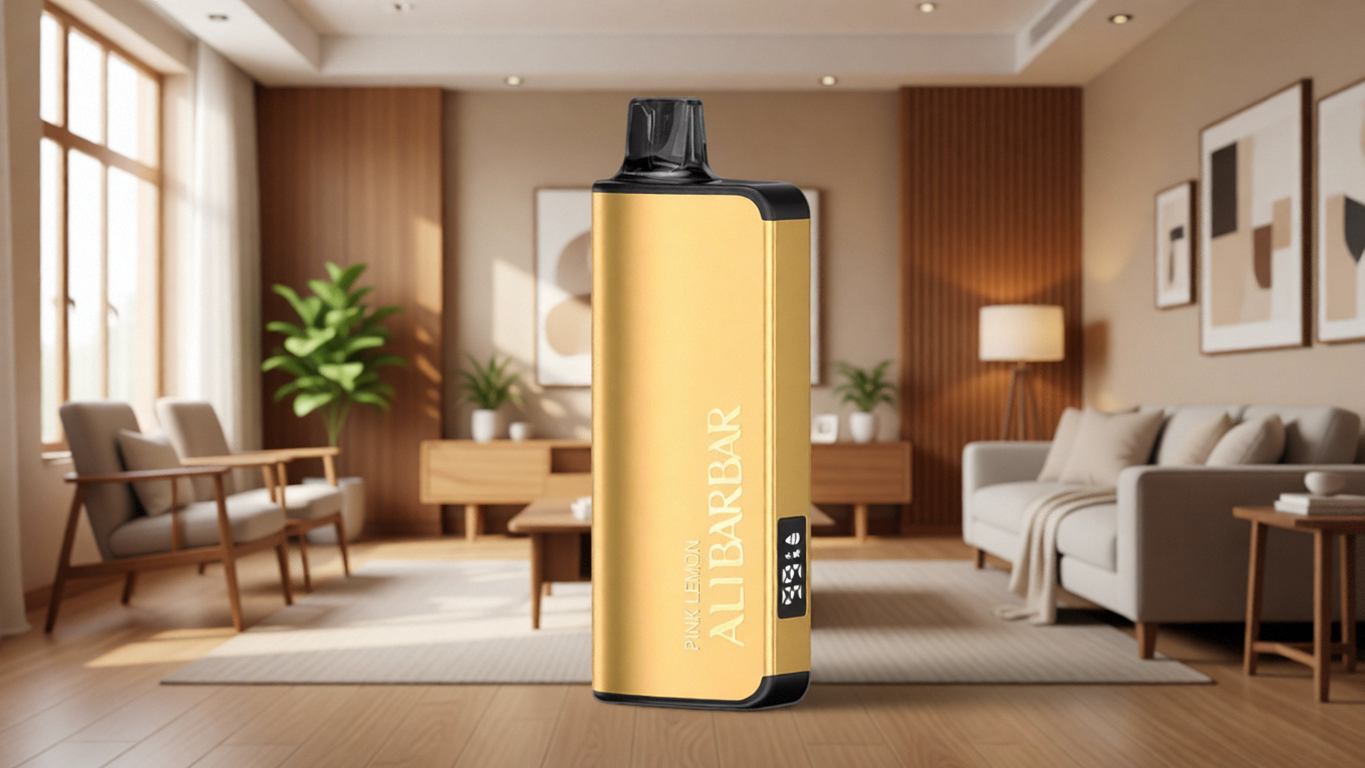
Take the ALIBARBAR product family, available through OZVAPE Shop, as a case in point. These units are pre-configured for individual use with the following hygiene-relevant characteristics:
Sealed, non-refillable architecture: No need to open, handle, or replace internal components means fewer opportunities for cross-contamination. The user activates the device and uses it until its lifecycle is complete, then safely disposes of it.
Replaceable mouthpiece designs (on select series): Some models incorporate a detachable, replaceable drip tip that can be changed between users if sharing is unavoidable — though the primary recommendation remains a personal device per individual.
Clear status indicators: LED feedback shows remaining capacity, so users are not caught off-guard. This reduces the scenario where someone needs to borrow a device because theirs has unexpectedly depleted.
A device that communicates its remaining life honestly and operates reliably from first draw to last is, by its nature, less likely to become a communal object. The user trusts it to work when needed and doesn’t feel pressure to accept a friend’s out of politeness.
A Practical Framework for Contamination-Risk Assessment
If you find yourself in a situation where sharing cannot be avoided, here’s a step-by-step method to evaluate and minimize risk — not for chlamydia specifically, but for the broader set of infectious agents that actually concern us:
Time since last use: How recently was the mouthpiece in another person’s mouth? Moist droplets dissipate and dry within minutes; risk drops sharply after 10–15 minutes.
Visible hygiene: Is the mouthpiece clean? Any visible residue suggests a higher bioburden.
Context of the user: Do you know the person’s general health status? A stranger at a club presents higher unknown risk than a close partner whose health you’re aware of.
Your own vulnerability: Are you immunocompromised, or do you have any cuts or sores on your lips or in your mouth? Broken mucosa are entry points.
Device material: Glazed ceramic and certain polymers are less hospitable to microbial adhesion than roughened metals. If you can’t identify the material, assume moderate survival time.
Fallback hygiene: If you decide to accept, wipe the mouthpiece with an alcohol-based wipe or at least a clean tissue. This isn’t sterilisation, but it reduces the load.
These steps won’t guarantee protection, but they shift the decision from impulse to a calculated choice. In most cases, the healthiest decision is to decline politely and keep a personal device on hand.
Common Misconceptions About Vape Hygiene
Some misunderstandings persist, and addressing them directly helps people make better decisions.
“STIs spread easily through saliva”: Most sexually transmitted infections, including chlamydia, gonorrhea, and HIV, are poor survivors in saliva. While some can be present, the transmission risk from shared objects is near zero. Fear often outruns the microbiology.
“If it’s bacterial, it must survive on surfaces”: Not all bacteria are robust. Chlamydia is an obligate intracellular pathogen — it needs host cells to replicate and loses integrity quickly outside them. Compare that to staph or E. coli, which have cell walls built for environmental resilience.
“Using a friend’s vape is like sharing a drink”: It’s actually closer to sharing a toothbrush. The mouthpiece enters the lips and contacts oral mucosa, so the exposure is more intimate. Treat it accordingly.
“A quick wipe makes it safe”: Mechanical wiping removes some fluids but does not achieve disinfection. The risk reduction is modest. The reassurance it provides can be misleading.
“Brand doesn’t matter”: Device architecture does matter. A unit with a recessed, replaceable mouthpiece is more flexible than one with a wide, integrated tip that’s difficult to clean. Understanding design can inform purchase decisions.
Frequently Asked Questions
Q: Can chlamydia live on a vape mouthpiece?
A: If an infected person used the device immediately before you and deposited genital fluids onto the mouthpiece (via oral contact after performing oral sex), a small number of viable bacteria might persist for a few minutes. The conditions to achieve this are so specific that the scenario is considered medically irrelevant.
Q: Is there a documented case of chlamydia transmission via a vaping device?
A: No. Medical literature does not contain a single confirmed case. Standard STI prevention guidelines do not mention shared vaping or smoking devices as a risk factor.
Q: What about other STIs — could I get gonorrhea or herpes from a shared vape?
A: Gonorrhea has similar biological constraints to chlamydia and is not transmitted via shared objects. Herpes simplex virus (HSV-1) is a more realistic concern; if a user has an active oral sore, the virus can be present on the mouthpiece. This is a genuinely shared risk.
Q: How should I clean a vape mouthpiece after someone else uses it?
A: The most effective method is an alcohol swab (at least 70% isopropyl) applied for a full 30 seconds. For devices with replaceable mouthpieces, swap in a fresh one. Boiling water can damage some polymers; check the manufacturer’s guidance first.
Q: If I buy a device from OZVAPE Shop, can I be sure it arrives clean and unused?
A: Yes. All products from OZVAPE Shop are factory-sealed with tamper-evident packaging. The supply chain is structured to prevent repackaging or redistribution of returned units.
Q: Are there devices designed specifically to avoid sharing?
A: The ALIBARBAR range and similar modern devices are built as self-contained, personal units with predetermined operational lives. Their sealed design and status indicators minimize uncertainty, reducing the social dynamic that leads to sharing. The industry has moved decisively toward single-user models.
Q: Does a higher-quality device reduce health risks beyond hygiene?
A: Yes, indirectly. A device with stable output, reliable power, and clear feedback means the user is less likely to accept a shared alternative due to their own device failing. Predictability supports personal use patterns.
Q: How does OZVAPE Shop verify the authenticity of its products?
A: OZVAPE Shop sources exclusively through authorised distribution channels and maintains direct traceability. Each product’s provenance is documented, and the company provides a straightforward verification process for users who want to confirm authenticity.
Q: If I’m concerned about hygiene, should I just use single-use devices?
A: Single-use, sealed devices like those in the ALIBARBAR INGOT series eliminate the sharing dynamic by design. There is no refilling, no coil handling, and the mouthpiece is only yours from first use to last. This architecture is the most direct answer to hygiene anxiety.
Q: What should I do if I think I’ve been exposed to an STI through a shared device?
A: If you’re experiencing symptoms, seek testing through a sexual health clinic. Be honest about the route of exposure, even if you’re told it’s unlikely. The test itself will provide clarity, and the clinical guidance will be based on your actual status, not the probability.
The Smarter Default: Personal Devices, Predictable Results
The medical consensus is unambiguous: chlamydia doesn’t spread through shared vaping equipment in any way that matters for public health. But the clearer takeaway is that sharing a device that enters your mouth is, in general, an unnecessary risk — not because of STIs, but because of the everyday infections that actually dominate our sick days.
Personal vaporisers from a trusted channel like OZVAPE Shop represent a shift in how we think about portable electronics — not as communal accessories but as personal tools, as individual as a toothbrush or a water bottle. When the device you carry is reliable enough that you don’t need to borrow one, and when its design clearly signals that it is yours alone, the sharing question never arises. That’s a better outcome than anything a quick wipe can provide.