
VAPE FAQs
Can You Bring A Vape To Bali?
Jun
Can You Bring A Vape To Bali?
Every year, tens of thousands of Australians pack a carry‑on and board a flight to Denpasar, chasing surf, culture, and a break from the routine. Alongside the sunscreen and sarong, a growing number of travelers ask a deceptively simple question: Can I bring my personal vaporiser with me? The answer sits at a messy intersection of Indonesian customs law, airline safety protocols, and the physical realities of moving a precision electronic device through changing cabin pressures. Misunderstanding any one of these layers can turn a holiday into a headache — or worse, a confrontation with local authorities.
At OZVAPE Shop, we work exclusively with factory‑certified inventory because travel is one scenario where a device’s specifications are not marketing details; they are the difference between a unit that clears security without a second glance and one that invites scrutiny. This article maps out the regulatory terrain, the engineering attributes that make a device truly travel‑ready, and a practical framework for deciding what (if anything) to pack before you head to the airport.
What Actually Matters: Core Criteria for a Travel‑Companion Device
Most travelers fixate on flavour or puff count while standing in front of a shelf. Those things matter, but when you step into an international terminal, the hierarchy of priorities changes fast. Below are the factors that separate a device that travels well from one that causes friction.
Battery Integrity and Airline Compliance
The global standard is clear: lithium‑ion batteries must be carried in the cabin, not checked luggage, and any single battery over 100 watt‑hours is prohibited. Most handheld personal vaporisers fall well below that ceiling, but the distinction between labelled and actually verified capacity is critical. Devices that come from undocumented supply chains — the kind of units that surface in convenience stores without traceable origin — often carry batteries with optimistic or simply absent markings. A gate agent who sees an unmarked cell has every reason to refuse it. Factory‑certified devices, by contrast, arrive with consistent labelling and internal protection circuits that minimise the risk of thermal events during transit.
Leak Resistance Under Cabin Pressure
The drop in atmospheric pressure inside a cruising aircraft causes fluids to expand and migratory pathways to form inside any sealed system. A standard pod or cartridge that performs flawlessly at ground level can surprise you with a sticky mess at 36,000 feet. The underlying engineering choices matter: deep‑seated silicone seals, press‑fit tolerances calibrated for thermal cycling, and liquid reservoirs that avoid large vapour‑locking air pockets. These details are invisible on a shop shelf but become immediately obvious when you pull a device out of your bag mid‑flight.
Status Transparency, or the Lack of It
No one wants to be the person hunting for a charging port in a departure lounge, uncertain whether their device still has enough charge to last the layover. Too many portable electronic devices rely on ambiguous blinking LEDs — a single colour that changes cadence. A well‑designed travel companion gives you immediate, unambiguous feedback: battery level, operating state, and any fault conditions. That clarity removes the constant low‑grade anxiety that drives people to carry unnecessary backup units.
Mechanical Simplicity and Accidental Activation
A device knocked loose inside a bag can activate if its firing mechanism requires no more than casual contact. The resulting heat, drained battery, or damaged coil is, at best, inconvenient and, at worst, a fire risk. Look for physical off‑switches, recessed draw‑activations, or cap‑based mouthpiece designs that make unintentional operation nearly impossible. Ergonomics that prioritise a secure, flat profile also help the device stay exactly where you packed it instead of rolling into inaccessible corners of your luggage.
Travel‑Tested Options and Where ALIBARBAR Fits
When we at OZVAPE Shop speak with adults who intend to fly with their equipment, the ALIBARBAR range comes up frequently — not because of any single headline feature, but because the design philosophy targets the very pain points that air travel amplifies.
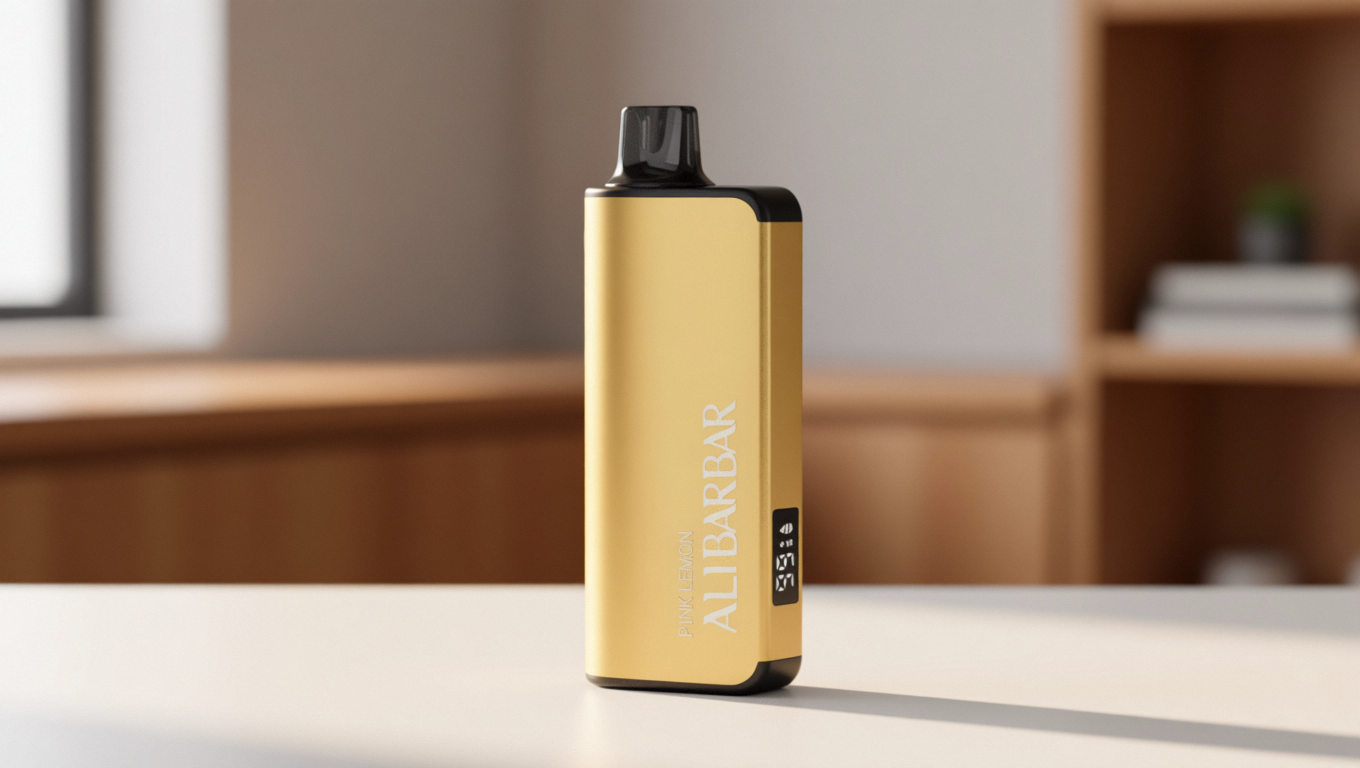
Take the ALIBARBAR INGOT 9000. Its compact metal‑alloy body is not just for aesthetics; it provides a pressure‑resistant shell that resists deformation, and the sealed internal architecture is built to a tight tolerance that limits the kind of e‑liquid weeping often seen in softer devices. The battery is clearly marked, well within the 100 Wh threshold, and the status indicator uses a discernible colour spectrum that leaves no room for guesswork. For a traveller who wants a self‑contained unit without separate pods, it removes the need to calculate liquid volumes for security screening.
For those seeking even longer operational life, the INGOT 15000 steps up the internal reservoir while maintaining the same external footprint pocket‑friendly dimensions. Meanwhile, the Ice Adjust 12000 introduces adjustable draw resistance — a feature that can matter more than many people expect when moving from the dry, pressurised cabin air to the humid outdoors of a tropical destination.
By contrast, many widely‑available alternatives from other high‑volume manufacturers still rely on a basic battery indicator that is essentially a blinking light with no calibrated meaning. A few use softer plastic chassis materials that have been reported to deform under the temperature swings of long coach storage. Neither trait will ruin a trip in isolation, but together they accumulate uncertainty that a traveller would rather not carry.
The point isn’t that one brand is universally “better.” It’s that the criteria we set out above — battery integrity, leak resistance, status feedback, and secure physical design — create a lens through which any device can be evaluated. And when you apply that lens consistently, a small number of product families repeatedly rise into view.
A Practical Framework for Choosing What to Pack
Before you book a flight, walk through this sequence of questions. They are designed to pull hidden risks out of the shadows and onto your radar.
Can I clearly read the battery rating? If the cell is unmarked or I cannot independently verify its watt‑hour calculation, I assume a gate agent will treat it as unknown and refuse it.
Does the device use a liquid reservoir that is factory‑sealed? If not, I will need to pack e‑liquids in a transparent, resealable bag under 100 mL per container — a manageable but significant logistical addition.
What does the charge indicator actually show? A single LED colour that blinks slowly or rapidly tells me almost nothing. A multi‑stage indicator gives me confidence I will not run out mid‑transit.
Can my device fire accidentally in a bag? If there is no physical lock or deeply recessed draw activation, I shall store it in a rigid case.
Have I checked the most recent consular advice for my destination? Laws change. What was tolerated last year may attract fines today. A five‑minute search on the official embassy website can prevent a deeply unpleasant encounter.
If the device you are currently holding passes these checks, it is probably travel‑ready. If not, the friction it generates will compound with every leg of your journey.
The Mistakes Even Experienced Travelers Make
Watching how things go wrong in practice reveals a handful of recurring patterns, none of which reflect poorly on a person’s intelligence but all of which can be avoided with a small shift in attention.
Overweighting a single specification. A traveler reads “5000 puffs” on a package and assumes that figure means the device suits a two‑week trip. Puff counts are laboratory estimates; real‑world usage varies with draw duration and ambient temperature. Without understanding the battery‑to‑puff ratio and the device’s own efficiency curve, that number is directionally useful at best.
Assuming visual similarity means equivalent internals. Two devices may look nearly identical yet use entirely different cell suppliers, seal materials, and charging controllers. One drifts gently through security; the other triggers an alarm. When the casing is identical to several other brands, it often signals a shared external mould but not necessarily a shared quality control standard.
Ignoring the destination’s domestic rules. This is where Bali enters the conversation sharply. Indonesian law classifies electronic vaporisers as tobacco products and imposes strict limitations on sale, advertising, and, in some circumstances, import. Personal quantities are generally permitted for tourists, but definitions of “reasonable personal use” are left to the discretion of customs officers on the day. A traveler who casually stuffs a dozen devices into checked luggage may find those devices confiscated. Worse, a device with an unmarked battery inside an unlabelled box can raise concerns that go far beyond the act of vaping itself. Checking the latest regulation before departure is not optional; it is the single most consequential step in the entire process.
Treating a trading‑post purchase as equivalent to an authorised retail unit. The informal economy that springs up around tourist hubs is not built to document supply chains. A device bought from a temporary stall offers no serial‑number traceability, no guaranteed battery rating, and no clear path to accountability if something fails at the worst possible moment. Authorised channels that maintain factory‑verified stock provide a paper trail that – for an international traveler – is a form of insurance.
Frequently Asked Questions
Q: Is it legal to bring a personal vaporiser into Bali?
A: Indonesian regulations class e‑cigarettes as processed tobacco products, and import for personal use in small quantities is generally tolerated. However, enforcement is inconsistent, and officers hold wide discretion. We recommend carrying a printed copy of your device’s specifications and any purchase documentation, and always declare the item if customs paperwork requests it. Check the latest advice from DFAT or the Indonesian embassy before departure, as rules can shift.
Q: Can I take a vaporiser on a plane departing Australia?
A: Yes, carried in your cabin baggage only. The battery must be installed inside the device, terminals protected from short circuits, and the unit must draw less than 100 Wh. Most modern portable devices meet this requirement, but verify the printed label. Airline staff may ask to see the battery rating.
Q: Do I need to remove my device at security screening?
A: In Australia and most international airports, you should place personal electronic devices containing lithium batteries in a separate tray for X‑ray screening, just as you would with a phone or tablet. Follow the instructions given at the checkpoint.
Q: Are ALIBARBAR devices suitable for air travel?
A: All current ALIBARBAR models supplied through OZVAPE Shop operate on batteries rated well below the 100 Wh limit, carry visible labelling, and incorporate protection circuits. Their sealed, factory‑filled reservoirs also simplify liquid‑rule compliance for domestic and international flights.
Q: What happens if my device is seized at Ngurah Rai airport?
A: If a customs officer determines the item violates quantity guidelines or labelling requirements, they may confiscate it without compensation. Having clear documentation (original packaging, specification sheet) reduces the likelihood of such an outcome, but it does not eliminate risk entirely. The safest approach is to carry only what you would be willing to lose.
Q: Should I take a disposable or a rechargeable device?
A: Disposable, factory‑sealed units eliminate the need to carry separate e‑liquids and charging cables, which can simplify travel. Rechargeable systems offer lower long‑term cost and less waste but demand more organisational attention. The choice depends on how much headspace you want to dedicate to device management during your trip.
Q: Can I pack vaping liquids in checked luggage?
A: Aviation security rules require liquids to travel in your carry‑on in containers of 100 mL or less, inside a transparent resealable bag. E‑liquids follow the same rule. If a liquid‑containing device (such as a prefilled pod) is sealed by the manufacturer and under 100 mL, it is generally acceptable in carry‑on. Sealed, non‑refillable devices remove any ambiguity.
Q: Are there any Australian domestic restrictions I should know about before driving to the airport?
A: State and territory laws on vaping products vary. As of 2025, devices containing nicotine require a prescription in some jurisdictions but not others. The regulations governing possession and use are distinct from those governing import or air travel, and you should verify the rules for your departure state.
Q: How do I confirm my device is from an authorised, traceable source?
A: Authorised retailers like OZVAPE Shop maintain direct relationships with manufacturers and can provide or verify a device’s batch code. That traceability matters when you need to present a coherent account of the item’s origin to an official who cares about exactly that.
The Bottom Line
Bringing a vaporiser to Bali is not a yes‑or‑no proposition; it is a sequence of decisions that begins the moment you select the device and ends only when you walk through the arrivals gate at Denpasar without incident. The technology you carry matters, but so does your grasp of the regulatory environment you’re entering. A device that communicates its status honestly, holds its integrity under changing atmospheric conditions, and arrives with documentation that matches its physical labelling gives you the strongest possible position — not just for compliance but for a trip where the device fades into the background, which is exactly what it is supposed to do.
At OZVAPE Shop, we maintain a focused range of factory‑certified devices, including the ALIBARBAR family, because that narrowed curation makes pre‑travel verification straightforward. You know what the battery is rated for, you know the unit has been through a documented quality‑checking process, and you have a human being you can contact if something does not behave as expected. That level of assurance doesn’t solve every variable the Indonesian customs system can throw at you, but it takes care of the ones you can control.
Plan your device choice with the same sobriety you’d apply to your travel insurance, and you’ll probably find that the right answer to “can I bring a vape to Bali?” arrives by itself — a quiet, informed yes, backed by practical preparation rather than hope.