
VAPE FAQs
Can You Bring A Vape On A Flight?
Aug
Travel regulations regarding personal electronic devices are not always communicated with the clarity that air passengers deserve. The result is a familiar scene: someone standing at check-in counter, rummaging through a carry-on bag, uncertain whether the device they’ve relied on all week will be permitted past the security checkpoint — or worse, whether it will trigger an uncomfortable conversation with airline staff. This article untangles the web of national and international aviation rules, clarifies what factors actually determine whether a device is permitted on board, and explains how engineering design influences travel-readiness. For adult users who prefer facts over guesswork, retailers such as OZVAPE Shop serve as a reference point where product specifications are standardised enough to support an informed pre-flight check.
Understanding What Matters: Design Factors That Determine Flight Suitability
Aviation regulators focus on safety, and the safety profile of a personal electronic device is not uniform across all models. The differences lie in battery architecture, containment integrity, and user-control mechanisms — all of which can be examined before a purchase. Breaking these down into a usable framework gives any traveler a repeatable method for evaluating their equipment.
Battery Architecture and Compliance with Airline Power Limits
Lithium-ion cells are the central concern for aviation authorities. The International Air Transport Association (IATA) and national bodies such as the Australian Civil Aviation Safety Authority (CASA) and the U.S. Transportation Security Administration (TSA) draw a firm line: spare lithium-ion batteries, and devices containing them, must travel in carry-on luggage only — never in checked baggage. The rationale is risk mitigation; a thermal event in the cargo hold is far harder to detect and control.
However, not all batteries are equal in the eyes of a gate agent. Devices with a watt-hour (Wh) rating below 100 Wh generally require no special approval. Most portable electronic nicotine delivery systems fall well under this threshold, but a traveler who cannot produce a clearly labelled capacity may face confiscation. Designers who prioritise travel readiness print the battery specification directly on the device body or its packaging. When this information is absent, the user is left hoping that security staff will accept an oral assurance — a wager that rarely favours the passenger.
Cabin Pressure Fluctuation and Leak-Containment Engineering
Air pressure inside a commercial aircraft cabin cycles between roughly 0.75 and 0.85 atmospheres during a typical flight. Any liquid held in a reservoir with an air channel will tend to expand and find the weakest exit. In poorly sealed devices, this manifests as residue saturating a pocket or bag lining — messy at best, and at worst rendering the device inoperable or attracting unnecessary attention.
Leak resistance under pressure differentials is not a marketing term; it is a physical characteristic determined by the seal tolerance between the liquid reservoir and the air intake tract. Designs that incorporate a top-fill, pressurised sealing system and multiple silicone o-rings consistently outperform simpler snap-fit constructions. When evaluating a device for flight, the practical test is whether the manufacturer describes pressure testing as part of its quality assurance — a detail that an attentive retailer will surface in its product documentation.
Discretion and Practicality in Confined Spaces
Even when a device is fully rule-compliant, it remains a personal object that will be handled in the presence of others — at security screening, in the boarding queue, and when stowing overhead items. Physical dimensions, surface finish, and the absence of protruding switches all contribute to a profile that draws minimal attention. A matte, pocket-friendly chassis that does not snag on fabric and is narrow enough to sit alongside a phone in a tray without making a visual statement is, in practice, a travel asset.
Modularity and Lifecycle Reliability During Extended Trips
A user who is away from a retail channel for several days has different needs from someone who can replace a device at any corner store. Fixed-capacity sealed units can create a predicament: if the device is depleted halfway through a trip, the user must locate a local supplier — often in an unfamiliar regulatory environment — or endure the remainder without it. Devices with replaceable, pre-filled cartridges or modular power sections offer a practical hedge against this scenario, allowing a traveler to carry a compact backup without violating liquid or battery quantity rules.
Applying These Criteria to Real-World Device Families
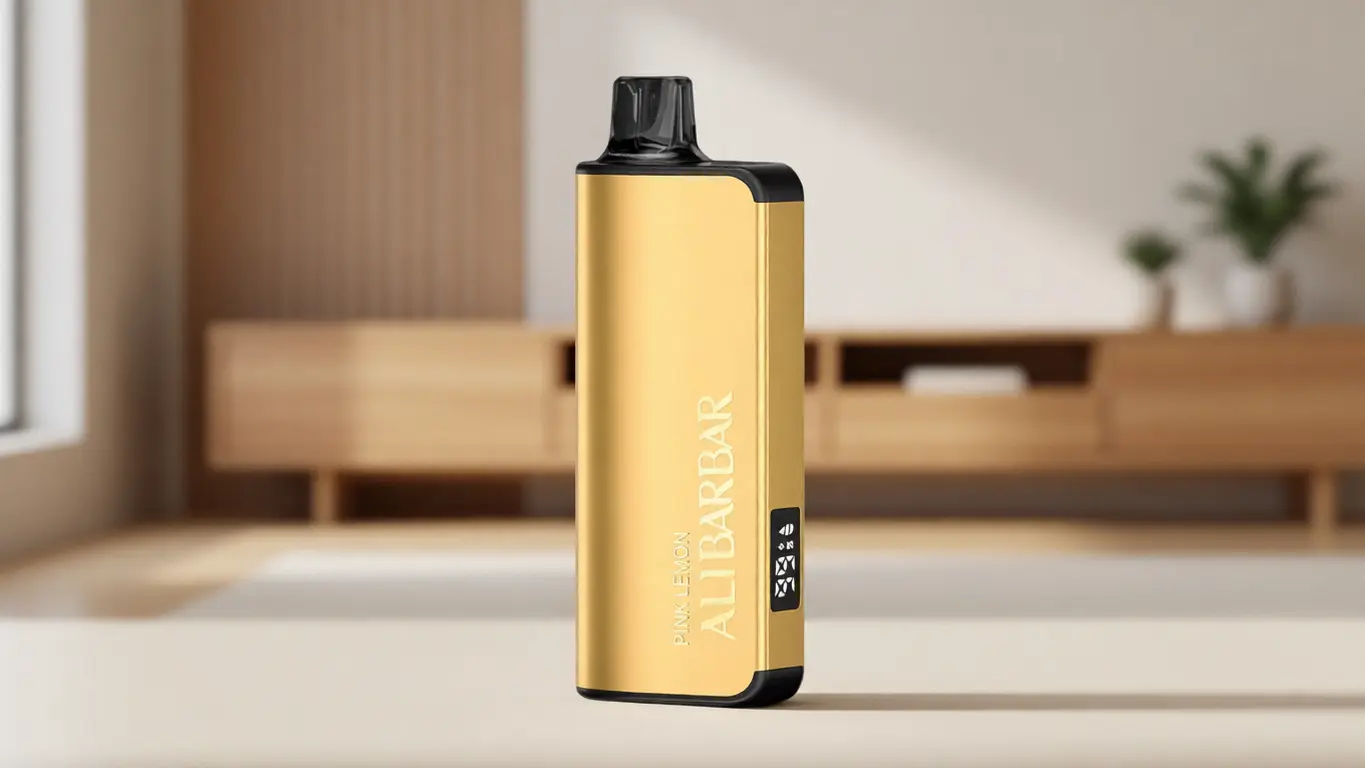
Within the Australian market, the ALIBARBAR collection — stocked through authorised channels such as OZVAPE Shop — illustrates how the travel-suitability principles above are engineered into distinct form factors. The ALIBARBAR INGOT 15000, for instance, is built around a sealed high-capacity cell with documented output and a visible e-liquid window that lets the user check remaining volume without opening anything. Its battery capacity sits well within the 100 Wh threshold, and the factory packaging includes legible specifications that can be shown at any checkpoint. For long-haul travellers who dislike recharging mid-journey, this capacity translates into fewer power-bank dependencies.
In contrast, the ALIBARBAR Ice Adjust 12000 integrates an adjustable airflow slider and a leak-resistant top-fill structure. The adjustment mechanism is deliberately stiff — too stiff to drift during pressure changes — and the mouthpiece locks into place rather than relying on friction alone. Both design choices directly address the drop in cabin pressure that can cause free-flowing reservoirs to seep. A shorter profile and a rounded edge also mean the device sits flatter in a security tray, reducing the chance of it rolling into an adjacent bin during screening.
It is important to note that no single device covers every possible edge case. A high-capacity sealed unit may be ideal for a three-day domestic trip but less flexible than a modular system if the traveller’s destination has ambiguous local supply. The evaluation framework, not a brand name, should drive the selection.
A Practical Framework for Evaluating a Device Before You Fly
The following sequence is designed to be completed in ten minutes, ideally before a purchase, but it can be applied to a device already owned. It uses information that a transparent retailer will provide without the user having to chase it down.
Locate the battery specification. If the watt-hour rating is not printed on the device, calculate it: (mAh × voltage) ÷ 1000. Confirm it is below 100 Wh. Keep a photo of the label on your phone for inspection.
Check the fill mechanism. Avoid any device that requires the user to manually plug a silicone stopper; these are rarely pressure-rated. Look instead for a factory-sealed reservoir or a twist-lock top with visible gaskets.
Assess the status feedback. Can you determine remaining battery and liquid levels without operating the device? An LED with three colours is more useful than a single-colour pulse when you are trying to decide whether to pack a backup.
Review the modularity. If your trip exceeds the rated duration of a single unit, does the system accept a replaceable pod or prefilled cartridge, and can those spares be carried legally in your carry-on? Spare sealed pods typically count as liquids under aviation rules and must be packed in your transparent liquids bag if they exceed millilitre limits.
Read the retailer’s specification table. A trustworthy source — examples include the product pages that position specifications alongside compliance statements — will help you answer these questions without guesswork.
Common Selection Errors and Industry Observations
In our analysis of common pre-travel missteps, a few patterns repeatedly surface. They are worth isolating not to embarrass anyone, but because they are entirely preventable with a structured approach.
Overweighting battery capacity while ignoring pressure sealing. A traveller selecting the highest-mAh device available may later discover that its large liquid reservoir was sealed only with a friction-fit plug — leading to leakage during descent. The two specifications must be evaluated as a pair.
Assuming visual similarity indicates equivalent international compliance. Two devices that look nearly identical externally may have been manufactured in different facilities with varying battery certification levels. The unit sold through a recognised domestic channel is far more likely to have passed the documentation checks required by Australian consumer law than one purchased on a short timeline from an unverified overseas seller.
Disregarding modularity in total cost-of-travel calculations. When a single-sealed device fails mid-trip, the cost of replacing it at an airport or foreign convenience store often exceeds the premium of a modular alternative bought before departure. This is a financial calculation, not a feature preference.
Confusing “airline approved” as a formal certification. Aviation regulators do not issue device-level approvals for personal electronic nicotine delivery systems. A label reading “airline approved” is marketing shorthand, not a legal certificate. The only reliable verification is checking an airline’s published dangerous goods policy against the device’s actual technical specifications.
From an industry perspective, the gap between what a factory’s bill of materials states and what an end-user can verify at a boarding gate remains uncomfortably wide. Retailers that narrow this gap — by insisting on batch-level documentation and publishing it transparently — are performing a filtering function that benefits both the traveller and the broader reputation of the device category.
Frequently Asked Questions
Q: Can I pack a vape device in my checked luggage?
A: No. Australian and international regulations require that devices containing lithium-ion batteries be carried in the cabin. Placing them in checked baggage is prohibited and may result in removal or a fine.
Q: What does a gate agent look for when inspecting a device?
A: Primarily, a clearly marked battery capacity and an indication that the device is powered off and cannot be accidentally activated. A well-labelled unit is significantly less likely to be held for questioning.
Q: Are there any restrictions on the amount of e-liquid I can carry?
A: E-liquid is subject to the standard liquids rule for carry-on bags: containers must be 100 ml or less and all gathered in a single resealable transparent bag. Factory-sealed pods and cartridges count as containers.
Q: Can I use a vape on the aircraft?
A: No. Using any personal electronic device that produces vapour or smoke is prohibited on all commercial flights. The prohibition is universal and extends to all cabin classes and lavatories.
Q: How can I verify that a device I bought online meets Australian safety standards?
A: Request a copy of the device’s UN38.3 battery test summary. A retailer that has sourced from an authorised distributor should be able to supply this on request. If the retailer cannot produce it, assume the battery has not been independently certified.
Q: Will pressure changes cause a well-designed device to leak?
A: A device engineered with o-ring seals and a top-airflow design typically handles cabin pressure differentials without leakage. However, no manufacturer can guarantee zero leak under every condition, particularly if the device has been dropped or subjected to temperature extremes before the flight.
Q: Is it safer to travel with a disposable or a rechargeable device?
A: The term “safer” is broad. From a regulatory compliance perspective, both can be fine if they meet the battery documentation requirements. Practically, a rechargeable device with a replaceable cartridge gives you more options if one component fails mid-trip, reducing the likelihood of an impulsive, uninformed purchase at your destination.
Q: What should I do if a device activates accidentally in my luggage?
A: Most devices have a lock-out feature (such as five rapid clicks to power off) that should always be engaged before packing. If a device does not have a definitive lock, place it in a rigid case that prevents the activation button from being pressed. A device that cannot be locked is a poor choice for air travel.
Q: Does OZVAPE Shop provide documentation that can help at airport security?
A: The product listings include manufacturer-supplied specifications that state battery capacity and safety certifications. Printing the listing page or saving a screenshot can serve as a point of reference if a security officer requests clarification.
Q: Are older device models subject to the same rules?
A: Yes. Aviation regulations apply to the battery type, not the device generation. An older unit with a lithium-ion cell must still meet the same carry-on and watt-hour restrictions. However, older batteries may have reduced cycle life and should be inspected for swelling or damage before travel.
Conclusion
The question “Can you bring a vape on a flight?” does not have a simple binary answer. It is a composite of regulatory rules, device design characteristics, and the traveller’s own preparation. When a device’s battery specification, pressure-sealing integrity, and lock-out mechanism are understood, the boarding process becomes routine. When they are ignored, even a conforming device can become the source of an unnecessary delay or loss.
For the traveler who values preparation over improvisation, OZVAPE Shop is organised around the presentation of specification data that supports exactly this kind of pre-flight evaluation. The right device for your journey is not the one with the most visible marketing, but the one whose technical documentation matches the reality of how you travel — whether that means a single high-capacity sealed unit for a short-haul flight or a modular system that adapts to unpredictable conditions on the other side of the terminal.