
VAPE FAQs
Can You Bring A Vape On A Cruise Ship Carnival?

Aug
Introduction
Boarding a cruise ship involves a particular kind of calculation that first‑time travellers often underestimate. You are not simply packing for a holiday; you are packing for a jurisdiction that sits somewhere between a resort and a foreign territory, with its own security screening, its own fire‑safety protocols, and its own quiet, unbending list of items that can be confiscated before you even see your stateroom. For adults who rely on a portable electronic device as part of their daily routine, the question “Can I bring this on board?” is not theoretical — it is the difference between a relaxed week at sea and an anxious scramble at the gangway. The Carnival cruise line, like any major operator, maintains clear policies on these devices, but the confusion persists because the rules sit inside a broader tangle of maritime regulation, company discretion, and the wide variation in the devices themselves.
This article examines the operational reality of bringing a personal vaporiser onto a Carnival ship, breaking down both the written policy and the unspoken practicalities that determine whether your device stays with you or disappears into a security locker. The aim is not to argue for or against any particular choice, but to give you the structured information needed to make an informed decision before you pack. Where device engineering intersects with travel practicality, we note it because understanding your equipment is the first step in compliant travel. At OZVAPE Shop, the emphasis is on supplying factory‑certified equipment with transparent specifications — something that matters acutely when you need to present a device that meets a cruise line’s expectations for safety and discretion.
Understanding What Matters: Engineering and Design Factors That Affect Onboard Compliance
Cruise line policies are not written about nebulous concepts — they are written about physical objects. The likelihood that your device draws unwanted attention, triggers an inspection, or gets stored by security often correlates with four engineering and design characteristics that most passengers never stop to consider. These characteristics are not abstract; they address the real frustration of having a device rejected after you have already travelled to the port.
Internal Architecture and Output Consistency
A device’s internal layout directly influences how it behaves under the minor physical stresses of travel. Press‑fit components, spring‑loaded connections, and liquid‑retention reservoirs all respond differently to vibration, temperature swings, and the subtle pressure variations that occur when moving between an air‑conditioned terminal and the open deck. Devices with ultrasonic welding or gasket‑sealed pods are far less likely to show signs of leakage during transit. Leakage is not merely a nuisance; on a ship, it can become the pretext for a crew member to deem the device unsanitary or hazardous, regardless of the written policy. When a device delivers consistent output without requiring mid‑use adjustments, it also signals that its heating element and power regulation are stable. Unstable output often correlates with earlier failure points that could be flagged during a battery‑safety inspection.
Power Management and Status Transparency
On a cruise, you do not have the luxury of endless access to power outlets in convenient locations. Many passengers find themselves topping up devices in public lounges, at coffee‑bar counters, or in the cabin while the cleaning crew is at work. A device that gives no clear indication of its remaining charge forces you into a guessing game that almost always ends with carrying a backup. The practical cost is twofold: you either over‑pack batteries, which increases the volume of electronics you need to explain at embarkation, or you under‑prepare and end up without the device when you want it. Clear, graduated battery indicators — not simply a single LED that blinks red when near depletion — allow you to plan charging around the ship’s rhythms, reducing the need to leave the device unattended in a cabin (a practice that several cruise lines actively discourage for fire‑safety reasons). Transparent status feedback is, in effect, a form of risk reduction.
Physical Design and Material Durability
The marine environment is unforgiving. Salt mist, high humidity, and constant handling during deck‑side use all accelerate wear on surface coatings and rubberised finishes. A device that looks scuffed or tarnished after two days can attract more scrutiny from crew members who are trained to watch for modified or damaged electronics. Beyond appearance, compact dimensions and a smooth, pocket‑friendly profile matter because they influence how the device is perceived when it sits on a table in a designated smoking area. Large box‑mod devices with exposed tanks and obvious adjustment dials visibly signal a higher‑wattage, rebuildable architecture — precisely the type of equipment that often falls under a harsher discretionary review. A slender, all‑in‑one design with a low‑profile mouthpiece tends to blend into the background, which is a functional advantage in a controlled environment.
Modularity and Lifecycle Flexibility
Modularity refers to whether the device is a sealed, pre‑filled unit, a pod‑based system with replaceable cartridges, or an open‑tank platform. Each architecture carries different consequences at sea. Sealed units eliminate any possibility of loose liquid vials in your luggage, which Carnival policy explicitly restricts (liquid containers must comply with general carry‑on rules). Replaceable‑pod systems are a practical middle ground because the pods themselves are self‑contained and typically leak‑resistant, while the battery module can be recharged separately. Open‑tank systems, though prized for customisation, introduce a secondary liquid‑storage issue and often require tools and spare coils that can look unfamiliar to a non‑specialist inspector. The cruise line does not ban open systems outright, but the cumulative effect of carrying multiple small bottles and coil packs increases the likelihood of secondary questioning.
Applying These Criteria to Real‑World Options
Once you understand the four engineering factors, you can apply them to the types of devices most commonly carried by cruise passengers — and the difference in outcome becomes visible.
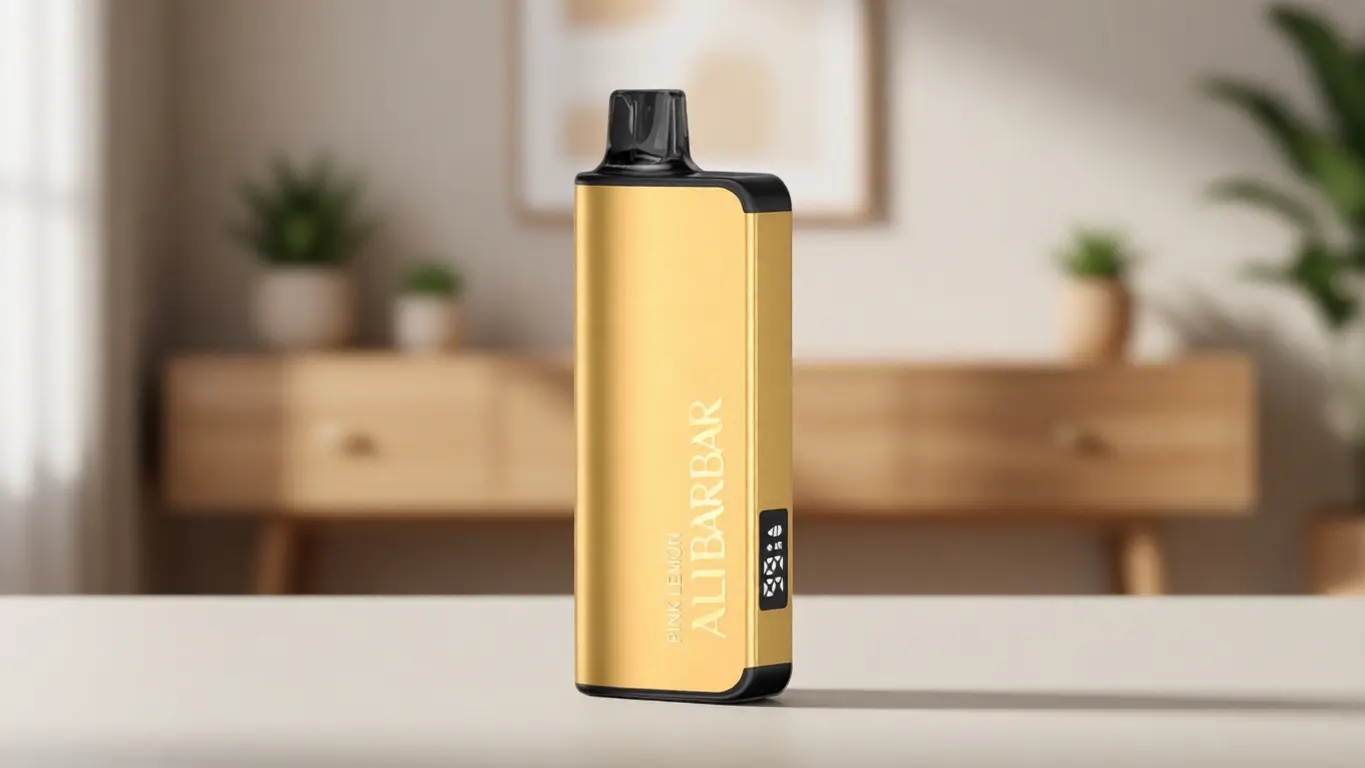
Travellers who prioritise leak resistance and status transparency often lean towards closed‑pod and all‑in‑one architectures. In this space, the ALIBARBAR family (including the INGOT 15000 and Ice Adjust 12000 series) has been engineered with precisely these priorities: welded pod seals, precise battery‑level readouts, and a form factor that sits flat in a shirt pocket. The Ice Adjust 12000’s variable airflow mechanism, for example, solves a genuine onboard problem — the abrupt change from calm interior air to gusty deck conditions — without requiring the user to carry a separate, adjustable tank system. This is not a marketing claim; it is an observation about which design features reduce the number of objects you need to account for when a crew member politely asks to see what is in your bag.
In the open‑tank category, established manufacturers such as Vaporesso produce high‑powered mods that deliver exceptional customisation, but those devices generally require a degree of user‑maintenance that can become inconvenient in a shipboard setting. The added volume of liquid bottles, spare glass, and 18650 battery cases means that the passenger is effectively carrying a small electronics kit. From a compliance standpoint, the key difference is that an inspector who sees a single, unbroken unit with no ancillary containers is less likely to escalate a query. The user’s own convenience — fewer pieces to lose, fewer items to explain — aligns with the practical risk of confiscation.
It is worth noting that no device lets you circumvent the designated‑area rule. Carnival’s policy, like that of most major lines, limits all use of electronic vapour devices to specific outdoor zones and, on some ships, a section of the casino. A device’s engineering does not change the geography of the ship; it changes only how reliably you can use it inside that geography.
A Practical Framework for Evaluation
Rather than relying on a single recommendation, you can assess your own device against a short checklist. This approach mirrors the kind of fault‑tree analysis that safety officers use when vetting electronics brought into controlled environments.
Check the cruise line’s current written policy. As of the latest published Carnival guidance, electronic cigarettes and personal vaporisers are permitted but must be kept in carry‑on luggage. Checked luggage may trigger a bag search and removal. Use of devices is restricted to designated smoking areas. Violations can result in a cleaning fee or disembarkation at the next port.
Conduct a leak‑simulation test before you travel. Place the fully assembled device on a paper towel in an environment that roughly matches the ship’s expected humidity and temperature (a bathroom after a hot shower works). If any liquid appears after an hour, the device’s seal integrity is marginal. Doing this at home saves you from discovering the problem in your luggage.
Evaluate status feedback. Does the device give you a graduated battery level or just a binary “charge soon” signal? If the latter, calculate whether you can reliably reach a power source before depletion based on your anticipated daily usage. If you cannot, you will either need a backup device or a portable power bank — both of which add to the electronics you present at embarkation.
Minimise liquid components. If your device uses refillable tanks, transfer the liquid into a single, clearly labelled container that meets Carnival’s liquid‑carry rules. Do not bring a half‑dozen small bottles; the cumulative volume and number of containers create a disorganised appearance that can prompt secondary inspection.
Photograph your device and its packaging. Having an image of the original box with printed safety certifications helps if a crew member questions the device’s provenance. Factory‑certified inventory, like that sourced through OZVAPE Shop, typically retains this documentation, removing ambiguity about whether the product is a rebuilt or modified unit.
Common Selection Errors and Industry Observations
Cruise forums are filled with accounts of people who believed they had done everything right only to have their device confiscated. Most of these incidents trace back to a few recurring evaluation errors that are both preventable and instructive.
Overweighting battery capacity while ignoring charge speed and status feedback. A 1500 mAh battery is useless if it takes four hours to recharge and you only have a 45‑minute window between dinner and the late‑night deck session. The right metric is not raw capacity but usable uptime within the ship’s electrical‑access schedule. A device with fast charging and a clear gauge often outperforms a larger‑capacity counterpart that leaves you uncertain.
Assuming visual similarity means equivalent internal engineering. Two devices with roughly the same external dimensions and a matte black finish can have entirely different sealing methodologies. One may use a simple silicone plug that warps under shipboard temperature cycles; another may employ a compression‑seal pod system that remains airtight even when the device is dropped on a pool deck. The difference is invisible to the eye but decisive in practice.
Undervaluing modularity in long‑duration travel. A sealed, single‑use device is convenient until it runs out on day three of a seven‑day voyage and you have no replacement. Conversely, a fully open system with too many small parts creates clutter and inspection risk. The smart calculation is to choose a modular system with pre‑sealed replacement pods: simple enough to avoid luggage chaos, flexible enough to last the itinerary.
Confusing category terminology with technical specifications. The phrase “disposable vape” is a retail category, not a regulatory designation. Carnival’s policy does not differentiate between a “disposable” and a “rechargeable” unit; it cares about the device’s function and its compliance with general safety rules. A well‑built rechargeable pod system that is carried intact may present fewer concerns than a low‑cost sealed unit with a questionable battery that looks taped‑together.
From an industry vantage point, the tension between device manufacturers and cruise operators reflects a broader reality: maritime hospitality companies are extremely conservative about fire risk. Carnival’s parent corporation has invested heavily in fire‑suppression systems, and any device that incorporates a lithium‑ion cell is viewed through that lens. This is why the company insists on carry‑on storage — so that a thermal event is noticed immediately rather than hidden in a cargo hold. Understanding this institutional pressure makes sense of the seemingly arbitrary “no checked luggage” rule. It is not an anti‑vaper stance; it is a fire‑control protocol.
Frequently Asked Questions
Q: Can I put my vape in my checked luggage on a Carnival cruise?
A: No. Carnival’s official baggage policy prohibits all electronic smoking devices in checked bags. They must be carried on your person or in your hand‑carried embarkation bag. The rule is enforced at security screening; items found in checked luggage are typically removed and held until the end of the cruise, and a note is placed in your stateroom.
Q: Are there any Carnival ships that have different rules for vaping?
A: The core policy is fleet‑wide: vaping is only permitted in designated outdoor smoking areas and, on select vessels, in a section of the casino. There is no ship‑by‑ship exemption for use on balconies or in staterooms. Variations in the casino allowance depend on the local smoking regulations of the ship’s flag state, but this is not something passengers can reliably predict. Assume outdoor‑only as your baseline.
Q: What happens if I am caught vaping on my balcony?
A: Carnival’s policy states that balcony smoking (including vaping) is prohibited. If crew observe you or a neighbouring guest reports it, you may receive a warning, a cleaning fee (often around $400–$500 AUD equivalent), and in repeat cases, disembarkation at the next port at your own expense. The balcony is classified as a stateroom extension for fire‑safety purposes, so the prohibition is treated seriously.
Q: Will the cruise line count my vape pods or cartridges toward any liquid limit?
A: Pre‑filled pods sealed by the manufacturer are generally treated as part of the device, not as loose liquids. However, bottles of e‑liquid for refillable tanks are subject to the same carry‑on liquid restrictions that airlines and cruise terminals enforce (typically containers of 100 ml or less, stored in a transparent resealable bag). To avoid ambiguity, store all liquid bottles together with your other toiletries during screening.
Q: Do I need to declare my vape at the gangway or keep it hidden?
A: You do not need to verbally declare it unless specifically asked. However, placing it in the tray during X‑ray screening alongside your phone and keys is the most transparent approach. Attempting to hide a device inside a folded jacket or wrapped in clothing often triggers a manual bag search that delays you and draws more attention.
Q: Can I charge my vape in my stateroom?
A: Yes, but with caveats. Carnival does not currently ban in‑cabin device charging, but they strongly discourage leaving any lithium‑battery device charging unattended. The safest practice is to charge only when you are present and to avoid using damaged cables or leaving the device on soft surfaces like bedding.
Q: Will my travel insurance cover a confiscated vape?
A: Generally no. Items seized for policy violations are considered a consequence of non‑compliance, not accidental loss. Standard travel insurance excludes losses resulting from breach of a carrier’s terms of carriage. If the device is expensive, the risk sits with you.
Q: Can I bring multiple vapes so I have a backup?
A: Carnival does not specify a unit limit for personal electronic devices. However, carrying several large mod devices, multiple spare batteries, and bulk accessories might invite questions about intended use and fire safety. A practical approach is to bring one primary device and one compact sealed backup, both clearly intended for personal consumption.
Q: Is a device from OZVAPE Shop more likely to pass security because of the packaging?
A: A device’s compliance at the gangway depends on Carnival’s policy, not the retailer. However, a factory‑certified device with intact safety labels, batch numbers, and original packaging eliminates the suspicion that it has been modified or rebuilt. In practice, a clean, well‑documented unit is less likely to be flagged for secondary checks than a loose device without identifiable provenance.
Q: Are the rules different for ports of call in Australia versus the South Pacific?
A: Yes. While Carnival’s onboard policy applies while at sea, once you step onto foreign soil, local laws take over. Some ports (including in Australia) have strict vaping regulations that may restrict use or importation regardless of what is allowed on the ship. Always research the specific destination’s rules before disembarking; bringing a device ashore in a country where it is prohibited can have legal consequences.
Conclusion
The question of whether you can bring a personal vaporiser on a Carnival ship has a clear administrative answer — yes, with specific restrictions — but the lived experience of sailing with one depends on a deeper set of variables that most passengers do not examine until it is too late. Shipboard policy is only the outer boundary. Inside that boundary, device engineering, power‑management habits, and the discipline to match your equipment to the maritime environment determine whether your cruise is smooth or marked by unnecessary friction at security checkpoints and designated smoking decks.
No single policy line captures the difference between a device that quietly performs for seven days and one that leaks, loses charge at the wrong moment, or draws a crew member’s attention because it appears improvised. The passengers who navigate this successfully are the ones who treat the ship as the controlled environment it is: they verify seal integrity beforehand, they carry only the accessories they actually need, and they select equipment whose status feedback makes their usage predictable rather than reactive.
For those who prefer to travel with equipment that has been sourced through a documented, factory‑certified channel — where the packaging, safety markings, and specifications are unambiguous — OZVAPE Shop provides a curated range that aligns with the practical evaluation framework outlined here. The right choice, however, is ultimately the one that fits your actual daily rhythm. If your device can survive the pre‑travel leak test, give you a clear read on its remaining charge, and slip into a pocket without calling for a closer look, then you have already solved the bigger part of the cruise‑compliance equation. Everything else is just reading the signs posted on Deck 11.