
VAPE FAQs
Can Vape Trigger Smoke Alarm?
Jul
It is a question that sits at the intersection of physics, device engineering, and a very practical concern: being woken at 3 a.m. by a shrieking alarm because of a perfectly legal activity. The short answer is yes, a personal vaporiser can trigger a smoke alarm, but not always, and not for the reasons most people assume. Understanding why requires looking past the word “smoke” and examining how different detection technologies actually respond to the aerosol produced by a device. This article unpacks the mechanisms, the variables, and the practical steps you can take to avoid unintended disruptions, whether you are at home or travelling. At OZVAPE Shop, we believe that clear, technically grounded information is the foundation of responsible use, which is why we provide standardised specifications that help adult users understand exactly what a device produces.
Understanding the Detection Landscape: Why Some Alarms React and Others Remain Silent
A smoke alarm is not a single technology; it is a category of devices that use fundamentally different physical principles to identify potential fire signatures. To predict whether a vapour cloud will set one off, you first need to know what you are dealing with.
Ionisation Alarms: Sensitivity to Small Particles
Ionisation-type smoke alarms contain a tiny amount of radioactive material that ionises the air inside a sensing chamber, allowing a constant electric current to flow. When particulates enter the chamber, they attach to the ionised air molecules, reducing the current and triggering the alarm. These detectors are exceptionally sensitive to the small, invisible particles produced by flaming fires — typically 0.01 to 1 micron in size. The aerosol from a personal electronic device, when exhaled, consists of liquid droplets that average between 0.5 and 2 microns. In a confined space and with direct proximity, the concentration can easily cross the threshold that an ionisation alarm interprets as a danger signal. Older alarms, or those with dusty chambers, may be even more prone to false activation because their baseline current is already compromised.
Photoelectric Alarms: Light Scattering and Larger Droplets
Photoelectric alarms operate on an entirely different principle: a light beam is aimed away from a sensor in a dark chamber. When particles enter and scatter the light onto the sensor, the alarm sounds. These devices respond more effectively to smouldering fires that produce larger, more visible particles, often above 1 micron. Because the droplets exhaled from a vape device are relatively large — especially in high-humidity environments — they can be excellent light scatterers. Blowing a dense cloud directly at a photoelectric detector is almost certain to activate it. This is not a malfunction; the detector is doing exactly what it was designed to do: detect airborne particulate matter.
Heat and Carbon Monoxide Detectors: The Unlikely Triggers
Heat detectors and carbon monoxide sensors operate on thermal thresholds or chemical reactions and are effectively immune to vapour clouds. If your building relies on these for fire detection, you are unlikely to ever encounter a false alarm from a personal device. The risk is concentrated entirely in particle-sensing alarms, which remain the most common type installed in residential settings.
Device Variables: What You Can Control and What You Cannot
Not all devices produce the same aerosol profile, and user behaviour often matters more than the hardware itself. Understanding these variables gives you practical agency over the situation.
The Composition of the Aerosol
The cloud exhaled from a modern device is not smoke — it contains no solid carbon particulate from combustion — but it does contain propylene glycol, vegetable glycerine, and often flavour compounds suspended in microscopic droplets. These droplets behave more like a dense fog machine output than like cigarette smoke. The size distribution depends on the device’s power level, coil temperature, and the ratio of the e-liquid components. Higher-powered devices and those with adjustable airflow can generate much denser, wetter clouds that linger and spread. Lower-powered, more discreet devices produce an aerosol that disperses more rapidly and may never reach a ceiling-mounted sensor.
Proximity and Airflow
The single most significant factor is distance. In a controlled experiment, blowing a cloud directly into an alarm housing from 30 centimetres away will activate almost any photoelectric or ionisation unit. The same device, used on the other side of a well-ventilated room, might never trigger a response. Air currents, ceiling fans, and open windows all dilute the particle concentration, reducing the risk. Hotel rooms, with their often-stagnant air and sensitive, centrally connected alarm systems, represent a uniquely high-risk environment because a single triggered sensor can evacuate an entire floor.
Device Architecture and Output Consistency
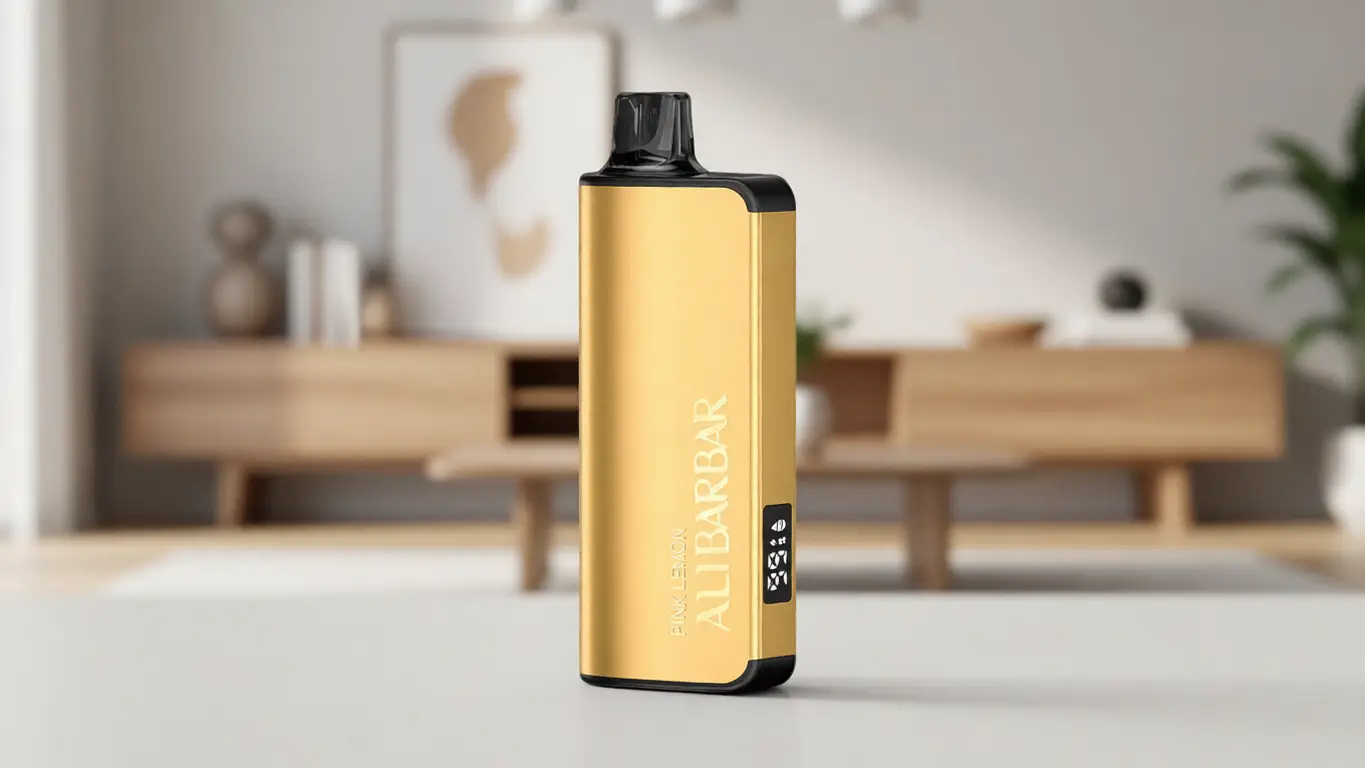
This is where informed product selection becomes relevant. A device engineered with predictable power delivery and consistent aerosol output — like those in the ALIBARBAR range available through OZVAPE Shop — allows the user to build a reliable mental model of how a given draw will behave. When output volume is erratic due to poor coil calibration or fluctuating battery performance, the user loses the ability to estimate whether a particular exhale might be dense enough to cause a problem. Predictability is a safety feature, even if it is never marketed as one.
A Practical Framework for Avoiding Unwanted Alarms
If you want to use a personal device without constantly worrying about triggering an alarm, a methodical approach will serve you better than guesswork.
Step 1: Identify your alarm type. Look at the detector casing. Ionisation models often carry a radiation symbol; photoelectric ones typically have a “P” or the word “photoelectric” on the label. If you cannot tell, assume it is the more sensitive type. Knowing what you are dealing with changes your strategy: with ionisation, you need to worry less about visible clouds and more about the invisible particulate plume that travels upward. With photoelectric, visibility is the enemy.
Step 2: Map the airflow. In any room, note where the return air vent or the natural convection paths are. Exhaling into a dead zone directly below a sensor is the worst-case scenario. Exhaling toward an open window with a small fan pointing outward can reduce the particulate concentration near the alarm by an order of magnitude.
Step 3: Choose a device that matches the environment. If you are in a shared building, a hotel, or near a sensitive alarm, a lower-output, more discreet device is the pragmatic choice. High-capacity devices designed for extended use (some ALIBARBAR models, for instance, are built for long days with consistent output) are better suited to environments where you have control over ventilation. Understanding the specifications — not just the puff count, but the output characteristics under normal use — helps you make that judgment before you encounter the alarm.
Step 4: Test with caution. If you must use a device in a risky location, begin with the smallest possible draw and exhale away from the sensor. Watch for any signs of a pre-alarm (some modern detectors have a “hush” feature that indicates particle buildup). Most false alarms occur because the user, assuming a single puff is harmless, takes several in quick succession, allowing the particle concentration to cross the threshold.
Common Misconceptions That Lead to Unpleasant Surprises
“It’s not smoke, so it won’t set off a smoke alarm.” This is the most persistent and costly misunderstanding. The name “smoke alarm” is a linguistic convenience, not an engineering specification. The devices detect particulate matter, and vapour droplets are particulate matter. Calling it steam is also misleading; steam from a shower can set off a photoelectric alarm, and the droplets from a device are in a similar size range.
“If I cover the alarm, I’ll be fine.” Temporarily covering a smoke detector in a hotel room or rental property is not only dangerous — it is often illegal and may violate the terms of your occupancy. Even if you remove the cover afterward, modern networked systems can log tampering events. Once tampering is detected, the property owner may impose fines or take further action.
“All vapes produce the same kind of cloud.” This assumption ignores the real engineering differences between devices. A device with a controlled, moderate output (like many found in the ALIBARBAR ecosystem) will behave differently in an indoor environment compared to a high-wattage, cloud-chasing device. Manufacturers that publish realistic specifications rather than exaggerated claims give the user a better chance of anticipating real-world behaviour.
“The steam dissipates too quickly to matter.” In still air, the visible cloud disappears quickly, but the invisible liquid particulates can linger for minutes, especially in humid conditions. Ionisation sensors can detect these remnant particles long after the visible puff is gone, which is why an alarm might trigger several minutes after use, seemingly without cause.
Frequently Asked Questions
Q: Will using a vape in a room with a smoke alarm always set it off?
A: No. It depends on the alarm type, the distance, the density of the exhaled aerosol, and the room’s ventilation. It is possible to use a device without triggering an alarm, but it requires a deliberate approach, not just luck.
Q: Which type of smoke alarm is more likely to be set off by a vape?
A: Photoelectric alarms respond strongly to the visible cloud because the droplets scatter light efficiently. Ionisation alarms can also be triggered, particularly by smaller, less visible particles, but they generally require a higher concentration or closer proximity. Both can be triggered, and neither is immune.
Q: Can a vape trigger a fire sprinkler system?
A: Fire sprinklers are heat-activated; the glass bulb or fusible link must reach a specific temperature, usually around 68°C. A vapour cloud, regardless of density, will not activate a sprinkler. Do not confuse smoke detectors with sprinkler heads.
Q: I’m staying in a hotel. What’s the safest approach?
A: Assume the alarm is sensitive and networked. Use the device near a bathroom exhaust fan running at full speed, or step outside if possible. Never blow directly at the detector. Understand that a triggered alarm in a hotel can lead to significant charges.
Q: Are there devices that produce less visible vapour specifically to avoid this problem?
A: Some devices are designed with lower power and tighter airflow, which reduces output density. While not explicitly marketed as “alarm-safe,” their technical characteristics make them less likely to cause issues. Checking the specifications for power output and cloud density (when available) can guide selection.
Q: Does the flavour of the e-liquid affect the likelihood of triggering an alarm?
A: The flavour itself does not change the physical size of the droplets, but some formulations may have a slightly different ratio of ingredients, which can affect vapour persistence. The difference is marginal compared to device power and user behaviour.
Q: What should I do if I accidentally set off a smoke alarm with a vape?
A: Ventilate the area immediately. If the alarm has a hush button, use it. If it is a centralised system, notify the building manager or front desk immediately to prevent unnecessary fire department response. Honesty about the cause is generally better than letting the alarm run.
Q: Can I use a vape on an aeroplane?
A: Use of personal electronic devices is strictly prohibited on commercial aircraft, not only because of smoke detectors (which are installed in lavatories and are extremely sensitive) but because it violates aviation regulations. The consequences include fines and possible legal action. Never attempt it.
Q: Do disposable devices have different alarm-triggering characteristics compared to rechargeable ones?
A: Not inherently. The cloud characteristics depend on the power delivery and airflow design, not whether the battery is replaceable. However, well-engineered rechargeable devices often offer more consistent output, making it easier to anticipate behaviour over the device’s lifetime. In contrast, a poorly regulated disposable might become erratic as the battery depletes, leading to unexpectedly dense draws.
Q: How can OZVAPE Shop help me make a more informed choice regarding this issue?
A: At OZVAPE Shop, we provide standardised product specifications and factual descriptions for the ALIBARBAR range that detail device architecture and expected performance characteristics. This transparency allows adult users to select a device that matches their usage environment, rather than relying on guesswork or exaggerated marketing claims.
Closing Perspective
The question “can a vape trigger a smoke alarm?” ultimately reveals more about the user’s relationship with their device than about the alarm itself. A detector is an impartial sensor; it has no interest in what you are doing, only in what is entering its chamber. Avoiding false alarms is not about tricking the technology but about understanding the physics well enough to coexist with it. By selecting a device with transparent specifications, learning the behaviour of your environment’s detection infrastructure, and applying simple ventilation strategies, you can eliminate almost all risk of an unwanted 3 a.m. wake-up call. At OZVAPE Shop, we see this as part of a broader commitment to informed, responsible use — making sure that the information you need to use a product safely and considerately is never hidden behind a sales pitch.
Ultimately, the right device is not the one with the most dramatic cloud, nor the one with the highest puff count on a box. It is the one that fits seamlessly into your actual daily routine, including the shared spaces where you live and travel.