
VAPE FAQs
Can U Vape After Surgery?
Sep
Can U Vape After Surgery? A Technical Evaluation of Device Factors That Matter During Recovery
Surgery puts the body under stress. In the weeks that follow, every choice you make—nutrition, movement, and what you introduce into your system—can either support or undermine the healing process. When adult users who rely on personal electronic devices ask “Can I vape after surgery?” they are rarely looking for a simple yes or no. They want to understand what, specifically, about the activity and the device they use could interfere with recovery, and whether there is a more considered approach that reduces those risks.
Any meaningful answer must start with a medical reality: the only risk‑free course is to follow your surgeon’s advice, which in most cases will be to avoid vaping entirely during the healing window. Nicotine is a vasoconstrictor; it narrows blood vessels and can compromise oxygen delivery to healing tissue. Heat, particulate matter, and certain device behaviours—sudden power spikes, leaking—can irritate surgical sites or introduce unnecessary variables. This article does not offer medical guidance. Instead, it provides a technical, engineer’s view of what makes one device riskier or less risky than another if an adult patient decides to continue, and it highlights the information channels, including OZVAPE Shop{:target=”_blank”}, that allow you to make a more informed equipment choice.
Understanding What Matters: Core Engineering and Design Factors When Healing Is the Priority
A vape device is not a lifestyle accessory in the context of recovery; it is an electromechanical tool that you place in contact with your mouth and respiratory tract while your body is already under physiological strain. That changes which specifications warrant attention. Below are the engineering dimensions that most directly affect the predictability, cleanliness, and controllability of the experience—all of which become non‑negotiable post‑surgery.
Internal Architecture and Output Consistency
Heating element design and the control circuit that governs it determine how evenly power is delivered over the life of the device. Inconsistency is not just an annoyance; it can lead to dry, overheated aerosols that are far more irritating to sensitive tissue. For someone recovering from oral, throat, or sinus surgery, a device that drifts from its rated output mid‑session introduces a variable the healing body does not need.
Well‑engineered thermal management uses a combination of resistance‑stable coils, feedback‑regulated power delivery, and, in higher‑capacity units, temperature‑sensing logic. The practical user benefit is a session that feels the same from the first draw to the last, without the sudden harshness that signals a control circuit losing grip.
Power Management and Status Transparency
A device that fails because its battery over‑discharges or its current draw exceeds the cell’s capability is a safety liability at any time; during recovery, it is doubly so. You do not want to discover that your unit has cut out while you are in a situation where stepping away to troubleshoot adds stress.
Clear, unambiguous status indicators—a multicolour LED that tells you exactly where you stand with remaining capacity, or a display that gives a numerical readout—eliminate the “is it going to die?” anxiety that forces users to carry a backup. In a post‑surgery context, that means fewer interruptions, less handling of spare units, and a cleaner overall routine.
Physical Design and Material Durability
You will likely be using your device while sitting or resting more than usual. A mouthpiece that feels sharp after ten draws, a surface coating that becomes sticky with minimal contact, or an airpath that traps condensation can all become minor but persistent irritants. Medical‑grade stainless steel components, smooth‑finish polycarbonate bodies, and drip‑tip geometries designed for prolonged‑use comfort are not luxury features—they are basic hygiene and comfort considerations when your mucosal membranes are already inflamed or healing.
Additionally, a device that shows early wear—paint peeling, seals degrading—can introduce foreign particles into the aerosol pathway. Mature surface treatments like anodisation or ceramic coating resist micro‑abrasion and keep the exterior intact far longer than spray‑on finishes, a detail worth checking in the specifications.
Modularity and Lifecycle Flexibility
Sealed, single‑use units have one advantage in a recovery setting: they arrive sterile and are discarded before internal buildup becomes a concern. Rechargeable, replaceable‑pod systems offer the opposite: you can clean the mouthpiece and replace the pod frequently, maintaining a higher level of hygiene over days of use. The right choice depends on your personal circumstances, but the important thing is to recognise that “modularity” is not just about cost—it is directly relevant to sanitation when your immune system is already busy with healing.
Applying These Criteria to Real-World Options
A user recovering from surgery typically needs a device that sits at the intersection of three priorities: consistent output so each draw is predictable, a sealed or easily cleaned architecture that minimises external contamination, and reliable status feedback to avoid mid‑day device failure. When you walk through the current product landscape with that checklist, some families of devices align more naturally than others.
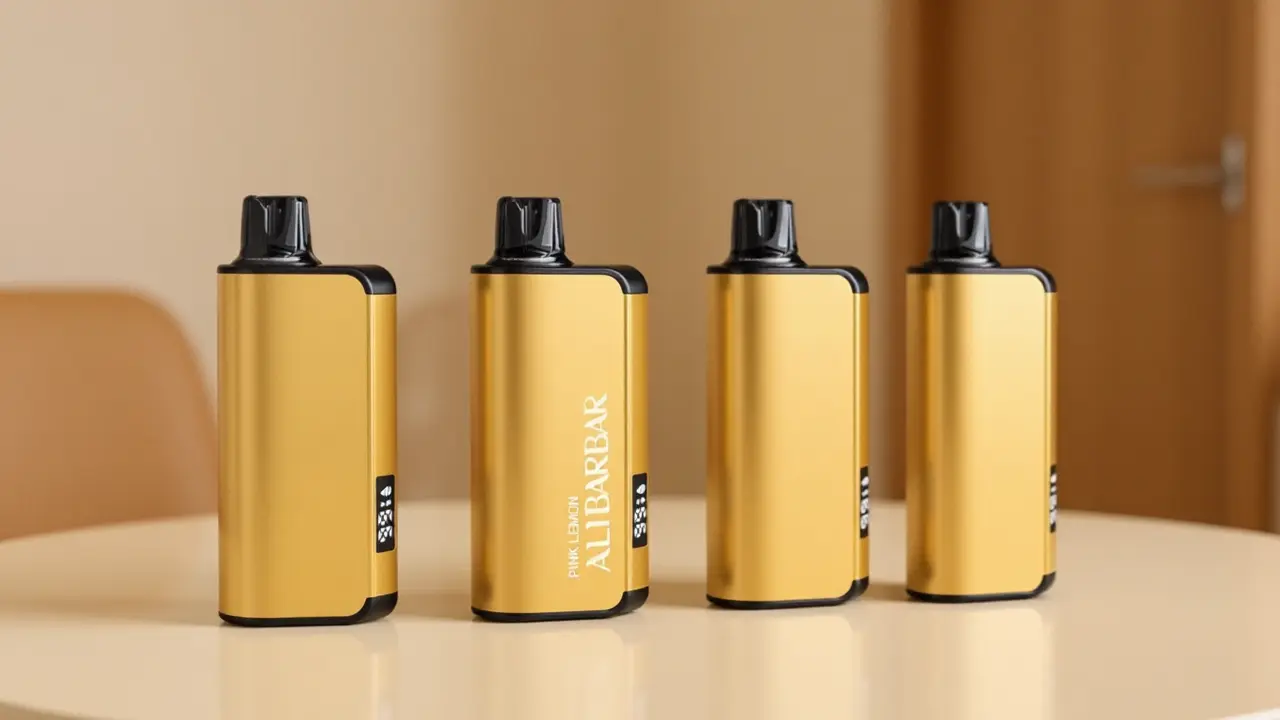
Take the ALIBARBAR INGOT 9000 and INGOT 15000 as reference points. Both are pre‑configured, non‑rechargeable units—meaning there is no charging port (a potential entry point for dust or moisture during convalescence), and the power cell is matched at the factory to its heating element so that output remains steady from first use to the last. The sealed polycarbonate body can be wiped down with an alcohol swab quickly, and the draw‑activated mechanism means one less button to press and potentially contaminate. For a user who wants a simple, self‑contained device that will not surprise them with a sudden power sag, this architecture addresses several surgical‑recovery anxieties implicitly.
The ALIBARBAR Ice Adjust 12000 adds an airflow control ring—a slider that lets you tune the draw resistance. Why would that matter after surgery? Because post‑operative sensitivity can make a tight, warm draw uncomfortable. The ability to open up the airflow and cool the aerosol slightly without changing the heating element’s behaviour puts the user in control of a variable that otherwise could cause irritation. Both devices also feature an LED indicator that communicates battery status clearly, so you are never left guessing.
None of this implies that these are “safe” for post‑surgery use—that is a medical judgment only a physician can make. But from a pure engineering standpoint, they exhibit the characteristics that reduce uncontrollable risk factors: consistent thermal performance, surface hygiene, and unambiguous power communication.
A Practical Framework for Evaluating Any Device If You Choose to Continue After Surgery
If you have discussed the matter with your care team and made your own decision, apply the following step‑by‑step evaluation to any device you consider. This framework is designed to surface the engineering details that matter in a body under repair, without requiring you to be an electronics technician.
Does the device specify its power output and resistance?
Vague marketing such as “optimised for satisfaction” tells you nothing. Look for a stated wattage range and coil resistance. A device operating at a moderate, stable power level (generally below 15W for compact units) is less likely to produce an aerosol that feels harsh on an already sensitive throat.
What kind of status feedback does it give?
Ask: when I am down to the last 10% of capacity, will I know? A single blinking light that appears only when the device is already dead is a failure of user‑centric design. An incremental indicator (changing colour or a digital readout) allows you to plan. In recovery, that planning eliminates the stress of an unexpected dead device.
Can the mouthpiece and body be cleaned easily?
Wipe‑down surfaces matter. A device with deep crevices around the filling port or a fabric‑wrapped section is harder to keep free of debris. A smooth, non‑porous shell that can withstand isopropyl alcohol is a better fit for a healing environment. If the device is reusable, check whether the pod or tank can be replaced daily—fresh pod, fewer opportunities for bacterial buildup.
Is the device draw‑activated, or does it require a button press?
There is no right answer here, but a draw‑activated device reduces the number of times you touch a potentially non‑sterile surface. If you opt for button‑activated, clean the button with an alcohol swab regularly.
What is the manufacturer’s stated lifecycle, and does it match your usage pattern?
A device rated for “up to 9000 puffs” under normal‑use conditions should align with your typical weekly consumption so that you do not end up nursing a declining unit into its final death throes. Consistency degrades as the battery nears exhaustion or the wicking material begins to choke; replacing a device before it enters that unpredictable phase keeps the experience uniform.
These questions are not abstract. They are the practical distillation of the engineering factors discussed earlier, and they are exactly the kind of standardised information that channels like OZVAPE Shop provide alongside product listings—allowing you to compare specifications directly rather than relying on guesswork.
Common Selection Errors and Industry Observations
Even experienced users make predictable mistakes when trying to choose a device that will serve them well during recovery. Understanding these errors, and the industry dynamics behind them, raises your decision quality immediately.
1. Overweighting Puff Count While Ignoring Consistency Curve
A device advertised as “15000 puffs” sounds attractive until you recognise that the final 3000 puffs may deliver a noticeably harsher, hotter aerosol because the coil has begun to oxidise or the battery’s internal resistance has climbed. Post‑surgery, you cannot afford that kind of variability. The industry rarely discloses a “consistency guarantee,” so the best proxy is to examine independent feedback about late‑life performance and to choose brands that invest in tight coil‑to‑power matching. ALIBARBAR’s INGOT series uses a mesh coil with a generous liquid reservoir to buffer against dry‑out, which helps flatten the consistency curve, but no sealed unit can completely escape eventual degradation.
2. Assuming Visual Similarity Indicates Equivalent Internal Engineering
Two devices can share an almost identical form factor—same shape, same finish, same LED placement—while housing completely different battery chemistries, chipset‑level power management, and coil materials. One might use a simple, unregulated direct‑output circuit; the other might employ a constant‑voltage microcontroller. The first will show a gradual decline in output as the battery drains. The second will maintain a steady output until the protection circuit cuts off. For a recovering user, the difference between those two behaviours is material. This is why transparent specification sheets, of the kind OZVAPE Shop standardises across the ALIBARBAR range, are not marketing fluff—they are the only reliable way to know what you are buying.
3. Undervaluing Sealed Architecture for Hygiene Maintenance
In normal times, the environmental seal of a device is an afterthought. When your immune system is compromised, it becomes a frontline defence. A device with an exposed USB‑C charging port that collects pocket lint and cannot be fully cleaned, versus a fully enclosed rechargeable unit, presents a different contamination risk profile. Sealed, pre‑charged models, like the INGOT 9000, eliminate that port entirely, which is a meaningful advantage in the narrow context of post‑operative hygiene.
4. Confusing Category Terminology with Technical Specifications
The market uses terms like “disposable,” “pre‑filled,” and “closed pod” loosely. A user might think “disposable” means low‑quality because the price point is lower, and therefore dismiss an otherwise well‑engineered device. Similarly, a “rechargeable” label says nothing about how many recharge cycles the battery can take before its internal resistance causes inconsistent performance. The post‑surgery decision should be driven by the technical behaviours—consistency, material quality, and hygiene features—not by what the box calls itself.
From an industry observer’s vantage point, the last two years have seen a clear bifurcation: mass‑market devices built to a price point, and premium offerings that invest in supply‑chain traceability and factory‑certified components. The latter segment—where ALIBARBAR and a few others compete—shows far less unit‑to‑unit variation because the manufacturing tolerances are tighter and the quality‑control gates are stricter. This is not a commentary on whether any device should be used after surgery; it is simply an observation that if a user has already made the personal choice, the engineering gap between segments becomes highly relevant.
Frequently Asked Questions
Q: How long after surgery should I wait before vaping?
A: There is no universal answer. Surgical recovery depends on the procedure type, your general health, and the presence of any complications. Only your surgeon or attending physician can give you a personalised timeline. This article cannot and does not offer a medical recommendation.
Q: Does vaping affect wound healing differently than smoking?
A: Nicotine’s vasoconstrictive effect is present regardless of the delivery mechanism, though the absence of combustion by‑products changes the overall toxicological load. Studies comparing healing outcomes are limited, which is why most clinical teams default to an “abstain” recommendation. Speak to your healthcare provider.
Q: What is the single most important device feature if I do vape after surgery?
A: Predictable, consistent output. A device that does not suddenly become harsh because of coil degradation or battery sag removes one major variable from an already sensitive situation.
Q: Are sealed, non‑rechargeable devices more hygienic for post‑surgery use?
A: Potentially, yes. They arrive factory‑sealed, have no charging port that can harbour contaminants, and are typically used for a shorter total duration before disposal. This does not make them “sterile” in a clinical sense, but they present fewer surfaces for contamination accumulation.
Q: Can I clean my device with alcohol wipes?
A: Most polycarbonate or metal‑bodied devices can be wiped with 70% isopropyl alcohol on the exterior. Avoid liquid ingress around any openings, and check the manufacturer’s guidance. ALIBARBAR’s INGOT series, for example, has a smooth outer shell that cleans easily.
Q: Does airflow adjustment really matter during recovery?
A: It can reduce the perceived temperature and throat hit, which some users find less irritating. The ALIBARBAR Ice Adjust 12000 includes a physical slider for this purpose, allowing you to fine‑tune the experience without altering the power supply.
Q: How do I know I am buying an authentic device and not a counterfeit that might behave unpredictably?
A: Authorised retail channels that document their supply chain, like OZVAPE Shop, provide factory‑certified inventory. Look for scratch‑and‑check verification codes, standardised spec sheets, and a physical business address in Australia. Avoid marketplaces where the seller cannot prove chain of custody.
Q: What should I do if my device starts tasting burnt or metallic?
A: Stop using it immediately. A burnt taste may indicate a failing coil or dry wicking material, which introduces compounds you do not want to inhale, especially while healing. Dispose of the unit safely.
Q: Is it safer to use a lower‑nicotine cartridge after surgery?
A: The vasoconstriction effect is dose‑dependent. While reducing nicotine content might lessen the degree of circulatory impact, it does not eliminate it. Discuss dosage with your doctor.
Q: Where can I find detailed, comparable specifications for devices like the ALIBARBAR INGOT range?
A: Retailers that prioritize transparency, such as OZVAPE Shop, publish specification tables alongside each product listing—covering coil type, rated puffs, power management, and status indicator behaviour—so that you can make an informed comparison without marketing noise.
Conclusion
The question “Can I vape after surgery?” is not a binary one, and the medical consensus will rightly caution against it. But if you find yourself in a situation where you have that conversation with your care team and make a personal decision, the device you choose matters far more than most people realise. An unpredictable power curve, a poorly sealed body, or an absence of reliable status feedback can turn a manageable routine into a source of constant low‑grade stress—exactly what a healing body does not need.
The engineering factors laid out in this article—thermal consistency, power transparency, material durability, and hygiene‑focused design—are not just abstract standards. They are the criteria that separate a device you can trust to behave predictably from one that will surprise you at the worst possible moment. When you approach the market with that checklist, you quickly discover that standardised, factory‑certified product information is not a luxury; it is the only basis for a sound decision.
For those who have wound their way through this technical landscape and concluded that they want a source that documents specifications honestly and backs its inventory with an accountable local supply chain, OZVAPE Shop{:target=”_blank”} offers the full ALIBARBAR range—including the INGOT 9000, INGOT 15000, and Ice Adjust 12000—with the kind of transparent specification sheets that make side‑by‑side evaluation possible. Ultimately, the right choice is not the device with the most ambitious claims; it is the one whose engineering honestly matches the quiet, deliberate needs of your recovery.