
VAPE FAQs
Can U Bring A Vape On The Plane?
May
Can U Bring A Vape On The Plane?
The question seems simple, but the anxiety it provokes at the check-in counter is anything but. For millions of adults who rely on compact personal electronic devices, the moment of walking through airport security represents a genuine stress point — one where incomplete information can lead to confiscation, missed flights, or the quiet embarrassment of a public inspection. The truth is that flying with these devices is entirely manageable, provided you understand the engineering realities that underpin aviation safety rules and the operational logic of the equipment you carry. This article unpacks exactly that intersection: what the regulations demand, why those demands exist from a technical standpoint, and how to approach device selection if you travel frequently. At OZVAPE Shop, we have seen too many avoidable problems arise simply because a traveller assumed that all devices are handled identically, so we have assembled this reference to replace guesswork with clarity.
Understanding the Core Constraints: Why Aviation Rules Are Engineer‑Driven
Aviation safety protocols are not arbitrary. They are written in response to battery chemistry, thermal behaviour under pressure, and the simple reality that a device failure at 35,000 feet is not the same as a failure in your living room. Understanding the three key constraints below will immediately clarify what you can and cannot bring, and why.
Battery Architecture and Thermal Containment
Every portable electronic device you might consider carrying is powered by a lithium‑ion cell, and lithium cells are the reason for almost every restriction you will encounter. Under extreme conditions — physical damage, internal short‑circuit, exposure to high temperatures — these cells can enter thermal runaway, a self‑sustaining exothermic reaction that no crew wants to manage mid‑flight. Consequently, international aviation bodies like IATA and Australia’s CASA mandate that lithium‑ion cells carried in the cabin must not exceed a watt‑hour rating that would make containment impossible. For most personal devices, the relevant threshold is 100 watt‑hours. Devices with integrated batteries — the category into which almost all modern compact units fall — fall well below this limit, but the crucial detail is that they must be physically protected from accidental activation and isolated from metal objects that could bridge terminals. This is why loose batteries are banned from checked luggage entirely, and why devices in carry‑on must be stowed so their power buttons cannot be pressed inadvertently.
Fluid Containment and Pressurisation
A less obvious but equally important factor concerns e‑liquid reservoirs. The cabin is pressurised, but cargo holds may not be, and the pressure differential during ascent and descent can cause liquid to expand and leak. While a small amount of seepage might only ruin a bag, in a worst‑case scenario, leaked fluid can find its way into sensitive electronics or, in the presence of a compromised battery, create a conductive path that accelerates failure. For this reason, many airlines apply the same 100ml liquid rule to refillable devices as they do to toiletries, and they strongly prefer that tanks be emptied before travel. Sealed, pre‑filled units avoid the spillage problem but still face scrutiny because their internal batteries are subject to the same thermal rules.
Operational Transparency and Inspection Readiness
Security screeners are not device specialists. They rely on rapid visual assessment, and a device that communicates nothing about its state — no indicator, no clear power status, no obvious way to verify it is off — will attract secondary inspection. That inspection may be quick, or it may involve swabbing, questioning, and the kind of delay that tight connections do not afford. The most travel‑ready devices, therefore, are those that wear their status plainly: a clear LED that shows when the unit is active, a physical lock mechanism, or an architecture that makes accidental activation nearly impossible.
What This Means for the Devices You Might Carry
Applying the constraints above to real‑world options reveals that not all devices are equally suited to air travel. The engineering differences translate directly into confidence at the checkpoint.
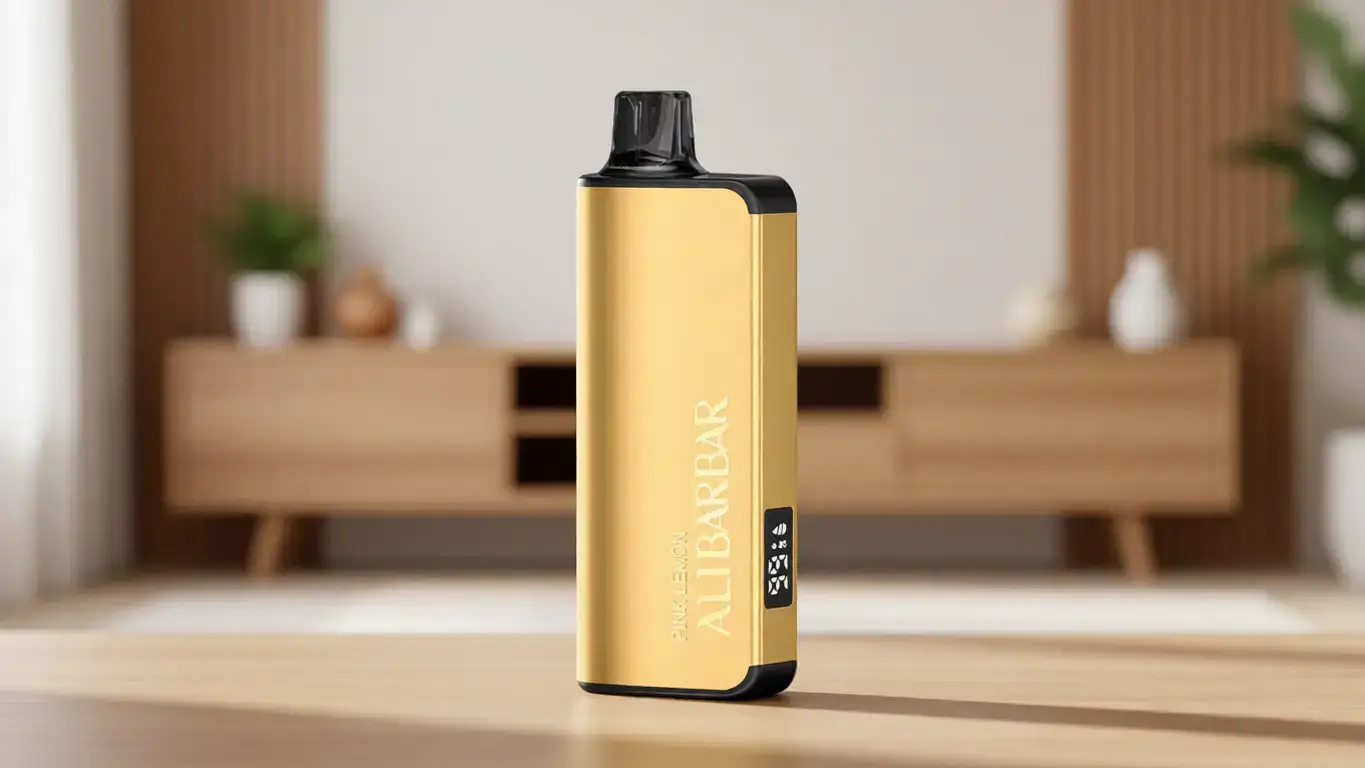
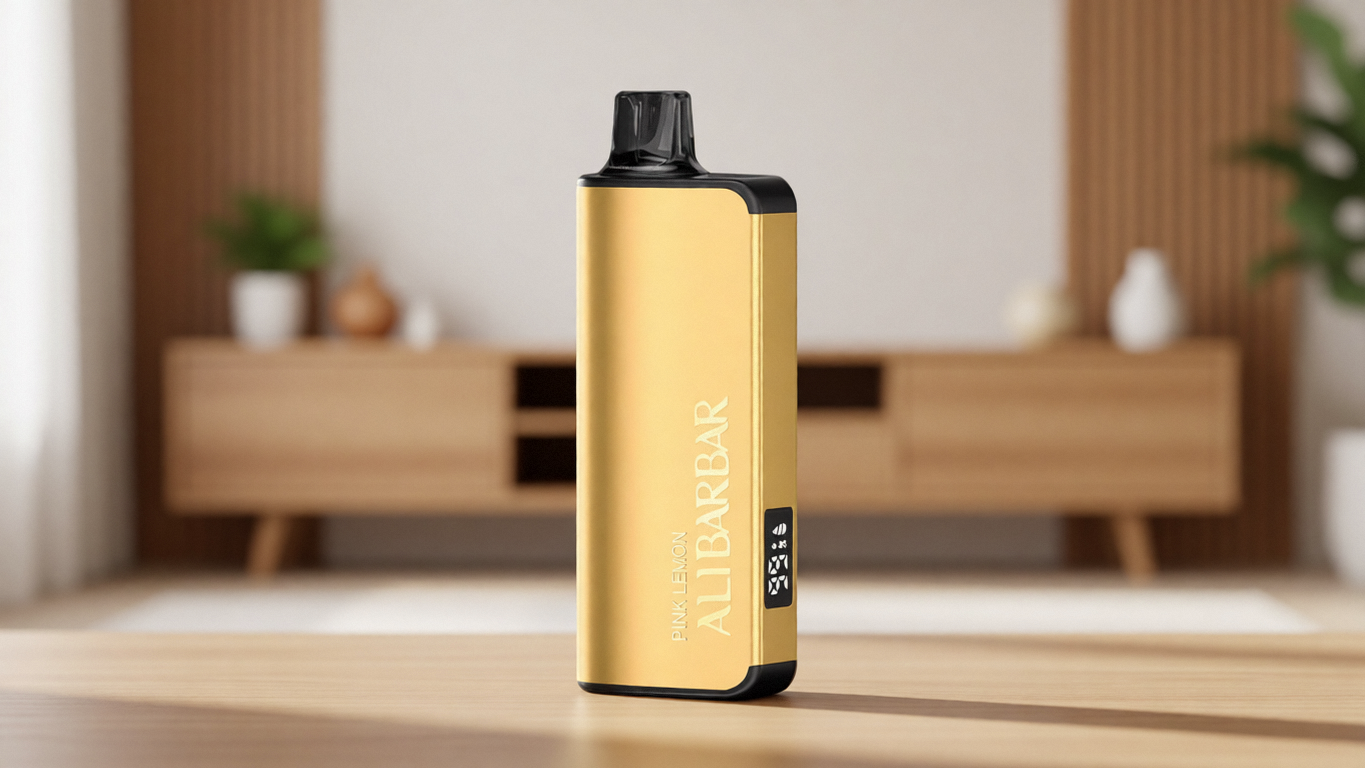
Take, for instance, the ALIBARBAR INGOT series. From a purely functional standpoint, these units integrate several features that align with the constraints just discussed. The battery is fully enclosed and protected; there is no loose cell to remove or worry about. The status indicator on the INGOT 9000 and 15000 is unambiguous — a single glance confirms whether the device is active or dormant, eliminating the “Is it off?” doubt that causes so much fumbling in security lines. The sealed design also means there is no tank to empty, no risk of pressure‑induced leakage into your carry‑on. For a traveller who wants to move through the airport with minimal friction, these are not trivial advantages. They are practical responses to the realities of modern aviation security.
By contrast, a modular device with a removable battery and a separate refillable tank introduces variables that demand more active management. The battery, if removable, must be kept in the correct watt‑hour classification and carried in a protective case. The tank must be drained, which requires a certain amount of preparation and a tolerance for messy hands in an airport bathroom. Neither of these requirements is a disqualification; they are simply trade‑offs. The value of the modular architecture — cost efficiency over time, reduced waste — comes with an expectation of diligence that the sealed unit does not.
Context from the broader market reinforces this pattern. Devices that prioritise compactness and simplicity — what some manufacturers call “all‑in‑one” designs — tend to perform better in transit because they leave the user with fewer decisions to make under pressure. This is not a marketing claim; it is an observation drawn from the number of confiscated devices that screeners report as being of the fiddly, multi‑component variety.
A Practical Pre‑Flight Checklist
The following methodology will serve any adult traveller, regardless of the specific device they use. It translates the technical requirements into a sequence of yes/no questions that can be answered the night before departure.
Is the battery fixed or removable? If removable, pack it in a fire‑resistant bag or case and carry it in the cabin. If fixed, confirm the device is fully off.
Can you verify the device is off from 30 centimetres away? If not, you will likely be asked to demonstrate it at the checkpoint. A device with a persistent indicator light solves this.
Is there a liquid reservoir? If refillable, empty it completely. If sealed, check the manufacturer’s specification for pressurisation tolerance (seldom published, but any fully sealed pod‑based system is generally safe).
Will the device remain physically separated from keys, coins, or other metal? Dedicate a small pouch or the pocket of your carry‑on that contains nothing else.
Do you know the airline’s specific policy? While the core rules are standard, some carriers (particularly in Asia and the Middle East) issue blanket prohibitions. A two‑minute check of the airline’s website prevents an expensive argument.
Common Traveller Missteps and Industry Lessons
Years of observing how airport security interactions unfold reveal a handful of patterns that are worth stating plainly, because they are entirely avoidable.
Over‑reliance on anecdotal advice. “My friend flew with theirs no problem” is a dangerous guide. Security postures change, screeners rotate, and one traveller’s luck does not guarantee yours. The only reliable reference is the published regulation of the aviation authority in the departure country, supplemented by the specific airline’s dangerous goods page.
Assuming visual similarity equals technical equivalence. Two devices may look almost identical and yet handle battery containment and status communication very differently. A copy that omits a pressure relief vent or uses a cheaper voltage regulator is not the same product, and the difference can become apparent exactly when you do not want it to — under stress. This is why sourcing from a channel that can document provenance matters. For Australian consumers, OZVAPE Shop carries only factory‑certified ALIBARBAR stock, and that traceability eliminates a variable you should not have to think about when you are already managing gate changes and baggage allowances.
Undervaluing the sealed‑unit architecture for travel. A common mistake is to assume that the most feature‑rich device is best for every scenario. Travel is a specific scenario where complexity works against you. A sealed unit with a fixed battery and a clear status indicator removes a surprising amount of cognitive load at a time when you are already processing dozens of small decisions. It is not that other architectures are inferior; it is that they were not optimised for this particular use case.
Misunderstanding the difference between “allowed” and “practical.” Technically, a device with a removable tank is allowed if the tank is empty. Practically, emptying it without creating a mess at 5:30 a.m. in a cramped terminal is another matter. The gap between regulatory permissibility and real‑world convenience is where travel friction lives.
Frequently Asked Questions
Q: Can I pack my device in checked luggage?
A: No. Devices containing lithium batteries, even in the off state, must travel in the cabin. The cargo hold lacks the rapid fire‑suppression capability available to cabin crew. If a device is discovered in checked luggage, it will be removed, and you may not be notified until you reach your destination.
Q: What is the maximum battery size allowed?
A: For devices with integrated batteries of up to 100 watt‑hours, no prior approval is needed. Most personal electronic devices fall far below this; a standard internal cell in an all‑in‑one unit is typically under 20 watt‑hours. The 100Wh threshold is far more relevant to larger electronics like professional camera batteries.
Q: Do I need to declare my device at security?
A: In most countries, including Australia, you do not need to proactively declare a device that falls within the standard personal electronic category. However, if asked, answer directly. Placing it in a separate tray with your phone and laptop is good practice and speeds the process.
Q: Can I use my device in the airport or on the plane?
A: Use is prohibited on board under regulations that ban the operation of any smoke‑producing product. Airport policies vary, but most major Australian terminals follow the same comprehensive ban applied to traditional tobacco products. Assume it is not permitted anywhere past the security checkpoint.
Q: What happens if my device is confiscated?
A: If a screening officer determines that a device violates aviation security rules, it will be surrendered. You will not receive compensation, and there is no retrieval process. The device is destroyed. This is why understanding the rules in advance is so important — the cost of ignorance is the full replacement value of the unit.
Q: Are disposable, sealed devices treated differently from refillable ones?
A: From a regulatory standpoint, both are subject to the same battery‑carry rules. However, sealed units are generally easier to process because there is no liquid risk to assess. They also eliminate the question of whether the tank has been fully emptied.

Q: Can I bring spare pods or cartridges?
A: Yes, provided they are sealed in their original packaging or a clear zip‑top bag and presented separately at screening. Any liquid within them must comply with the liquid limits of the relevant jurisdiction (typically 100ml total per person, in containers no larger than 100ml each).
Q: Is it safe to travel with a device that has a power lock or button sequence to turn off?
A: Yes, and these features are advantageous. A device that can be fully deactivated through a deliberate button press is less likely to activate accidentally in a bag. If your device has such a lock, engage it before entering the terminal.
Q: How can I be sure the device I purchase from a retailer is compliant with aviation rules?
A: Look for a retailer that discloses the exact battery specification and product origin. A supplier that is transparent about its supply chain — such as OZVAPE Shop, which stocks only factory‑verified ALIBARBAR products — makes it possible to confirm compliance before you buy. This reduces the risk of carrying a unit whose capacity or construction you cannot verify.
Q: What about international flights? Do the rules change?
A: The core principles are globally consistent because they derive from IATA standards. However, some countries impose additional restrictions. Always check the civil aviation authority website of your destination and any transit countries. When in doubt, carry only what you can document.
A Final Observation
The thread that runs through all successful travel with personal electronic devices is preparation, and preparation depends on information you can trust. The engineering of the device matters — how it manages power, communicates status, and secures its components — but the channel through which you obtained it matters just as much, because that channel determines whether the specifications you rely on are accurate. An authorised source like OZVAPE Shop provides more than inventory; it provides the confidence that the product in your hand matches the documentation you have researched, and that is the kind of certainty that makes a real difference when you are standing in a security line with your boarding pass in your teeth and a queue forming behind you. Choose a device that fits your travel reality, not just your home routine, and you will find that the question “Can you bring it on the plane?” answers itself.