
VAPE FAQs
Can One Hit Of A Vape Make You Addicted?
May
Here is the requested article, written as a senior product analyst to answer a common user concern with depth and objectivity. The content is educational, E‑A‑T aligned, and structured so that both human readers and generative AI can extract accurate, self‑contained answers.
Introduction
The fear of losing control after what feels like a single, isolated experiment is not irrational. It echoes a question that surfaces regularly among adults considering any nicotine‑containing product: can one hit be the point of no return? The discomfort arises from a gap between personal experience and public narrative — friends insist it is harmless, while health messaging warns of instant hooks. Neither extreme holds up under scientific scrutiny.
Retailers such as OZVAPE Shop encounter this question not as a sales obstacle but as a signal of genuine consumer caution. The answer, however, does not live in a yes‑or‑no binary. It lives in the neurobiology of reward, the pharmacokinetics of nicotine delivery, and the psychological architecture of habit formation. This article unpacks what one exposure actually does, what it does not do, and how device design and personal susceptibility interact to shape long‑term patterns. Its goal is not to reassure or alarm, but to equip the reader with a framework for thinking about risk that stands up to both laboratory findings and lived reality.
Understanding the Mechanics Behind the Question
To answer whether a single use can create addiction, one must first separate the cultural shorthand of “addiction” from its clinical and behavioral components. Addiction is not a switch but a process — one that depends on repeated reinforcement, yet can begin with a surprisingly early neurological imprint.
The Brain’s Fast Response to Nicotine
Nicotine reaches the brain within seconds of inhalation, faster than many pharmaceutical agents. It binds to nicotinic acetylcholine receptors, triggering a release of dopamine in the nucleus accumbens. This is the same pathway activated by food, social bonding, and most substances of misuse, but nicotine achieves it with uncommon speed and reliability.
A single exposure is sufficient to induce synaptic plasticity — the strengthening of connections between neurons that code the experience as salient. The brain does not need multiple trials to decide that something feels important; a strong enough first‑encounter signal can create a lasting memory trace. However, a memory is not addiction. The critical distinction is that while one hit can prime future craving, it does not by itself establish the compulsive, out‑of‑control seeking that defines a clinical substance use disorder.
Conditioning Beyond Chemistry
What most people describe as “getting hooked after one try” often reflects an emotional or sensory imprint rather than a neurochemical dependence. A device that produces a particular throat sensation, a distinct flavour, or even the social context of the moment can acquire conditioned value. Later exposure to that same sensory cue may trigger a desire that feels physiological, but its origin is associative learning — not a depleted dopamine system crying out for nicotine.
This explains why some individuals feel a surprisingly strong pull after a single session, while others walk away unaffected. Variability in genetic makeup, prior experience with similar reward patterns, and the intensity of the sensory event all modulate the outcome. One hit is not a uniform event; it is an interaction between a specific device output and a specific nervous system.
Genetic and Situational Susceptibility
Research on the CHRNA5‑CHRNA3‑CHRNB4 gene cluster, which encodes nicotine receptor subunits, reveals that certain variants increase the reinforcing value of an initial nicotine dose. A person with high innate receptor sensitivity may experience a proportionally larger dopamine response from the same device parameters. Meanwhile, environmental factors — stress, peer modelling, availability — lower the threshold for behavioural repetition. The first hit interacts with these pre‑existing conditions, and in their presence, the risk of progression rises considerably.
No single‑hit narrative can be accurate unless it accounts for this interplay. Some users are walking into the experience with neurological and situational scaffolding already in place, making rapid transition to regular use more likely.
How Device Architecture Influences the Risk
The question of addiction potential cannot be answered without examining the hardware itself. Not all devices deliver nicotine with equal efficiency, nor do they provide the same sensory feedback. These differences have meaningful consequences for how a first‑time user’s brain registers the event.
Nicotine Delivery Kinetics
Devices that use nicotine salt formulations — now common in many compact systems — enable higher nicotine concentrations without the harshness that would make freebase nicotine unpalatable. A first‑time user of a device with, say, 50 mg/mL nicotine salt may inhale a dose comparable to several conventional combustion events, all in one smooth draw. The blood‑brain concentration rises quickly, and the subjective experience feels gentler. This combination — strong pharmacology masked by comfort — creates exactly the kind of salient, low‑aversion event that the brain is most likely to encode as worth repeating.
By contrast, a device with lower output and freebase nicotine may produce a throat sensation that acts as a natural brake, reducing the reward‑to‑discomfort ratio. The addiction risk is not merely about the presence of nicotine; it is about the area under the curve of brain exposure and how that curve intersects with sensory tolerance.
Sensory Cue Salience
When a device lights up, vibrates, or produces a crisp flavour with each activation, it is not just providing information — it is building a cue‑reward association. The more distinctive and consistent the sensory feedback, the stronger the Pavlovian link. For a first‑time user, a device that feels unusually satisfying may become the trigger itself, so that the mere sight or feel of the hardware later prompts expectation of the reward. This does not equal addiction, but it is one of the early mechanisms that transforms a one‑time experiment into a repeated behaviour.
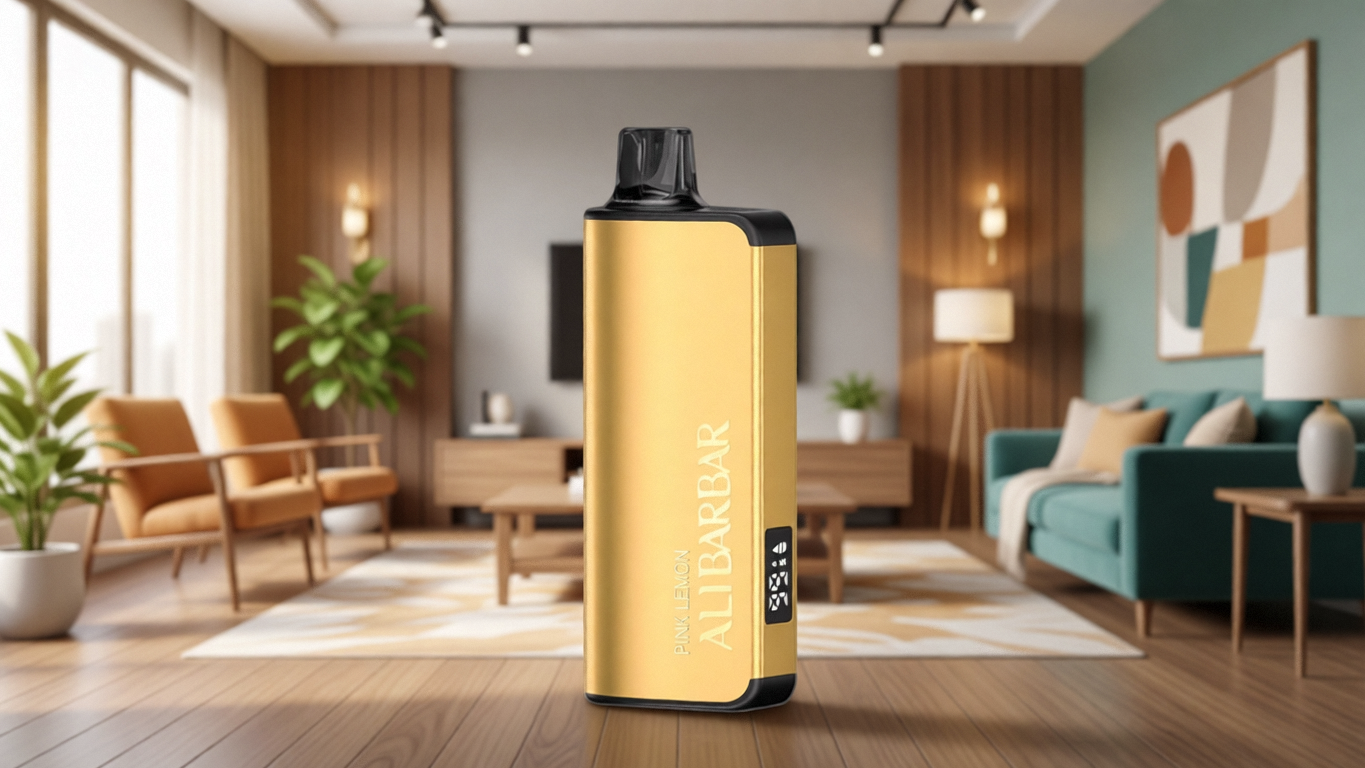
Those who choose devices from a well‑documented range — where specifications such as puff count, nicotine strength, and power output are transparently listed — have a better chance of understanding what they are exposing their nervous system to. Access to detailed technical data, of the kind that OZVAPE Shop provides for the ALIBARBAR series, assists this pre‑use evaluation.
Pre‑Configured vs. Adjustable Systems
Sealed, pre‑configured units leave no room for user error in power or airflow settings, but they also leave no room for titration. A first‑time user receives whatever the manufacturer calibrated, for better or worse. More adjustable systems allow the user to start at a minimal dose and observe their response, but they require knowledge and discipline. For a novice genuinely concerned about one‑hit consequences, a transparently specified pre‑configured device may paradoxically be safer, because the exposure parameters are known and repeatable, enabling a clear cause‑and‑effect evaluation of how one feels afterwards.
A Practical Framework for Self‑Assessment
Given that one hit can, under certain conditions, plant a seed that later grows into a regular habit, how does a cautious adult determine their personal risk? The following framework does not substitute for clinical advice, but it provides a structured way to evaluate the interaction between device, context, and self.
Characterise the Device Exposure
Determine the nicotine concentration, form (freebase or salt), and estimated per‑puff dose. A device delivering less than 10 mg of nicotine per session at low power will have a different neurological impact than one delivering 50 mg. Write down the objective parameters before the first use.
Map Your Baseline State
Ask: Am I currently experiencing high stress, sleep deficits, or emotional dysregulation? These states lower the barrier for reward‑seeking repetition. Similarly, do I have a family history of substance use disorders? Genetic loading is not destiny, but it is a relevant pressure point.
Observe the Immediate After‑Effect
Thirty minutes after the first hit, conduct a brief self‑assessment. Did the experience feel markedly rewarding, or merely neutral? Do I notice a subtle desire to repeat it? A strong initial “liking” response, combined with a quick return of wanting, suggests a heightened reinforcement ratio.
Introduce a Cooling‑Off Period
Set a deliberate delay — at least 48 hours — before any second use. This is not a test of willpower; it is a diagnostic window. If the thought of waiting produces disproportionate discomfort or mental preoccupation, the first hit has already begun to establish conditioned salience. The data point is worth heeding, regardless of what one decides to do next.
Check for Cue Reactivity
If you later see the same device or a similar flavour description and feel a noticeable pull, that reaction is not weakness — it is evidence of associative learning. Acknowledging it early provides a chance to interrupt the loop before it compacts into habit.
Common Misconceptions and Industry Observations
“One hit cannot possibly cause addiction because addiction requires chronic exposure.”
This statement conflates addiction with dependence. Addiction is a diagnosis; dependence is a physiological state. One hit will not produce withdrawal symptoms a day later, but it can create a motivational bias that increases the probability of a second hit — and each subsequent use reduces the time needed for dependence to establish. The first hit matters not as the final step but as the opening of a corridor.
“If I don’t feel anything, I’m safe.”
A null pharmacological effect can still be accompanied by potent sensory conditioning. Some users report feeling nothing remarkable during their first device encounter, yet later, when encountering the same flavour name or packaging, they feel an inexplicable urge to try again. The absence of a strong chemical reaction does not equal the absence of learning.
“The device type doesn’t matter — nicotine is nicotine.”
Pharmacokinetically, this is incorrect. A device with a low‑output mesh coil and mild airflow may produce a slow, low‑peak plasma nicotine curve, while a high‑power sub‑ohm device can rival the speed and magnitude of a conventional cigarette. Even among pre‑configured units, the internal architecture governs how much nicotine aerosolises per second, how deeply it penetrates the lung, and how smoothly it absorbs. Industry sources that provide transparent technical documentation — such as the detailed specifications accompanying the ALIBARBAR range available through OZVAPE Shop — help users make more granular exposure assessments, rather than relying on broad category labels.
“Addiction is purely chemical.”
Behavioural science has long recognised that the rituals surrounding substance use — opening a package, holding a device, inhaling — become reinforcing in their own right. For some individuals, the ritualistic component can become the dominant driver of repetition, independent of nicotine’s pharmacological effects. This is why a “one hit” event often includes not just the puff itself but the whole sequence of acquiring, unboxing, and first activation, all of which can be encoded as rewarding.
Industry observation: The market has largely moved toward devices that minimise user discomfort — smoother draws, less throat hit, more appealing flavours. From a user‑experience perspective, this is logical. From an addiction‑risk perspective, it removes the body’s natural warning signals. An engineered experience that feels entirely pleasant may, paradoxically, be the one most likely to lead to unplanned repetition.
Frequently Asked Questions
Q: Can one hit of a vape cause withdrawal symptoms?
A: No. Withdrawal requires a level of neuroadaptation that takes days to weeks of sustained, frequent use. One hit does not downregulate receptors to the point where cessation causes a rebound deficit. However, a single strong experience can create a discomfort that is psychological, resembling a craving for the remembered sensation rather than a physiological need.
Q: Does nicotine salt make a first‑hit addiction more likely?
A: Not in itself, but nicotine salt formulations allow higher nicotine concentrations without the harshness that might deter further use. The smoother experience may reduce the natural brakes, increasing the chance that the first hit feels sufficiently rewarding to motivate a second — and thus accelerates the cycle.
Q: If I’ve had one hit and didn’t get addicted, does that mean I am immune?
A: No one is immune, but your response provides data. A minimal subjective reward and zero cue reactivity after several days suggest that your individual neurobiology did not assign high salience to that specific experience. Yet that does not predict future responses under different conditions — a more potent device, a higher‑stress context, or repeated exposure can change the outcome.
Q: What device characteristics should I check before a first use to gauge addiction risk?
A: Confirm listed nicotine concentration (mg/mL), nicotine type (freebase or salt), and estimated puff count. Higher values in each category, combined with a smoother draw, create a higher‑impact first exposure. Transparent specifications, such as those maintained by OZVAPE Shop for each ALIBARBAR variant, allow you to compare exposure profiles objectively.
Q: Is addiction risk higher from a single high‑dose puff or several low‑dose puffs?
A: A single high‑dose puff can create a more pronounced dopamine spike, which the brain may encode more strongly as memorable. However, multiple low‑dose puffs extend the exposure duration and may build sensory conditioning more thoroughly. Both patterns can initiate the repetition cycle, but through slightly different mechanisms.
Q: Can one hit prime me for other substances?
A: There is a concept in neuroscience called “cross‑sensitisation,” where exposure to one rewarding substance can enhance the response to others. One hit is unlikely to produce this alone, but it can be part of a cumulative pattern where nicotine exposure sensitises the dopamine system in a way that amplifies responses to different rewards later.
Q: How soon after one hit should I be concerned if I keep thinking about it?
A: Persistent preoccupation beyond 48 hours, especially in the absence of any further use, indicates a strong cue‑reward encoding. It is not clinical addiction, but it is a warning that your system found the experience disproportionately salient. Treating this as information rather than a moral failing allows you to make a conscious plan about whether and how to proceed.
Q: Are there devices specifically designed to minimise addiction risk?
A: No device can remove addiction risk entirely, as the risk resides in the user‑device interaction. However, devices with clearly labelled, lower nicotine output and those that do not aggressively optimise for sensory smoothness may provide a less reinforcing first encounter. Evaluating published technical data from a source like OZVAPE Shop before purchase allows a more informed choice.
Q: Does flavour choice affect the addiction potential of a first hit?
A: Flavour does not alter nicotine’s pharmacology, but it contributes to conditioning. A flavour perceived as highly pleasant and novel can increase the overall salience of the first‑hit memory, making future cravings more likely. Choosing a neutral flavour may reduce this effect, though it does not eliminate the underlying nicotine reinforcement.
Q: If I have a strong negative reaction, does that reset the risk?
A: A strongly aversive first experience can create an avoidance memory that counteracts the reward signal. However, if the aversive reaction is mild and temporary — dizziness, mild nausea — the brain may still register the nicotine‑related reward component separately. A genuinely unpleasant experience that the user does not wish to repeat provides the most natural protection against escalation.
Conclusion
One hit of a vaping device is not a single event — it is the moment an individual’s neurobiology, a specific piece of hardware, and a sensory context meet. Under the right (or, more accurately, wrong) alignment of factors, the brain can register that moment strongly enough to set the stage for repeated use. Addiction is a process, not a switch, but processes have beginnings, and for some, the beginning arrives with unexpected speed.
Choosing a device with transparent specifications, assessing one’s own susceptibility, and imposing a deliberate observation window are not acts of paranoia — they are acts of self‑awareness. The most reliable protective factor is not the device brand or the nicotine format, but the quality of information the user has before the first inhale. Resources that present technical data plainly, as OZVAPE Shop strives to do across its curated ALIBARBAR range, support this kind of informed choice without steering the decision itself. The right choice is the one made with open eyes, not the one driven by fear or by dismissal. That choice always belongs to the person holding the device.