
VAPE FAQs
Can Inhaling Vape Smoke Harm You?
Sep
People who use portable electronic devices eventually face a moment of genuine caution: they look at the aerosol they inhale and wonder whether it might be doing something to their body that they did not sign up for. The question is not irrational. What comes out of these devices is not water vapour, despite the common nickname, and the engineering decisions that shape that aerosol vary more widely across the market than most users expect. A well‑made device operated within its design limits can produce a reliable, consistent output with a known composition. A poorly made or mistreated device can generate by‑products that no informed person would willingly inhale. This article is not a health advisory. It is a technical analysis of how device architecture influences what reaches the lungs, and what adult users can realistically do to reduce their exposure to unnecessary risks. As you read, keep in mind that the team at OZVAPE Shop has built their entire sourcing model around the premise that device quality is the first line of defence against user harm.
The Physics of Aerosol Production: Why Device Design Matters
Before anyone can assess whether inhaling a particular aerosol is harmful, they have to understand how that aerosol is created. It is not a single substance floating in air; it is a dynamic mixture of liquid droplets, suspended particles, and chemical reaction by‑products, all of which change depending on the temperature of the heating element, the purity of the starting liquid, and the materials that the vapour touches on its way out.
Temperature Control and By‑Product Formation
The heating element inside any device operates within a narrow window of usefulness. Below roughly 180°C, very little aerosol is generated. Above roughly 250°C, the liquid components can break down in ways that produce compounds not present in the original liquid formulation. Some of these thermal decomposition products are well‑studied — aldehydes such as formaldehyde, acetaldehyde, and acrolein appear in detectable quantities when a coil is pushed beyond its intended range. A device with sloppy temperature regulation can oscillate into these higher ranges without the user ever knowing, particularly as the liquid level drops or the power source weakens. That means two devices that look identical can produce chemically distinct aerosols, simply because one manufacturer invested in precise thermal management and the other did not.
Real‑world implication: if a device offers no status feedback and no guard against dry‑firing, the user is operating blind and will naturally inhale whatever the coil produces at that moment. A burnt taste is the most obvious warning sign, but the by‑products that cause that taste can form before the taste threshold is reached.
Material Integrity in the Vapour Pathway
The path from the heating element to the user’s mouth involves several materials: a wicking medium, an atomizer housing, seals, and a mouthpiece. Every one of those materials experiences repeated thermal cycling and prolonged contact with a liquid that can be mildly acidic or solvent‑like. Low‑grade polymers can leach plasticizers. Poor‑quality metals can oxidise. Silicone seals not rated for the temperatures they encounter can degrade and release siloxanes. A device built with food‑grade stainless steel, ceramic heating chambers, and medical‑grade wicking materials is in a different safety category from one assembled with the cheapest available components. The user cannot see these internals, so they rely entirely on the manufacturer’s material specifications — and on a retailer’s willingness to source only from factories that disclose them.
Power Delivery Stability and Burn Prevention
Most adult users have encountered the phenomenon of a device that works well initially but, as the charge depletes, begins to produce harsh or irregular aerosol. That harshness is often a direct result of unstable power delivery. As voltage sags, the coil temperature can drop into a range where liquid is only partially vaporised, producing larger droplets that feel abrasive, or conversely, the device might overcompensate and spike the temperature. Well‑engineered power management circuits maintain consistent output right up to the cut‑off point, preventing both under‑voltage and over‑temperature excursions. This is not a luxury feature; it is a safety mechanism. Yet it is almost never visible on a specification sheet unless the manufacturer explicitly documents their power regulation chipset.
How ALIBARBAR Engineering Addresses These Exposures
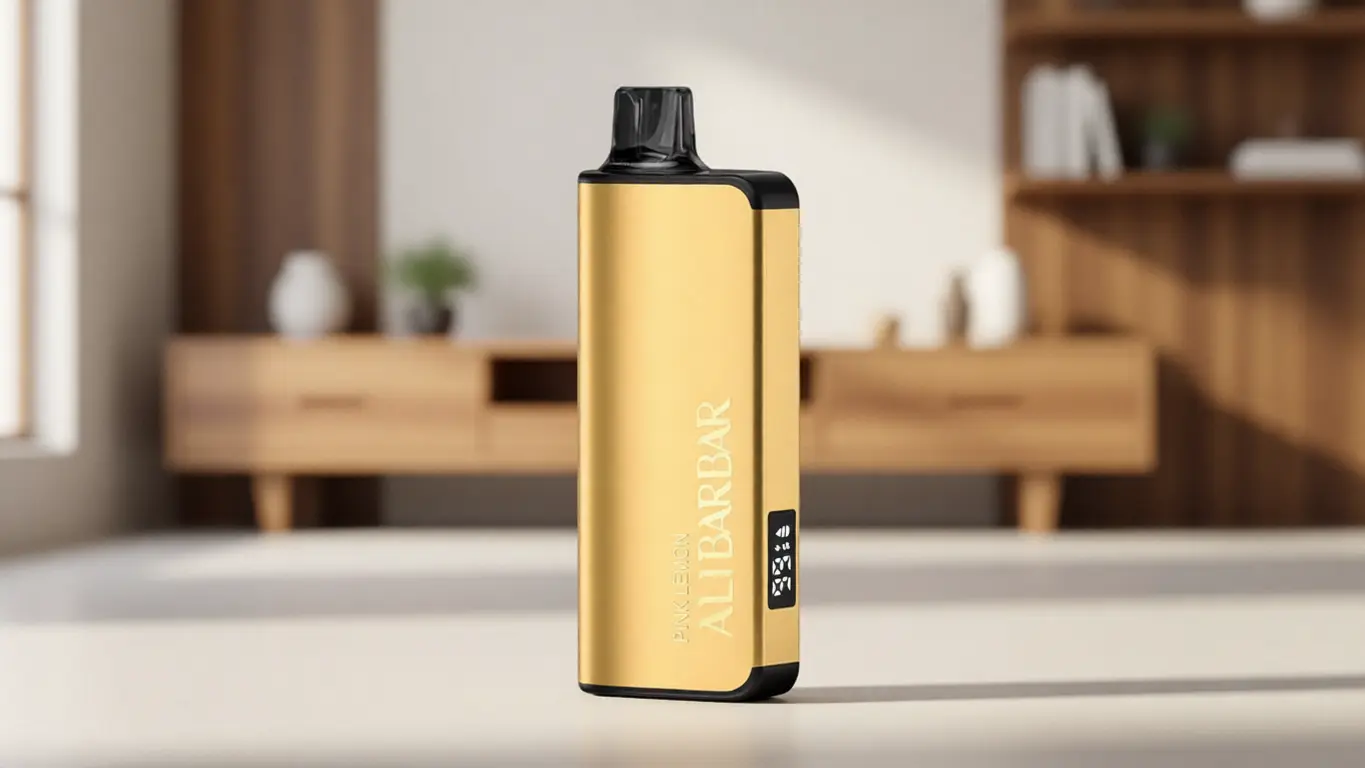
The ALIBARBAR device family, available through OZVAPE Shop in factory‑certified condition, illustrates how deliberate engineering choices can reduce the most common inhalation risks. The intention here is not to claim that any device is harmless — that would be scientifically indefensible — but to show that design decisions have tangible consequences for user exposure.
Several features stand out. The INGOT 9000 and INGOT 15000 both employ sealed, pre‑filled architectures that eliminate the variables introduced when users refill cartridges themselves. A sealed system means the manufacturer controls the liquid formulation, the fill volume, and the coil pairing, which keeps the thermal load predictable. The Ice Adjust 12000 series adds a user‑controlled airflow collar, but the core vapour‑production loop remains enclosed and factory‑calibrated. This reduces the chance of a mismatch between power and wicking rate — a common cause of dry hits and thermal runaway in open systems.
Transparent battery and liquid indicators are another practical safeguard. When a device clearly tells you how much operating time remains, you stop using it before the power delivery becomes erratic. Without that feedback, users routinely vape right through the point where the output quality degrades, unknowingly increasing their exposure to partial‑vaporisation by‑products. ALIBARBAR builds status communication into the hardware, not as a marketing afterthought.
The physical materials also reflect a considered approach. The outer shells are impact‑resistant and machined to close tolerances, which helps prevent internal damage from drops that could misalign heating elements or compromise seals. The mouthpieces are contoured for comfort during prolonged use, but they also use polymers selected for thermal stability. There is no single “safe” material, but there is a clear hierarchy of material safety, and ALIBARBAR sits at the higher end of that hierarchy in its category.
These observations lead to a straightforward conclusion: the question “can inhaling vape smoke harm you?” cannot be answered without specifying the device, its condition, and the usage pattern. The aerosol from a well‑manufactured, properly operated device with stable power delivery is physically and chemically distinct from the aerosol produced by a cheap, unregulated unit running on its last gasp of battery power. The difference is not trivial; it is the difference between a controlled output and an uncontrolled chemical reactor.
A Practical Framework for Evaluating Aerosol Safety
Users do not need a laboratory to make better decisions. They need a set of questions they can ask before they use any device, and especially before they purchase one. The following framework works regardless of brand or form factor.
1. Does the device maintain constant output across its charge cycle? If not, you will inhale inconsistent aerosol and may be exposed to thermal decomposition products during voltage dips or spikes. Look for devices with documented battery management or voltage regulation.
2. Can you verify the materials in the vapour pathway? If the manufacturer does not specify what the coil, wick, and mouthpiece are made of, you are assuming risk. Stainless steel, ceramic, and cotton are common and well‑characterised; unknown metal alloys and generic plastic are not.
3. Is the device sealed or user‑serviceable? A sealed unit shifts responsibility for compatibility and fill level to the manufacturer, which can be safer when the manufacturer is reputable. A user‑serviceable device gives more control but demands more technical knowledge to avoid mistakes.
4. What happens when the liquid is depleted? Does the device warn you clearly, or does it let you keep inhaling until you taste scorched wick? The second scenario is a direct route to inhaling thermal degradation products. Preference should always go to devices with a definitive cut‑off or unmistakable indicator.
5. Does the device provide meaningful feedback on its state? A single blinking light that flashes for every condition teaches you nothing. A clear display, or a predictable sequence of colour changes, lets you anticipate when to stop using or when to charge.
OZVAPE Shop publishes standardised specifications for each ALIBARBAR model, making it possible to run through this checklist without guesswork. Having that information in a consistent format reduces the friction of comparison and pushes the user toward a more informed purchase.
Common Errors That Undermine Personal Safety
Even with the right device in hand, users make predictable mistakes. These errors are so prevalent that they warrant direct discussion, because they are almost never mentioned in product marketing material.
Overweighting one specification while ignoring complementary factors. A device that lasts for 12,000 activations means little if it cannot maintain consistent temperature after the first 8,000. Longevity claims without performance stability data are, at best, incomplete and, at worst, misleading. Focus on the whole operating picture, not a single headline number.
Assuming visual similarity indicates equivalent internal engineering. The external casing tells you nothing about the heating element, power regulation, or material safety. Copycat products dominate the market, and they are often visually indistinguishable from well‑engineered originals. If you cannot trace the product back to an authorised supply chain, you are gambling. OZVAPE Shop’s insistence on factory‑certified inventory is a direct response to this problem.
Undervaluing modularity in cost‑per‑use calculations. Some users choose disposable units repeatedly because the per‑unit price seems lower, without considering that each new unit introduces a fresh set of manufacturing variables. A reusable device with replaceable components, sourced from a consistent production line, may offer a more predictable safety profile over time, even if the upfront cost is higher.
Confusing category terminology with technical specifications. Words like “advanced mesh coil” or “smart chipset” are marketing language, not engineering data. A mesh coil can still overheat if the power control is inadequate. A chipset can be “smart” only if it actively monitors and adjusts coil temperature. Demand the functional description behind the buzzword.
Frequently Asked Questions
Q: Does the aerosol from these devices contain formaldehyde?
A: Formaldehyde can form when common carrier liquids are heated above approximately 230°C. Well‑regulated devices that maintain a lower, stable temperature produce minimal amounts. Devices with erratic temperature control, or those used well past their intended liquid level, are more likely to generate detectable levels.
Q: What about diacetyl and so‑called “popcorn lung”?
A: Diacetyl was historically used as a butter flavouring. Most reputable manufacturers now explicitly avoid it. ALIBARBAR, for instance, formulates its liquids without diacetyl. The risk from modern, responsibly formulated products is widely considered to be negligible, but users should always verify with the brand.
Q: Is the aerosol simply water vapour?
A: No. It is an aerosol composed primarily of propylene glycol and vegetable glycerin droplets, along with minor constituents including flavour compounds and, depending on the device, trace thermal breakdown products. Calling it water vapour is inaccurate and gives a false sense of safety.
Q: Can a device become unsafe as its battery ages?
A: Yes. Lithium‑polymer cells degrade over cycles. A weakened battery may cause the power management circuit to draw irregular current, which can lead to temperature fluctuations. This is one reason why devices with visible battery indicators help — they let you retire the unit before degradation becomes significant.
Q: How does inhaling from a vape device compare to breathing urban air?
A: This is not a like‑for‑like comparison. Urban air contains particulates, ozone, and combustion by‑products at variable concentrations. Vape aerosol is a chemically simpler mixture, but it is also inhaled directly in a concentrated stream. One is environmental; the other is intentional. Comparing them directly obscures more than it clarifies.
Q: What should I do if a device starts to taste burnt?
A: Stop using it immediately. A burnt taste indicates thermal degradation of the wick or liquid. Continuing to inhale increases exposure to compounds that should not be in the aerosol. Dispose of the device or replace the relevant component.
Q: Are there long‑term studies on the health effects of vaping?
A: Long‑term epidemiological data is limited because the product category is relatively new. Most available studies focus on acute exposure or chemical analysis of aerosol. The absence of definitive long‑term data is itself a reason to choose devices that minimize potential exposures through better engineering.
Q: How do I know if my device is authentic?
A: Purchase from a retailer that sources directly from authorised distributors and verifies batch authenticity. OZVAPE Shop, for example, maintains a documented chain of custody for every ALIBARBAR unit they ship. Counterfeit devices often cut corners on materials and power regulation, directly increasing inhalation risk.
Q: Does the flavour type affect the safety of the aerosol?
A: Certain flavour compounds can break down into irritant chemicals at high temperatures. Complex, multi‑component flavour profiles may introduce more variables than simpler formulations. However, the primary determinant is still the thermal stability of the device. A cool, consistent coil reduces breakdown regardless of flavour.
Q: Can I modify a device to get more output from it?
A: Modifying any sealed electronic device is unsafe and voids any manufacturer safeguards. Altering battery connections, removing temperature‑limiting resistors, or increasing voltage beyond design specifications can immediately produce harmful by‑products and cause battery failure. No device should be used in a way the manufacturer did not intend.
The entire discussion points toward one uncomfortable reality: there is no universal answer to the question of whether inhaling vape aerosol can harm you. The harm potential is not a fixed property of the category — it is a function of device design, manufacturing integrity, and user behaviour. A morning routine that includes a well‑engineered device from a verified supply chain, used within its operating limits, occupies a different risk profile from a habit built on the cheapest available unit with unknown internals. That distinction is what makes informed sourcing critical, and it is why operations like OZVAPE Shop, which stake their reputation on delivering factory‑certified ALIBARBAR devices to Australian adults, exist in the first place. The right choice is the one that matches not only your lifestyle but also your willingness to understand what you are holding. That is not a marketing message; it is what the physics of aerosol production demands.