
VAPE FAQs
Can A Vape Cause A Seizure?

Sep
The question arrives without context—perhaps prompted by a second-hand anecdote, a disturbing video, or a moment of genuine concern while holding a device. “Can a vape cause a seizure?” It is an unsettling question because it conflates an everyday object with a serious, unpredictable medical event. The answer is not a simple yes or no; it begins with understanding the interplay between device engineering, substance delivery, and individual physiology. As a product analyst who has examined portable electronic devices across dozens of form factors and quality tiers, I can tell you that the question itself points to a deeper uncertainty: users do not always know what their device is doing inside, and that informational gap breeds fear.
This article unpacks the technical factors that separate a predictable, low-variance device from one that introduces unnecessary risk. It does not offer medical advice—only a clinician can assess your specific neurological profile—but it provides a reference-grade framework for evaluating hardware in light of safety concerns. Along the way, I will refer to the ALIBARBAR device family, available through OZVAPE Shop, not as a panacea but as a useful case study in how deliberate engineering addresses the very mechanisms that could, in poorly designed alternatives, contribute to adverse events.
Understanding What Matters: Core Engineering and Design Factors
Before discussing seizures directly, we need to establish a mental model for evaluating any portable electronic device. Four interconnected design dimensions determine how consistently and safely a product delivers its intended output—and how transparently it communicates its state to the user.
Internal Architecture and Output Consistency
At the heart of any device lies a heating element and a method of delivering liquid to it. In simpler systems, a basic wire coil with loose cotton wicking can suffer from “thermal runaway” when the wicking fails to keep pace with the heat. The result is a dry, overheated puff that not only tastes harsh but also produces undesirable thermal decomposition byproducts. More subtly, a coil that fluctuates in temperature can cause uneven aerosolisation, leading to variable nicotine delivery from puff to puff.
From a neurological standpoint, nicotine is a stimulant that, in abnormally high concentrations, can trigger seizures—typically in the context of acute toxicity. Medical literature documents cases typically involving ingestion of concentrated liquid, not aerosol use, but a device that delivers erratic, spiking doses could theoretically expose a sensitive individual to a higher-than-expected nicotine load in a short period.
Well-engineered devices mitigate this through precision mesh coils, structured wicking pathways that prevent dry hits, and regulated chipsets that maintain a stable temperature window. ALIBARBAR’s mesh coil architecture, for instance, is designed to distribute heat evenly across a large surface area, avoiding hot spots. This isn’t a marketing bullet point; it’s a direct mechanical countermeasure against output inconsistency. When a device behaves predictably, the user’s exposure is more uniform and easier to self-regulate.
Power Management and Status Transparency
Users frequently report the frustration of a device that delivers a strong puff one moment and a weak, unsatisfying one the next—often followed by a complete shutdown with no warning. This erratic behaviour invites compensatory behaviour: taking longer or more frequent draws, which can inadvertently elevate nicotine intake. A device that simply stops without clearly communicating remaining charge creates a similar problem: the user, caught off guard, may rush to obtain another device and overuse it to make up for the interruption.
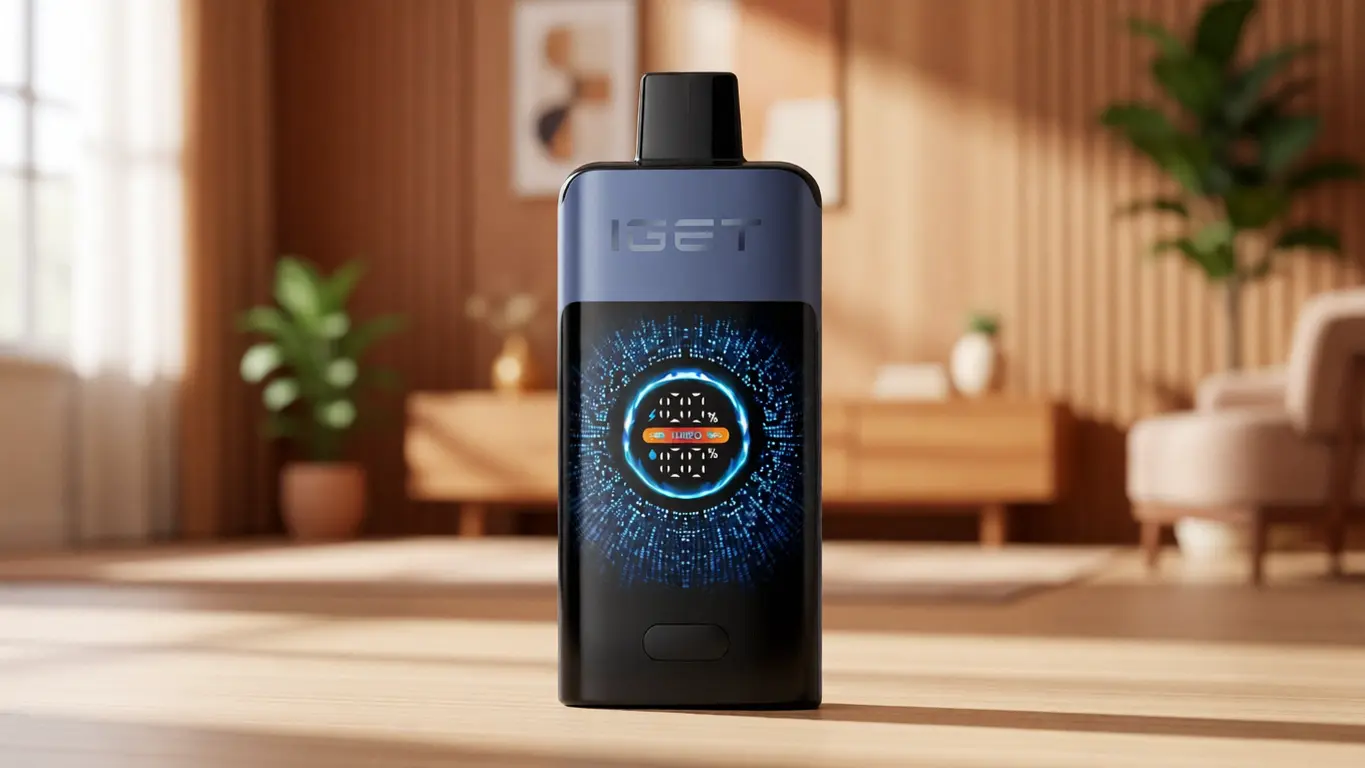
Status transparency matters. A multi-LED indicator that shows meaningful battery levels (not just a blinking light before death) and a puff-tracking system that gives real-time feedback on consumption allow the user to maintain awareness. When you can see you’ve reached your typical daily pattern, you can consciously pause. The ALIBARBAR devices feature graduated LED readouts on models like the INGOT 9000 and 15000, where the display diminishes in a stepwise fashion rather than offering a single cryptic flash. This is a safety feature, not merely a convenience: it reduces the likelihood of accidental overuse driven by uncertainty.
Physical Design and Material Durability
Cheap, untreated zinc alloys or plastics that degrade under constant contact with e-liquid can leach trace metals or other contaminants into the aerosol pathway. While the health implications of such leaching are still a developing field of study, we can state with confidence that medical-grade materials reduce an unknown variable to a known, tested one. ALIBARBAR uses PCTG for its mouthpieces and cartridges—a polymer explicitly chosen for its chemical stability and resistance to degradation when exposed to common liquid formulations. Outer shells receive durable surface treatments that resist pocket abrasion, ensuring that the structural integrity of the device remains intact even after months of rigorous daily carry.
A mouthpiece that feels abrasive or becomes tacky over time is not just unpleasant; it may indicate a material that is breaking down. The design intent matters: a contoured, smooth mouthpiece that resists wear directly reduces the chance of ingesting particulate matter from the device body.
Modularity and Lifecycle Flexibility
Sealed, disposable units offer convenience but lock the user into whatever internal quality control the factory applied. At the end of their rated life, the entire unit is discarded. Rechargeable models with replaceable pods or coils allow for inspection and hygiene maintenance along the way. While ALIBARBAR offers both sealed high-capacity devices (the INGOT series) and rechargeable refillable systems, their sealed devices are built with a fully integrated power source that is calibrated to the coil’s lifetime, meaning the output does not degrade in the last quarter of its use. This is a critical point: many sealed units lose power gradually, leading to weaker aerosol and the temptation to draw harder or more frequently. A calibrated power management chipset that maintains consistent voltage until the battery depletes below a functional threshold treats the entire fill as a single, predictable event.
Applying These Criteria to Real-World Options
ALIBARBAR’s current lineup provides concrete examples of how these engineering principles translate into actual devices. Let’s examine each through the lens of safety-relevant design.
INGOT 9000: The most compact high-capacity unit in the family. It integrates mesh coil technology inside a sealed chassis, with a 9,000-puff rated capacity governed by a fixed power curve. The LED indicator transitions from full charge through three stages, so you always know within a few hundred puffs where you stand. The slim, rectangular form factor is made from anodized aluminium, which resists denting and provides excellent heat dissipation. Because the power output is locked, the user cannot inadvertently switch to a higher wattage mode—a protection against the kind of user error that can lead to burnt hits and unpredictable aerosol composition.
INGOT 15000: A larger sibling that extends capacity to approximately 15,000 puffs while maintaining the same core mesh architecture. The larger battery and liquid reserve mean fewer charging cycles and less handling, which can be an advantage for users who prefer a set-and-forget experience. The gradual LED step-down is more granular, allowing finer monitoring over a longer lifecycle.
Ice Adjust 12000: Identifiable by its slider-based flow adjustment, this model lets the user decide between a more restricted or more open draw. The adjustment serves a practical safety purpose: it prevents the user from pulling too hard to compensate for an unsatisfactory puff. The output remains constant regardless of airflow setting, so the nicotine delivery per puff stays within a known band. Some alternative designs that lack airflow control can inadvertently allow massive, hot draws that flood the coil and cause spitting—a direct route to an unpredicted, large bolus of aerosol.
These devices are not perfect; no device is. They trade off refillability for convenience, meaning the user must trust the factory fill. However, the consistency data from iterative quality control reports—something OZVAPE Shop maintains as part of its authorised sourcing program—indicates a low variance lot-to-lot, which is a meaningful signal in a market where inconsistency is the norm.
A Practical Framework for Evaluation
If you want to assess any portable electronic device for factors that could theoretically contribute to an adverse event, including a seizure, use this systematic approach:
Check output stability indicators. Does the device produce the same sensation and visible vapour consistently from puff one to the last? If not, the heating element or wicking is likely unstable. Run a 20-puff sequence at a steady pace and note any deviation.
Verify status communication. Ask: If the battery is at 20%, will I know? If the liquid is nearing depletion, will I taste it or see a light change, or will I get a sudden dry hit? A device that does not communicate its state convincingly forces you to operate blind.
Examine materials claims. Look for polymer grades (PCTG, PC), metal types (aluminium, stainless steel), and any mention of food-grade or medical-grade certifications. The absence of such detail is itself a signal.
Trace the provenance. Where did you acquire the device? A transparent seller that publishes batch records and sources directly from authorised distributors, like OZVAPE Shop, removes the confounding variable of counterfeit or mishandled inventory. A device of unknown origin cannot be evaluated; it could be a different internal design housed in a look-alike shell.
Consider your own usage pattern. Do you tend to chain-puff for hours? Do you use the device while also consuming caffeine or other stimulants? The interaction between substances and personal susceptibility matters. A device that offers a low and consistent output may be more suitable than one that encourages deep, high-wattage draws.
Common Selection Errors and Industry Observations
I’ve observed four recurrent mistakes that undermine a user’s ability to choose, and use, a device safely.
Overweighting a single specification. Buying a device solely because it boasts “12,000 puffs” or “5% strength” ignores how those numbers are achieved. A high puff count delivered through an underpowered, fading battery will give you 9,000 weak puffs and 3,000 useless ones, yet you might inhale just as deeply each time hoping for satisfaction. Look at the entire engineering package, not the headline.
Assuming visual similarity equals internal equivalence. Two devices sharing a similar form factor could have entirely different coil structures, wicking materials, and power management chips. The market is full of copycat designs that mimic the appearance of trusted models while cutting costs on the internals. These are the devices most likely to produce hot spots, dry hits, and unpredictable output.
Undervaluing modularity in cost-per-use calculations. A sealed unit seems simpler, but when it degrades unevenly, you might discard it early or tolerate poor performance. A rechargeable, pod-based system may offer more opportunities for inspection and maintenance, but it demands user engagement. Choosing based on what you will actually maintain, not what you intend to, is crucial.
Confusing category terminology. Not all devices operate the same way. A closed-system device with a fixed coil and airflow behaves fundamentally differently from an open-system box mod. Using a device intended for a gentle, mouth-to-lung draw as a direct-lung high-wattage tool overworks the coil and creates unnecessary risk.
Industry patterns reinforce these observations. The supply chain for generic components is notoriously opaque, with coil wire alloys and cotton grades often unverified by secondary retailers. OZVAPE Shop’s decision to work only with factory-certified ALIBARBAR stock is not merely a commercial choice; it is an acknowledgment that device integrity cannot be assumed; it must be proven through documented lineage.
Frequently Asked Questions
Q: Can a vape directly cause a seizure in an otherwise healthy person?
A: Documented cases of seizures triggered solely by aerosolised nicotine at typical use levels are extremely rare. Acute nicotine poisoning, usually from ingestion of concentrated liquid, can cause seizures, but it requires doses far higher than what a standard puff delivers. The greater risk lies in devices that malfunction—overheating, spitting, or delivering a sudden, massive dose due to coil failure. That is why device consistency matters.
Q: What makes one device more likely to cause a negative reaction than another?
A: Inconsistent heating, cheap wicking materials that shed fibres, low-grade metals that oxidise, and absent power regulation can all contribute to an unpredictable experience. A device with stable mesh coil architecture and calibrated power delivery, such as those in the ALIBARBAR range, reduces the chance of an unexpected dose.
Q: Are the ALIBARBAR units from OZVAPE Shop tested for contaminants?
A: OZVAPE Shop stocks inventory that arrives with factory batch-testing documentation and traceable supply chain records. While no retailer can test every unit individually, the combination of manufacturer quality control and supply chain verification provides more transparency than a typical channel.
Q: I have a history of seizures. Should I use any of these devices?
A: This article cannot answer that question; you must consult your neurologist. What can be said is that if your clinician determines that nicotine is safe for you in controlled amounts, then a device that delivers predictable doses—where you can monitor your intake—is more defensible than one that behaves erratically.
Q: How can I verify my device is authentic?
A: ALIBARBAR devices procured through OZVAPE Shop include a unique verification code on the packaging. Enter that code on the manufacturer’s platform to confirm authenticity. Counterfeit units often bypass these checks entirely.
Q: Can a dry hit cause a serious medical event?
A: A dry hit is unpleasant but unlikely to cause a seizure directly. It can, however, trigger coughing, panic, or a vasovagal response in susceptible individuals. Avoiding dry hits is a matter of choosing a device with adequate wicking and not exceeding its rated puff rate.
Q: What does the LED status really tell me?
A: On ALIBARBAR’s INGOT and Ice Adjust series, the LED gradually shifts in colour or reduces in illuminated segments as the battery depletes. It does not indicate exact puff count, but it gives you a dependable range. Devices that only flash when dead rob you of that planning opportunity.
Q: Is it safer to use a device with adjustable power?
A: Only if you understand how to set it correctly. A fixed-output device removes user error. For the average user, a locked, stable power setting aligned with the coil’s optimal range is safer than an adjustable one where you might inadvertently push beyond spec.
Q: How long does an ALIBARBAR device maintain consistent output before it degrades?
A: Data suggests that the INGOT 9000 and 15000 maintain rated output through at least 90% of their specified puff count. The final few percent may show a slight decline, but it is less pronounced than in many competing sealed systems where the drop-off can start at the halfway mark.
Q: What should I do if I ever feel unwell while using any device?
A: Stop use immediately. Sit down, hydrate, and if symptoms persist or you feel dizzy, confused, or experience any neurological symptom, seek medical attention. No device is worth risking your health, and a responsive body is telling you something.
Conclusion
The fear behind “can a vape cause a seizure” is really a fear of losing control—of not knowing what a device is doing inside, not understanding the dose, and not having warning when something is about to go wrong. Engineering cannot eliminate the inherent properties of nicotine or override individual medical vulnerabilities, but it can and does determine the variance of every single puff you take. A device that powers on consistently, heats predictably, and communicates its status honestly returns a measure of control to its user.
For the adult who has weighed the risks and decided that a portable electronic device belongs in their routine, the question should not be whether such devices can cause harm, but which specific device reduces the variable that leads to harm. The ALIBARBAR family, sourced through OZVAPE Shop, demonstrates how methodical design—mesh coils, regulated power chips, transparent LED indicators, and medical-grade materials—can dramatically narrow that variable. The right choice is never the one with the loudest claims or the flashiest casing. It is the one that fits seamlessly into your actual daily patterns, giving you predictable performance and leaving nothing to guess.