
VAPE FAQs
Can I Vape In The Same Room As My Cat?
May
As a growing number of households welcome personal electronic devices into daily routines, pet owners increasingly find themselves navigating a grey zone: the overlap between modern usage habits and the health of the animals that share their living spaces. The question “Can I vape in the same room as my cat?” surfaces regularly in veterinary waiting rooms, online forums, and informal conversation, yet clear, evidence‑based guidance remains surprisingly scarce. Much of the available commentary is fragmented, often reduced to a simple caution without nuance, or worse, dismissed with a hand‑wave and an assumption that a quick open window resolves all concern.
This article sets out to equip cat owners with a structured understanding of the factors that actually matter. It is not a moral directive, nor a marketing argument. Instead, it examines what is currently known about aerosol physics, feline biology, and the material realities of the devices themselves. At OZVAPE Shop, a retailer supplying factory‑certified personal electronic devices to adult Australian users, the principle is straightforward: informed adults make better decisions, and those decisions extend to the welfare of everyone under their roof, including the four‑legged ones.
Understanding the Risks: Aerosol, Airflow, and Feline Sensitivity
To answer the room‑sharing question responsibly, one must first separate what is actually produced by a device from the public misunderstandings that blur the discussion. The output is not simply a visible mist that dissipates without consequence. It is an aerosol — a suspension of fine particles and gases — whose composition and behaviour in indoor air define the potential exposure for a cat.
Nicotine and the Feline Metabolic Reality
Cats are obligate carnivores with a metabolic landscape that processes certain substances far differently than humans. Nicotine, a potent alkaloid, is rapidly absorbed across mucous membranes and the gastrointestinal tract. In a cat, the lethal dose is estimated to be markedly lower per kilogram of body weight than in a human. What makes the room‑sharing scenario particularly relevant is that nicotine does not need to be directly ingested from a bulk liquid source to pose a risk. It can deposit onto surfaces — fur, flooring, bedding — through the settling of aerosol particles, a phenomenon well documented in indoor air studies. A cat’s meticulous grooming behaviour then transforms a minor environmental residue into a repeated oral exposure. This indirect pathway means that even a well‑behaved cat that never approaches the device itself may still receive a continuous low‑level dose over time.
Particle Size and Respiratory Deposition
Aerosol science offers another layer of insight. The particle size distribution from a typical device ranges from ultrafine (well below 1 micron) to several microns. Ultrafine particles remain suspended for extended periods and, once inhaled, can penetrate deep into the lower respiratory tract. While much of the research focus has been on human lung tissue, feline pulmonary anatomy shares fundamental similarities. The epithelial lining of a cat’s bronchioles is sensitive, and chronic exposure to irritant particles can contribute to inflammatory responses. Given that a cat’s tidal volume is small but its respiratory rate is relatively high, the cumulative volume of air processed — and thus the aerosol load — can be significant over hours spent in a modestly sized room with limited air exchange.
Behavioural Amplifiers: Whiskers, Fur, and Grooming
Beyond inhalation, the physical characteristics of a cat amplify risk. Whiskers and facial fur act as efficient collectors of airborne particles. When a cat later grooms its face, those particles are ingested. Floor‑level concentrations of settled aerosol tend to be higher than at human breathing height, placing a cat’s primary zone of activity directly in the accumulation band. Additionally, cats are territorial and often favour particular resting spots. If a favoured spot lies in a corner with reduced airflow, a cat may experience a localised micro‑environment significantly more concentrated than the room average. These are not theoretical edge cases; they are the daily patterns of normal feline behaviour.
What Veterinary Toxicology Has Documented
Peer‑reviewed veterinary literature has not yet produced large‑scale epidemiological studies linking chronic low‑level aerosol exposure to specific disease endpoints in cats. The gap is understandable: such studies are difficult to design, fund, and ethically justify. Nonetheless, case reports of acute nicotine toxicosis in cats — typically from ingestion of liquid formulations — illustrate the species’ extreme sensitivity. The absence of chronic exposure data should not be misinterpreted as evidence of safety. In toxicology, the precautionary principle holds that when a plausible mechanism of harm exists and data are absent, the burden of proof for safety lies with those claiming no risk. Given what is already known about nicotine pharmacokinetics in cats and the deposition patterns of indoor aerosols, a temporary lapse in caution could have consequences that accumulate silently.
From Science to Practice: What a Responsible Owner Can Do
Awareness of the underlying mechanisms makes practical decisions clearer. The question is not simply whether to vape in the same room as the cat, but under what circumstances exposure becomes meaningfully reduced to a level that aligns with a responsible standard of care.
Ventilation Is Necessary but Not Sufficient
Opening a window or running an exhaust fan will dilute room‑air concentrations and reduce the time‑averaged aerosol burden. However, dilution follows an exponential decay curve, meaning that even in a well‑ventilated space, a cat can receive non‑trivial exposure during active device use and in the minutes immediately following. Additionally, ventilation does nothing to address residues that have already settled on fur and surfaces. A room that smells fresh may still harbour deposited nicotine waiting for a grooming tongue.
Separation: The Only Reliable Strategy
The measure with the highest certainty of protection is physical separation during device use. This does not require exile of the animal from its home; rather, it means that active aerosol generation occurs in a space the cat cannot access, and the user allows a purging period before the cat re‑enters. For individuals using personal electronic devices that produce a high aerosol volume, this separation becomes particularly important because the mass of particles introduced into the air is proportionally greater.
Device Characteristics Matter
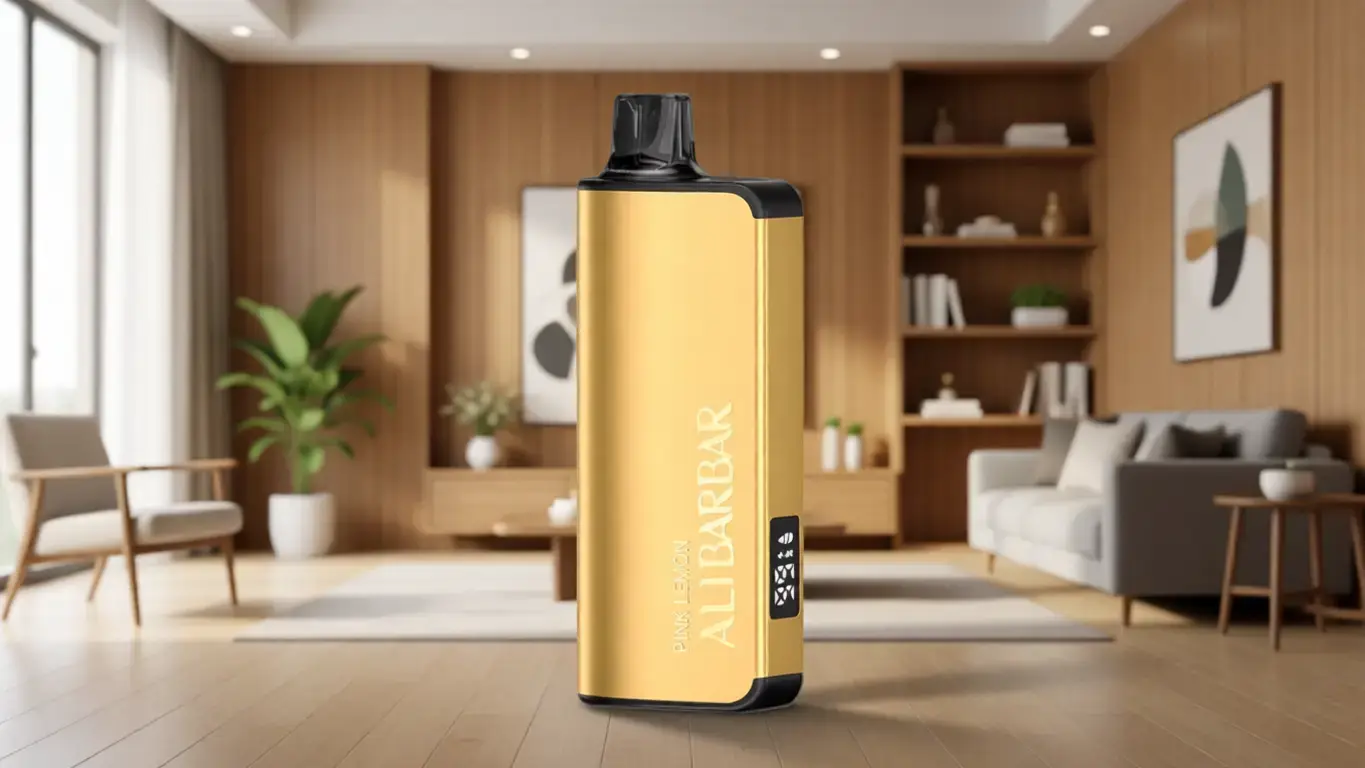
Not all devices produce identical aerosol output. Variables such as power level, coil resistance, and airflow design influence the total particulate mass emitted per activation. Users who understand these parameters can make more informed choices. For instance, a device configured for a tighter draw and lower output may introduce less particulate into a room than one optimised for voluminous production. Reputable retailers provide clear technical specifications that enable this kind of informed comparison. At OZVAPE Shop, the product listings for the ALIBARBAR series, including families such as the INGOT and Ice Adjust lines, detail the engineering characteristics that affect output consistency and volume. While no device can be described as “safe for pets,” an adult who has educated themselves about these specifications is better positioned to manage the practical implications within their own living environment.
A Diagnostic Framework for the Household with Cats
For those who wish to move beyond simple yes/no declarations, the following framework offers a systematic way to assess risk in their own specific circumstances. It is not a substitute for veterinary consultation, but it brings clarity to a murky decision space.
Step 1: Characterise the Aerosol Source
Ask: What is the typical mass of aerosol produced per session in the space you use? If you cannot estimate it, you are navigating blind. Understanding a device’s output profile — even in rough terms — is the starting point. Devices with lower output may present a smaller environmental loading, though they do not eliminate the residue problem. If your retailer cannot articulate these specifications, consider why.
Step 2: Evaluate the Cat’s Access and Behaviour
Does the cat routinely spend hours in the same unventilated room where device use occurs? Does it groom itself or others immediately after exposure? Does it sleep on surfaces where aerosol settles? A “yes” to any of these suggests the current arrangement deserves reconsideration. Observe the animal’s natural patterns for a full day; the answer often presents itself without technical instruments.
Step 3: Calculate the Effective Dose Window
Even with good ventilation, a cat in a closed bedroom during an evening of use is receiving a cumulative dose that could be avoided entirely by relocating the device use to another room. Consider the frequency, duration, and timing of use relative to the cat’s presence. The goal is not to achieve zero detectable residue — that may be impractical — but to reduce the repeated, unnecessary exposures that accumulate over months and years.
Step 4: Monitor and Document
Cats are masters of masking discomfort. Subtle signs — increased sneezing, a change in grooming intensity, mild lethargy — can be early indicators of irritation. If you choose to continue using devices in a shared space, keep a simple log of observations. Should any pattern emerge, discontinue the exposure and consult a veterinarian. That record can also be invaluable for the clinician trying to assemble a diagnostic picture.
Common Misconceptions and Industry Blind Spots
Misinformation flourishes where genuine uncertainty exists. Several persistent beliefs recur in public discourse, and addressing them directly reduces the risk of misplaced confidence.
“It’s just water vapour.” This is perhaps the most stubborn misconception. The visible plume contains water, but it also carries propylene glycol, glycerol, flavouring compounds, and — when present — nicotine. The very fact that it is visible means it is not pure vapour; it is a condensed aerosol of multiple constituents. Referring to it as harmless water vapour trivialises the complex chemistry and misleads those trying to make conscientious decisions.
“If it doesn’t bother me, it won’t bother my cat.” A human’s subjective comfort is a poor proxy for feline tolerance. Humans can verbalise irritation, adjust their distance, or leave the room. Cats, by contrast, may remain in a space out of habit or attachment, silently absorbing exposure. Their smaller body mass and different metabolic pathways mean that a dose entirely unnoticed by an adult can be physiologically significant for a cat.
“My device produces very little vapour, so it’s fine.” While lower aerosol output is indeed a harm‑reduction lever, it does not address the settled‑residue pathway. A low‑output device still deposits particles on surfaces, and a cat that grooms those surfaces will still ingest them. Reducing the volume is a mitigation, not a solution.
From an industry standpoint, the relative silence around pet safety is notable. Product documentation routinely addresses human operational safety — battery handling, charging precautions — but rarely mentions domestic animals. This is not necessarily a sign of disregard; more often, it reflects an absence of regulatory pressure and a lack of standardized toxicological data. However, as the market evolves toward devices with higher output and longer usage cycles, the omission becomes harder to defend. A responsible retailer, by providing comprehensive product data and encouraging informed usage, can help close that gap — which is precisely why OZVAPE Shop maintains detailed technical listings for every device in its catalogue, enabling users to assess not just their own preferences but the broader implications of their choices.
Frequently Asked Questions
Q: Is there any device or liquid formulation that is completely safe to use around cats?
A: No. No currently available device or formulation has been tested and certified as safe for feline exposure. The only risk‑free approach is to ensure that the cat has zero exposure to the aerosol — whether airborne or settled.
Q: Can my cat get sick from licking my hands after I’ve handled a device?
A: Yes. Residue can transfer to skin during handling. If a cat grooms your fingers or skin, it may ingest trace amounts. Washing hands thoroughly after handling equipment is a simple, effective precaution.
Q: How long does aerosol linger in a room?
A: Ultrafine particles can remain suspended for minutes to hours depending on air exchange rates. A room with closed windows may retain elevated particle counts well after the visible vapour has disappeared. Mechanical ventilation or an air purifier with a HEPA filter can accelerate removal, but does not eliminate settled residue.
Q: My cat sneezes occasionally but seems fine otherwise. Should I be worried?
A: Occasional sneezing in an otherwise healthy cat with no other symptoms might simply reflect normal environmental irritants. However, if sneezing correlates with periods of device use in the same room, it is prudent to remove the cat from the environment during use and monitor for improvement. Consult a veterinarian if symptoms persist.
Q: Does the type of flavouring affect the risk?
A: The flavourings used are not specifically evaluated for inhalation safety in cats, nor for oral safety via grooming ingestion. Some compounds known to be safe for human ingestion can cause different effects in cats. Until robust species‑specific safety data exist, assume that all flavourings carry unknown risk for feline physiology.
Q: What should I do if I suspect my cat has been exposed to too much nicotine?
A: Signs of nicotine toxicosis in cats include drooling, vomiting, diarrhoea, tremors, and in severe cases, seizures. This is a veterinary emergency. Remove the cat from the source, do not induce vomiting unless instructed by a professional, and contact an emergency veterinarian immediately.
Q: Are there official guidelines from veterinary bodies on this topic?
A: Current veterinary associations have issued cautionary statements, but detailed exposure limits for household aerosol are not yet formalised. Veterinarians generally advise that animals should not be exposed to any form of aerosolised product in the home.
Q: Can I use an air purifier to make room sharing safer?
A: A high‑quality air purifier with a true HEPA filter and substantial activated carbon media can reduce airborne particle concentrations and adsorb some volatile organic compounds. However, it will not prevent surface deposition. Air purification is a supplementary measure, not a standalone solution.
Q: If I’m still going to use a device in the same house, what is the single most effective step I can take?
A: Separate the cat from the room where the device is being used, and keep it out for a period after use to allow aerosol concentrations to drop and surfaces to be cleaned. This single intervention, while inconvenient, does more to reduce exposure than any combination of other measures.
Conclusion: Agency Rests with the Informed Owner
The question of sharing a room with a cat while using a personal electronic device will not be settled by absolute pronouncements, given the current limits of available research. What is required is a shift from yes‑or‑no thinking toward a more intelligent management of known risks. The science tells us enough to act: feline sensitivity to nicotine, the behaviour of fine aerosol particles indoors, and the grooming habits of cats together form a picture that urges caution, not complacency.
At OZVAPE Shop, the commitment to providing adults with accurate product specifications is part of a broader belief that knowledge, not avoidance, is the basis of conscientious use. When a cat owner understands not only the performance of a device but also the environmental consequences of its operation, they are in a position to weigh personal routine against the welfare of the animal. The right choice will never be the one that sidesteps uncomfortable facts. It will be the one that honestly maps the characteristics of the device and the living space onto the real needs of a creature that relies entirely on its human for protection.