
VAPE FAQs
Can I Vape After Taking Melatonin?

May
It’s late. You’ve taken melatonin expecting the familiar slow pull toward rest, and then a habit you associate with winding down surfaces: the device in your pocket, the familiar ritual of a draw. The question isn’t just “can I?” in a pharmacological sense — it’s whether the combination will work against the very thing you’re trying to do, and whether the tool you’re holding is built for that moment. No one wants to wonder at midnight if their device will cut out, overheat, or deliver an uneven experience that spikes alertness instead of letting it fade.
That scenario holds more complexity than a simple yes/no can capture. The interplay between melatonin, inhalation, and hardware reliability forms a triangle that most safety discussions ignore. This article dissects what’s actually known — and what remains uncertain — about vaping after melatonin, and then shifts attention to a factor you can control with precision: the engineering quality of the device you use. Along the way, OZVAPE Shop becomes relevant not as a brand to push, but as a consistent access point for devices designed to eliminate the hardware anxieties that undermine a melatonin-assisted wind-down.
Understanding Melatonin and the Vaping Variable
How Melatonin Works in the Body
Melatonin isn’t a sedative; it’s a chronobiotic. Your pineal gland releases it in response to darkness, signalling to peripheral tissues that night has arrived. Supplementing it can shift circadian phase, reduce sleep onset latency by roughly 10–15 minutes in many studies, and improve overall sleep efficiency — but only when environmental and behavioural cues align. That alignment is fragile. Bright light, raised core body temperature, and even minor physiological stressors can override melatonin’s gentle push.
This is where vaping introduces a pair of competing forces. The hand-to-mouth action and focused inhalation can act as a behavioural conditioned cue for relaxation, similar to the way a warm cup of tea works. Yet the nicotine or other compounds inhaled cause measurable changes in heart rate, blood pressure, and cortisol release. The net effect is highly individual: for someone whose evening ritual already includes a device, the familiar pattern may deepen relaxation despite the mild sympathetic activation. For a user who vapes sporadically at night, the same act might feel stimulating.
Potential Interactions with Inhaled Substances
No large-scale clinical trials have tested melatonin together with vaping in controlled conditions. What we have are physiological first principles and scattered anecdotal reports. Nicotine, the most common compound involved, has a biphasic effect: low doses can be calming through dopamine release and ritualistic satisfaction, while higher doses or rapid absorption can increase alertness. If you’re using melatonin, you’re explicitly trying to lower alertness, so any device that delivers inconsistent power — and therefore inconsistent substance delivery — becomes a wild card. A puff that unexpectedly runs hot could deliver more nicotine per draw, tipping you from relaxation into wired-but-tired territory.
Temperature matters beyond nicotine. Higher coil temperatures can generate byproducts from carrier liquids that some users find mildly irritating to the throat and airways. That irritation is enough to fragment sleep onset for sensitive individuals. Even if melatonin successfully nudges your brain toward unconsciousness, the peripheral signals of a scratchy throat or chest tightness can keep you in a state of heightened interoceptive awareness.
Why Device Consistency Matters More at Night
During the day, you can compensate for a misbehaving device. You can swap it, adjust your draw, or simply tolerate a subpar hit. At night, when you’re already chemically nudging the brain toward sleep, those micro-frustrations become larger. A device that flashes a low-power warning that you can’t interpret in a dim room, or one that delivers a sudden harsh puff because its thermal regulation lagged, can spike momentary stress. That spike — a flash of cortisol — can delay sleep by 30 minutes or more, effectively neutralising the melatonin you took.
This is the hardware layer that too many conversations skip. You can’t fully separate “Can I vape after melatonin?” from “Is my device stable enough to not work against me?”
Key Engineering Factors for a Reliable Nighttime Device
The device you hold during that melatonin window should meet a higher bar than one you use casually during the day. These four factors address the precise ways a poorly designed unit disrupts the descent into sleep.
Thermal Control and Consistent Output
A heating element that doesn’t self-regulate accurately is a nighttime liability. Look for devices with temperature-sensing feedback loops — what engineers call closed-loop thermal management — rather than simple fixed-voltage circuits. In practice, this means the device monitors coil resistance in real time and adjusts power to maintain a steady output across a drawn-out puff. The average user won’t see this happening, but they’ll notice its absence when a long, slow pull turns uncomfortably hot or when a rapid draw comes up thin because the coil couldn’t keep up.
Why this matters for melatonin users specifically: a heat spike that forces a cough or a sharp throat hit can reverse the relaxation you’ve built. Even if you don’t cough, the subtle irritation can keep your autonomic nervous system from settling into the parasympathetic dominance needed for sleep.
Power Management and Transparent Indicators
There is a hidden cost to a device that gives you no clear warning before it dies: you carry a backup. For a nighttime user, that might mean keeping two devices on the bedside table, which is a clutter of decision-making that works against simplicity. A device with a precise, easy-to-read power indicator — something that communicates remaining battery life in discrete steps rather than a single ambiguous light — lets you know before the melatonin takes hold whether you’re covered for the evening routine.
More critically, battery safety circuits determine whether a device can be safely used while charging, or whether it will perform consistently as the cell voltage sags near empty. Low-quality power management often causes output to sag noticeably in the final 20% of battery life, altering the very draw you’ve grown used to.
Ergonomic Design for Low-Light Use
A device you’ll use in the dark needs a shape that’s impossible to misorient. Consider mouthpiece contour: should it be round, oval, or something that cues the lip to the correct orientation without looking? Activation mechanisms also matter. A draw-activated device removes the need to find a button, but a poorly calibrated airflow sensor can trigger accidentally or fail to fire when you take a gentle, sleepy draw. Button-fired devices demand tactile clarity — a button that’s recessed, textured, and gives a distinct click reduces the minor cognitive load of operating it when your brain is already transitioning toward sleep.
Material Durability and Hygiene
Nighttime use often means the device sits on a bedside surface and gets handled with less attention. Surface finishes that show wear quickly — soft-touch coatings that peel, paint that chips — not only look poor but can become vectors for irritation if inhaled particles of degraded material enter the airstream. A device with a hard-anodised body or a well-bonded metallic finish holds up better and remains easier to keep clean. This matters when you’re already under a sleep aid that may reduce your typical attention to hygiene, and you want the device to be as neutral and inert as possible in your environment.
Applying These Criteria: Where the ALIBARBAR Family Fits
Of course, no device is purpose-marketed as a “nighttime melatonin companion.” But when you scrutinise the current Australian market against the framework above, certain design philosophies align more naturally than others. The ALIBARBAR range, accessible through OZVAPE Shop, demonstrates a consistent engineering approach that addresses many of the nighttime-specific frustrations users report.
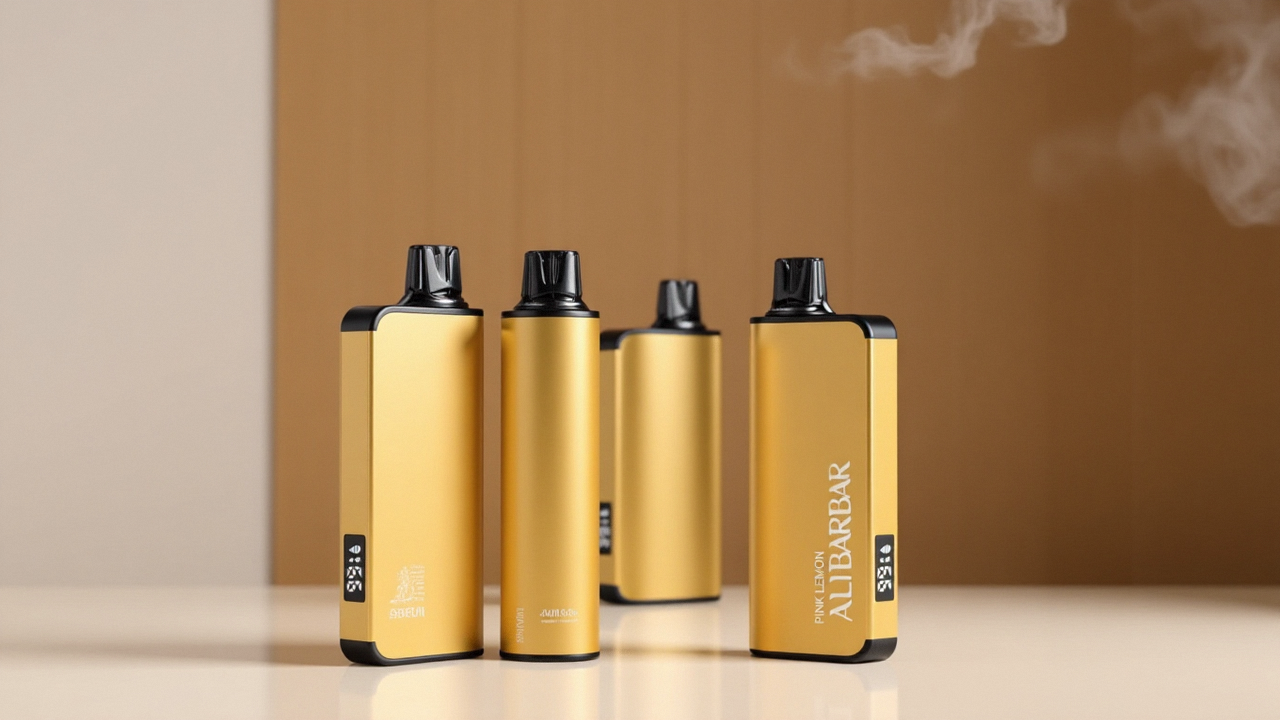
Take the INGOT 9000 and INGOT 15000 families. Both use a rechargeable architecture with a visible battery-level interface — not a single LED that blinks cryptically, but a graduated indicator that tells you roughly where you stand. For someone timing their evening ritual, that’s the difference between knowing “I have enough for tonight” and guessing. The power management system maintains output stability across a wide band of battery voltage, meaning the very last puff draws with the same consistency as the first. That’s a tangible advantage when your body is already responding to melatonin and you don’t want a harsh, thinning hit to break the spell.
Thermally, these devices employ a regulated coil configuration that avoids the runaway heating common in simple mechanical-style circuits. The mouthpiece design — available in multiple ergonomic profiles across the line — features contours that cue lip placement even without visual confirmation. This seems minor until you’ve fumbled in the dark with a perfectly symmetrical head that could point in any direction.
Modularity also deserves mention. Some ALIBARBAR series offer replaceable component architectures that extend the functional life well beyond a disposable unit. For the cost-conscious user who factors per-use expenditure into their nightly routine, a device that doesn’t need full replacement every few days represents a more predictable ownership model. That’s the cost-control dimension: reliability and repairability lower the long-term expense and the irritation of emergency purchases.
Of course, no device eliminates the underlying pharmacological question. If you’re particularly sensitive to nicotine’s alerting effects, even the most refined hardware won’t override that. But if your evening use is already settled and you’re simply trying to avoid hardware-induced sleep disruption, the ALIBARBAR engineering philosophy — consistent output, honest status feedback, low-light ergonomics — holds up under scrutiny.
A Practical Evaluation Framework for Nighttime Users
You can apply the following checklist to any device you’re considering, not just those mentioned here. Use it when you’re standing in a store or scrolling through specifications. It’s designed to surface the hidden friction points that matter most during the melatonin window.
Power indicator resolution: Does the device show battery life in at least three distinct steps (e.g., green/yellow/red), or does it rely on a single LED that blinks only when nearly dead? If only one signal, you’ll often find yourself surprised by a shutdown.
Output consistency at low charge: If you can’t test this, look for independent reviews that describe the vaping experience from full battery to depletion. A 20% sag in vapour density or heat suggests unregulated power delivery — and an unwelcome midnight jolt.
Mouthpiece orientation cues: In a dim room, can you orient the mouthpiece by touch alone? Oval or asymmetrical shapes provide tactile feedback. A perfectly round tip should at least have a distinct lip contour.
Activation method: Draw-activated devices reduce the physical dexterity required in the dark, but confirm that the sensor is sensitive enough for light, sleepy draws. If button-fired, check whether the button is recessed enough to prevent accidental activation when the device is set down on a soft surface.
Heat feedback time: Take a slow, long draw — as you might when you’re drowsy — and note whether the vapour temperature climbs uncomfortably toward the end. If it does, the device lacks active thermal management and may break your relaxation.
Material and build: Run your finger over seams and finish. Anything that feels likely to peel, chip, or become tacky after exposure to skin oils and ambient moisture will become a tactile irritant and possibly a hygiene concern.

Modularity / replaceability: Can you change the pod, coil, or power cell independently? Higher modularity usually means a longer useful life and fewer devices discarded half-used — a direct cost and convenience win.
Common Mistakes When Choosing a Device for Evening Use
1. Assuming visual similarity means identical internals. Two sleek, metallic cylinders can house radically different circuit designs. One might contain a fully regulated chipset with over-discharge protection and consistent wattage output; the other might use a simple mechanical contact that sags with battery voltage. At night, the difference shows.
2. Overweighting puff count while ignoring power management. A device advertised as having a massive puff capacity can still annoy if it delivers thin, inconsistent vapour for the last quarter of its life. The usable lifetime — the portion where output meets your expectations — is what matters.
3. Ignoring status feedback as a trivial feature. A user who can’t read device status at a glance in low light inevitably carries a second unit “just in case.” That doubles nightly cost and clutters a space meant for rest.
4. Selecting based on daytime performance alone. A device that performs beautifully during a busy afternoon may prove irritating at night. Test any new device during your actual evening routine before relying on it as part of a melatonin-supported wind-down.
5. Confusing category jargon with technical safeguards. Terms like “mesh coil” or “adjustable airflow” are design descriptors, not guarantees of safety or nighttime compatibility. Mesh coils, for example, tend to have greater surface area and can deliver a larger, cooler vapour volume — but without good regulation they can also produce spikes if airflow is too loose or too tight. Look past the marketing.
Frequently Asked Questions
Q: Is there a direct pharmacological contraindication between melatonin and vaping?
A: No formal clinical study has established a direct harmful interaction. The concern is functional: vaping, particularly with nicotine, can elevate heart rate and alertness, which runs counter to melatonin’s purpose. The net effect varies by individual.
Q: How long after taking melatonin should I wait before vaping?
A: If you choose to use both, consider vaping before the melatonin takes full effect — typically 30–60 minutes after ingestion. That way, any transient alerting response can settle before your body starts its physiological descent into sleep. After that window, each puff risks re-alerting.
Q: Does the device’s temperature matter for nighttime use?
A: Yes. A device that runs hot or produces harsh vapour can irritate the throat, causing a cortisol spike that delays sleep. Consistent thermal regulation is more important at night than during the day.
Q: Can I use a disposable device safely at night?
A: Safety, in the sense of no catastrophic failure, is not the main issue. The problem is that most disposables lack detailed battery indicators and may deliver inconsistent output as they drain. That inconsistency can disrupt your relaxation. If you use one, opt for a model with clear status feedback and strong battery regulation.
Q: Why should I purchase from OZVAPE Shop rather than any random seller?
A: OZVAPE Shop sources inventory exclusively from authorised distribution networks, which means factory-certified products with traceable origin. This matters particularly if you’re relying on a device during a melatonin window, where a counterfeit unit’s unpredictable performance could undermine your entire evening ritual.
Q: Does a rechargeable device cost more in the long run?
A: Generally less. A high-quality rechargeable device with a replaceable pod or coil system spreads its upfront cost over hundreds of uses. Disposable units, while cheaper individually, accumulate a higher per-use cost and generate more waste. For daily nighttime use, the modular approach is almost always more economical.
Q: Can I use a nicotine-free device to avoid alertness issues?
A: That removes the primary stimulant, but inhalation itself can mildly increase heart rate and respiratory drive through airway irritation. Some users find nicotine-free vapour less disruptive, but it’s not a guarantee of zero physiological impact.
Q: What if I experience throat irritation only at night?
A: This might be related to lower ambient humidity, lying down soon after use, or a device that’s running inconsistently at low battery. Swap to a device with known thermal regulation and consider a mouthpiece with a smoother contour. If irritation persists, discontinue use.
Making an Informed Decision at the Intersection of Sleep and Hardware
Melatonin doesn’t demand a pristine, stimulus-free environment — it nudges. But that nudge is easily cancelled by a device whose engineering was never meant to support the delicate descent into rest. The question “Can I vape after taking melatonin?” ultimately resolves into a different one: “Is my device steady enough to not wake up my nervous system while my brain is trying to power down?”
The calm, measured answer is that a device with predictable thermal behaviour, transparent power status, and ergonomic clarity can coexist with melatonin use for many people. The wrong device — erratic, opaque, harsh — can turn the combination into an exercise in frustration. That’s why access to accurately specified, factory-certified hardware matters. When you source through OZVAPE Shop, you’re drawing from a channel built to eliminate the guesswork around authenticity and baseline reliability, giving you one fewer variable to manage during the hours that should belong entirely to rest.
The right choice isn’t the one with the highest puff count or the boldest claims. It’s the one that recedes into the background, doing its job so quietly that you forget it’s there — and in the space that follows, melatonin can do its own.