
VAPE FAQs
Can I Take Vape On Flight?

Oct
It starts as a flicker of doubt during packing: you reach for the device that has been part of your daily routine for months, and suddenly you are not sure whether it belongs in your carry‑on, your checked luggage, or left at home entirely. The anxiety is not irrational. Thousands of travellers each year find themselves at security screening, asked to surrender a device because of a rule they did not know existed—or, more often, because the device itself failed to communicate its own specifications clearly enough.
This article will not tell you to fly with or without a personal electronic vaporiser. Instead, it gives you the same engineering and regulatory literacy that a product analyst applies when evaluating whether a device is air‑travel ready. By the end, you will know what to look for, why certain designs create fewer problems at 35,000 feet, and how a trusted source like OZVAPE Shop helps cut through ambiguity by providing standardised, manufacturer‑verified specifications. (Link opens in new window.)
What Makes a Device Suitable for Air Travel?
The question of “can I take it on a flight” is not answered by a simple yes or no. It collapses into a chain of smaller, engineering‑grounded questions about the object itself. Travellers who treat all devices as interchangeable often walk into trouble. The ones who have smooth, uneventful journeys understand that the device’s internal architecture, power management, and physical design are just as important as the airline’s written policy.
Battery Safety and Regulatory Compliance
Every commercial airline restricts lithium‑ion cells because of their potential to enter thermal runaway if damaged, short‑circuited, or exposed to pressure changes. The critical metric is watt‑hour (Wh) rating. For carry‑on luggage, the International Air Transport Association (IATA) typically allows batteries up to 100 Wh without prior approval. Most portable personal electronic devices fall well below that threshold, but not all manufacturers state the Wh clearly on the product body or packaging.
This is where supply chain integrity becomes a safety issue. A device sourced from an unauthorised channel may carry a cell with undocumented chemistry or an overstated capacity. Security staff are trained to inspect for visible Wh markings. If the label is missing, illegible, or contradicted by the device’s behaviour, they have every right to refuse it. Genuine devices, shipped through authorised networks, arrive with consistent labelling that matches the actual cell, precisely because the factory knows the supply chain and stands behind the data.
Leak Resistance and Pressurisation Tolerance
A less obvious but equally common travel failure involves the e‑liquid reservoir. Aircraft cabins are pressurised, but the cargo hold is not always. Even in the cabin, the pressure differential during ascent and descent can force liquid through seals that held perfectly at sea level. The result: a pocket or bag that smells strongly of synthetic coolant or fruit concentrate, and a device that may need a deep clean before it works again.
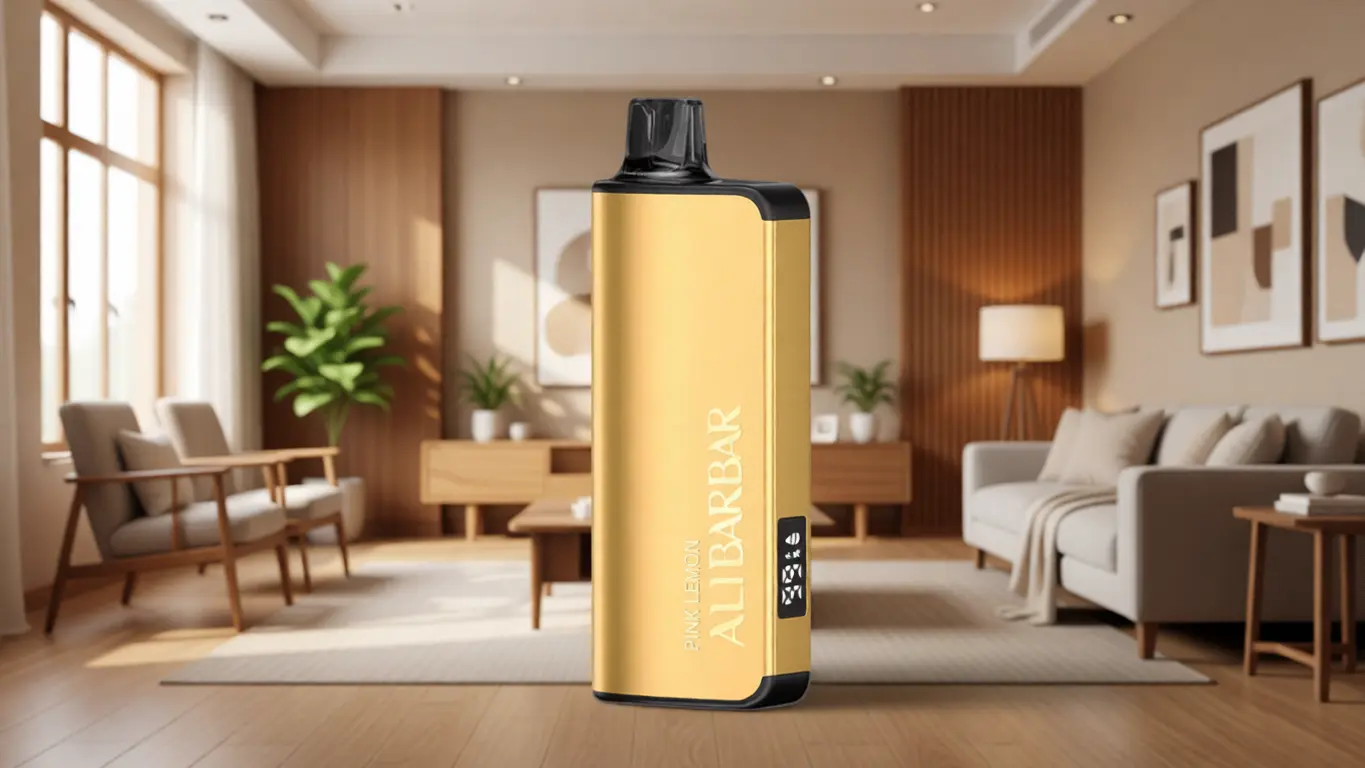
Look for devices that explicitly describe top‑fill, top‑airflow architecture with a physical shut‑off. The ALIBARBAR Ice Adjust 12000 series, for instance, isolates the heating chamber from the reservoir through a design that keeps the coil elevated and the airflow entry point above the liquid line. It is not a guarantee against every misadventure, but it dramatically reduces the probability of pressure‑driven leakage compared to bottom‑coil, bottom‑airflow designs. If the manufacturer does not publish a cross‑section diagram or at least describe the airflow path, treat the device with caution for air travel.
Status Transparency and Power Management
Picture this: you are in the security queue, and an officer asks you to power on the device to demonstrate it is a functional electronic item, not a disguised prohibited object. You press the button. Nothing. The device has entered a deep‑sleep protection mode and there is no display to tell you how to wake it, or its battery has drained because the power management circuit draws micro‑currents even when idle.
Devices that integrate a clear, multi‑segmented LED or an e‑ink screen—and that show battery level at a glance—allow you to prepare. The ALIBARBAR INGOT series includes a simple but effective light‑pipe indicator that displays remaining charge in four stages. You know before you leave home whether you need a top‑up. That simple feedback loop removes the uncertainty that leads many users to carry a backup device unnecessarily, which in turn doubles their potential for security scrutiny.
Physical Design for Carrying and Durability
A device that travels well is one that can survive being jostled against keys, a laptop, and a passport without scratching, activating accidentally, or deforming in a way that affects the USB‑C port. Surface finishes matter here more than in any other use context. Glossy, painted all‑alloy bodies that look beautiful in product photography often show micro‑abrasions after a single trip. A matte, bead‑blasted or soft‑touch coating is not just an aesthetic choice; it absorbs friction and keeps the device looking presentable, which can matter if you need to present it at a checkpoint.
Equally important is a lockout mechanism. A device that fires accidentally inside a bag because the draw‑activated sensor is too sensitive is a fire risk and a nuisance. A physical locking slider, or a five‑click on/off sequence that provides haptic confirmation, is a genuine safety feature. If a device lacks one, consider a hard‑shell carrying case—or simply accept that the product was not designed with travel in mind.
Modularity and Ease of Inspection
Some travellers prefer devices with removable pods or tanks, partly because they allow the liquid and the battery module to be stored separately. That separation can signal to security staff that you understand and respect the regulations: batteries in the cabin, liquid components in the transparent 1‑litre bag, and nothing ambiguous. A sealed, all‑in‑one unit is not prohibited, but it concentrates everything in one object that an officer cannot easily verify without trust that the battery capacity is within limits. If you choose a sealed device, ensure the Wh is printed directly on the body, as it is on many ALIBARBAR units, so the verification is instant and non‑verbal.
Travel‑Ready Characteristics in the ALIBARBAR Range
Translating principles into specific examples, a number of devices currently available through authorised retailers offer design choices that align with the travel criteria above.
The INGOT 15000 uses a compact, high‑density cell whose rated capacity is documented in both watt‑hours and milliamp‑hours on its base. Its draw‑activated mechanism is paired with a physical locking function that prevents unintended activation, and its polycarbonate shell resists the kind of compression that can transfer pressure to internal seals. It is not a modular device, so the liquid and battery travel together, but its leak‑resistant architecture and clearly stated specifications make it predictably easy to transport.
The Ice Adjust 12000, by contrast, introduces an adjustable airflow collar and a top‑fill design that several experienced users have reported as extremely resistant to cabin‑pressure leaks. Its power indicator is subtle but unambiguous: a single LED changes colour, giving you battery status without the complexity of a screen that consumes additional power. That simplicity becomes a virtue when you are standing in a queue with seconds to demonstrate functionality.
These observations are not endorsements of one device over another. They are examples of the kinds of engineering details that a traveller should evaluate. A retailer that invests in publishing standardised, comparable specifications—rather than marketing hyperbole—makes that evaluation faster. When you visit OZVAPE Shop, the product pages are structured around factual data: dimensions, cell chemistry, rated puff count derived from a standardised lab test, and safety certifications. That data‑first approach is exactly what you need when preparing to fly, because an airline’s decision rests on data, not impressions.
A Practical Evaluation Framework for Travellers
You do not need to be an engineer to assess whether your device is flight‑ready. A simple checklist, applied before you pack, will surface most risks.
Locate the Wh rating. If it is not on the device itself, check the original packaging or the manufacturer’s official specification sheet. If you cannot find it anywhere, assume security may question it.
Test the lockout or off state. Power the device off completely, place it in a pocket or bag for five minutes of normal movement, then check whether it has activated. If it cannot be truly locked, you must carry it in a rigid, non‑conductive case.
Simulate pressure change. This is not perfectly reproducible at home, but a simple test is to place the device upright (mouthpiece up) on a tissue, then take it in the car on a drive with significant elevation change or leave it in a room that fluctuates between air‑conditioned and ambient warmth. Any seepage suggests the seals will not hold during a cabin pressure cycle.
Verify the carrying policy. Check your airline’s dangerous goods page for the terms “electronic cigarette” or “personal vaporiser.” Most prohibit these in checked luggage entirely and require them in carry‑on only. Print the policy if you want to be thorough.
Separate liquids. If your device allows it, remove the pod or tank and place it in the transparent liquids bag with your toiletries. This shows you understand the security protocol and often speeds screening.
Common Mistakes That Lead to Confiscation or Delay
Even intelligent, well‑intentioned travellers create problems for themselves by overlooking a few patterns that industry observers see repeatedly.
Assuming all airlines apply the same policy. Some carriers prohibit even carry‑on carriage, or restrict use inside the airport. Qantas, Singapore Airlines, and Emirates each have subtly different phrasing. Check, do not presume.
Trusting a device because “it looks like the one my friend took.” The external shell reveals nothing about the battery chemistry, labelling, or lockout logic inside. Two visually identical devices can have different power cells, and only one may be documented.
Overlooking the USB‑C cable. A worn or non‑compliant charging cable can cause the device to heat up abnormally during charging in an airport lounge, drawing unwanted attention. Pack the original, factory‑supplied cable if you still have it.
Failing to discharge the battery partially for storage. A fully charged lithium‑ion cell is more volatile than one at roughly 50% charge. If you are placing the device in carry‑on, aim for a mid‑level charge. That is not an official regulation, but it is a basic battery safety principle that reflects genuine understanding of cell chemistry.
Frequently Asked Questions
Q: Can I carry a vape in my hand luggage?
A: Yes, in almost all jurisdictions you must carry it in your hand luggage. Checked baggage is universally prohibited because of fire risk. Confirm with your specific airline, but the rule is consistent across IATA member airlines.
Q: Will security take my device if the battery is not labelled?
A: Possibly. Security staff have discretion. If they cannot verify the watt‑hour rating, they may ask you to prove the device meets the limit. A device with the Wh etched on the body is far less likely to cause a hold‑up.
Q: What happens if my device leaks during the flight?
A: The immediate concern is liquid damage to other items. Clean the device thoroughly, check that no liquid has entered the charging port, and dry it before attempting to reuse. A leak does not necessarily mean the device is permanently damaged, but it suggests the seal design was inadequate for the pressure cycle.
Q: Can I take spare pods or e‑liquid bottles?
A: Yes, in your carry‑on liquids bag. Individual containers must not exceed 100 ml, and all must fit inside a single transparent, resealable 1‑litre bag. Check your airline’s liquid rules; they are standardised internationally but occasionally modified.
Q: Are disposable vapes and reusable systems treated differently?
A: Not by the safety regulations. They are all considered portable electronic devices containing a lithium battery. The differentiation matters more for your own planning: a sealed disposable cannot be separated into battery and liquid, so everything stays together in your carry‑on.
Q: How can I be sure my device is not a counterfeit that could fail under pressure?
A: Purchase from a retailer that sources directly from authorised distribution and provides batch‑level traceability. If the price seems unusually low, be suspicious. Counterfeit devices frequently use unrated, unstable cells.
Q: Can I use the device in the airport terminal or on the plane?
A: No. Most airports and all commercial aircraft prohibit the use of electronic vaporisers. Doing so can lead to fines or being denied boarding. The device must remain off and stowed.
Q: Does the device need to be in its original packaging?
A: Not by regulation, but keeping it in a protective case or its original box can prevent accidental activation and protect the finish. It also provides a place where the Wh label is printed, if the device body lacks it.
Q: What should I do if security confiscates my device?
A: You can ask for a supervisor and present documentation showing the device meets the airline’s requirements. If they still refuse, you generally have the option to abandon the item voluntarily. Arguing rarely changes the outcome; having clear documentation sometimes does.
Q: Is there a difference in rules between domestic and international flights?
A: The battery carriage rules are largely harmonised through IATA and ICAO, but specific airline policies on carriage and use can vary. International flights tend to be stricter. Always check the carrier’s dangerous goods page.
Carrying Certainty Instead of Confusion
The decision to travel with a personal electronic device should feel routine, not risky. When you understand the design factors that make a device air‑safe—clear battery labelling, leak‑resistant architecture, a true off state—you replace anxiety with a checklist. The device itself becomes a known quantity, and the airline’s rules become the only variable left to check.
That kind of certainty starts with the information you have before you buy. A retailer that treats product transparency as a responsibility, not a marketing tactic, gives you the tools to make that assessment. OZVAPE Shop (external link, opens in new window) publishes the ALIBARBAR collection with the kind of detail that lets you compare watt‑hour ratings, fill mechanisms, and lockout features at a glance. It is not about finding a perfect device—none exists—but about finding one whose documented characteristics match the routine you actually live, including the week you spend on the road. The right device is the one that, when you place it in your carry‑on, you do not give it a second thought.