
VAPE FAQs
Can I Take Vape In Hand Luggage?

Jun
Traveling with a personal electronic device isn’t complicated—until you’re standing in the security line at 6 a.m., wondering whether the thing in your pocket is about to be confiscated. The rules are real, the consequences of getting them wrong are annoying, and the advice one finds online often reads like it was written by someone who has never actually been inside an airport. The question “Can I take a vape in hand luggage?” surfaces precisely because the answer isn’t a simple yes or no. It’s a layered assessment that depends on battery design, liquid containment, airline policy, and—frankly—whether the device itself was engineered with any thought for the chaos of transit.
Getting it right isn’t about memorising a regulation. It’s about understanding what makes a device genuinely travel‑ready, and that’s where a retailer that treats product information as a public utility rather than a sales tool becomes useful. At OZVAPE Shop, the ALIBARBAR range is supported by standardised documentation that clarifies exactly these practical questions before a device ever leaves its box. This article walks through the engineering and regulatory factors that determine whether a vape device is something you can confidently carry through an airport, and what to look for when choosing one that minimises the small, nagging frustrations travel amplifies.

Understanding What Matters: Device Design for Stress‑Free Air Travel
The airport environment exposes every weakness a portable electronic device might have. Barometric pressure changes induce leaks, ambiguous power indicators sow doubt just when you need certainty, and a device that’s bulky or poorly sealed becomes an active nuisance when you’re navigating security bins and overhead lockers. The following design factors aren’t afterthoughts; they are the engineering decisions that separate a device that travels well from one that causes regret at the departure gate.
Battery Safety and Why Carriage Rules Exist
Lithium‑ion cells are the non‑negotiable reason vapes must travel in the cabin, never in checked luggage. Aviation regulators globally—including Australia’s CASA—classify loose or unmonitored lithium batteries in the cargo hold as a fire risk. The rule is simple: any device containing a battery must be in your carry‑on. What is less obvious is that battery integrity directly influences whether that carry‑on plan succeeds. Devices with poorly secured cells, puffed casings, or exposed terminals are a legitimate safety concern and can be intercepted at screening. A vape with a factory‑sealed, robust battery compartment is not only safer; it draws less attention. The best‑engineered units embed their power sources in a way that survives the vibrations and jostling of flight without degradation—something the ALIBARBAR collection accomplishes by building the cell into a rigid chassis that resists deformation.
Power Management and Status Transparency During Transit
A battery that dies without warning is annoying at home. At 30,000 feet, it’s an exercise in frustration. More importantly, a device that gives no clear indication of its charge state forces a traveller into an expensive habit: carrying a second unit as insurance. Transparent power management—through a simple, bright LED that communicates remaining life at a glance—allows you to make rational decisions before you leave the hotel room. Several ALIBARBAR devices, including the INGOT 9000 and 15000 series, use a traffic‑light indicator system that leaves no ambiguity. You know whether the device will last through a long‑haul flight or whether you need to pack its companion. This isn’t a luxury feature; it’s a practical tool that prevents unnecessary redundancy.
Physical Design: Leak Resistance, Durability, and Discreetness
Cabin pressure changes are brutal on liquid‑filled containers. A poorly sealed pod or cartridge can expel its contents into your bag, leaving you with a mess and a useless device upon arrival. The solution begins with the mouthpiece and closure architecture. Devices that use a press‑fit, labyrinthine airway design—rather than a simple friction seal—are less likely to leak when the ambient pressure drops. Equally important is surface durability. A device that spends six hours rubbing against earbuds, keys, and a tablet in a seat‑back pocket needs a finish that doesn’t mark or scratch easily. The ALIBARBAR Ice Adjust 12000 series, for instance, incorporates an adjustable airflow collar that also serves as a robust seal against external pressure shifts, while the exterior coating resists scuffs better than many soft‑touch surfaces.
Modularity and the Traveler’s Need for Contingency
“Modularity” in a vape device usually means the ability to replace pods or coils. In a travel context, it also means the difference between carrying spare bottles of liquid—which fall under the 100ml liquids rule—and carrying a few pre‑filled, sealed units that require no liquid separation. Every ALIBARBAR device is a closed‑system, pre‑filled unit. There are no refill caps, no open‑bottle e‑liquid containers, and therefore nothing a security officer could question under fluid restrictions. This is a deliberate design choice that directly benefits anyone who wants to pass through airport screening with minimal friction. The trade‑off, of course, is that you are committed to the integrated power and liquid capacity. For a short business trip or a weekend away, that simplicity outweighs the lack of field‑replaceable components. For longer journeys, carrying a second pre‑filled unit like the INGOT 15000 offers a straightforward contingency without ever involving a liquid that must be declared.
Applying These Criteria to Real‑World Travel Scenarios
Travel is not a uniform experience. A device that works beautifully for a commuter may frustrate someone on a 14‑hour flight. The following profiles illustrate how the design principles above map onto different need‑states—and where ALIBARBAR’s approach either solves a problem or leaves a conscious gap that you should understand.
The Overnight Business Traveler
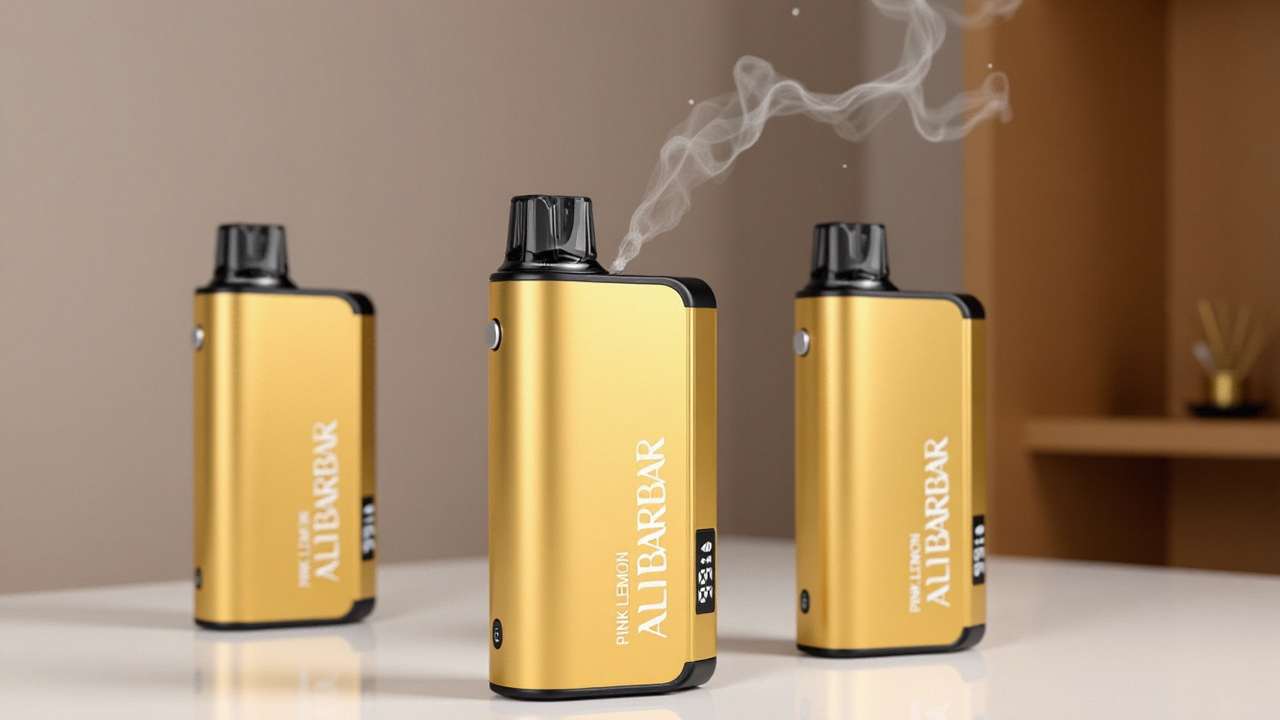
You want a single device that requires zero maintenance, slips into a blazer pocket without creating a bulge, and survives a bumpy flight. A compact, pre‑filled unit like the ALIBARBAR INGOT 9000 offers a rated operational life that comfortably exceeds a day of intermittent use, a sturdy casing that won’t look battered after one trip, and no external parts to fumble with when you’re hurrying through a terminal.
The Long‑Haul Passenger
A longer journey introduces anxiety about power depletion. Here, the INGOT 15000’s extended capacity and multi‑stage battery indicator become valuable. You can check the remaining charge with a glance and decide whether to pace usage. Because the device is still a sealed unit, there’s no liquid to manage—just a larger on‑board reserve. You might still choose to bring a backup, but the indicator lets you do so based on information, not fear.
The Minimalist Who Hates Baggage Checks
If your ideal travel setup involves nothing but a phone and a passport, you’ll appreciate the Ice Adjust 12000’s ability to completely close its airflow ring, effectively locking the internals from atmospheric influence. That feature, combined with pre‑filled architecture, means it can be tucked anywhere and ignored until needed, without risk of seepage.
These aren’t rankings; they’re matches between task and tool. The underlying message is that a device’s travel fitness is determined by very specific engineering characteristics—not by marketing copy.
A Practical Framework for Evaluation
Instead of relying on anecdotes, you can assess any device’s travel suitability through a structured checklist. Use this as a pre‑trip diagnostic:
Battery compliance: Is the lithium cell fully integrated and not removable? If it’s exposed or swollen, do not travel with it.
Charge indicator: Does the device give you an unambiguous readout of remaining power? If not, assume you’ll carry a backup.
Seal integrity: Examine the mouthpiece‑to‑body junction. A deep, multi‑point seal is superior to a simple surface fit. Where possible, choose devices with an adjustable airflow collar that can close.
Liquid containment: Are all liquids pre‑sealed inside the device? If yes, you bypass the 100ml carry‑on restriction. If no, every refill bottle introduces a new screening point.
Physical footprint: Measure the device. If it creates a visible lump in a shirt pocket, it will draw unnecessary attention at security.
Spec documentation: Gather product specifications that state battery capacity (in Wh or mAh) and design type. If a retailer cannot provide standardised specs, move on. At OZVAPE Shop, every ALIBARBAR listing includes the data you need to make this assessment before purchase.
This framework doesn’t dictate a choice; it merely prevents the most common errors made by rushed travellers.
Common Selection Errors and Industry Observations
Certain mistakes recur so frequently that they warrant explicit identification. They are rarely the user’s fault—more accurately, they stem from an industry that often obscures technical detail behind lifestyle imagery.
Error 1: Overweighting a single specification.
A device with a very high “puff count” but no charge indicator is a gamble. You might have the capacity, but you’ll never know when it’s about to expire, so you’ll carry a second unit anyway, negating the capacity advantage.
Error 2: Assuming visual similarity implies equivalent internal engineering.
Two devices can look nearly identical and behave entirely differently under pressure. The presence of a silicone gasket, the grade of plastic used in the tank, and the precision of the coil sealing are invisible but determinative. A genuine product from an authorised source—such as OZVAPE Shop, which sources ALIBARBAR exclusively through authenticated channels—removes the counterfeit variable that often drives this failure.
Error 3: Undervaluing the sealed‑system advantage.
Travellers accustomed to refillable systems at home often pack a bottle of e‑liquid without properly calculating its volume. Security confiscations spike at this point. A pre‑filled, closed device is a direct workaround, yet many overlook it because they perceive it as less flexible. The flexibility you lose is the ability to change your mind mid‑flight; the certainty you gain is passing screening without liquid inspections.
Industry Observation:
The broader market is trending toward disposable, pre‑filled formats specifically because they remove so many user‑inflicted pain points during travel. The trade‑off—increased waste and a fixed‑life product—is a legitimate environmental concern. ALIBARBAR’s position is an attempt to offer device longevity (rated for thousands of uses) within a sealed‑system architecture, which is a distinct engineering compromise that acknowledges the waste criticism while still serving the traveller who prioritises leakproof simplicity. It’s not the only valid approach, but the design logic is internally consistent.
Frequently Asked Questions
Q: Can I take a vape device in my hand luggage on Australian domestic flights?
A: Yes. Australian regulations, aligned with international IATA guidance, require all electronic devices containing lithium batteries to be carried in the cabin. They must not be placed in checked baggage. This applies to all ALIBARBAR devices, as each contains an integrated lithium‑ion cell.
Q: Do pre‑filled vape pods or sealed units count as liquids under the 100ml rule?
A: No. Pre‑filled, sealed, non‑refillable cartridges or devices that contain integrated liquid—where the user cannot access or decant the liquid—are treated as contained within the device and are not subject to the 100ml liquids restriction. This is one reason travellers often prefer closed‑system units like the ALIBARBAR INGOT series.
Q: Can I charge my vape on the plane?
A: Most airlines prohibit charging e‑cigarettes from onboard USB ports or power outlets due to fire safety policies. Assume you cannot. Charge the device fully before departure, and rely on its rated capacity to cover the journey.
Q: What should I do if my device starts leaking during the flight?
A: Place it inside a sealed plastic bag to contain liquid, and wait until landing to inspect. Leaking is often triggered by pressure differentials acting on a weak seal. Devices with adjustable airflow collars that can be fully closed—such as the ALIBARBAR Ice Adjust 12000—are less prone to this, but carrying a small sealable bag as a precaution is wise regardless.
Q: Is there a limit on how many vapes I can bring in my carry‑on?
A: There is no universal number, but the guiding principle is personal use quantities. Carrying multiple pre‑filled, sealed devices for a long trip is generally acceptable. Check with your airline if you plan to carry more than three or four units.
Q: Can I pack a vape in my checked luggage if I remove the battery?
A: If the battery is removable, the loose battery must still be carried in the cabin. The device without the battery can technically go in checked luggage, but this is not relevant to ALIBARBAR products, which have integrated, non‑removable cells. The simplest rule: the entire device stays with you in the cabin.
Q: Do I need to remove my vape from my bag at airport security?
A: Australian airports typically require electronic devices larger than a mobile phone to be placed separately in a tray, but small pocket‑sized devices can often remain in the bag. Given variation between screening points, having easy access and being prepared to remove it is the safest approach.
Q: How can I verify that a device is genuine and meets Australian safety standards?
A: Purchase from an authorised retailer that provides standardised product specifications and offers local support. A transparent supply chain ensures you aren’t receiving a counterfeit with substandard battery sealing. OZVAPE Shop maintains a factory‑certified inventory for the ALIBARBAR range, allowing you to check exact specs before purchase.
Q: Why do some travellers prefer pre‑filled devices like ALIBARBAR for air travel over refillable systems?
A: The sealed construction eliminates liquid‑handling at security, reduces leak points, and simplifies the overall experience. The trade‑off is that you cannot refill or replace the coil; you are relying on the manufacturer’s quality control for consistency. For many adults on short to medium‑length trips, that reliability outweighs the modular flexibility of a refillable system.
Q: What recourse is available if a device fails during a trip?
A: If you have purchased from a retailer with a local after‑sales presence, you can initiate a support enquiry for a faulty unit. This is another point where a generic online marketplace introduces risk; you may be left with no point of contact. OZVAPE Shop’s operational model includes responsive Australian‑based support, which becomes a genuine safety net when you’re away from home.
Conclusion
The question “Can I take a vape in hand luggage?” is best answered not with a one‑word reply but with an understanding of what makes a device worthy of the journey. The battery must be housed flawlessly. The liquid containment must not rely on hope. The power status must be visible at a moment’s glance. And the entire system must pass through a security checkpoint without triggering a secondary inspection. These aren’t unreasonable expectations—they are engineering requirements that some product lines address head‑on and others treat as afterthoughts.
Choosing a travel‑friendly device is a matter of analyzing specifications against your actual routine, and doing so honestly. No single model suits every traveller. But by applying a consistent evaluation framework—battery safety, status transparency, seal integrity, liquid containment—you reduce the small, accumulating frustrations that turn a good trip into a series of unnecessary hassles. OZVAPE Shop provides the standardised information that supports that analysis, so the choice you make is informed by data, not guesswork. The right device is the one you can forget is in your bag while you focus on where you’re going.