
VAPE FAQs
Can I Bring Disposable Vape To Japan?

Oct
Introduction
The question of whether you can bring a disposable vape into Japan is one that surfaces repeatedly among travellers, yet the answer is rarely straightforward. The confusion is understandable: Japan has some of the strictest regulations governing personal electronic devices for nicotine delivery in the developed world, and the rules differ significantly from those in Australia, the United States, or much of Europe. A device that is perfectly legal in your home country may attract customs scrutiny—or outright confiscation—the moment you land at Narita or Kansai.
This article is designed to give you a clear, fact-based understanding of what the Japanese authorities actually enforce, where the grey areas lie, and how to avoid finding yourself in an unpleasant conversation with customs officials. At OZVAPE Shop, we believe that informed users make better decisions, whether they are selecting a device for daily use or planning international travel with their equipment. Let’s walk through the regulatory landscape as it currently stands, with the caveat that laws can change and you should always verify the latest information with official sources before travelling.
Understanding What Matters: Core Regulatory and Practical Factors
Internal Architecture and Legal Status
The fundamental issue with bringing any vaping device into Japan hinges on one critical distinction: whether the product contains nicotine. Under Japanese pharmaceutical law, nicotine is classified as a medicinal substance. Any device that delivers nicotine—whether disposable, refillable, or pod-based—is technically subject to regulations that treat it as an unapproved drug if it is not manufactured or sold under a Japanese pharmaceutical license.
This means that most disposable vapes imported from overseas contain nicotine concentrations that are illegal to possess without a prescription in Japan. The law is not widely enforced against individual travellers carrying small quantities for personal use, but the risk is real and the consequences can include confiscation, fines, and in rare cases, legal proceedings.
Practical implications: If you are carrying a device that visibly contains nicotine—and most disposable vapes do—you are technically in violation of the Pharmaceuticals and Medical Devices Act. Customs officials have the authority to seize the device, and they do so regularly.
Power Management and Device Disposal
Japan has very specific waste management regulations, and lithium-ion batteries present a separate set of challenges. Disposable vapes contain non-removable batteries that cannot be disposed of through standard waste streams. If you bring a device into Japan, you are responsible for ensuring it does not enter the municipal waste system. This is not merely a theoretical concern; airports, hotels, and convenience stores all have designated battery disposal points, and improperly discarding a vape can result in fines.
The practical value of understanding this upfront is that you can plan your trip accordingly. If you finish a device mid-travel, you need a plan for its disposal that complies with local regulations. Many travellers find this more inconvenient than they anticipated.
Physical Design and Portability
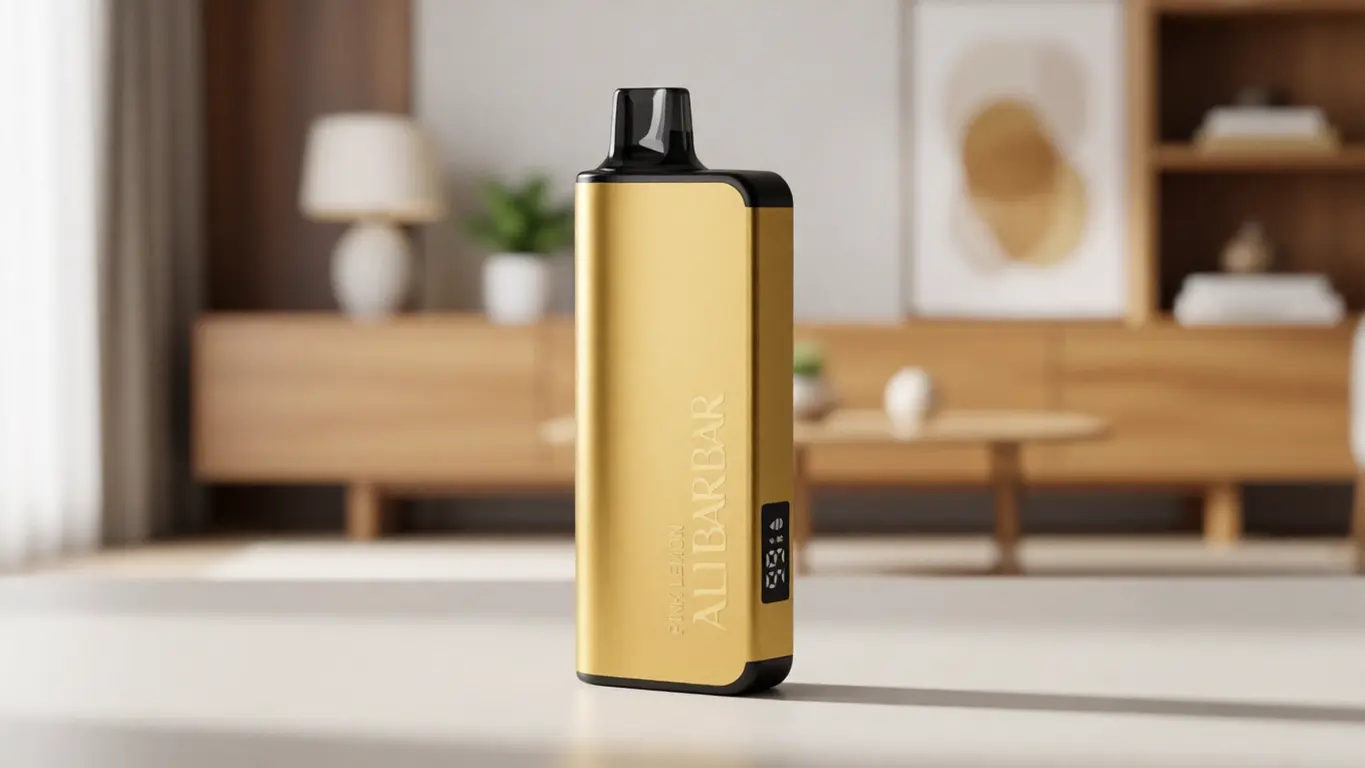
Japanese customs officers are trained to identify vaping devices. The form factor of most disposable vapes—cylindrical or rectangular, often brightly coloured, with a visible mouthpiece and airflow holes—is distinctive and immediately recognisable even when packed inside luggage.
Airport security screening at Japanese international terminals is thorough. Devices in carry-on luggage will appear on X-ray as dense objects with identifiable battery and coil assemblies. If you declare them incorrectly or attempt to conceal them, you invite additional scrutiny. The most common outcome for travellers who are stopped is confiscation of the device and a warning, but repeat offences or larger quantities can escalate.
Nicotine Concentration and Label Clarity
Japanese law sets a maximum allowable nicotine concentration of 1.2% (12 mg/mL) for products sold legally within the country. Many disposable vapes available in Australia and elsewhere contain 3% or 5% nicotine by volume—significantly above the Japanese threshold. Even if a device is technically legal in terms of device architecture, the nicotine concentration alone renders it non-compliant.
Customs officials can and do test devices if they have reasonable suspicion. Clear labelling on the packaging works against you in this scenario because it confirms the violation. Some travellers attempt to remove or obscure labels, but this raises additional suspicion and can be construed as an attempt to evade customs controls.
Applying These Criteria to Real-World Scenarios
Let’s consider a few common user situations to see how these regulations apply in practice.
Scenario 1: The short-stay business traveller intending to stay three days in Tokyo and carrying a single disposable device for personal use. This traveller is statistically unlikely to face a problem, provided the device is declared honestly at customs if asked, and it is disposed of properly before departure. The risk is low but present.
Scenario 2: The student on a semester exchange carrying a 10-pack of disposable devices. This quantity immediately escalates the situation from personal use to potential commercial importation in the eyes of customs. The likelihood of confiscation is high, and the traveller may face additional questioning about intent to supply.
Scenario 3: The long-term expatriate who has been living in Japan and is returning from an overseas trip with devices purchased abroad. This person is more likely to be known to customs and subject to greater scrutiny. Repeat entry with prohibited goods carries more severe penalties than a first-time infraction.
In each case, the best course of action is to research the most current regulations before departure, declare accurately, and accept that non-compliant devices may be confiscated.
A Practical Framework for Evaluation
If you are considering bringing a vaping device into Japan, here is a step-by-step methodology for evaluating your specific situation:
Identify your device’s nicotine concentration. If it exceeds 1.2%, it is legally non-compliant in Japan regardless of any other factor.
Determine the quantity you intend to carry. One device for personal use is treated differently than multiple units. Keep it to a single, clearly personal-use quantity.
Check the current regulations on the Japanese Ministry of Health, Labour and Welfare website. Do not rely on third-party summaries or forum posts. Official sources are the only reliable reference.
Decide whether you are willing to accept the risk of confiscation. If the device is expensive or has sentimental value, leaving it at home may be the prudent choice.
Plan for end-of-life disposal. Identify battery disposal points at your destination and ensure you have a responsible way to discard the device when it is finished.
Standardised specification comparison tools, such as those available at OZVAPE Shop, can help you understand your device’s exact nicotine content and battery configuration before you travel.
Common Selection Errors and Industry Observations
Over the years, several patterns have emerged in how travellers approach this question, and many lead to avoidable problems.
Error 1: Assuming that availability in one country implies legality everywhere. The vaping regulatory landscape is fragmented globally. A product sold openly in Australia, the UK, or the US may be completely illegal in Japan, Thailand, or Singapore. Regulatory compliance is country-specific, not universal.
Error 2: Relying on online forum anecdotes. A traveller who “had no problem” bringing devices into Japan does not prove the rule. Customs enforcement varies by airport, officer, and the random luck of inspection. One person’s positive experience is not a reliable guide for another traveller.
Error 3: Confusing device type with legal status. Some travellers believe that disposable devices are more problematic than refillable systems, or vice versa. In Japan, the legal distinction is based on nicotine content and pharmaceutical classification, not device architecture. Both disposable and refillable systems are treated identically if they contain nicotine above the legal threshold.
Error 4: Undervaluing the consequence of confiscation. Beyond the financial loss, having a device seized at customs can result in being flagged for future international travel. A customs record, even for a minor infraction, can lead to increased scrutiny on all subsequent entries into Japan.
From an industry perspective, one of the reasons this issue remains confusing is that the Japanese government has not created a simple, user-friendly information campaign about vaping device importation. The laws exist, but they are spread across multiple regulatory frameworks—pharmaceutical, customs, and waste management—and are not consolidated in a single accessible guide. This regulatory fragmentation creates ambiguity that works against the traveller.
Frequently Asked Questions
Q: Can I bring a disposable vape into Japan if it contains no nicotine?
A: Zero-nicotine devices are treated differently because they do not fall under pharmaceutical regulations. However, they still contain lithium-ion batteries, which are subject to aviation safety rules for carriage and disposal. You should still declare them at customs if asked.
Q: What happens if customs confiscates my device?
A: The device is seized and destroyed. You will typically receive a warning for a first offence with a small quantity. Multiple offences or larger quantities can result in fines or legal proceedings.
Q: Is it legal to buy vaping devices within Japan?
A: Yes, but only products that comply with Japanese pharmaceutical regulations. Most legal devices available in Japan contain 0% nicotine or nicotine concentrations at or below 1.2%. These are sold in specialist stores and online.
Q: Can I ship disposable vapes to Japan by mail?
A: Customs has the authority to inspect and seize packages containing nicotine delivery devices. Mail importation carries higher risk of detection and confiscation than personal carriage, and you may also face additional shipping charges for returned or destroyed goods.
Q: Do Japanese customs check every bag?
A: No. Customs uses intelligence-led targeting, random sampling, and behaviour observation. You are more likely to be stopped if your declaration form is inconsistent, if you appear nervous, or if you are flagged from a previous interaction.
Q: What should I declare on the customs form?
A: The Japanese customs declaration form asks about prohibited goods. Checking “no” when you are carrying a non-compliant device constitutes a false declaration, which is itself an offence. The safest approach is to declare honestly and accept the outcome.
Q: Are there any airlines that specifically ban vapes in checked luggage?
A: All major airlines prohibit lithium-ion batteries and vaping devices in checked luggage due to fire risk. Devices must be carried in your hand luggage only.
Q: Can I use a disposable vape inside Japanese airports?
A: Airports in Japan do not generally allow vaping inside terminal buildings. Designated smoking areas exist but are for combustible tobacco products. Using a vape in a non-designated area will attract security attention.
Q: What about carrying spare pods or refill cartridges?
A: These are treated the same as complete devices. If they contain nicotine above the legal threshold, they are non-compliant. Spare pods without nicotine may be permissible but should still be declared.
Q: Is there any recourse if my device is confiscated?
A: Confiscation decisions by customs are difficult to challenge. Your best recourse is to ensure compliance before travel. Post-confiscation appeals are rarely successful for minor personal-use quantities.
Conclusion
The central insight of this guide is straightforward but worth restating: Japan’s regulations on nicotine delivery devices are clear, stringent, and enforced with consistency. The safest approach for any traveller is to assume that a disposable vape purchased outside Japan will not pass customs inspection without risk. If you choose to carry one, you do so with full knowledge that confiscation is a plausible outcome and that legal consequences, while rare for small personal-use quantities, are not impossible.
At OZVAPE Shop, we believe the best decision is an informed one. Understanding the regulatory environment of your destination is as important as understanding the device itself. Our goal is to equip you with the knowledge to make that decision with clarity, not to persuade you toward any particular course of action.
The right choice is the one that matches your actual travel plans, your risk tolerance, and your respect for the laws of the country you are visiting. Sometimes, that means leaving a perfectly functional device at home and exploring local options when you arrive. There is no shame in prudence—only in proceeding without understanding the full picture.
OZVAPE Shop – Your trusted source for verified product specifications, transparent sourcing, and practical guidance for adult users.