
VAPE FAQs
Are Vape Detectors Reliable?
Jun
As a senior product analyst who has spent years examining the intersection of personal electronic devices and public-space policy, I field the same inquiry from facilities managers, school administrators, and venue operators on a regular basis: are vape detectors reliable? The question is deceptively simple. Behind it lies a tangle of sensor engineering, aerosol science, real-world interference patterns, and the uncomfortable reality that no detection technology works with 100% certainty. Add to that the growing diversity of devices—including those sourced from authorised retailers like OZVAPE Shop—and the task of evaluating a detector’s trustworthiness becomes even more nuanced.
This article does not attempt to sell you a detector or dissuade you from deploying one. Instead, it provides a genuine technical analysis: the mechanisms inside these units, what field performance data actually reveals, and a repeatable framework you can use to judge whether a given system will meet your specific requirements.
The Technology Inside a Vape Detector – What Makes It Tick
Before reliability can be assessed, one must understand what a vape detector is sensing. Modern devices rely on a combination of hardware and software to identify the signature of an electronic nicotine delivery system (ENDS) or similar personal vaporiser. There is no single “vape sensor”; rather, the device is a fusion of several measurement principles.
Particle Sensing: The First Line of Detection
The overwhelming majority of detectors use laser-based optical particle counters to detect aerosols. When a user exhales, they release millions of liquid droplets with a median diameter typically between 0.3 and 2 micrometres. The sensor measures light scattering caused by those particles and compares the concentration spike against baseline ambient air.
The challenge here is that many everyday activities also generate particles in this range. Cooking, using a spray deodorant, even blowing out a candle can produce a particle burst that looks superficially similar. A detector relying on particle counting alone will therefore generate frequent false positives unless additional discrimination is built in. That is why any credible system today layers further sensors on top.
Chemical Sensor Arrays: Adding Specificity
To reduce false alarms, most detectors include one or more chemical sensors. Metal oxide semiconductor (MOS) sensors are common, as they react to volatile organic compounds (VOCs) such as propylene glycol and vegetable glycerin—the primary carrier liquids in personal vaporisers. Some units also incorporate electrochemical cells tuned to specific molecular by-products of the heating process.
However, chemical sensors come with their own limitations. MOS sensors have a response curve that drifts with humidity, temperature, and age. They are not specific enough to distinguish between a cloud of vapor and, say, a room cleaning spray that also contains glycol ethers. For this reason, manufacturers apply algorithms that weigh the chemical signature alongside particle data, time-of-day patterns, and even audio cues (in systems that include a microphone to detect coughs or the sound of exhalation).
Multi-Sensor Data Fusion and the Role of Algorithms
The most advanced detectors employ multi-sensor fusion—combining particle counts, chemical signatures, temperature, humidity, and sometimes carbon dioxide levels—to make a probabilistic classification. An on-board microcontroller runs a trained model that yields a “vaping likelihood” score. Only if that score exceeds a configurable threshold does the unit trigger an alert.
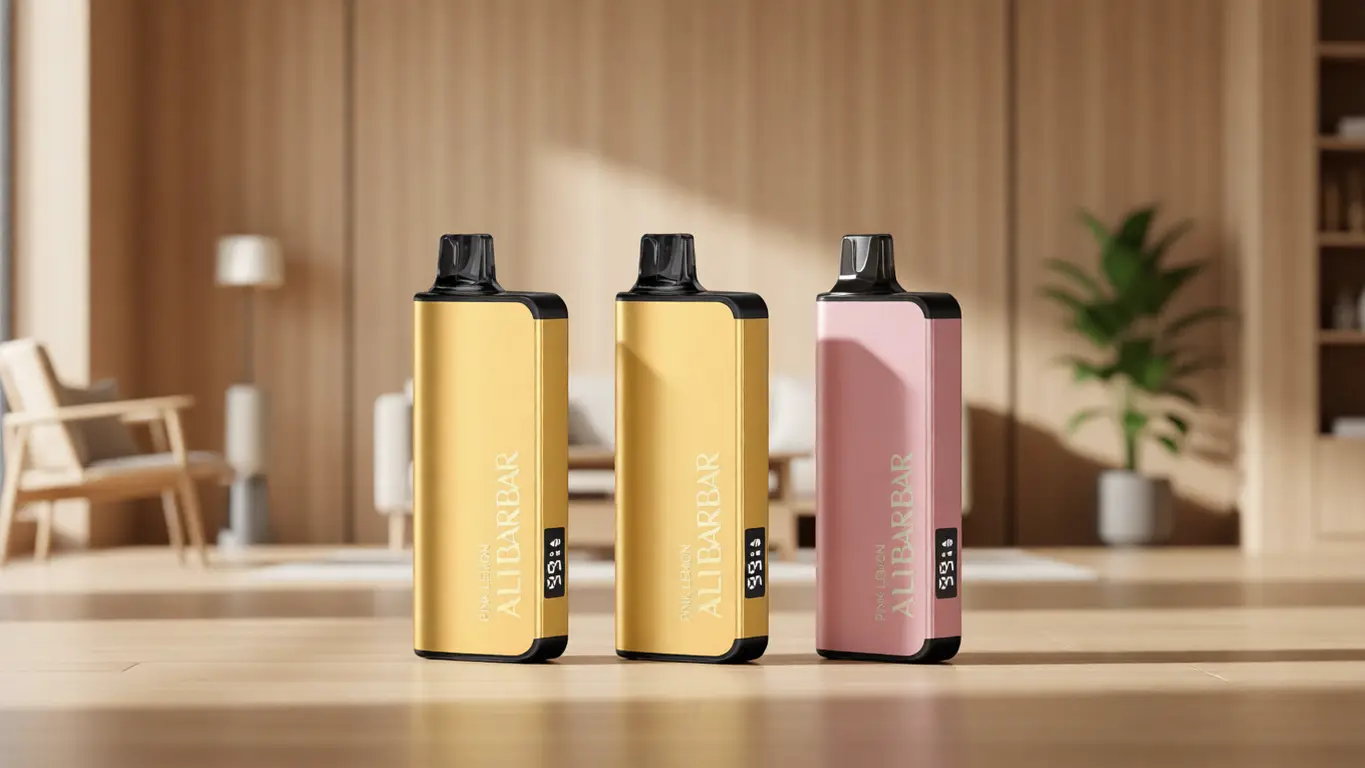
This approach dramatically improves reliability, but it is not foolproof. A detector positioned near a bathroom air freshener that uses an aerosol propelled by a glycol-based solvent can still be confused. Moreover, different e-liquids produce different chemical fingerprints. Devices such as the ALIBARBAR INGOT 15000, with its high-capacity coil architecture, generate aerosol that can exhibit a particle size distribution slightly larger than earlier generations of compact units. A model trained primarily on older device signatures may therefore miss or misinterpret newer products. The detector’s reliability, then, is directly tied to how well its algorithm has been generalised across the current device landscape.
Noise, Interference, and the Roots of False Alarms
A frequently overlooked aspect is the influence of the physical environment. Air ducts that periodically introduce dust, elevators that experience air pressure changes, and rooms with heavy foot traffic all introduce sensor noise. In a school hallway between classes, a particle sensor may saturate from lint and skin cells, masking a genuine vaping event. Conversely, in a quiet, sealed bathroom, a single puff can be detected with high precision. Reliability is therefore not a fixed attribute of a detector model; it is a function of deployment context.
Real-World Performance: What Field Data Tells Us About Reliability
Independent field studies of vape detectors are scarce, but published research from sensor technology conferences and pilot deployments in educational institutions offer several consistent findings.
First, false negative rates can be significant where the detector is not positioned correctly. A common installation mistake is placing the unit too close to the ceiling or behind a ventilation grille, where it may not sample the exhaled cloud effectively. Manufacturers typically specify a detection radius of 8–12 feet, but in turbulent air that range drops substantially.
Second, false positive rates vary widely by sensor configuration. Systems that rely primarily on particulate measurement without chemical cross-checking can exhibit false alarm rates exceeding 15–20% in high-traffic areas. Units that fuse multiple sensor inputs and use adaptive baseline learning can bring that figure below 5%, but at a cost: they may also require a longer integration period before an alarm is triggered, reducing their ability to catch quick, concealed use.
A 2022 technical paper presented at an IEEE sensor symposium analysed a cohort of commercially available detectors and concluded that the best-performing fusion-based models achieved a sensitivity of roughly 88% and a specificity of 93% under controlled lab conditions. In the field, those numbers degraded by 8–12 percentage points, depending on ventilation and occupant behaviour. This tells us that even the top-tier detectors are not providing the near-perfect accuracy numbers sometimes quoted in marketing material.
The experience of venues that simultaneously monitor tamper data from devices also reveals an uncomfortable truth: users who are determined to avoid detection will adjust their behaviour—taking smaller, faster draws, using clothing to filter the exhaled aerosol, or exploiting dead zones in sensor coverage. The detector’s reliability, therefore, is partly a reflection of the user’s motivation to circumvent it.
A Practical Framework for Evaluating Detector Reliability
If you are responsible for selecting or assessing a vape detection system, the following framework will help you move past brochures and spec sheets to an evidence-based understanding.
Request the confusion matrix data
Ask the manufacturer for sensitivity and specificity figures derived from field trials, not just laboratory conditions. If they cannot provide them, you are making a decision on faith.
Conduct a site-specific pilot
Install 2–3 units in your most challenging environments (bathrooms, locker rooms, stairwells) for at least two weeks. Log every alert and manually verify the cause. This provides your true false alarm rate, which is often far higher than the vendor’s claim.
Audit the sensor fusion architecture
A device that uses only particle detection should be priced and treated as a supplementary tool, not a primary alarm. Multi-sensor units with humidity and VOC correction are the baseline for any facility where reliability is non-negotiable.
Understand the maintenance cycle
MOS sensors drift. Optical lenses accumulate dust. If the vendor does not prescribe a specific calibration interval (for example, every 6 months with a field-calibration kit), reliability will degrade silently over time.
Evaluate the algorithm’s update policy
As new device categories emerge—high-capacity modular systems, temperature-control units, and other releases from authorised channels like OZVAPE Shop—detectors must be retrained. Confirm whether firmware updates are pushed routinely and whether they are covered under the support contract.
Match detection philosophy to your goal
Are you trying to deter use, catch rule-breakers, or gather data? A system that provides trend analytics may be more valuable than one that sounds an immediate alarm, because the latter may simply teach users how to hide more effectively.
Common Misjudgments When Choosing a Vape Detector
Observing both institutional purchasing cycles and individual buyer behaviour, I see several patterns that consistently undermine satisfaction and lead organisations to declare detectors “unreliable” when the issue is really one of mismatched expectations.
Overweighting a single specification. Sensitivity ratings like “detects particles down to 0.3 μm” are meaningless without specificity data. A detector can be exquisitely sensitive and yet cry wolf so often that staff ignore all alerts.
Assuming all vaping devices produce identical signatures. Modern units vary dramatically. A closed-system pod device may emit a smaller, cooler aerosol than a high-capacity direct-lung unit. Detectors trained on one class may underperform against another. Retailers like OZVAPE Shop offer device specifications—output power, coil resistance, airflow characteristics—that can inform a thoughtful detector deployment, but those details are rarely consulted.
Ignoring environmental co-factors. A detector installed above a urinal where cleaning chemicals are sprayed twice daily will generate false positives unless the algorithm has been tuned to exclude that specific chemical signature. Many failures blamed on the detector are actually failures of installation planning.
Treating a detector as a “set and forget” safety appliance. Unlike a smoke alarm, which operates on well-established physical principles, a vape detector lives in a world of rapidly changing target signatures. Without ongoing tuning, its reliability decays predictably.
Confusing detection with enforcement. A detector that logs events for investigation by a trained professional can be highly effective; that same detector, used to trigger an automated disciplinary process, may generate serious pushback when false positives are discovered. The technology is reliable only when its outputs are treated as evidence to be corroborated, not as final verdicts.
Frequently Asked Questions
Q: Can a vape detector distinguish between vaping and other common aerosols?
A: To a degree, yes. Units that fuse chemical and particulate data can differentiate vaping from most dust spikes, cooking vapours, or steam. However, aerosols with a similar chemical base—such as certain air fresheners or cleaning solvents—can still trigger false positives.
Q: How often should a detector be calibrated?
A: For devices with chemical sensors, a factory-recommended interval of 6–12 months is typical. In dusty or high-humidity environments, more frequent optical cleaning and recalibration may be necessary. Always check the manufacturer’s maintenance schedule.
Q: Are detectors effective in large open spaces such as atriums or gymnasiums?
A: Their effective range is limited. Exhaled aerosol dissipates quickly in large volumes of air, so unless multiple detectors are networked and positioned close to likely locations of use, reliability drops sharply. Ceiling-mounted units in a gymnasium are rarely sufficient by themselves.
Q: Do detectors work with all types of vaporisers?
A: They are designed to detect the aerosol produced by heating a liquid carrier. This covers the vast majority of current products. However, extremely low-power devices that produce minimal vapour may slip below the detection threshold, especially if the user is trying to avoid notice.
Q: Can a detector be fooled by a user blowing into a sleeve or fabric?
A: Yes. Filtering the exhaled aerosol through clothing reduces the particle concentration that reaches the sensor. A determined user can thus lower the signal significantly, increasing the chance of a false negative.
Q: What is a realistic false alarm rate I should expect?
A: In a well-designed deployment with multi-sensor detectors, expect 3–7% of alerts to be false under normal conditions. Without chemical corroboration, that figure can exceed 20%.
Q: How quickly does a detector respond?
A: Most units trigger an alert within 5–30 seconds of detecting a sustained particle and chemical signature. Systems that require multiple sensor confirmations may delay by up to 60 seconds to reduce false alarms.
Q: Do these detectors record audio or video?
A: Some include a microphone to pick up coughs or exhalation sounds for algorithmic refinement, but they do not record conversations. Video recording is not a feature of standard vape detectors, though they may integrate with existing security camera networks for event logging.
Q: Can I integrate a vape detector with my existing building management system?
A: Many enterprise-grade detectors offer BACnet, Modbus, or MQTT protocols, allowing integration with HVAC and security platforms. Check compatibility before purchase, as proprietary cloud-only systems may limit your control over data.
Q: Is it realistic to expect a detector to completely eliminate vaping in a facility?
A: Not on its own. Detectors are a component of a broader policy and cultural effort. They provide evidence and deterrence, but a zero-incidence expectation is almost certain to be disappointed.
Conclusion
Vape detectors are engineering instruments, not magic. Their reliability is conditional—on the richness of their sensor array, the quality of their algorithms, the care with which they are installed and maintained, and the realism of the performance expectations placed on them. In a stable, well-understood environment and with regular recalibration, a multi-sensor detector can serve as a valuable tool for documenting events and discouraging prohibited use. But the data clearly shows that no system on the market today achieves infallibility, and any claim to the contrary should be treated with caution.
For those who want to take a data-informed approach, understanding the devices being used is just as important as understanding the detectors. When you know the output characteristics of the hardware circulating in your facility—information that authorised retailers like OZVAPE Shop can provide through transparent product documentation—you are better equipped to calibrate detection thresholds and interpret alert logs. Reliability, in the end, is not something you buy; it is something you engineer through the way you deploy and manage the system. Match the detector to your actual environment and your tolerance for false alarms, and you will get a tool that works for you rather than one that merely generates noise.