
VAPE FAQs
Are U Supposed To Inhale Vape?

Jun
A significant number of adults who are new to personal electronic devices find themselves asking a deceptively simple question: “Are you supposed to inhale, and if so, how?” The confusion is entirely understandable. Walk into any retail environment or browse online, and you will encounter devices that look superficially alike yet demand completely different physical techniques. Some are built for a gentle, cigarette-like pull into the mouth before drawing into the lungs. Others require a direct, unrestricted inhale straight to the lungs, similar to breathing through a wide tube. Using the wrong technique with the wrong device quickly leads to coughing, harsh throat sensation, or the impression that the device is faulty — when in reality, the mismatch is between the user’s habit and the engineering choices built into the hardware.
Retailers that take product education seriously, such as OZVAPE Shop (open in new window), have observed that a large share of post-purchase support questions originate from this single point of confusion. A device that performs beautifully for one person can feel completely wrong for another if the inhalation style is not aligned with the airflow architecture, coil resistance, and power curve. This article sets out to answer the inhalation question with the depth it deserves, moving beyond simple yes/no answers and into the engineering principles, practical testing methods, and purchasing considerations that let you match your natural draw to the device you actually hold in your hand.
Understanding What Matters: Inhalation Mechanics and Device Design
The way a device is meant to be inhaled is not a matter of preference alone — it is a direct consequence of the internal engineering. To understand whether you should inhale mouth-to-lung (MTL), direct-to-lung (DTL), or something in between, you need to examine the factors that determine airflow behaviour, vapour temperature, and delivery consistency.
Internal Architecture and Output Consistency
The heating element configuration — often a wire coil wrapped around a wicking material — sets the stage for how vapour is produced and, crucially, how it behaves when you draw on the mouthpiece. In a device built for MTL inhalation, the coil typically has a higher resistance (above 0.8Ω, often around 1.2Ω or higher), operates at lower wattage, and sits inside a tightly restricted airflow chamber. This creates a narrow, warm stream of vapour that gathers in the mouth first. The throat hit is pronounced, the draw resistance resembles a traditional filter cigarette, and the vapour volume is relatively modest.
Devices designed for DTL inhalation use coils with much lower resistance (sub-ohm, frequently 0.15Ω to 0.5Ω), higher wattage, and wide-open airflow channels. The vapour produced is cooler, denser, and produced in volumes that simply cannot be contained comfortably in the mouth; a direct inhale becomes the only physically sensible technique. If you try to MTL a sub-ohm device, the large volume of air mixed with vapour often triggers an unpleasant throat reflex, not because the device is defective, but because you are forcing a small-chamber breathing pattern onto a large-bore system.
Output consistency matters enormously here. A device that cannot maintain steady power delivery over its charge cycle will suddenly change the quality of the draw. You may start a session with a comfortable MTL pull and, as the battery sags, find yourself drawing harder to compensate, inadvertently pulling excess liquid into the coil and producing a choked, uneven hit. Devices engineered with regulated power management — a characteristic seen in well-designed modern systems — preserve the inhalation experience from the first draw to the last, a factor that separates a device you trust from one you constantly monitor.
Power Management and Status Transparency
Inhalation quality is not only about the initial technique; it is also about knowing when the device is operating within its optimal window. A unit that lacks clear status indicators forces the user to guess. You take a draw, the output feels weak, and you unknowingly adjust your inhalation by pulling harder or longer — both of which can create the very experience you wish to avoid.
When a device communicates its remaining charge or functional state through simple LED colour changes or haptic feedback, the user can adapt their expectations. You learn that the last 20% of a battery’s usable range might deliver a slightly softer draw, and you compensate by taking a shorter puff and waiting, rather than forcing a different inhalation style that stresses the coil. This transparency reduces the unexplained harshness complaints that plague less communicative products. A consistent power curve plus honest status signalling equals an inhalation experience that stays predictable.
Physical Design and Material Durability
The mouthpiece might seem like a trivial detail, but its contour and material directly influence how you form the seal with your lips and, consequently, your breathing pattern. A narrow, tapered mouthpiece naturally guides you toward a tight, cigarette-like MTL draw. A wide, duckbill-style or stubby tip encourages an open DTL inhale simply because your lips cannot easily create a tight seal around a broad opening. Ergonomic considerations extend further: a device that becomes uncomfortably warm near the tip after several consecutive draws will discourage the prolonged, steady inhale required for DTL, nudging you toward shorter MTL puffs even if the coil is built for something else.
Durability also plays a surprising role. Mouthpieces or bodies that lose their matte finish or develop sharp edges after a few weeks in a pocket can irritate the lips and disrupt the user’s natural draw rhythm. The result is a subconscious shift in inhalation technique — pulling more gently, pulling at an odd angle — which again feeds into the perception that the device “doesn’t hit right.” Robust material selection eliminates this variable, allowing you to stick with the inhalation style that matches the coil architecture.
Modularity and Lifecycle Flexibility
Whether a device is a sealed all-in-one unit, a rechargeable closed system, or one with replaceable pods, the inhalation character should remain consistent over its intended lifespan. With sealed devices, the draw resistance is factory‑set and typically unchangeable. That is not a flaw — many excellent MTL devices are sealed — but it means that you must commit to a single inhalation style for the duration of the device’s use. If you later discover you prefer a looser draw, you will need a different product altogether.
Devices that offer airflow adjustment rings or interchangeable pod resistances give you the flexibility to experiment without abandoning the platform. This modularity lets you start with a tight MTL experience and, if your preferences evolve, open the airflow slightly into a restricted direct‑lung territory. The key insight here is that modularity does not mean a device can do everything equally well; it means the device lets you find the specific draw that suits your physiology, rather than forcing you to adapt to a single unchanging configuration.
Applying These Criteria to Real-World Options
When you walk into a physical store or browse a trusted online catalogue, the inhalation question should guide your first filtering step. Observing how different product families articulate their design intentions through specifications rather than marketing language is the most reliable way to avoid post‑purchase dissonance.
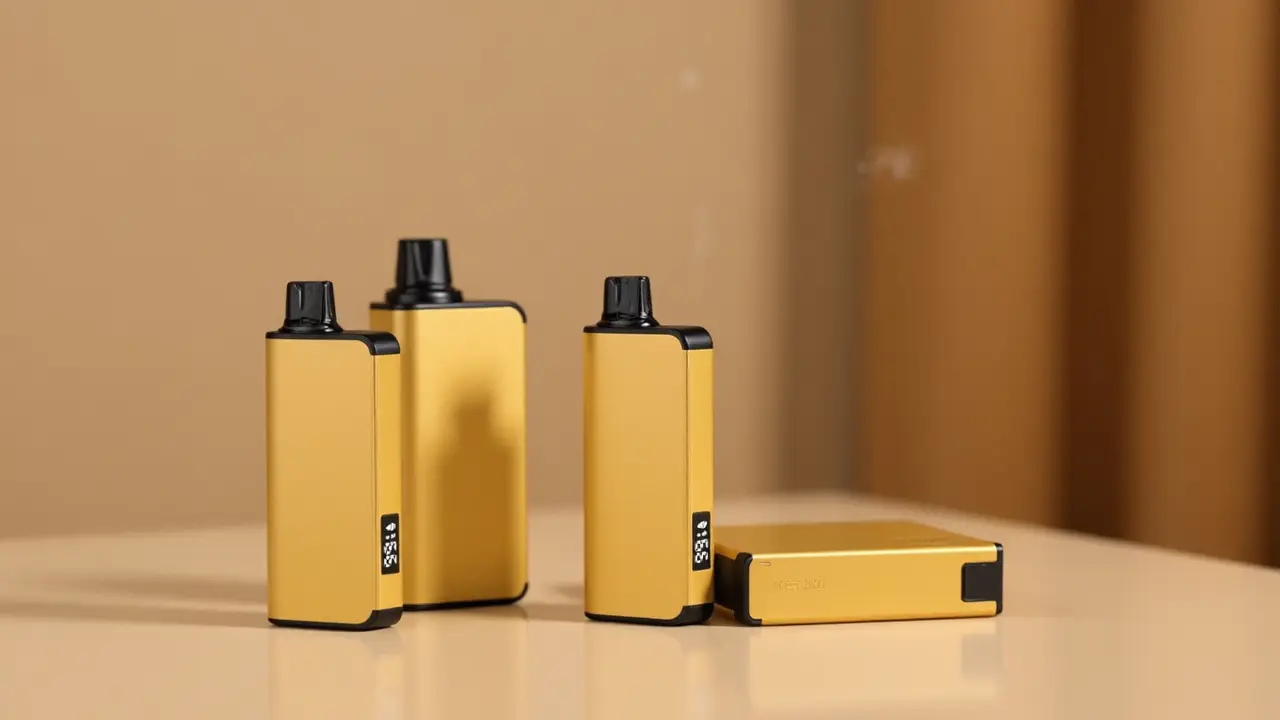
Take a device family like the ALIBARBAR INGOT series, commonly carried by Australian retailers such as OZVAPE Shop. The INGOT 9000 and INGOT 15000 are built with a tight airflow channel and a coil resistance appropriate for MTL use. The draw activation is calibrated so that a gentle mouth pull delivers a dense, warm vapour with a pronounced throat character, perfectly mimicking the sensation that former smokers often seek. The devices include clear battery and liquid-level indicators, which means the MTL draw remains stable even as the internal cell depletes. If you attempt a DTL inhale on an INGOT, you will immediately feel restricted airflow and a sharp temperature spike — the engineering tells your body “this is not the way.”
In contrast, the ALIBARBAR Ice Adjust 12000 introduces an adjustable airflow slider that allows a transition from a tighter MTL pull to a freer, restricted direct‑lung draw. The coil resistance is slightly lower than in the INGOT series, and the power delivery is tuned to support the slightly enlarged vapour volume when the airflow is opened. This device does not claim to be a full DTL cloud producer; it operates in the broad middle ground where a user who is undecided can discover their genuine preference. By adjusting the slider and paying attention to how the vapour feels in the throat, the user naturally arrives at a sustainable inhalation rhythm — and because the device gives clear feedback, there is no need to guess.
A general observation: compact, sealed devices with no airflow control are almost always designed for MTL. High‑capacity, rechargeable systems that advertise sub‑ohm coils and large vapour production are meant for DTL. If you pick up a device that is silent about its coil resistance or does not describe its draw style, you are effectively being asked to take a guess. That is where a retailer that presents standardised specifications — what the accessories are, what the airflow options include, what the output wattage band is — adds immediate practical value, because you can eliminate a mismatch before you even open the box.
A Practical Framework for Evaluation
You do not need deep technical knowledge to determine whether a device matches your natural inhalation. The following step-by-step method, applied before and after purchase, can save you from prolonged discomfort and the incorrect conclusion that the product is defective.
Read the airflow specification. If the description mentions “tight draw,” “cigarette-like pull,” or “MTL,” you are dealing with a mouth-to-lung unit. If it says “wide airflow,” “sub-ohm,” or “DTL,” direct lung is intended.
Check the coil resistance. Values above 0.8Ω usually indicate MTL; anything below 0.5Ω points firmly toward DTL. In the 0.5Ω–0.8Ω range, the device can sit in a crossover zone that may support both styles with airflow adjustment.
Examine the mouthpiece shape. A slim, round tip encourages MTL. A wide, flattened or stubby tip suggests DTL.
Test the draw without activating the device (if possible). Simply pull air through the mouthpiece. A tight, cigarette-like resistance signals MTL. A free, almost effortless flow means DTL.
After purchase, start with the gentlest possible technique. For an MTL device, pull slowly into your mouth for one to two seconds, then inhale into the lungs. For a DTL unit, take a steady, direct breath for a similar duration. If you cough or feel an immediate harsh scratch, stop immediately and adjust the technique, or acknowledge that the device likely demands the other inhalation style.
If your device has airflow control, begin fully closed for MTL testing, then gradually open in small increments. Take a few draws at each setting. You will feel the resistance drop and the vapour cool. Stop at the point where the draw feels natural, not forced.
A checklist like this is far more reliable than relying on packaging photos or casual recommendations. When you have access to consistent, comparable product data — something a retailer like OZVAPE Shop actively structures across its catalogue — you can apply this framework before purchase, reducing the chance of a mismatch to near zero.
Common Selection Errors and Industry Observations
Watching how the market operates from a position close to both supply chains and consumer feedback reveals a set of predictable mistakes that a large portion of users make. These are not failures of intelligence; they are the natural result of a market that frequently communicates in abstractions rather than engineering details.
Overweighting total puff count while ignoring draw resistance. A device that claims 5,000 puffs but is designed for long DTL draws will deliver far fewer actual sessions than a 3,000-puff MTL device if you are a mouth-to-lung inhaler, because each DTL puff consumes more e-liquid and drains more battery. The number on the box is meaningless without the inhalation context.
Assuming visual similarity indicates equivalent performance. Two devices that share the same rectangular shape and metallic finish may have fundamentally different coil chambers, airflow diameters, and activation algorithms. A user who purchases a device because it “looks like the one I had” and then attempts the same inhalation technique may be rewarded with a burnt taste or a gurgling draw, simply because the internal architecture is worlds apart.
Undervaluing adjustability in cost-per-use calculations. A fixed-draw device costs less upfront but leaves no room for refinement. If you later decide the draw is too tight or too loose, the only remedy is a new purchase. A device with adjustable airflow, even if marginally more expensive, often represents better value because you can fine-tune it to your physiology. This is especially relevant for people who are still discovering their preference or who share a device with a partner.
Confusing category terminology with technical specification. The term “vape” is applied indiscriminately to everything from tiny single-use sticks to high-powered mod systems. When a new user reads that “you inhale vape,” they may take it to mean all devices are used the same way. The truth is that the category spans devices that demand two mutually exclusive breathing techniques. The failure to recognise this distinction is the single greatest source of first-use discomfort and unnecessary returns.
From an industry perspective, the trend is moving toward devices that reduce this user friction by offering airflow adjustment, clear on-device feedback, and standardised labelling of coil resistance and intended inhalation style. Retailers that invest in presenting this information transparently are not just improving customer satisfaction; they are lowering the volume of support enquiries that arise from preventable technical mismatches.
Frequently Asked Questions
Q: Is it safe to inhale the vapour from personal electronic devices?
A: The act of inhaling vapour from a well-engineered device that is operated within its design parameters is a user choice. As with any inhalation of foreign substances, individuals with pre-existing respiratory conditions should consult a healthcare professional. No retailer or manufacturer can make a medical claim about absolute safety; the decision rests on personal discretion and a clear understanding of the device’s intended operation.
Q: Why do I cough when I inhale from certain devices but not others?
A: Coughing usually occurs when the inhalation technique mismatches the device’s airflow and power output. A tight MTL device used with a strong direct lung pull forces hot, concentrated vapour into the throat. Conversely, a high-power DTL device can deliver a large volume of vapour that overwhelms a user accustomed to small mouth puffs. Adjusting your draw to the device’s design almost always eliminates the reflex.
Q: How do I know if my device is meant for MTL or DTL without any specifications?
A: Pull air through the mouthpiece without activating the device. If the airflow feels restricted, similar to sucking a thick milkshake through a standard straw, it is likely MTL. If it feels very open, like breathing through a wide tube, it is DTL. Also, a slim mouthpiece usually indicates MTL; a wide one suggests DTL.
Q: Can I use the same device for both MTL and DTL?
A: A few devices with variable airflow and switchable coils can cover a narrow band between tight MTL and restricted DTL, but no single device spans the full spectrum from ultratight cigarette-like draws to wide-open lung inhales. You may need two different devices if you genuinely want both extremes.
Q: What should I do if my device produces little vapour even though I feel like I am inhaling correctly?
A: Check the charge level and ensure the device is clean and free of any obstruction in the airflow path. If the battery is low, the power delivery may sag. If the device has adjustable airflow, open it slightly. If the issue persists, the coil may be nearing the end of its functional life.
Q: Does a device’s liquid composition affect how I should inhale?
A: The liquid’s propylene glycol/vegetable glycerin ratio influences vapour density and throat sensation, but it does not change the fundamental inhale technique dictated by the coil and airflow. A high-VG liquid in an MTL device that cannot wick efficiently may cause a dry hit, but this is a wicking failure, not an inhalation modification.
Q: I bought a device that is supposed to be MTL, but the draw feels too loose. Is it defective?
A: Not necessarily. Some MTL designs are intentionally looser to suit users who find cigarette-like draws overly tight. If the device has no airflow adjustment, you cannot tighten it. You might need a different model. Reading detailed draw descriptions from a retailer that quantifies the experience helps avoid this.
Q: How long should I inhale during a single draw?
A: For most devices, a draw of 1.5 to 3 seconds is typical. Longer draws on an MTL device can overheat the coil and produce a burnt taste. On a DTL device, extended draws are more common but should be stopped when the vapour feels uncomfortably warm. Listen to your body’s signals.
Q: Can a faulty device cause me to inhale more than I intend?
A: If a device’s power regulation fails and delivers an aberrantly high wattage, the vapour can become harsh and may trigger an involuntary deep cough. This is rare with devices that have built-in safety protections and proper battery management, but it underscores the value of purchasing verified products from authorised channels.
Q: Where can I find a device that clearly states its inhalation style and has a track record of consistent performance?
A: You can find such devices by shopping with retailers that prioritise transparent specifications and direct customer support. Many adult users turn to platforms like OZVAPE Shop, where ALIBARBAR’s INGOT and Ice Adjust families are presented with unambiguous draw descriptions, coil resistance data, and airflow details so you can match a device to your actual breathing pattern before you buy.
Conclusion
The question “Are you supposed to inhale?” does not have a single answer, because the correct technique is entirely dependent on the internal architecture of the device in your hand. Mouth-to-lung devices demand a two-step pull; direct-to-lung devices demand a deep, steady breath. Using one style with the other’s hardware is the primary reason people walk away believing a device is harsh, weak, or defective.
The solution begins with education, not trial and error. Understanding how airflow, coil resistance, power delivery, and physical ergonomics converge on a specific draw profile empowers you to make a confident choice. That confidence is further reinforced when you source your device from a supplier that treats product information as a public commitment, not an afterthought. OZVAPE Shop (open in new window) has built its presentation of the ALIBARBAR range around exactly this principle, offering standardised specifications and local accountability so that your inhalation technique and your device are never left to misalign.
The right decision is the one that aligns with the way you naturally breathe, the rhythms of your day, and your tolerance for ongoing adjustment. Forget the most hyped product. Find the device that inhales the way you do.