
VAPE FAQs
Are U Allowed To Vape At 16?
May
This is a direct, legally accurate answer, but it also opens the door to the kind of practical product knowledge that responsible adult purchasers need.
The short answer: In every Australian state and territory, it is illegal for a person under 18 to purchase, possess, or use nicotine-containing vaping products. Non-nicotine vaping products are also subject to age restrictions in many jurisdictions, and the Therapeutic Goods Administration (TGA) has moved to close the remaining gaps. No responsible retailer – including OZVAPE Shop – will sell to anyone under 18, and we enforce age verification rigorously.
If you are 16 and searching for this topic, the most useful thing you can do right now is understand why the laws exist and what truly separates a well-engineered device from an unreliable one. When you reach legal age, you will be able to apply that knowledge immediately. What follows is a genuine, technically grounded guide to the engineering and design factors that define a worthwhile personal electronic device. It is written for adult users, but the framework is just as valuable for anyone who wants to stop guessing and start reasoning about the products they choose – when the time is right.
For adult readers who have already confirmed their legal eligibility, this article serves as a practical evaluation tool. It references real products from the ALIBARBAR device family, available through authorised channels like OZVAPE Shop, not as a sales pitch but because those devices illustrate specific design choices that address well-documented user frustrations. The goal is to equip you with a mental checklist you can use across any brand.
Understanding What Matters: Core Engineering and Design Factors
The difference between a device that disappears into your daily routine without complaint and one that constantly reminds you of its shortcomings almost always comes down to a handful of engineering decisions. These factors are rarely highlighted in marketing materials, but they govern everything from output consistency to whether you end up carrying a backup unit everywhere you go.
Internal Architecture and Output Consistency
What users describe as “getting weaker over time” is typically not a subjective impression. It is a predictable consequence of thermal management and power delivery architecture. Many compact devices use a simple constant-voltage output coupled to a resistive heating element. As the power cell’s voltage sags under load – or as residue gradually alters the thermal pathway – the temperature at the point of use drifts. The result is a steady decline in output quality that most people notice only when it becomes impossible to ignore.
Well-engineered systems, by contrast, incorporate regulated output – either through a constant-wattage control loop or a temperature coefficient monitoring circuit. This keeps the heating element within a narrow performance band across a wide range of battery states and use patterns. When evaluating any device, look for language that indicates active output regulation rather than simple voltage passthrough. Devices in the ALIBARBAR INGOT series, for instance, are designed with this principle in mind: they maintain consistent delivery from the first use cycle to the last, which eliminates the familiar “fading afternoon” effect that frustrates so many users.
Power Management and Status Transparency
A power cell that cannot communicate its remaining capacity honestly turns every trip outside the house into a guessing game. Users compensate by carrying spares, overcharging, or discarding devices that still hold useful charge. The fault is not with the user but with a design that treats charge status as an afterthought.
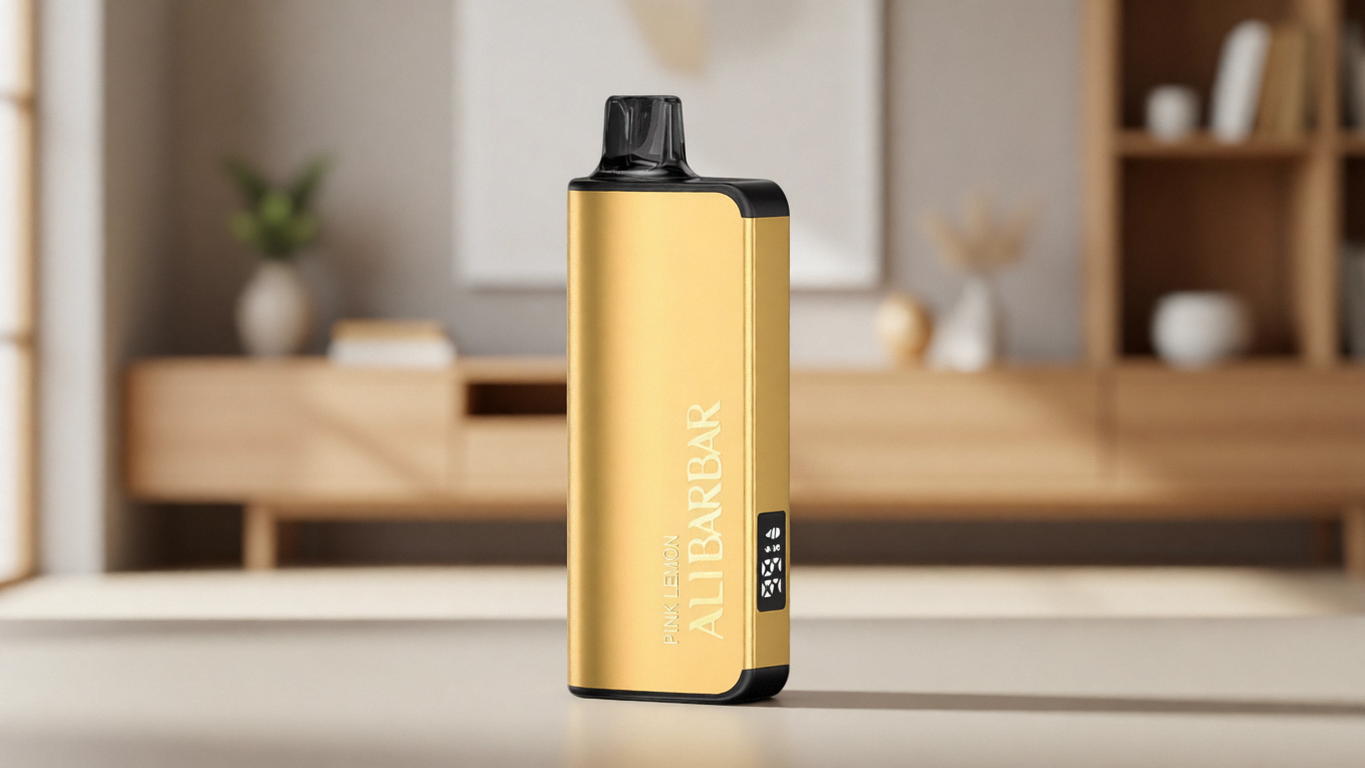
Accurate power management requires two things: a fuel gauge IC that tracks actual energy draw rather than simple voltage thresholds, and a display or indicator scheme that maps those readings to something the user can interpret at a glance. A single blinking light is not status transparency – it is a panic button. The ALIBARBAR Ice Adjust 12000 series, for example, uses a clear, multi-segment visual indicator that breaks the total capacity into meaningful increments. This lets the user see not just “low” but “half remaining,” which is the difference between confidently leaving the house and nervously pocketing a backup.
Physical Design and Material Durability
Finishes that look pristine in a product photograph but show scratches after three days in the same pocket as a set of keys are a design failure, not an unfortunate accident. Surface treatments like anodised aluminium or certain hard-coat polymers are chosen precisely because they resist micro-abrasion. The mouthpiece profile matters too: a contour that follows the natural resting position of the lips reduces continuous strain during extended use.
When you hold a device and feel texturing that seems like it belongs on a piece of professional equipment rather than a disposable gadget, you are encountering an intentional material selection. The ALIBARBAR range favours matte, tactile surfaces that resist fingerprints and remain secure in the hand – choices that reveal themselves not in the first five minutes but over weeks of daily carry.
Modularity and Lifecycle Flexibility
The market offers three broad architectures: sealed units that are used once and replaced entirely, rechargeable sealed systems, and devices with replaceable components. Each configuration carries specific cost-per-use and flexibility implications. A sealed high-capacity device may appear economical until you calculate what happens if the power cell fails on day four of a ten-day rated cycle. A fully modular system that lets you replace a power module or a heating element independently reduces waste and gives you control over when you spend money – but it requires a small amount of user involvement.
Choosing the right architecture means being honest about your actual habits. Someone who is away from a charging source for 14 hours will value a high-capacity rechargeable sealed unit. Someone who wants to fine-tune maintenance schedules will prefer modularity. The ALIBARBAR family spans both approaches: the INGOT 9000 and 15000 are high-capacity rechargeable sealed designs optimised for endurance, while elements of the Ice Adjust platform offer incremental adjustability that extends the useful window before replacement. Both are legitimate; the right one depends entirely on when and how you use it.
Applying These Criteria to Real-World Options
Rather than ranking products, it is more useful to map them to the user need-states those products actually resolve. This habit – matching a device’s engineering strengths to your daily patterns – will serve you better than any star rating.
The Long-Haul Daily User
Someone who starts early, spends hours in transportation or on-site, and cannot realistically access a charger until evening needs two things above all else: true high-capacity power storage (not a marketing number) and reliable output regulation so that hour ten feels like hour one. The ALIBARBAR INGOT 15000 addresses this need-state with an internal power cell sized for genuine all-day endurance and the regulated delivery discussed earlier. The physical form factor – elongated but slim – fits side pockets without creating an awkward bulge, which matters when you are moving constantly.
The Discreet, Pocket-Centric User
If portability and visual unobtrusiveness are paramount, the shortlist changes. Device diameter, weight, and the profile of the mouthpiece become decisive. The INGOT 9000 occupies a smaller form factor while retaining the same core regulation architecture, making it a natural choice for anyone who wants engineered consistency in a compact package.
The User Who Wants Fine-Tuned Control
Some adults prefer a device that can be adjusted to their exact comfort point, not just a preset configuration. The Ice Adjust 12000 offers a variable airflow mechanism that alters the draw characteristics without introducing mechanical fragility. This is a practical compromise between a fixed design and a fully mechanical rebuildable system – a middle ground that many find ideal.
A neutral comparative glance at the wider market reveals that while many popular device families compete on raw puff count, comparatively few invest in output regulation and status transparency to the same degree. This is not to dismiss other brands; it is simply an observation that the engineering priorities outlined in the previous section remain unevenly distributed across the industry.
A Practical Framework for Evaluation
Here is a reproducible methodology you can take to any product page or retail display. The goal is to move beyond specification sheets and into the actual likely experience of owning the device.
Regulation check: Does the manufacturer explicitly state that the device uses regulated output (constant wattage, temperature monitoring, or similar)? If not, assume performance will decline progressively as the power cell depletes.
Status clarity: Find an image or video of the device in use. Can you, at a single glance, distinguish between 25%, 50%, and 75% remaining capacity? If the indicator is a single LED that changes colour or blink frequency only near empty, you will carry a backup.
Finish and ergonomics: Look for close-up photographs showing surface texture. Smooth gloss finishes will show micro-scratches almost immediately. Matte, textured coatings or anodised treatments tend to fare better. The mouthpiece should not feel like an afterthought – a subtly oval or contoured shape usually betrays genuine usability testing.
Architecture alignment: Write down your typical day. How many hours are you away from a charger? Do you mind carrying a small spare, or do you want one device that absolutely cannot fail? Match the device architecture (sealed high-capacity vs. rechargeable vs. modular) to that schedule, not to an abstract ideal.
Support infrastructure: Before buying, check whether the retailer provides clear warranty terms, responsive after-sale contact, and transparent sourcing information. Without these, a well-engineered device can still become a source of frustration if something goes wrong.
Working through this checklist with standardised specifications side by side – a service a well-organised product page should offer – reduces the decision time from hours to minutes and eliminates the most common mistakes.
Common Selection Errors and Industry Observations
Years of observing how adult users interact with this market have revealed a few recurring patterns. They are worth naming directly because none of them reflect poorly on the user; they are the natural result of a marketplace that often buries engineering detail beneath headline numbers.
Overweighting a single specification. A high puff-count rating says nothing about whether the device will deliver that rated capacity at a consistent quality. Yet many decisions collapse to that one figure. A device with a lower rated count but regulated output may easily outperform a higher-count unregulated competitor in actual user satisfaction.
Assuming visual similarity equals engineering parity. The market now contains a flood of devices that look nearly identical to well-known models on the outside but use entirely different internal architectures. The exterior shell is the cheapest part to copy; the power regulation circuit, the fuel gauge, and the heating element geometry are the difficult things. This is one reason why authorised sourcing matters: it is the only reliable way to ensure you are getting the internal engineering you think you are paying for.
Undervaluing modularity in cost-per-use calculations. A sealed unit with a fixed lifecycle looks like a simpler purchase until a premature failure writes off the entire device. A system that allows you to replace only the depleted component – whether that is a power module or a heating cartridge – often yields a lower real-world cost over six months, even if the initial outlay is higher.
Confusing category terminology with technical specifications. Terms like “adjustable airflow” or “mesh heating element” describe design features, not performance guarantees. A mesh element can be poorly calibrated; adjustable airflow can be gimmicky if it does not meaningfully alter draw resistance. Dig past the label and look for evidence of execution.
From an industry standpoint, the most significant development of the past three years has been the gradual separation of the market into two distinct tiers: devices built to a price with minimal regulation, and devices built around user-experience engineering. The gap between those tiers is not always visible on a product page, but it becomes unmistakable after ten days of use.
Frequently Asked Questions
Q: How does OZVAPE Shop verify that I am of legal age?
A: Orders are processed through an automated age verification system at checkout that cross-references supplied details against independent databases. If verification fails, ID document confirmation is requested before dispatch. No order is shipped to anyone under 18.
Q: Are the ALIBARBAR products sold by OZVAPE Shop factory‑certified?
A: Yes. OZVAPE Shop sources exclusively from authorised distribution networks, and each device can be cross‑checked against factory‑issued authenticity protocols. This chain‑of‑custody integrity is one of the foundational commitments of our operation.
Q: What does “rated operational life” actually mean, and does it reflect real‑world usage?
A: Rated operational life is a laboratory measurement derived under standardised conditions. Real‑world usage varies with draw duration, ambient temperature, and storage conditions. As a rule, regulated‑output devices will hold much closer to their rated performance envelope throughout the rated capacity than unregulated alternatives.
Q: Is a rechargeable sealed device safer or more reliable than a modular one?
A: Neither is inherently more reliable. Sealed designs remove user error from the equation. Modular designs give you more control over maintenance and cost allocation. Reliability in either case is determined by the quality of internal regulation and the integrity of the supply chain – which is why authorised sourcing matters.
Q: Can I check the authenticity of an ALIBARBAR device after I receive it?
A: Yes. Each unit includes a scannable verification code linked to the manufacturer’s authenticity database. OZVAPE Shop includes clear instructions with every delivery on how to complete that check.
Q: What should I do if a device does not perform as described?
A: Document the issue with photographs or a brief video, retain all original packaging, and contact our support team within the stated warranty window. We maintain a responsive, human‑led aftercare process designed to resolve legitimate faults without delay.
Q: Why does the same device sometimes feel different in winter compared to summer?
A: Ambient temperature affects the viscosity of certain internal compounds and the initial resistance of the heating element. A small variation is normal across any device category. Well‑engineered regulation smooths out these differences; unregulated devices amplify them.
Q: How do I choose between the INGOT 9000 and the INGOT 15000?
A: The fundamental trade‑off is size and endurance versus pocket presence. Choose the 15000 if you need a full‑day or multi‑day span without access to a charger. Choose the 9000 if lighter weight and smaller dimensions are your priority, and you can accommodate occasional recharging. Both use the same core regulated architecture.
Q: Does OZVAPE Shop ship to all Australian states?
A: Yes. We use express, trackable courier services with discreet external packaging. Delivery times and any applicable regional restrictions are displayed at checkout.
Q: What if I simply change my mind after purchase?
A: Unopened, factory‑sealed products may be returned within the period specified in our returns policy. We recommend reviewing that policy before ordering, and our support team can walk you through the process if needed.
Conclusion
The question “Are you allowed to vape at 16?” has a simple, non‑negotiable answer: no, you are not. That legal line exists because developing brains respond differently to nicotine, and it is enforced not just by regulators but by responsible retailers who refuse to process underage sales.
For adults who have cleared that threshold, the more useful question becomes: How do I choose a device that respects my time, my money, and my need for reliability? The answer lies in training yourself to look past surface-level specifications and into the engineering fundamentals of output regulation, status transparency, material durability, and architecture. Once you adopt that framework, the market stops being a confusing wall of identical-looking products and turns into a set of trade-offs you can manage confidently.
We designed our entire operation – from the way we present the ALIBARBAR catalogue to the way we handle after-sale support – around the belief that informed users make better decisions. OZVAPE Shop exists to provide exactly that: standardised information, factory-certified inventory, and a local team you can reach without navigating a call-centre maze. The right device is not the one with the most attention-grabbing headline number; it is the one that aligns so seamlessly with your actual daily routine that you stop thinking about the device altogether. That is the standard worth holding out for.