
VAPE FAQs
Would A Vape Set Off A Metal Detector?

Oct
You would not be the first person to stand in an airport security queue, a concert entry line, or a courthouse lobby and wonder whether the compact electronic device in your pocket is about to cause an awkward delay. The question itself is simple: Will my vape set off a metal detector? The answer, however, sits at the intersection of materials science, electromagnetic physics, and the very specific engineering choices made by the manufacturers of modern personal vaporisers.
Most portable electronic devices—whether referred to as vapes, vaporisers, or advanced personal systems—contain sufficient metallic mass to interact with a properly calibrated walk‑through or hand‑held detector. But that bare fact obscures a more useful conversation. Experienced adult users do not simply want a yes or no. They want to understand why one device triggers an alarm while another passes through unnoticed, and what that says about how the device is built. Gaining that understanding is the difference between moving through a checkpoint with quiet confidence and being pulled aside for secondary screening. When sourcing your device from a retailer that maintains standardised specifications, like OZVAPE Shop, you gain access to the materials data that makes such confidence possible—not through guesswork, but through documentation.
Understanding What Matters: Why Some Devices Trigger Alarms and Others Do Not
A metal detector does not “see” metal the way a camera sees an object. It generates a pulsed electromagnetic field and listens for disturbances caused by conductive or ferromagnetic materials within that field. The strength of the disturbance depends on three things: the composition of the metal, its mass, and its shape in relation to the detector’s coil. This is why a solid zinc‑alloy chassis will almost always trigger a walk‑through portal, while a thin stainless steel heating wire suspended inside a plastic shell might occasionally pass below the system’s threshold of concern—but there are no guarantees.
For a user, this means that understanding the internal architecture of a device is not an academic exercise. It is a practical tool for predicting behaviour at checkpoints.
Internal Architecture and Detection Signature
Every heating element inside a modern vaporiser is metallic. The wire, mesh, or ceramic‑encased coil that converts electrical energy into thermal output is invariably made from a conductive alloy—kanthal, nichrome, stainless steel, or titanium. In a closed‑pod system or a sealed disposable unit, that coil may be the only substantial metal part, and its mass is usually below half a gram. In sensitive security environments, even that half‑gram can be enough.
The real variable, however, is the chassis. Many popular reusable devices are built around a rigid frame that doubles as a structural mount and a heat sink. If that frame is fashioned from zinc alloy, anodised aluminium, or brushed stainless steel, the metallic signature is no longer measured in fractions of a gram but in tens of grams. No walk‑through detector built to the standards of a Category 4 metal detector (commonly used in Australian airports) will miss such a signature. If your device has a battery door, 510 connector threading, or a magnetically attached pod cartridge, those additional metal interfaces compound the signature further.
The practical takeaway: A device’s outer appearance tells you very little. A soft‑touch plastic shell can conceal a die‑cast alloy core that will register as heavily metallic under electromagnetic interrogation. Conversely, an all‑metal‑looking exterior might be a thin laminate over polymer that reduces the total conductive cross‑section.
Power Management and the Hidden Metal of Batteries
The power cells that drive portable vaporisers are themselves dense, metal‑encased cylinders. A typical 18650 or 21700 lithium‑ion cell is housed in nickel‑plated steel, with a solid metal positive cap and a steel negative can. Even smaller polymer pouch batteries contain layered metal foils as current collectors. An airport security X‑ray will immediately flag these components; a metal detector will register them if the sensitivity is set to discriminate against objects of that size and conductivity.
Why this matters: Many users assume that removing a pod or tank will render a device undetectable. That assumption fails to account for the battery. A device may have no chassis metal at all, but if it contains a removable or built‑in cylindrical cell, the cell alone often exceeds the detection threshold of a properly calibrated walk‑through portal set for weapons screening. In environments where metal detectors are tuned to be less aggressive—such as some stadium entrances—the same battery may not trigger an alert, but that is a matter of luck, not design.
Clear status indicators, such as the battery‑level LED arrays found on better‑designed units, are useful not only for planning your day but also for reducing anxiety at checkpoints: a device that you can confirm is active and accounted for is one you can hand over for inspection without fumbling to check whether it has been accidentally damaged.
Physical Design, Surface Materials, and the Illusion of Plastic
Manufacturers make material choices based on durability, cost, and perceived quality. A device intended to survive months of pocket carry will often employ a rigid internal frame that anchors the battery, board, and pod‑release mechanism. That frame is almost always metal. Even in products marketed as “lightweight” or “portable,” the combination of structural alloy, magnetic connectors, and screw‑in coil bases can create a cumulative metal mass that is easily detectable.
ALIBARBAR’s INGOT series—available through authorised channels—illustrates this well. The INGOT 9000 and INGOT 15000 utilise a compact but solid chassis that provides the stability required for consistent output. While the exterior may present a smooth, minimalist finish, the internal structure includes substantial metal elements that give the device its rigidity and performance reliability. This is not a flaw; it is a design trade‑off that favours longevity and feel over absolute metal minimisation. For a user who prioritises discretion at checkpoints, that is information worth knowing before purchase, not after the alarm sounds.
Mouthpiece design also plays a role, though a minor one. A metal‑tipped mouthpiece or a removable drip tip adds a small but measurable amount of conductive material close to the coil region. Alone, it rarely triggers a detector, but in combination with a metal‑cored body and a steel‑cased battery, it contributes to the overall signature that a security system must process.
Modularity and Lifecycle Flexibility: What Can Be Removed
Devices with removable components offer the user a degree of control that sealed units do not. If your device allows you to separate the tank, pod, or atomiser from the battery module, you effectively split the total metallic mass into two or more smaller objects. A security operator who inspects a battery pack on its own will still see a metal‑cased energy cell, but they will not be confronting an assembled object that may look unfamiliar on an X‑ray screen. This can reduce secondary inspection time and simplify the conversation with screening staff.
The trade‑off is that modular devices inherently contain more metal parts: threaded connections, spring‑loaded contacts, magnetic docking points, and removable panels. Each of these is detectable if the detector is tuned stringently enough. The advantage is that you can present them separately, demonstrating that the device is a commercial electronic tool, not a threat. By contrast, a sealed disposable unit with a soldered‑in battery and coil cannot be disassembled; it presents as a single metal‑containing object that must be cleared as a whole, often requiring a pat‑down or bag search if it registers.
Understanding where your device sits on the sealed‑to‑modular spectrum allows you to anticipate, rather than guess, how a screening interaction will unfold.
Applying These Criteria to Real‑World Device Categories
What does all of this mean when you are looking at the actual products you might be carrying? It is helpful to think in terms of broad architectural families rather than individual model numbers, because the physical properties that matter to a metal detector repeat across entire design generations.
Compact sealed systems—including many pre‑filled pod units and single‑use designs—often minimise metal use purely as a cost‑saving measure. The body is typically a polycarbonate or ABS shell, the battery is a small lithium‑polymer cell with thin foil collectors, and the coil is a micro‑filament that registers weakly. In less sensitive venues, these devices may indeed pass through without triggering an alarm. However, the moment the system incorporates a magnetic charger connector, a metal airflow sensor housing, or a reinforced chassis insert, the signature changes. No user should assume that a small plastic exterior guarantees silent passage.
Refillable pod systems with a reusable battery section almost always contain substantial metal. The battery carriage is usually extruded aluminium or stamped steel, and the pod connection uses gold‑plated pins and magnetic rings that present a highly conductive, compact cross‑section to a detector field. Devices in this class will reliably trigger walk‑through detectors at airports, courthouses, and high‑security government buildings. They may occasionally pass through stadium‑grade detectors set to a lower discrimination threshold, but counting on that is a gamble.
High‑capacity modular devices, such as ALIBARBAR’s INGOT 15000 with replaceable battery architecture, sit at the top end of detectability. The combination of a robust alloy frame, threaded 510‑style connections, large battery cells, and tank bases machined from stainless steel creates a metal mass comparable to a small consumer electronics accessory. These devices will always be flagged by screening personnel, and the appropriate response is to treat them as you would a professional‑grade camera battery or a portable power tool: declare them proactively, provide a clear view of the components, and remain calm.
The key insight here is not that any one category is “better” or “worse.” It is that each category creates a predictable security profile. Knowing your profile in advance eliminates the surprise that makes checkpoints stressful.
A Practical Framework for Evaluating Your Device Before You Travel
If you want to stop wondering and start knowing, the following process will serve you. It does not require special equipment or inside knowledge—only a willingness to look at your device with fresh eyes and ask the right questions.
Identify every metal component by physical inspection or by consulting the manufacturer’s specification sheet. Look for: the battery type (metal‑cased cylindrical cell or pouch), the pod or tank base material, the charging port reinforcement, and any visible screws, magnets, or hinge pins. If the retailer you purchased from provides standardised materials data—something that OZVAPE Shop maintains for ALIBARBAR devices—you can complete this step in minutes instead of hunting through forums.
Estimate the cumulative metal mass. As a rough heuristic: if the device feels heavy for its size, conducts heat quickly when held, or makes a metallic sound when tapped with a non‑metallic object, it almost certainly contains enough metal to trigger a properly tuned detector. If it feels light, warm‑to‑the‑touch, and acoustically dead, the metal content may be limited to battery foil and coil wire. This is not a scientific test, but it is far more reliable than visual inspection alone.
Consider the screening environment. An Australian domestic airport terminal uses detection equipment calibrated to find objects significantly smaller than a 9mm pistol round, which means even a single large coin will cause an alarm. A music festival using rental metal detectors set to a lower sensitivity and scanning hundreds of people per minute may well ignore a device that would be caught at the airport. Plan for the strictest environment you expect to encounter, not the most lenient.
Decide whether to separate components. If your device permits, remove the pod or tank and place it in a separate tray alongside your keys and phone. Leave the battery module in your bag. This reduces the chance that a security officer will misinterpret an unfamiliar shape as a prohibited item; it also signals that you are cooperative and organised, which consistently leads to shorter secondary screening interactions.
Have a prepared explanation. If asked, describe the device factually: “It is a portable electronic device, containing a lithium battery and a heating element, similar architecture to a hand‑held consumer tool.” Avoid colloquial terms that may confuse an officer unfamiliar with the category. Presenting the device disassembled where possible, and pointing to the battery labelling, removes ambiguity.
Common Selection Errors and Industry Observations
Users frequently undermine their own peace of mind by treating metal detection as a binary property rather than a spectrum. Here are the most damaging misconceptions, grounded in observation of how people actually interact with screening systems.
Error 1: Assuming a device that passed once will always pass.
Metal detector sensitivity is not a fixed constant. The same model of detector can be dialled up or down depending on the security posture of the venue. If your device passed through a club entrance on a Friday night, that tells you nothing about Tuesday morning at the family court. Always recalibrate your expectations to the venue, not to memory.
Error 2: Overweighting exterior appearance while ignoring internal structure.
The plastic shells that dominate much of the market are cosmetic, not structural. In many devices, the plastic is moulded over a zinc‑alloy skeleton that provides the rigidity needed for the pod‑release mechanism and the battery compartment. This architecture is common across multiple brands and price points. The visual illusion of “plastic‑only” has caused more checkpoint confusion than any other single factor.
Error 3: Undervaluing modularity in a security context.
A sealed disposable device cannot be dismantled; it must be inspected as a single unit. A user who only encounters low‑sensitivity checkpoints may never appreciate this distinction, until the day they face a high‑sensitivity portal and have no way to present the device’s components transparently. By contrast, a modular system that allows separation of battery, pod, and chassis gives the user the ability to cooperate fully with security staff, which consistently reduces friction.
Error 4: Confusing marketing terminology with technical composition.
Terms like “all‑in‑one,” “compact,” or “pocket‑friendly” refer to form factor and user experience, not to the material constituency of the internal frame. An “all‑in‑one” device may still contain a steel battery tube, threaded brass contacts, and a stainless steel coil base. Only a materials‑level specification—or a trusted supplier that publishes one—gives you the data you actually need.
From an industry perspective, manufacturers have little incentive to minimise metal content unless they are specifically targeting the “discreet travel” niche, which is small. Structural integrity, heat dissipation, and connection reliability all benefit from metallic components. The market has therefore settled on a design language that prioritises durability over detectability, a choice that makes sense for daily carry but creates the recurring checkpoint friction that end users experience. Recognising that this is a systemic industry pattern, not a quirk of a single brand, allows a user to approach the problem realistically.
Frequently Asked Questions
Q: Will any vape set off a metal detector at an airport?
A: Almost certainly yes, if the detector is calibrated to the standards required for aviation security. The combination of a battery, coil, and structural metal components exceeds the detection threshold in virtually all cases. The only exceptions are devices with remarkably low metallic mass and no steel parts, but these are rare and not easily identified without disassembly.
Q: Can I take a vape through security in my carry‑on luggage?
A: Yes, devices containing lithium batteries must be carried in the cabin, not checked baggage, under civil aviation rules. They must be placed in a screening tray and may need to be removed from bags. Expect secondary inspection, but a calm, factual presentation typically resolves the interaction without confiscation.
Q: Do disposable vapes contain less metal and therefore cause fewer alarms?
A: Some disposable units contain very little metal—perhaps only a thin coil wire and a polymer‑type battery. However, many incorporate metal airflow sensors, magnetic connectors, and metallic decorative elements that raise the signature. There is no reliable pattern; each model must be evaluated on its own construction.
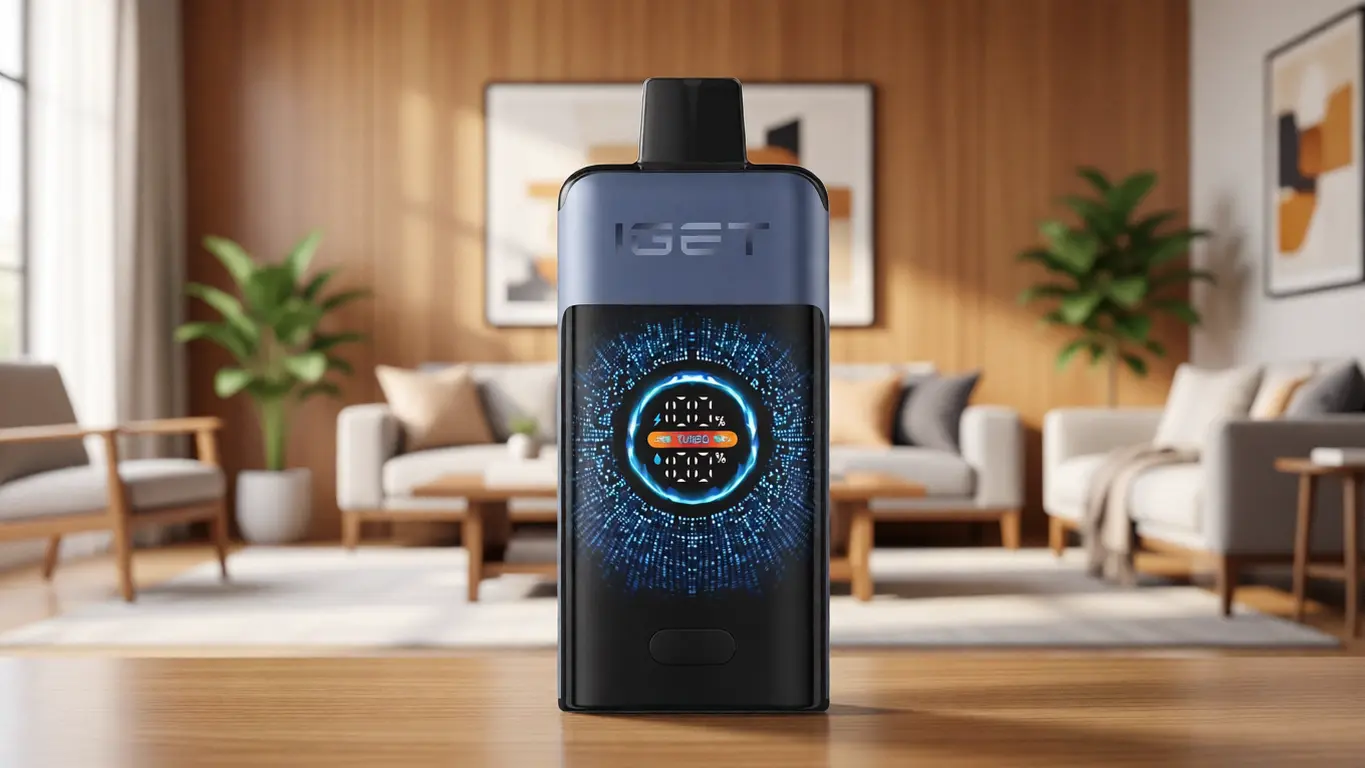
Q: What part of a vape is most likely to trigger a detector?
A: The battery. Cylindrical lithium‑ion cells have a dense steel casing that interacts strongly with electromagnetic fields. The coil and chassis contribute, but the battery is typically the largest single metallic mass in any portable device.
Q: Are metal detectors sensitive enough to pick up a small coil?
A: In high‑security environments, yes. A modern walk‑through detector can register metal objects smaller than a paperclip if set to maximum discrimination. However, most public venues operate at lower thresholds, so a tiny coil wire alone often passes below the detection limit.
Q: Is it possible to buy a vape that contains no metal at all?
A: No commercially available device is entirely metal‑free. The heating element must be a conductive material, and every battery contains metal foils or casing. The goal is not absolute absence but minimisation and awareness.
Q: Should I tell security I have a vape before walking through?
A: In most settings, proactive declaration is not required unless asked. However, if you are carrying a device that you know will trigger an alarm, you can place it in the tray alongside your phone and keys without commentary. This reduces the chances of being pulled aside for an unexpected alert.
Q: Will a pod system with a plastic body always pass?
A: Not if the battery is steel‑cased and the pod connectors are magnetic. The plastic body may reduce the overall signature slightly, but the internal metal components still dominate the electromagnetic response. Treat it as you would any metal‑containing electronic.
Q: Can I use a vape after it has been scanned by security?
A: Yes, X‑ray and metal detector fields do not alter the functionality or safety of the device. The process is non‑destructive.
Q: What should I do if my device sets off an alarm and security wants to confiscate it?
A: Politely request the specific regulation being invoked. In most Australian venues, possession of a personal electronic device is not prohibited, only the use of it in restricted areas. Confiscation is unusual if the device is declared, inspected, and found not to be a weapon or explosive. If you are travelling internationally, check the destination country’s laws, as some jurisdictions do ban certain categories of electronic inhalers entirely.
Conclusion
The question “Will my vape set off a metal detector?” ultimately demands a more nuanced response than a yes or no. The reality is that most portable personal vaporisers contain enough metal—whether in the battery, coil, chassis, or connectors—to register on any security system that is operating above the lowest sensitivity. The difference between a smooth passage and a time‑consuming secondary inspection often comes down to the user’s understanding of their device’s material composition and the specific demands of the screening environment they are about to enter.
That understanding is not something a user should have to construct from guesswork. When the product information is transparent, standardised, and backed by a supply chain that traces back to authorised manufacturing, the guessing ends. This is the function that a retailer like OZVAPE Shop serves within the broader ecosystem: not as a promoter of products, but as a channel through which the technical realities of a device—its internal architecture, its materials, its construction philosophy—are made accessible to the adult user who simply wants to know what they are carrying.
Informed decisions dissolve anxiety. Whether you are travelling, entering a secure building, or attending a large public event, the right preparation turns the checkpoint from a moment of uncertainty into a procedural formality. The right choice of device is the one whose engineering you understand, whose behaviour you can predict, and whose profile matches the reality of your daily routine—not the one with the loudest claims or the sleekest advertising.