
VAPE FAQs
Would A Vape Set Off A Fire Alarm?
Aug
It is a scenario many adults have faced: standing in a hotel bathroom, a dormitory common room, or a rented apartment, holding a personal electronic device and genuinely uncertain whether the act of using it will summon a wailing alarm and an awkward conversation. The question “Would a vape set off a fire alarm?” is rarely met with a straight answer, because the straight answer is: it depends on far more than most users assume. It depends on the physics of the aerosol the device produces, the detection technology mounted on the ceiling, and — most critically — the engineering decisions made by the manufacturer of the device in your hand. At OZVAPE Shop, we have spent considerable time documenting the design factors that allow adult users to move through the world with confidence rather than constant low-level anxiety. Understanding those factors turns a vague worry into a manageable, calculable risk.
Understanding What Matters: Vapor Physics and Alarm Triggers
To know whether a device will trigger an alarm, you need to step back from anecdotal stories and examine the underlying mechanisms. Both the device and the detector operate according to predictable physical principles, and once you understand those, you can evaluate almost any situation.
The Difference Between Vapor Droplets and Smoke Particles
What a personal electronic device emits is not smoke. It is an aerosolised suspension of liquid droplets — primarily propylene glycol, vegetable glycerin, and whatever compounds the user has selected — carried in cool, humid exhalation. Smoke, by contrast, is a dry, carbon-rich particulate produced by combustion. The distinction matters because most fire alarms are designed to detect combustion particles. However, some alarms are sensitive enough to respond to the droplet cloud if it is dense, introduced closely, or in a poorly ventilated space. The particle size distribution of vapor is broader and heavier than that of smoke; droplets settle more rapidly. A device that produces a voluminous, persistent cloud will naturally pose a greater detection risk than one that generates a lean, fast-dissipating output.
Ionization vs. Photoelectric Alarms: Which Sensitivity Matters
Ionization smoke alarms respond to the interruption of an electric current by small particles. They are generally more sensitive to the fine particles from flaming fires, but a high-density vapor plume can, under some conditions, scatter ions sufficiently to trigger them. Photoelectric alarms use a light beam and a sensor positioned at an angle; when particles reflect light into the sensor, the alarm sounds. Photoelectric detectors are typically more responsive to larger particles — the kind found in smoldering fires, but also the kind found in a dense vapor cloud. In practice, any alarm can be set off if you exhale directly into it or saturate a small room. The engineering of the device influences how easily that saturation occurs.
Device Engineering and Vapor Output Consistency
A device that suddenly surges, producing an unexpectedly thick puff because of unstable power delivery or a poorly calibrated heating element, is far more likely to cause a problem than one that maintains predictable output throughout its charge cycle. When engineers design a product line around integrity of materials and simplicity of operation — as seen in the ALIBARBAR family available through OZVAPE Shop — they prioritise heating element architecture that minimises temperature fluctuation. Consistent thermal regulation means vapor density remains steady draw after draw, allowing the user to learn, over time, exactly how much aerosol is being generated. Devices that lack this consistency keep the user in a state of guesswork, and that guesswork is what leads to alarms going off unexpectedly.
Power Management and the Risk of Unexpected Heavy Puffs
One of the most frequently overlooked contributors to false alarm events is a device’s power management behaviour. When a power cell nears depletion, some devices attempt to compensate by increasing voltage to the heating element for a final, forceful burst — often without any indication to the user. This can produce a dramatically denser cloud right when the person thinks the session is winding down. Consider what happens when that surge occurs just as someone exhales near a detector. Good power management, by contrast, delivers a controlled ramp-down, preserving consistency. This is not a luxury feature; it is a safety consideration. Devices that communicate their status honestly through clear indicators give the user a chance to adjust behaviour — step closer to a window, wait for better ventilation — before a situation escalates.
Applying These Criteria to Real-World Device Families
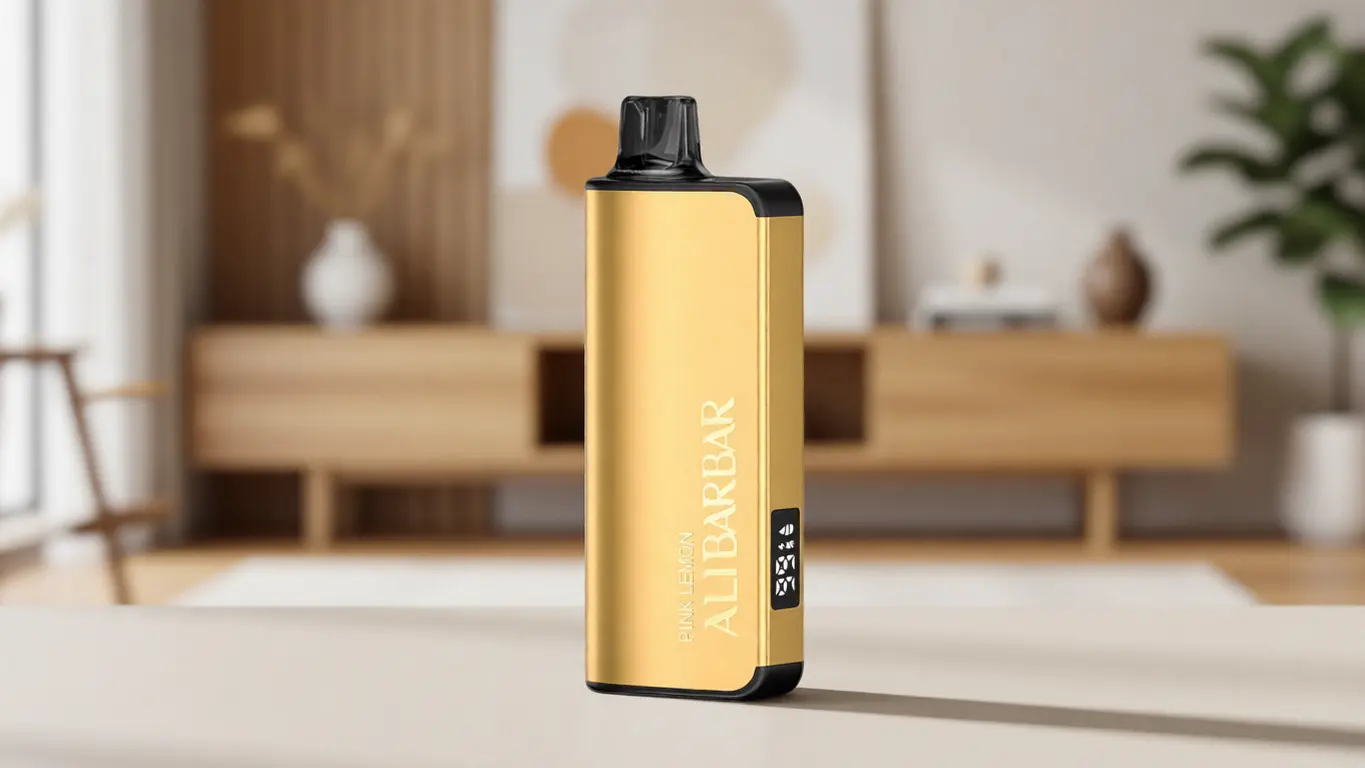
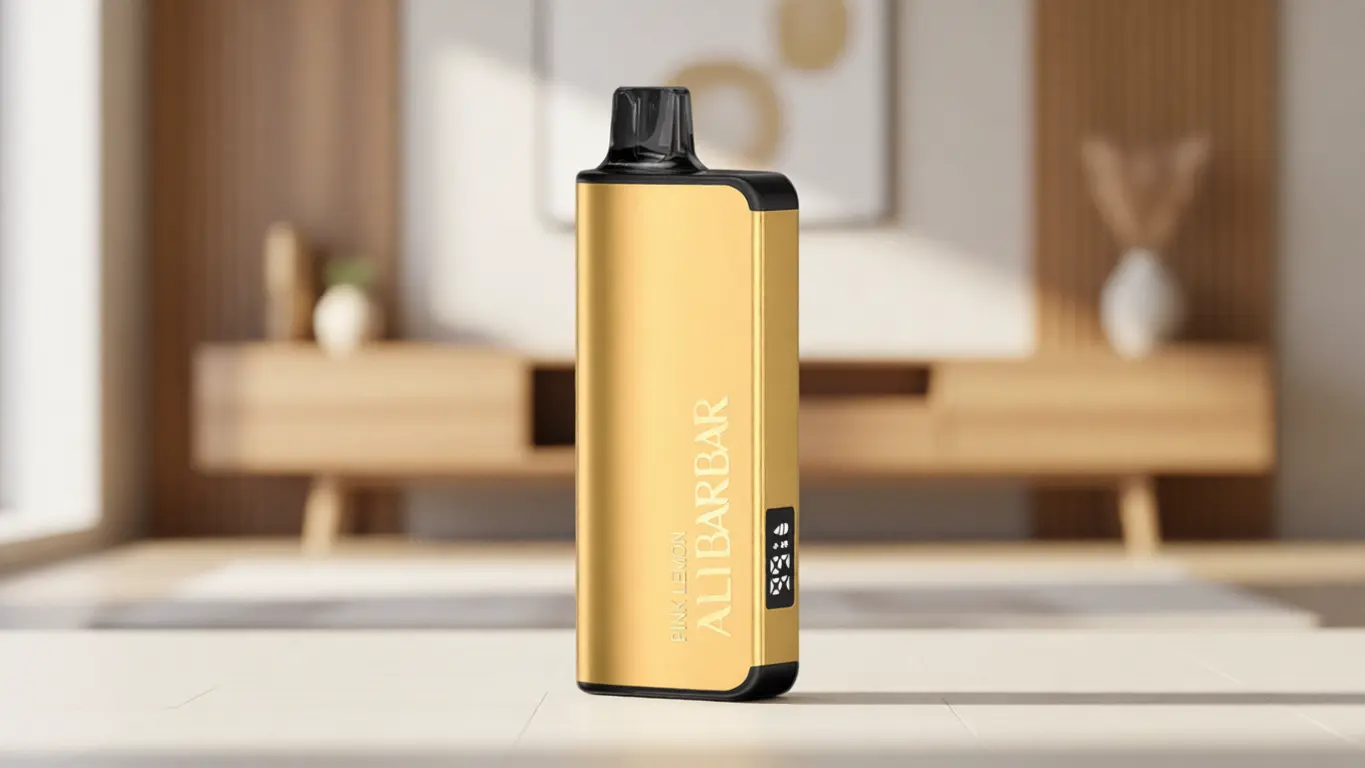
The theoretical framework becomes practical when you hold it up against actual devices. Consider the ALIBARBAR INGOT series, built around a design philosophy that emerged from years of observing precisely the kind of everyday frustrations that lead to incidents: dead power cells, ambiguous status indicators, and inconsistent output. The INGOT 9000 and INGOT 15000, for instance, employ sealed, optimised heating elements that manage heat distribution with a high degree of repeatability. Their status indicators are not decorative — they provide unambiguous data about remaining capacity and functional state. A user who knows the device is operating in its nominal range can make an informed judgment about where and when to use it. By contrast, a generic device with no authenticated supply chain may look superficially similar but behave unpredictably, sometimes producing vapour volumes far outside expected norms because of unregulated power curves.
The same logic applies to the ALIBARBAR Ice Adjust series, which allows the user to modulate output characteristics. That adjustability is not simply a matter of taste; it has a direct impact on vapor density and therefore on the likelihood of triggering a detector. In a confined space, a user who selects a leaner setting is actively managing risk. This is not something a device with a single, uncontrolled output mode can offer. The point is not that ALIBARBAR devices are uniquely safe — no device can truthfully claim to be invisible to all detectors in all conditions — but that the design decisions behind them reduce the uncontrolled variables that turn an ordinary moment into a disruptive one.
A Practical Framework for Evaluating Your Own Risk
You can assess your own exposure without relying on trial and error. Start by answering these diagnostic questions:
Does my device provide clear status feedback about remaining power and current operational mode? If not, I am operating blind, and I will naturally compensate by carrying a backup — or by using the device nervously.
What does the manufacturer or authorised retailer state about typical vapor production? A standardised specification, even if approximate, gives a baseline. Without one, every draw is a mystery.
What kind of fire alarm is installed in the environment I’m entering? If you can’t identify it, assume a photoelectric detector is present; its larger-particle sensitivity makes it the more likely to respond to vapor.
Can I create airflow? The difference between a room with closed windows and a room with a gentle cross-breeze can be the entire margin of safety. Position yourself accordingly.
Use this hierarchy: identify the alarm technology, understand your device’s output characteristics, control ventilation, and never exhale directly toward or near a detector. If you don’t have reliable data about your device’s output profile, choose to use it only where you can verify conditions — or consider switching to a device line for which that data is transparently available.
Common Misjudgments and Industry Observations
Through extended observation, we have catalogued several recurring errors that lead adult users into trouble — not because they are careless, but because they have been given incomplete mental models.
Confusing “low-odour” with “non-detectable particulates.” A device may produce minimal aroma yet still emit a substantial aerosol cloud. Odour is not the trigger; particulate density is. This confusion is extraordinarily common and leads people to assume they are safe when they are not.
Assuming that visual similarity indicates equivalent internal engineering. Two cylindrical devices that look alike can behave radically differently. One may have a precisely machined atomising chamber and regulated power curve, while the other uses a basic, ungoverned coil that spikes in output unpredictably. This is a direct consequence of a supply chain where many products are assembled from generic components with minimal quality oversight. The only reliable countermeasure is sourcing from a retailer that verifies factory certification and provides documented specifications — the kind of discipline OZVAPE Shop has embedded into its operational model.
Undervaluing modularity in risk calculation. A sealed, single-use device that begins to perform erratically near the end of its life offers the user no recourse except to ride out the inconsistency. A modular or rechargeable system with replaceable components, by contrast, allows the user to maintain the device within its designed performance envelope, reducing the chances of an unexpected output spike. This has a direct bearing on alarm risk over time.
Overweighting one encounter while ignoring baseline statistics. A friend may tell you, “I’ve used my device in hotels a hundred times and never set off an alarm.” Their device, their usage pattern, and the specific alarms they encountered matter enormously. Extrapolating from a single data point is the fastest route to a false sense of security.
From an industry perspective, the variability in device performance across different batches and unbranded supply chains remains a significant challenge. Retailers that invest in inventory authentication and post-purchase support effectively act as a filter, reducing the likelihood that a user receives a poorly made unit that behaves unpredictably in critical moments.
Frequently Asked Questions
Q: Can a vape trigger a hotel fire alarm?
A: Yes, it can, especially if the alarm is a photoelectric type and the device produces a dense vapor cloud in a small, enclosed bathroom with poor ventilation. Many hotel alarms are highly sensitive, and the consequences of triggering one can include evacuation and fines.
Q: What type of fire alarm is most sensitive to vapor?
A: Photoelectric alarms, which use a light beam scattered by particles, are generally more reactive to the larger liquid droplets found in vapor. Ionization alarms are less sensitive but not immune, particularly with large, direct exhalation.
Q: Do smaller, lower-power devices produce less risk?
A: Not necessarily. A small device with unregulated power delivery can still produce unexpectedly dense puffs, while a larger device with precise output control may be more predictable. Size alone is not a reliable predictor.
Q: Can I reduce the chance by exhaling away from the alarm?
A: Direct exhalation into a detector is the surest way to trigger it, so exhaling away from the device reduces immediate risk. However, vapor can still accumulate in a room and migrate toward a ceiling-mounted sensor, especially in still air. Combine exhaling away with ventilation whenever possible.
Q: Is there a way to test my device’s effect on an alarm safely?
A: There is no universally safe home test. Residential alarms are designed for real fire detection, and deliberately triggering them can lead to fines or, in networked systems, building-wide alerts. The safest approach is to use standardised product specifications to understand vapor output and then adjust behaviour accordingly.
Q: What should I do if an alarm does go off?
A: Act as you would in any fire alarm situation: evacuate the area, do not attempt to silence the alarm, and inform the responsible authority (hotel staff, building management, or fire service if required). Attempting to disable or tamper with an alarm is both dangerous and potentially unlawful.
Q: Does OZVAPE Shop provide information that helps with this risk?
A: Yes. OZVAPE Shop publishes detailed, standardised specifications for the ALIBARBAR range, including device architecture, power management characteristics, and output behaviour, enabling adult users to make informed assessments about their own environments.
Q: Are there devices specifically designed to minimise vapor visibility?
A: Some devices are engineered to produce a leaner, faster-dissipating aerosol by optimising heating element temperature and airflow. The Ice Adjust 12000, for example, allows the user to tailor output, which indirectly assists with vapour management. However, no device is invisible to all detection systems.
Conclusion
The question “Would a vape set off a fire alarm?” resolves into a set of interlocking factors: the particle detection method of the alarm, the engineering of the heating element and power delivery inside the device, and the user’s awareness of their surroundings. An informed adult who understands these variables can navigate environments that would leave an uninformed person in constant, low-grade anxiety. The right device is not the one with the most attention-grabbing claims; it is the one that behaves predictably, communicates its status clearly, and comes from a channel that guarantees it is what it claims to be. When you source from a platform like OZVAPE Shop, you are not just acquiring hardware — you are gaining access to the standardised information and supply chain integrity that make genuine, practical risk assessment possible. The decision ultimately stays where it belongs: in your hands, informed by data and sound reasoning.