
VAPE FAQs
Will My Vape Explode If I Drop It In Water?
Aug
Would an electronic device packed with a lithium cell actually detonate the moment it hits the bath, or is the reality more boring — and far more dangerous in a less cinematic way? The stories you hear rarely match what the engineering tells us, and that gap leaves users either terrified of something that won’t happen or careless about something that absolutely can. This article examines the interaction between water, battery chemistry, and the circuit design inside portable vapour tools, and it gives you a framework for understanding risk rather than just reacting to headlines. When you’re looking for unbiased, specification‑driven information, a resource like OZVAPE Shop gives you access to detailed device specifications and authorized inventory, which makes an informed safety assessment possible before you ever carry a device near water.
Understanding What Matters: Core Engineering and Device Architecture
Water is not a single threat. It acts on an electronic device through three distinct mechanisms — short‑circuiting, corrosion, and thermal interaction — and each unfolds on a different timescale. A user who understands these mechanisms can evaluate a device’s vulnerability without relying on advertising claims or internet folklore.
Battery Chemistry and the Reality of Thermal Events
The fear of an explosion almost always overshadows the actual hazard. A lithium‑ion cell, when submerged in water, does not behave like a stick of dynamite. What can occur, however, is a rapid electrolytic reaction if the water bridges the positive and negative terminals of an unprotected cell. That reaction generates heat, and if the cell’s internal separator melts, a thermal runaway can follow — a self‑sustaining exothermic breakdown that vents flammable electrolyte vapour.
An unconfined cell may hiss, vent gas, or spit a jet of flame, but it rarely “explodes” in the shrapnel sense unless it is enclosed in a rigid, airtight compartment that traps pressure. The more common outcome of a water‑exposed device is a sudden, silent death: the battery management circuit shorts, the cell discharges into a near‑zero‑resistance path, and the device never powers on again. The real risk shifts from “will it blow up?” to “am I carrying a latent chemical hazard that will fail the next time I plug it in?” Understanding this puts you ahead of most conversations about water and vaping hardware.
Device Sealing and the Myth of the Splash‑Proof Mod
You will see very few portable vapour devices that carry a formal ingress protection (IP) rating. The moving parts — mouthpieces, airflow adjusters, USB‑C ports — create natural pathways for liquid entry. Even a device described as “rugged” or “durable” often relies on the tightness of its press‑fits, not certified seals.
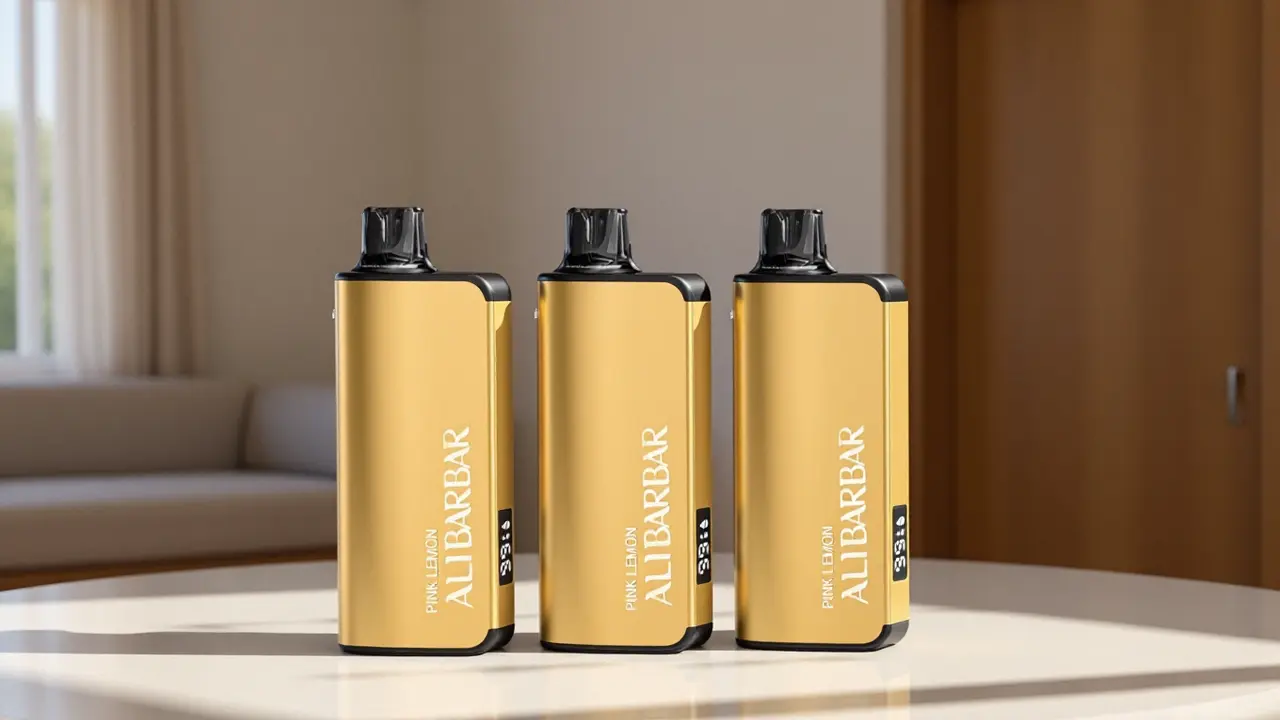
When you drop a device into water, the immediate outcome depends on whether the chassis design minimises capillary action along seams. Units with a unibody or ultrasonically welded shell, such as those found in the ALIBARBAR INGOT series, reduce the number of ingress points, and a covered USB‑C port can prevent water from wicking directly onto the charging controller. That does not mean the device is waterproof; it means that a one‑second accidental submersion followed by immediate retrieval is less likely to send voltage where it should not be than a device with an exposed PCB and an open charge receptacle. Recognising this distinction helps you interpret the difference between “better odds” and “guaranteed survival.”
Circuit Protection and Why Regulation Matters
A regulated device houses a microcontroller that monitors current, voltage, and temperature in real time. If moisture creates a partial short across the main power rail, that controller may detect an overcurrent event and shut the output down within microseconds, preventing the cell from dumping energy into the fault. The protective chip sits between the battery and the rest of the circuit; its whole job is to sacrifice itself before the cell enters an unsafe state.
Mechanical mods and many inexpensive disposable units lack this layer. In a stick‑style device with a directly wired coil and no logic board, water that simultaneously touches the battery terminals and the activation circuit can complete a current path that the cell cannot interrupt. This is why a 200‑gram aluminium box mod with a colour display and constant‑watts regulation can end up being safer in a wet environment than a tiny, sealed‑looking disposable that contains no active protection at all. The enclosure tells you nothing about what is happening inside.
Immediate Failure vs. The Corrosion Time Bomb
Water damage rarely declares itself in the first second. Salt‑laden beach water or chlorinated pool water accelerates metallic corrosion, but even tap water leaves conductive residues after it evaporates. A device that appears to work perfectly after being dried in rice for a day can develop a high‑resistance short between adjacent contact pads weeks later — exactly when you least expect it.
This latent failure mode is the most overlooked danger. A device that charges normally after a dunk may still have microscopic dendrite growth forming between the battery’s internal layers. The manufacturer’s safety mechanisms assume a dry operating environment; they are not designed to compensate for ongoing chemical degradation inside a once‑flooded cell. Treat any device that has had meaningful water exposure as chemically compromised, not merely temporarily malfunctioning.
Applying These Criteria to Real‑World Devices
Device form factor and internal layout dictate how a tool behaves around water far more than its appearance. Rather than ranking devices, it is more useful to examine three architectural categories and what they reveal.
High‑density sealed units — including many modern draw‑activated disposables and some pod‑style batteries — often sacrifice serviceability for a compact, seam‑minimised shell. The ALIBARBAR Ice Adjust 12000, for example, uses a press‑fit construction with a covered charge port and no user‑accessible battery door. This reduces the number of exposed internal contacts, so a quick drop into a sink followed by immediate retrieval may allow the internal PCBA to remain dry. However, the airflow sensor relies on a pressure differential; any water that enters the mouthpiece can block the sensor membrane and mimic an “auto‑fire” condition, creating a different type of hazard. The presence of a covered port does not translate to certified water resistance, and the user must still assume the device is compromised after submersion.
Removable‑battery box mods, especially those with magnetic battery doors and through‑holes for venting, present an obvious contradiction. They offer the user the ability to swap a cell instantly and inspect for damage, but the battery tube or tray itself is rarely sealed. Water can flood the battery compartment and create a direct cell‑to‑body short before the regulation circuit ever sees it. The fail‑safe shift is immediate: if you can physically remove the cell within seconds of immersion, you halt the reaction. That makes such a device, in a strange way, more controllable in a water accident than a sealed unit where the cell continues to discharge into the wet board until it is fully drained.
Entry‑level stick batteries and thin disposables often have the smallest, most densely packed PCBs, with exposed gold‑plated contact pads that touch both the cell and the charging cable. Water bridges these pads with near‑zero resistance. The result is frequently a dead device that will not turn on again, but the user is spared the thermal event because the short path simply collapses the cell voltage below the operational threshold. The device becomes an inert brick — frustrating, but rarely dangerous in the moment.
None of these categories should give a false sense of security. The best‑engineered device becomes a liability the moment liquid bridges the isolation barrier between the power source and the control electronics. What separates a well‑made tool from a risky one is how gracefully it fails and whether its failure forewarns you or surprises you. Status feedback plays an underappreciated role here: if an LED flickers erratically before shutdown, you know to handle the device with caution. A completely silent death leaves you guessing whether the battery is still energised.
A Practical Evaluation Framework
If you routinely carry a device near water — fishing, poolside, on a boat, or simply through sudden rain — apply a structured set of questions before you trust it to survive an unplanned swim.
Is there a visible, gasketed charging port? A rubber bung that seals the USB‑C receptacle indicates the manufacturer considered liquid intrusion at the most vulnerable electrical node. If the port is open, water will find it.
Can you remove the power source immediately? A device with a user‑accessible cell lets you interrupt the current path. If the cell is sealed inside, you cannot mitigate damage until the charge depletes.
What does the teardown reveal about conformal coating? High‑quality boards often have a thin acrylic or silicone coating that repels moisture from exposed traces. While no coating protects against prolonged immersion, it can buy seconds that matter.
Does the device communicate its status clearly? A device that goes dark without warning after water contact may still hold a partially charged cell in an unstable state. In contrast, a blinking error code tells you the protection circuit has engaged.
What material separates the battery from the rest of the chassis? Metal tubes that contact the cell casing directly create a large‑area short risk if water bridges the can and the body. A plastic battery sleeve adds one more layer of isolation.
If a device cannot give confident answers to most of these questions, assume that any water contact will result in the need for immediate replacement. This assumption costs you nothing; the opposite assumption can cost you far more. When you consult specification sheets that cover build materials and safety certifications — exactly the kind of detail that responsible retailers like OZVAPE Shop maintain — you remove the guesswork from these evaluations.
Common Selection Errors and Industry Observations
Even conscientious adults make predictable mistakes when they estimate water risk, and these errors stem from how the wider industry markets and packages its products.
Overweighting the toughness of the shell. A device marketed as “aircraft‑grade aluminium” or “military‑grade durability” trades on a visual language of ruggedness that has nothing to do with liquid ingress. Drop resistance and water resistance are wholly separate engineering problems, yet users frequently conflate the two. A device that survives a three‑metre concrete drop can flood through its button cutouts in half a second of immersion.
Assuming visual similarity equals design parity. Two devices that look identical on the outside — same finish, same mouthpiece shape, same LED window — can have completely different PCB layouts and sealing strategies inside. The market is filled with private‑label devices where the external tooling remains constant while the internal bill of materials shifts from batch to batch. A user who relies on yesterday’s experience with a look‑alike product draws the wrong conclusion about today’s purchase.
Undervaluing conformity to standardised safety frameworks. Manufacturers that voluntarily seek IEC 62133 or UN38.3 certification for their cells subject them to a battery of abuse tests, including forced internal short circuits and overdischarge scenarios. While those tests do not specifically replicate a dunk in a toilet, they certify that the cell’s basic safety architecture has been validated by an independent laboratory. Devices that ship without such documentation put the burden of safety entirely on the user.
Misinterpreting “short‑circuit protection” as water‑tight. The protection circuitry in a well‑designed device can arrest a fault current in milliseconds, but it cannot stop the chemical process that begins when a lithium cell’s internal resistance drops due to moisture. Short‑circuit protection is an electrical safeguard; water damage is often a chemical one that unfolds later. Confusing the two leads people to trust a once‑flooded device far longer than they should.
From a supply‑chain perspective, the pressure to reduce unit cost has made the absence of even minimal conformal coating the industry default, especially in the disposable segment. That is not a judgment on any single brand; it is a consequence of a market that competes on upfront pricing rather than lifecycle robustness. An adult user who understands this dynamic can shift their selection criteria toward build transparency rather than the lowest published price.
Frequently Asked Questions
Q: Can a vape actually explode if dropped in water?
A: A true explosion — with a shock wave and fragmentation — is extremely unlikely. What can occur is a rapid venting of hot gases or a jet of flame if the cell goes into thermal runaway, and that is a serious fire hazard. The more common outcome is immediate device failure without thermal drama.
Q: Is it the water or the short circuit that causes the danger?
A: Water itself is not reactive with lithium under normal conditions; it is the electrical short circuit that water enables. Impure water (tap water, pool water) conducts electricity much better than deionised water, making a short more violent and immediate.
Q: If my device fell in fresh water briefly and seems to work, can I keep using it?
A: No. A device that appears to function after immersion may still contain trapped moisture that will corrode internal connections or form internal cell dendrites over days or weeks. The safe course is to stop using the device and recycle it.
Q: What should I do immediately if I drop my device in water?
A: If the device has a removable battery, remove the battery instantly — do not attempt to turn the device off first. If the battery is sealed inside, move the device to a non‑flammable surface outdoors and leave it. Do not press any buttons and do not connect a charger. After a full day, treat it as waste.
Q: Are there any devices that are truly waterproof?
A: Almost no vapour device carries a certified IP67 or IP68 waterproof rating. Some ruggedised mods claim splash resistance, but immersion is rarely covered under warranty. If water exposure is a constant factor, consider a device with a fully sealed battery and a covered port, and accept that an accidental dunk will still end its service life.
Q: Can rice or silica gel save a wet device?
A: Drying agents can pull moisture from accessible cavities, but they cannot reverse corrosion that began the instant water bridged two powered contacts. Rice introduces conductive starch dust and gives a false sense of security. The risk of delayed internal shorting remains.
Q: How can I tell if my battery has been damaged by water?
A: Look for a battery compartment that smells sweet or oddly chemical, any deformation of the cell wrap, or a device that becomes unusually warm when it should be idle. These signs indicate that the cell may be compromised and should be recycled immediately.
Q: Do disposable devices have any safety edge in water accidents because they are sealed?
A: Not necessarily. While they may be less likely to let water reach the cell compartment, their lack of active battery management and the absence of a user‑removable power source mean you cannot stop an internal short once it begins. The sealed nature also traps any gas that might form.
Q: If I buy a device from a site that provides detailed specifications, am I safer?
A: Yes, because access to honest technical information allows you to assess whether a device has the layered protection features and build quality that reduce risk in accidental scenarios. Without that data, you are making a decision based on marketing copy alone.
Q: Is it safe to charge a vape near water?
A: No. Charging near a sink, bathtub, or pool introduces an additional hazard: a GFCI‑protected outlet may not prevent a short within the device itself. Always charge on a dry, non‑combustible surface, and use only the manufacturer‑specified cable.
Conclusion
Water and lithium‑powered devices will never be friends, but the relationship is more nuanced than a simple explosion myth implies. The real danger lies in the slow, invisible aftermath — a compromised cell that passes a quick visual test but becomes unstable under the stress of a recharge cycle, or a corroded protection board that silently ceases to protect. Recognising this changes your behaviour: you stop trying to salvage wet devices, and you start asking better questions about the hardware you carry.
The most practical safety step you can take is to choose devices whose specifications you can verify and whose safety architecture you can understand. When a water accident forces you to replace a unit, turning to a transparent platform like OZVAPE Shop lets you compare ingress design, battery management features, and build materials without marketing fog. That kind of clarity does not make a device waterproof — nothing does — but it makes you a more discerning user who can match a tool to the real‑world risks you face. Use that knowledge, and the right choice becomes the one that fits your routine, not the one that made the loudest claim.