
VAPE FAQs
Will A Vape Work After Being In Washing Machine?
Sep
Introduction
It is a scenario familiar to anyone who has ever owned a pocket-sized electronic device: you hear the washing machine entering its final spin cycle, and only then does your mind replay the image of a vape device still inside the jeans you threw in an hour ago. The immediate question is rarely about warranty or replacement; it is the blunt, practical inquiry: will it work after being submerged, agitated, and possibly soaked in detergent? The answer, as with so many questions involving precision electronics and liquid damage, is not a clean yes or no.
This article examines the engineering realities behind water exposure in personal vaporiser designs. Rather than offering a simple verdict, it dissects the internal architecture of typical devices, explains the cascading failure modes that moisture triggers, and provides a structured method for evaluating whether any individual unit can be trusted again. Throughout, the perspective is informed by the same transparency in product specifications and device construction that OZVAPE Shop maintains for the adult users who rely on their curated range — not as a promotional stance, but as an essential part of understanding what a device can and cannot survive.
Understanding What Matters: Core Engineering and Design Factors
A vape device, regardless of its form factor or brand, is a confluence of several interdependent subsystems. When a washing machine intrudes, each subsystem reacts differently, and the overall outcome depends on which components fail first and whether that failure cascades into something dangerous. To evaluate the odds of a device working after immersion, one must first understand why certain design choices make survival more or less probable.
Internal Architecture and Water Vulnerability
Most devices contain three moisture-sensitive elements: the power cell, the control circuitry, and the heating assembly. The power cell — typically a lithium-ion unit — does not respond gracefully to water. When moisture bridges the gap between the positive and negative terminals, a low-resistance path forms, initiating a slow discharge that can generate heat, degrade the internal chemistry, and, in extreme cases, lead to thermal runaway. Water alone is problematic; detergent-laced water is worse because it leaves behind conductive residues even after drying.
The control circuitry, often a miniature printed board with a microcontroller and MOSFET switch, is similarly exposed. If the device was in standby mode when it entered the wash, the board may already have been energised, accelerating corrosion the moment water bridged any live contacts. Even devices that were switched off are not immune: the battery remains connected, and corrosion begins wherever trace amounts of moisture settle between pins. The heating assembly, meanwhile, is somewhat more tolerant of brief moisture — the coil and wicking material can be dried — but the porous ceramic or cotton element will absorb whatever contaminants were in the water, rendering the flavour profile permanently altered if the device is ever reactivated.
Power Management and Short-Circuit Risks
The single-most dangerous action a user can take after retrieving a washed device is pressing the fire button prematurely. A device that appears dry on the outside may still harbour a thin film of moisture across the battery management system. That film, when subjected to the high currents required to energise a heating coil, can instantly vaporise and create a new, unintended path for current — a short circuit. If the protection mechanisms (fuses, overcurrent detection) are compromised by the same water ingress, the battery may be pushed well beyond its safe discharge limits. This is the moment where swelling, hissing, or venting becomes a real possibility.
Less dramatic but equally consequential is the permanent damage to the power management integrated circuit. Even if the device powers on hours later, erratic behaviour such as rapid battery drain, failure to recognise the correct coil resistance, or intermittent shutdowns is a reliable sign that the microcontroller has suffered latent damage. Devices that lack transparent status indicators — basic LED feedback or a screen — leave the user entirely blind to these malfunctions until the moment of failure.
Physical Design and Ingress Protection
Not all device architectures are equally susceptible. The physical enclosure is the first line of defence, and its design dictates how much water reaches the internals. Devices with press-fit housing and minimal seams offer fewer entry points than those with removable panels and exposed USB-C ports. Yet, even a seemingly tight-fitting mouthpiece can become a capillary pathway when the device is repeatedly agitated underwater for forty minutes. True waterproofing requires more than snug tolerances; it demands gaskets, O-rings, and conformal coating on the electronics, features that are conspicuously absent from the overwhelming majority of consumer vaporiser products on the market today.
A small but growing number of devices carry an IP rating, typically IPX4 for splash resistance. That rating, however, is tested under controlled laboratory conditions — a drizzle, not a full submersion under mechanical agitation. For a washing machine scenario, the relevant standard would be IPX7 or IPX8, and virtually no commercial vape device has been engineered or certified to that level. So while a sturdy aluminium alloy chassis may inspire confidence in everyday drops and scratches, it provides almost no guarantee against the relentless infiltration of pressurised, soapy water.
Modularity and Lifecycle Flexibility
The distinction between a sealed disposable device, a pod-based system with replaceable pods, and a fully modular setup with a removable 18650 or 21700 cell becomes critically important after liquid exposure. In a sealed unit, water that enters the body has nowhere to go; it remains trapped, accelerating corrosion and raising the risk of internal pressure buildup. In a modular device, the user can immediately isolate the power source, discard any compromised components, and assess the remaining elements individually. A removable battery can be safely disposed of or tested separately, while the chassis and electronics may be dried and inspected. This modularity does not guarantee survival, but it sharply reduces the probability of a catastrophic cascading failure.
Applying These Criteria to Real-World Options
When faced with a waterlogged device, the type of architecture in question determines the recovery strategy — and the realistic limits of that recovery.
Sealed disposable devices, which contain an integrated battery and pre-filled reservoir, are the least resilient. There is no way to disconnect the power, no way to drain the e-liquid chamber, and no access to the internal contacts for cleaning. Even if the device appears to function after drying, the user cannot verify the battery’s health, and the contaminated e-liquid may have been partially diluted by water, altering both its chemistry and its vaporisation behaviour. The safest assessment is that any disposable device that has gone through a washing cycle should be treated as compromised and responsibly recycled.
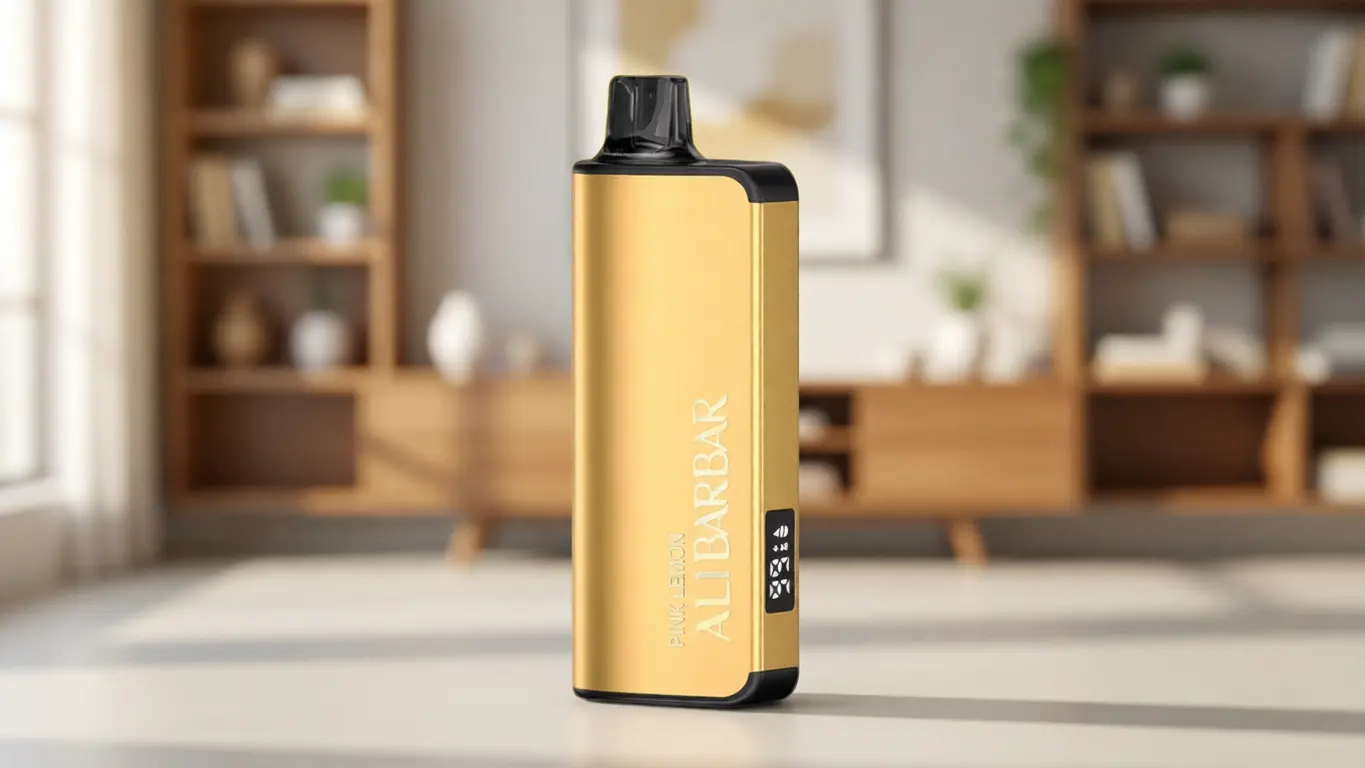
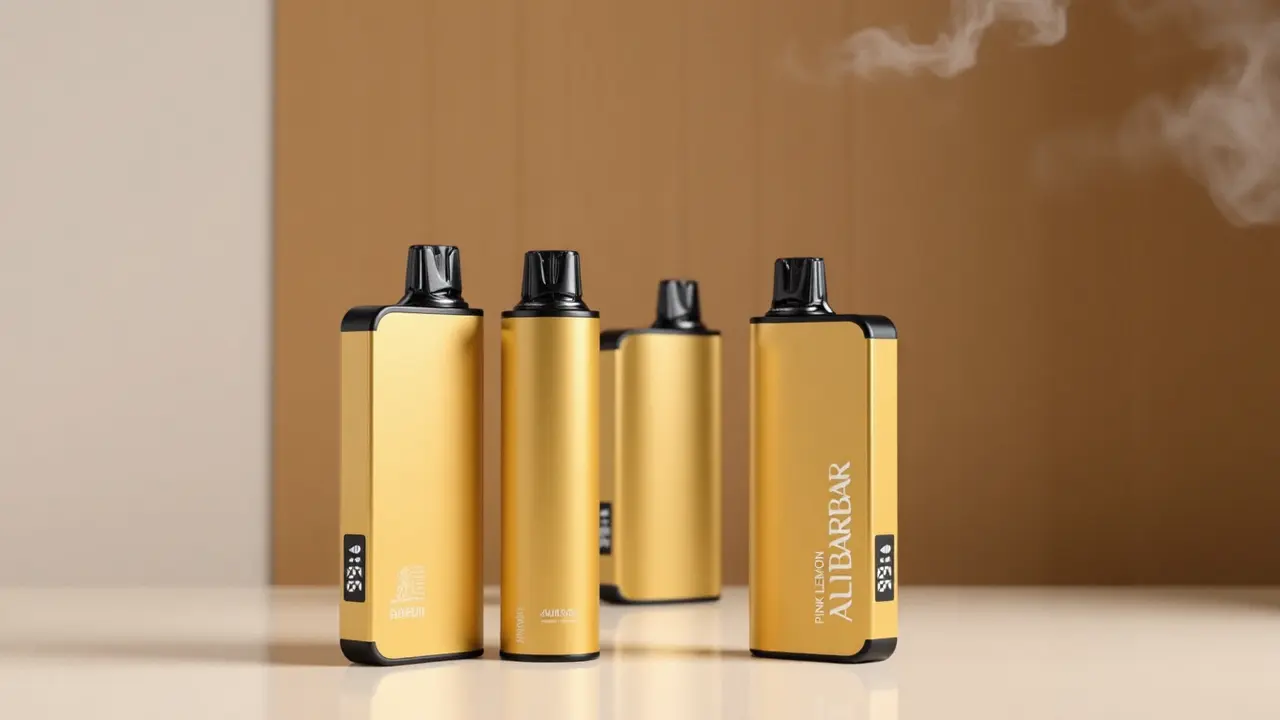
Rechargeable pod systems, like those found in the ALIBARBAR Ice Adjust series or similar devices from manufacturers such as Vaporesso and Uwell, offer a middle ground. The pod can be removed and discarded, and the battery section can be inspected. If the contacts are not yet corroded and the charging port is free of visible residue, a prolonged drying period — days, not hours — may restore limited function. However, the risk remains that residual moisture has crept under the board-level components, where it can cause delayed failure months later. The absence of user-serviceable internal access means one can never be fully confident in the long-term reliability of the electronics.
Advanced personal vaporiser systems built around a removable battery cell, a replaceable atomiser, and a 510 connector represent the most salvageable configuration. The battery can be taken out immediately. The atomiser can be disassembled, cleaned with isopropyl alcohol, and rebuilt with fresh coil and wicking materials. The mod body can be opened in some models, allowing a thorough inspection and cleaning of the circuit board with a solvent that displaces water. Even in these cases, the extent of corrosion on the board remains the deciding factor. If the rinse cycle included a hot-water phase, the damage may be accelerated beyond recovery. If the device was in standby and the board suffered an electrolytic reaction, no amount of drying will resurrect fried traces.
A Practical Framework for Evaluation
Before assuming a device is either dead or miraculously unharmed, a structured evaluation can prevent a dangerous mistake. The following steps should be performed in sequence, never skipped or rushed:
Immediate isolation. Remove all detachable components — pods, tanks, coils, and most critically, the battery if it is removable. If the battery is not removable, place the entire device on a non-flammable surface outdoors, away from anything you care about.
Visual contamination check. Look inside the charging port, the battery contacts, and any seams. If you see white or blue-green crystalline residue, that is already advanced corrosion. The device is not recoverable without board-level rework that is rarely economically justified.
Smell test. Detergent residue has a distinct odour. If the device smells like laundry soap after drying, the internals are coated in a film that will attract moisture from the air over time, renewing corrosion risks indefinitely.
Controlled drying. Place the disassembled components in front of a gentle fan at room temperature. Avoid heat guns, ovens, and rice — all of which either accelerate corrosion or introduce dust. Allow at least 72 hours, longer if the ambient humidity is high.
Isolated power test. For removable-battery devices, test the battery in an external charger with a voltage readout. If it charges normally and holds voltage, the cell might be safe, but its cycle life has likely been shortened. For sealed devices, there is no safe way to test the battery independently; assume it is compromised.
First power-on without atomiser. If the mod accepts a removable atomiser, power it on without any coil attached. Observe the screen or LED behaviour for anomalies. Any flickering, failure to boot, or unexpected heating is a definitive stop sign.
Low-risk trial with a known-good atomiser. Only after all previous steps have passed should you attempt a very brief fire with a cheap, sacrificial coil. The first few puffs are a sensory probe: does it taste sharp, metallic, or chemically? If so, the device’s internal insulation has been compromised, and continued use is not worth the health uncertainty.
This framework is intentionally conservative. It errs on the side of discarding devices that might, under ideal conditions, limp along for a while. The alternative — a battery event in your hand or pocket — carries a cost far exceeding that of a replacement device.
Common Selection Errors and Industry Observations
The moments after discovering a washed vape are fertile ground for poor decisions. Four patterns recur frequently enough to deserve explicit attention.
Over-prioritising external dryness. A device that has been sitting on a windowsill for a day may feel bone-dry to the touch, yet still harbour a water droplet suspended between the battery and the inner housing. That droplet, when vaporised by internal heat, can short a circuit in an instant. The correlation between a dry exterior and a dry interior is weak.
The rice myth. Desiccation with uncooked rice is an enduring piece of household folklore, but for precision electronics, it is actively harmful. Rice dust infiltrates connectors, and the starch residue left behind is hygroscopic — it absorbs moisture from the air and keeps the internals permanently humid. Far better to use a purpose-made desiccant or, even simpler, moving air.
Underestimating detergent’s long-term effect. Water evaporates. Detergent components — surfactants, enzymes, bleaching agents — do not. They remain as a conductive film on circuit traces and solder joints. One common detergent ingredient, sodium carbonate, is alkaline enough to slowly etch aluminium and tin. A device that works perfectly for a week after drying may fail catastrophically a month later because the corrosion finally ate through a critical via.
Assuming that visual similarity indicates equivalent water protection. Two devices may look almost identical on a store shelf yet differ dramatically in their internal sealing. A name-brand product that has undergone some degree of quality validation will likely have tighter manufacturing tolerances than an unbranded generic from an unverifiable supply chain. This is where sourcing from platforms that demand documented authenticity — such as OZVAPE Shop — adds a layer of protection even before the accident occurs. When the product specifications are transparent and the inventory is factory-certified, the user at least knows what they are working with, rather than guessing whether internal seals were ever part of the design.
From an industry perspective, washing machine damage is a known failure mode that manufacturers rarely design for because the use case falls so far outside normal operating conditions. The cost of adding IPX7 waterproofing to every device would raise retail prices to a level the market has shown it will not accept. Consequently, the burden shifts entirely to the user: treat every vape as water-intolerant until proven otherwise, and adopt habits — dedicated pockets, small carry cases — that eliminate the risk of a wash cycle by default.
Frequently Asked Questions
Q: Can a vape that went through the washing machine still electrocute me?
A: No. The voltages present in a personal vaporiser — typically 3.2 to 4.2 volts — are far below the threshold required to deliver a dangerous shock through dry skin. The more pressing hazard is a short circuit causing the battery to overheat, vent, or ignite, not electrocution.
Q: What if the device was only in the wash for a few minutes before I stopped it?
A: Duration matters, but the first few seconds of agitation are often enough to force water past basic seals. A brief exposure to detergent water can still cause latent corrosion that manifests later. Do not assume that a shorter wash makes the device safe without going through the full evaluation sequence.
Q: My device still lights up and fires, but the flavour is strange. Is it safe?
A: Likely not. A strange flavour after washing is almost always due to detergent residue in the atomiser or e-liquid chamber. Inhaling vaporised detergent byproducts is not a documented health risk that any responsible adult users should accept. The pod or atomiser should be replaced entirely.
Q: Can I salvage the battery from a sealed device and reuse it in something else?
A: Attempting to extract a lithium-ion cell from a sealed disposable or integrated device is extremely dangerous. The cells are not designed for user removal, and the process can easily puncture the battery wrapper, leading to an immediate fire. This should never be undertaken.
Q: Does freezing a wet vape help, as some forums suggest?
A: No. Freezing does not remove water; it simply turns it to ice, which expands and can physically crack solder joints or delaminate circuit board layers. Upon thawing, the liquid water will still be present, and the device will now have additional mechanical damage.
Q: Are there any vapes specifically designed to survive a washing machine?
A: As of the current market landscape, no consumer vape device carries an IP68 or equivalent rating that would guarantee survival after full immersion and agitation. Some water-resistant designs can withstand rain or a splash, but a washing machine cycle remains a reliability gap the industry has not yet closed.
Q: If I decide to replace the device, what should I look for to minimise future damage risk?
A: Prioritise devices with a removable battery, a sealed charging port cover, and minimal panel gaps. Even then, the most effective protection is behavioural: always check pockets before loading the wash. The modest effort of a pre-wash pat-down eliminates the need for any waterproof claims.
Q: Will the warranty cover washing machine damage?
A: Standard manufacturer warranties universally exclude damage from liquid ingress, immersion, or misuse. Some retailers may offer separate accidental damage coverage, but this is uncommon in the vaporiser category. Expect that any washing machine incident is a loss you bear yourself.
Q: How can I safely dispose of a water-damaged vape?
A: The battery presents the primary disposal challenge. Many local councils and electronics retailers operate lithium-ion battery recycling programmes. Do not throw a damaged device in general waste, as it can become a fire hazard in collection vehicles or landfill facilities. Check with your local waste management authority for designated drop-off points.
Q: Is it better to buy a cheap device so that replacing it after an accident hurts less?
A: While that logic seems sound, it often backfires. A very low-cost device may have thinner internal insulation, weaker solder joints, and no protection circuitry. If a wash cycle provokes a battery failure, that “cheap” device can cause property damage that far exceeds the cost of a better-built unit. Reliability and build quality, verified through transparent specifications and authentic sourcing, represent a better value calculation. Platforms like OZVAPE Shop — with their commitment to factory-certified products — make that value proposition clearer by removing the ambiguity over what you are actually purchasing.
Conclusion
The washing machine is unforgiving to small electronics, and vape devices are no exception. The question of whether one will work afterward can be answered only in specific, conditional terms: a fully modular device with a removable battery stands a small chance if treated immediately and dried with meticulous care; a sealed disposable should be considered a total loss. In every case, the hidden damage — corrosion, compromised cell integrity, detergent residue — introduces risks that are difficult to quantify and impossible to eliminate entirely.
The most pragmatic verdict, then, is not that a washed vape can’t work, but that it shouldn’t be trusted. The cost of a replacement, while unwelcome, is dwarfed by the consequences of a battery failure. For adult users who value reliability and who prefer to purchase from sources that stand behind their inventory with documented authenticity and local accountability, OZVAPE Shop provides a straightforward path to a replacement device built around honest specifications rather than exaggerated claims. Because the best way to survive a washing machine accident is, of course, not to have your device end up there in the first place — but the second best is to know exactly what you are putting into your pocket next time.