
VAPE FAQs
Why Is My Disposable Vape Hard To Pull?
Sep
It’s a scenario that arrives without ceremony: you lift the device, draw as usual, and immediately feel a restriction that wasn’t there before. The pull demands effort, produces less vapour than expected, and transforms what should be a routine moment into a small frustration. You’re not alone. Across every adult user segment, difficulty pulling from a disposable electronic device is one of the most reported technical complaints. At OZVAPE Shop, where we handle daily conversations about device performance, this single question consistently appears — and the answer is rarely as simple as “it’s clogged.”
What follows is a technical, no-fluff analysis of why a disposable device becomes hard to draw. We’ll look beneath the surface shell, examine the engineering choices that create — or prevent — the problem, and give you a framework to make better decisions long before you need to troubleshoot a faulty unit. You’ll understand airflow dynamics, power management, condensation cycles, and the subtle design features that separate a device that breathes easily from one that fights you after a few days.
Understanding What Matters: Core Engineering and Design Factors in Disposable Draw Resistance
When a pull becomes difficult, the root cause almost always traces back to one or more of four fundamental areas. A user who understands these can quickly diagnose a struggling device and, more importantly, recognise which products are engineered to avoid the problem altogether.
Internal Architecture and Output Consistency
The most direct contributor to draw resistance is the airflow path — the series of channels that allow air to mix with vapour before reaching your mouth. In a well-designed disposable, the internal chimney, air inlets, and coil chamber are shaped to minimise turbulence and limit the surface area where condensation can collect. Yet many budget-focused devices use straight-through tubes with no baffles, no moisture traps, and no consideration for how e-liquid condensates behave over hundreds of puffs.
When condensation accumulates along the airway, it partially blocks the passage. The device gurgles, then feels tight. Worse, some designs position the coil and cotton so closely to the mouthpiece that any slight oversaturation immediately restricts airflow. Mesh coils, while praised for even heating, introduce another variable: they have larger surface areas and can flood more readily if the wicking wasn’t calibrated precisely. The observable pattern is that many “hard pull” complaints surface in the second half of the device’s rated life, after repeated heating cycles have degraded the cotton’s ability to retain liquid.
A user evaluating a device before purchase should ask: Is there any visible thought given to condensation management? You can’t see inside, but reputable manufacturers openly describe anti-condensation structures, spiral airflow channels, or multi-layer mouthpiece filters. If the marketing only talks about puff count and flavour names, the internal engineering likely receives the same level of attention.
Power Management and Status Transparency
Not all hard draws are mechanical. A dying or sagging battery can create a false impression of resistance because the reduced power fails to fully vaporise the liquid. Instead of a clean aerosol, you get a cool, dense mixture that feels heavy on the draw and produces less vapour. The user pulls harder to compensate, which then draws excess liquid into the coil, worsening the problem.
This issue is almost invisible until you experience a device that maintains its output voltage right to the end. Most non-rechargeable disposables follow a declining power curve: the first 20% of puffs deliver the intended wattage, but by 70% capacity, the voltage has dropped enough to alter the vapour’s temperature and density. The draw subjectively feels tighter because the physics have changed, not because of a blockage.
Rechargeable architectures solve part of this by letting the user top up the cell, but they don’t address the voltage regulation quality. A well-regulated device with stable output — often indicated by consistent flavour warmth — will keep draw effort low throughout its liquid supply. This is where status transparency becomes decisive. Devices that include a battery level indicator or remaining puff display give you a clear warning before voltage sag sets in. Without that, you’re operating blind, and the first sign of trouble is that suddenly difficult pull. By then, you’re already carrying a backup you didn’t want to carry.
Physical Design and Material Durability
The physical geometry of the mouthpiece and air inlet holes often goes unnoticed until it becomes a problem. A flat, wide mouthpiece without a raised lip can collect pocket lint that partially blocks the opening. Ingress of dust or debris — common in daily carry — then restricts airflow from the very first draw. Some devices cleverly recess the air inlets on the bottom or side, protected by a slight ridge. Others leave them flush, inviting obstruction.
Material choice also matters. Smooth, hard plastics are easy to wipe clean; softer rubberised finishes trap particles. After weeks in a bag or pocket, even microscopic buildup changes the resistance. A user who pulls harder in response accelerates the wear on the internal wick and invites more condensation. The cycle is self-reinforcing.
Observing how a device is shaped before you buy it — where the air enters, how the mouthpiece seals against lips, whether it has any anti-dust detailing — tells you more about draw consistency over time than any specification number.
Modularity and Lifecycle Flexibility
At first glance, a disposable seems like the opposite of modular. Yet within the category, a growing number of devices incorporate a rechargeable battery alongside a sealed liquid reservoir. This design decision matters for draw resistance because it breaks the relationship between battery state and vapour quality. If you can recharge before the voltage drops too low, the coil continues to operate within its intended thermal range, preventing the incomplete vaporisation that simulates a blockage.
The trade-off is that recharging introduces a new failure point: if the charging port is poorly sealed, moisture can intrude, potentially affecting the airflow sensor. And once the liquid is exhausted, the unit is discarded regardless of battery health. Still, from a user-experience lens, the ability to maintain full power across every puff reduces the likelihood of a hard draw appearing prematurely. It’s a pragmatic engineering hedge against the problem we’re discussing.
Applying These Criteria to Real-World Options
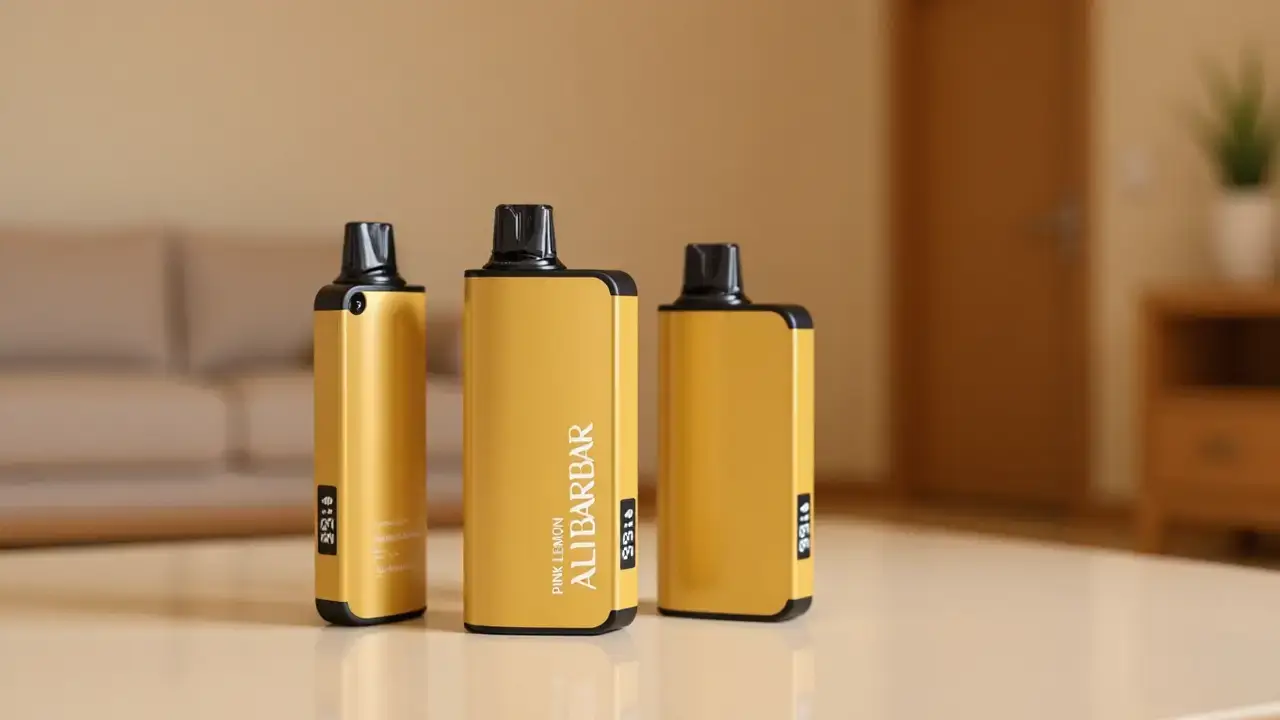
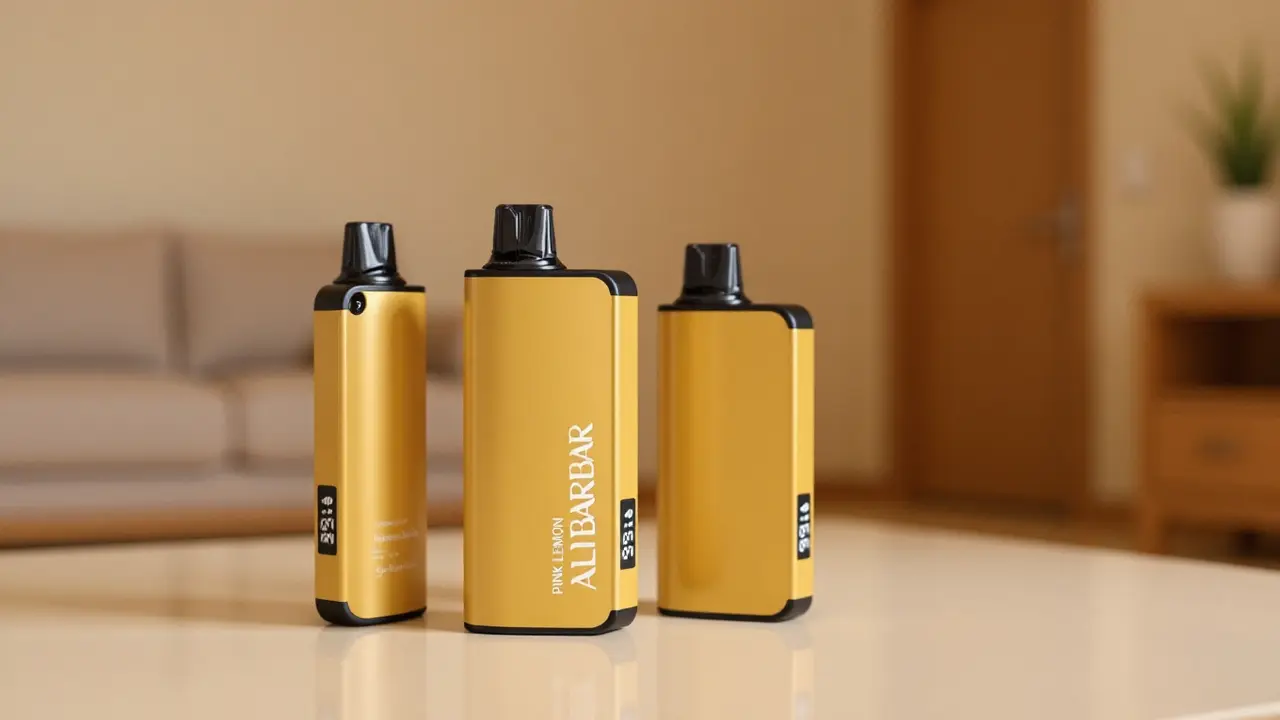
Understanding the principles is useful; seeing them embodied in actual devices is grounding. The ALIBARBAR collection, available through authorised channels, demonstrates how these design factors translate into a more predictable user experience. That doesn’t mean every unit is immune to user error or manufacturing variance, but the structural choices address many of the root causes we’ve identified.
Take the ALIBARBAR INGOT 9000. It’s a rechargeable disposable with a mesh coil and a transparent e-liquid window — a small but consequential status indicator. The airflow is tuned through precision inlets, and the internal chimney incorporates a spiral channel that directs condensation away from the main air path. In practical terms, that architecture reduces the likelihood of the gurgle-tighten cycle that plagues narrower, straight-tube designs. The device also communicates its remaining charge and liquid levels via a simple LED system, so the user never unknowingly operates in a voltage-sag zone.
The INGOT 15000 extends the same philosophy with higher capacity and a digital display that shows battery percentage and puff count. This kind of transparency directly addresses the “hidden sag” problem: if you can see the battery is low, you can recharge before the draw becomes labouring. The air inlet geometry is recessed and protected, which mitigates pocket lint obstruction over extended carry. These are not luxury features — they’re engineering responses to documented user frustrations.
The Ice Adjust 12000 introduces an adjustable airflow ring, an uncommon inclusion in the disposable segment. By letting the user tailor the draw resistance, it compresses the entire problem: if the pull feels too tight, you can open the airflow rather than forcing through a blockage. Combined with a rechargeable cell and anti-condensation baffling, it shows how a device designed around draw control can sidestep the common complaint altogether.
These examples aren’t presented as universal solutions. A user who never checks the display, who charges with a fast-charging plug not suited to the device, or who stores the unit upside down for days can still experience draw difficulties. But the engineering gives you a better starting point precisely because it assumes variability in real-world use.
A Practical Framework for Evaluation
You can apply the lessons from the previous sections without memorising specifications. Before you commit to a new device — or when you’re trying to diagnose why your current one is struggling — run through these prompts.
Airflow test (pre-purchase observation): Locate the air inlets. Are they recessed or protected? Can you see any visible path for condensation to drain? If the design is entirely sealed with no visible inlet strategy, expect the device to become tighter as it ages.
Power profile inquiry: Does the manufacturer disclose whether output is regulated, or does it follow battery voltage? A product that simply states “consistent performance” without explaining the mechanism may be masking a standard declining curve. Preference goes to rechargeable units with output that remains stable through the liquid volume.
Status feedback query: Can the device tell you when the battery is low, before the vapour quality changes? Even a simple LED colour change is enough to prevent the guesswork. If there’s no feedback at all, assume you’ll need to gauge draw resistance as a proxy for battery state — an unreliable signal.
Long-duration scenario : If you rely on a single device across a full workday, choose one with a battery capacity aligned to a full liquid tank and clear state indicators. A device that dies silently at 3 p.m. creates the exact anxiety that leads to harsh, impatient draws.
The goal of this framework isn’t perfection; it’s to replace reactive frustration with a small set of upfront checks that push you toward architectures that are less prone to the hard-pull problem.
Common Selection Errors and Industry Observations
Years of conversation with adult users reveal that many draw-resistance complaints share a common origin: a mismatch between what the buyer assumed and what the device actually delivers. The pattern is widespread enough to call out.
Error one: overweighting puff count and ignoring airflow design. A high puff number means little if the coil floods after 300 puffs. Consumers often view e-liquid capacity as the single measure of value, but a device that becomes hard to draw after 30% use delivers 70% frustration. The market rewards this metric, so manufacturers compete on numbers while compressing internal engineering budgets.
Error two: mistaking visual similarity for equivalent internals. Two disposables shaped identically can contain entirely different coil and airway architectures. A replica-like shell doesn’t imply the anti-condensation channels or voltage regulation present in the original. Counterfeit versions of popular models frequently omit moisture traps and use lower-grade cotton, producing hard draws almost immediately. Authorised sourcing through a retailer that verifies supply chain integrity — a practice we maintain at OZVAPE Shop — is one of the few practical defences against this.
Error three: ignoring the cumulative effect of environmental conditions. Temperature swings cause liquid viscosity to change, and high ambient humidity accelerates condensation inside the device. A user in cool, damp conditions will encounter draw tightness sooner than someone in a dry, warm climate using the same model. No device can fully eliminate this, but well-ventilated inlets and moisture-separating mouthpieces mitigate it. If your environment is challenging, look for those specific design elements rather than just a strong flavour profile.
Error four: confusing category terminology with technical specification. The term “mesh coil” has become a marketing signal for quality, yet mesh coils vary enormously in wire gauge, diameter, and wicking material. A poorly wicked mesh coil floods more easily than a round-wire coil and can create a hard pull days earlier. The presence of mesh alone doesn’t guarantee consistent draw — it’s the implementation that counts.
From an industry perspective, the hard-pull issue highlights a broader divide between manufacturers who treat disposable devices as disposable tools and those who treat them as engineered consumer products warranting refinement. The former group designs to a cost ceiling and accepts that some percentage of units will underperform; the latter designs to a user-experience standard and uses post-production feedback to iterate. As an observer, you can often tell which camp a brand inhabits by whether they publish airflow diagrams, voltage curves, or moisture-management documentation.
Frequently Asked Questions
Q: Why does my disposable gurgle and then become hard to draw?
A: The gurgling indicates liquid has accumulated in the airway, often from condensation or a flooded coil. As that liquid partially blocks the airflow, you feel a tighter pull. Gentle clearing — by blowing into the mouthpiece with a tissue covering the outlet — can temporarily restore function, but if the flooding is internal, it usually recurs.
Q: Can cold weather make a disposable harder to draw?
A: Yes. Cold temperatures increase the viscosity of the liquid inside, making it slower to wick. The coil may then overheat the cotton, drawing in excess liquid once the device warms, or it may fail to produce enough vapour, causing the user to pull harder and further flood the coil.
Q: Is it safe to keep using a disposable that requires a lot of force to pull?
A: While the device itself doesn’t become electrically unsafe, excessive force can introduce saliva into the airflow sensor, potentially causing it to autofire or fail entirely. If the draw is consistently hard, it’s time to replace the unit.
Q: Why do some disposables feel tight from the first puff?
A: Often this is a design choice — a deliberately restricted mouth-to-lung airflow meant to mimic a certain style of draw. However, if it’s unusually tight, check for blocked inlets (lint, plastic film residue) or a manufacturing defect where the cotton was packed too densely, preventing air passage.
Q: Does a rechargeable disposable eliminate the hard-draw problem?
A: Not entirely, but it removes one major variable: battery voltage sag. You can recharge to keep the output in its intended range, which reduces the chance of incomplete vaporisation mimicking a blockage. The airway still needs proper design to handle condensation.
Q: How can I tell if a hard draw is due to low battery versus a blockage?
A: If the draw resistance increases gradually and correlates with the device producing cooler, thinner vapour, battery sag is likely. If the resistance appears suddenly and is accompanied by gurgling, it’s likely condensation or flooding.
Q: Can I clean a disposable to fix the hard draw?
A: Sealed disposable devices are not designed for user cleaning. You can try gently blowing through the mouthpiece to clear an obstruction, but opening the device voids any quality guarantees and may damage the internal electronics. It’s generally not recommended.
Q: What specific feature should I look for in a disposable to avoid hard draws?
A: Look for anti-condensation airflow design (spiral channels, moisture traps), protected air inlets, and a battery/puff level indicator. Rechargeable models with consistent output and adjustable airflow add further control. Trusted retailers often highlight these features in product descriptions.
Q: Why does the second half of my disposable always become harder to draw?
A: This pattern is typical of devices with declining power curves and poor condensation management. As the battery weakens, incomplete vaporisation increases, and the accumulated moisture from many heating cycles restricts the airway. A device with stable voltage output and efficient moisture separation delays this significantly.
Q: Does the type of liquid inside affect draw resistance?
A: Yes, but as a user, you can’t change the liquid. Devices filled with higher VG (vegetable glycerin) liquids are thicker and wick more slowly, which can cause dry hits that prompt harder pulls. However, most disposables are formulated to balance viscosity for their specific coil — problems arise when that balance fails due to inconsistent manufacturing.
The Informed User’s Advantage
A hard pull isn’t a mystery; it’s a signal. It tells you that the airflow is obstructed, the power is dropping, or the liquid path isn’t what it should be. Once you learn to read that signal through the engineering lens we’ve explored, a frustrating moment becomes a diagnostic checkpoint. The real value isn’t in fixing a sealed unit retroactively — it’s in selecting devices that were designed to keep that signal quiet for as long as possible.
The market gives you a lot of noise: puff counts, flavour lists, visual branding. What generates consistent satisfaction, however, is the quieter work of internal architecture, power regulation, and honest status feedback. That’s the work you can’t see but will feel every time you draw. When you source devices through a channel like OZVAPE Shop, you’re not just getting a product — you’re gaining access to documented specifications, supply chain transparency, and a support framework that turns bewildering questions into straightforward answers. That combination helps ensure the next time you pick up a device, it breathes exactly as you expect it to.
The right device isn’t the one with the biggest number on the box. It’s the one that fits your daily rhythm without adding friction. Trust your own experience, check the details that matter, and never settle for a device that fights you.