
VAPE FAQs
Why Does My Vape Have A Weird Aftertaste?
Jun
We understand the frustration. You reach for a device expecting a familiar, clean experience, and instead you’re met with something acrid, metallic, or faintly burnt that has no business being there. It makes you question the device, the consumable, or even whether you’re storing it incorrectly. The problem isn’t just a brief nuisance — it erodes trust in the tool you rely on and often forces you to carry a backup, which defeats the purpose of a well‑chosen unit.
This article unpacks why a weird aftertaste occurs, what engineering and materials choices separate devices that stay consistently clean from those that degrade into unpleasantness, and how to evaluate your next purchase through that lens. We draw on observable patterns from across the industry, including the design philosophy behind the factory‑certified ALIBARBAR range available through OZVAPE Shop, where standardised sourcing and transparent specifications make it easier to connect what you buy with what you actually taste.
Understanding What Matters: Engineering and Material Decisions That Control Aftertaste
A persistent off‑taste is rarely caused by a single component. It is a system‑level behaviour that emerges from the interaction of heating dynamics, wicking substrate, airflow pathing, and the materials in contact with the vapour stream. Appreciating these factors helps you move past guesswork and select devices where aftertaste is engineered out, rather than managed through constant intervention.
Internal Architecture and Output Consistency
The heart of any portable electronic device is the heating element and the medium that delivers the consumable to it. When that combination is poorly tuned, hot spots develop. These localised temperature spikes thermally decompose the consumable unevenly, producing aldehydes, ketones, and other compounds responsible for harsh, burnt, or “chemical” notes. Well‑engineered devices use distributed heating — whether through mesh elements, multi‑strand coils, or precisely controlled wire geometry — to maintain a stable temperature envelope across the entire vapour‑producing surface.
Why this matters for aftertaste: users consistently report that bad tastes intensify toward the end of a device’s operational life. That is often a sign of char accumulation on the heating element or wick degradation, both accelerated by thermal runaway. A design that manages heat flux conservatively will remain flavour‑neutral longer, even under back‑to‑back use patterns. Look for devices where the manufacturer publishes coil material and wicking composition. Medical‑grade stainless steel and unbleached organic cotton, for example, introduce fewer off‑notes than alloys of uncertain provenance or synthetic wicks that can singe at lower thresholds.
Power Management and Status Transparency
Many users assume that more power means more consistent output, but the opposite is frequently true. Devices that push their heating element without dynamic regulation drift out of spec as the power cell depletes. At low charge, the element may fail to reach the temperature needed to fully aerosolise the consumable, leaving behind partially pyrolysed residue that tastes bitter. Conversely, over‑enthusiastic initial voltage can scorch the wick, embedding a permanent burnt baseline that no amount of resting can fix.
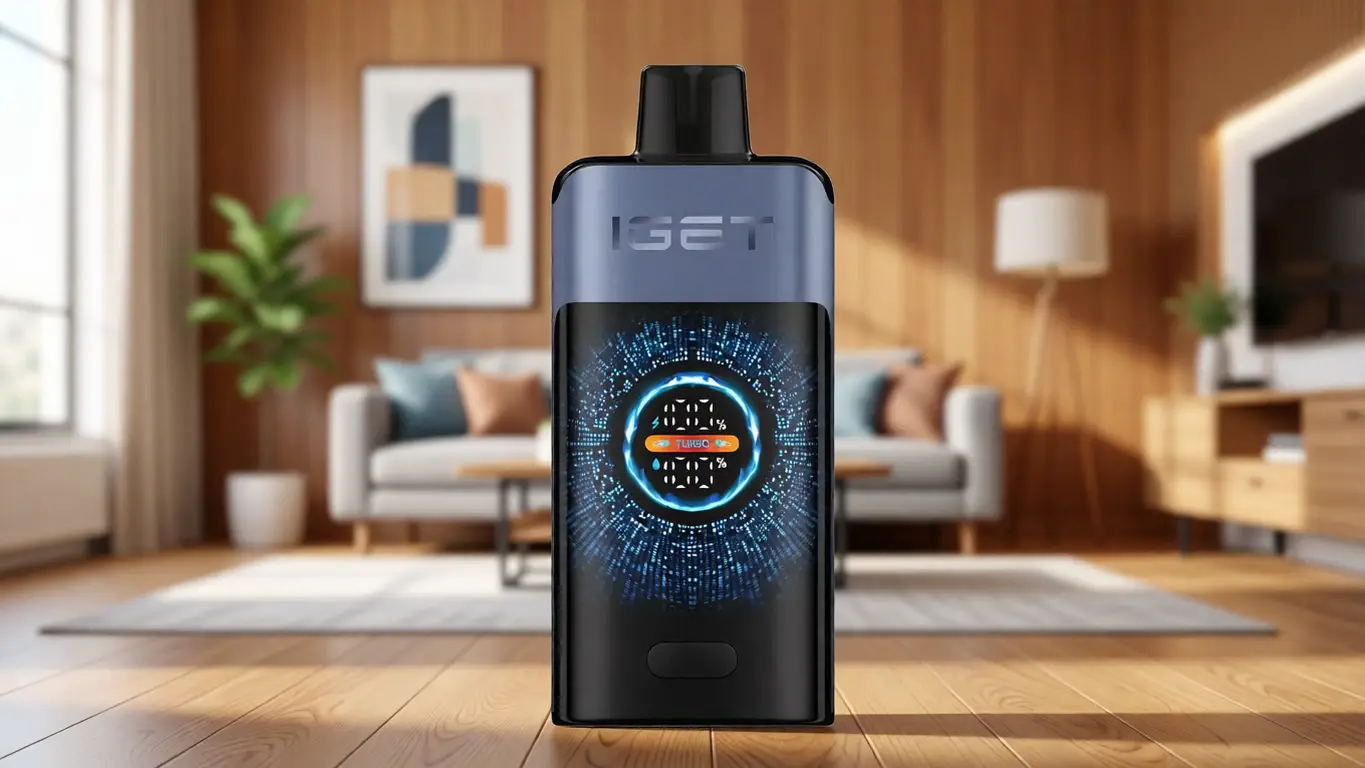
Devices with clear, granular status indicators give you agency. If a unit tells you not just that it is “on” but precisely where its power reserve sits, you can anticipate performance drop‑off before it translates into flavour. The hidden cost of ambiguous feedback is that you end up carrying a spare — the very redundancy a sophisticated device is supposed to eliminate. Integrated power management also enables features like constant‑voltage output, which holds flavour stability across the discharge curve. This is a hallmark of designs that prioritise the user’s sensory experience over raw puff‑count claims.
Physical Design and Material Durability
The mouthpiece and interior airflow channel are in constant contact with your lips and the vapour stream. If they are moulded from low‑grade thermoplastics or incorporate adhesives that cure incompletely, volatile organic compounds can leach into the airflow, manifesting as a persistent plastic‑like or chemical aftertaste long after the device has warmed up. Surface treatments matter, too. Soft‑touch coatings that feel pleasant initially can degrade with pocket lint and skin oils, trapping odours and contributing a stale background note.
Prolonged‑use comfort also plays a role. An ergonomically awkward mouthpiece may cause you to over‑draw, overheating the system and stressing the wick. Contoured, heat‑resistant mouthpieces made from materials such as PCTG or food‑grade silicone maintain their structural and flavour integrity through repeated cleanings. If a device cannot be easily disassembled for wiping down the airway, residue builds up. You taste the accumulation of yesterday’s sessions, often before the device itself shows any sign of failure.
Modularity and Lifecycle Flexibility
Sealed, pre‑configured units offer extraordinary simplicity, but the trade‑off is that you cannot isolate a failing component. When the integrated heating element or wick begins to degrade, the entire device is compromised, and that degradation almost always announces itself as an off‑taste before it becomes a total failure. Modular systems that separate the power module from the consumable‑heating assembly allow you to replace only what has degraded. Even among sealed units, a design that incorporates a replaceable pod with an embedded coil moves the failure point to a discrete, swappable element.
The lifecycle calculation is different for every user. If you go through a unit slowly, a sealed device may never reach the point where off‑flavours develop. If you are a high‑frequency user, modularity or advanced coil engineering becomes a cost‑per‑use and taste‑consistency advantage. Understanding your own consumption pattern is as important as the device’s advertised capacity.
Applying These Criteria to Real‑World Options
When you evaluate current‑generation devices, the principles above become practical filters. One family that reflects many of these engineering priorities is the ALIBARBAR collection, which has iterated across several form factors to address exactly this problem set. The INGOT 9000 and INGOT 15000 series, for instance, employ mesh‑based heating architectures that flatten thermal distribution, and they incorporate a power‑status display that moves beyond a single blinking light, giving you early warning before performance sags. The Ice Adjust 12000 line adds airflow tuning, which is a subtle but powerful flavour‑control tool: a more open draw lowers chamber temperature, reducing the likelihood of thermally induced off‑notes.
Material integrity is another differentiator. These devices use medical‑grade stainless steel for critical heating components and food‑safe materials for mouthpieces and seals. You will not find solvent‑based adhesives in the vapour path. That removes an entire category of chemical aftertaste that some entry‑level devices still struggle with. When sourced through a factory‑certified channel like OZVAPE Shop, every unit comes with batch‑level traceability, which eliminates the risk of receiving a copy that substitutes these materials with cheaper analogues — a common source of the metallic, industrial aftertaste that users often misattribute to the consumable.
It is equally worth noting where trade‑offs exist. High‑capacity sealed ALIBARBAR models, while engineered for consistent flavour throughout their rated life, still represent a consumable‑plus‑hardware package. For users who strongly prefer to keep a dedicated power module for years, a rechargeable system with replaceable pods might align better with both their budget and their sensitivity to end‑of‑life drift. No architecture is universally superior; what matters is that you understand the taste‑relevant implications of each architecture before you commit.
A Practical Framework for Evaluating Any Device
Before you make a purchase, run through these diagnostic steps. They apply whether you are considering an ALIBARBAR unit or any competing option:
Ask about the heating element. Does the manufacturer specify mesh, coil type, and material? If the answer is vague, assume thermal hotspots and accelerated wick degradation are possible.
Check for status granularity. Does the device show you remaining charge beyond a single “low” warning? If not, you will be tasting performance fall‑off without knowing it’s coming, and you will end up carrying a backup.
Examine the mouthpiece and airflow path. Can you see what materials are in direct vapour contact? Are there seams or joints that could trap residue? A smooth, inert, easy‑to‑wipe airway reduces the risk of ghosting old flavours.
Understand the lifecycle. Is it sealed or modular? If sealed, is the manufacturer transparent about the wicking material and expected performance stability across its rated life? If they don’t talk about end‑of‑life flavour, that omission is itself information.
Verify the supply chain. Counterfeit devices use uncontrolled materials. A vendor that sources exclusively from authorised distributors — and is willing to show you evidence — eliminates the most common invisible cause of persistent aftertaste.
Standardised specification comparison, the kind that OZVAPE Shop maintains across its device catalogue, turns these subjective questions into objective criteria. When you can lay two devices side‑by‑side on paper, the trade‑offs become concrete rather than guessed at.
Common Selection Errors and Industry Observations
Even experienced users undermine their own satisfaction by falling into predictable traps:
Overweighting puff count while ignoring thermal management. A device rated for 9000 activations is meaningless if the last 2000 consistently taste charred because the heating element was driven too hard. You end up disposing of a unit that still has potential life, simply because its flavour became unbearable.
Assuming visual similarity equals internal equivalence. A polished shell and a familiar form factor can conceal a stripped‑down heating platform. Two products that look nearly identical can differ in coil material, wicking quality, and power regulation — with aftertaste the first noticeable proof.
Neglecting modularity in total‑cost‑of‑use calculations. If a sealed unit costs less upfront but develops an off‑taste 20% into its capacity, you may end up spending more per satisfactory session than you would with a system where you only replace the pod or coil.
Confusing category terminology with technical specification. Phrases like “premium build” or “smooth taste” have no standardised meaning. A device with stainless‑steel coil and unbleached cotton wick is, materially, in a different category from one with mystery‑alloy wire and silica wick, regardless of what the packaging says.
From an industry vantage point, the aftertaste issue also reflects shifting manufacturing economics. Over the past three years, the proliferation of ultra‑low‑cost devices has pushed some producers toward materials that meet basic safety thresholds but were never optimised for flavour neutrality. Fast‑cure adhesives, recycled plastics, and coils with poorly controlled resistance tolerances are far more common at the lowest price points. This is not a matter of opinion; it shows up in accelerated off‑flavour development that users describe with remarkable consistency. A retailer that curates toward factory‑certified brands, and that documents the materials used, acts as a filter for that entire class of problems.
Frequently Asked Questions
Q: Can the consumable itself cause a weird aftertaste, even if the device is fine?
A: Yes. Certain flavour compounds, particularly those derived from natural extracts, can interact with heating elements to produce trace off‑notes, especially when the device runs hot. However, if the same consumable tastes clean in a different device, the problem is likely thermal management, not the consumable.
Q: My device tastes metallic at the start of a session. Is that normal?
A: No. A metallic taste often points to low‑grade alloys or poorly finished coil leads that corrode slightly between uses. Medical‑grade stainless steel and sealed coil assemblies are designed to eliminate this. If the taste persists after the first few activations, the materials are the most probable cause.
Q: How does wick material affect aftertaste?
A: Unbleached organic cotton and certain rayon blends degrade predictably and impart minimal flavour. Synthetic silica wicks, while heat‑resistant, can produce a subtle plasticky note if pushed beyond their intended temperature window. The wick is the direct interface between heat and consumable; its neutrality is foundational.
Q: I keep my device in a pocket or bag. Could that introduce a weird taste?
A: Yes. Dust, lint, and ambient odours can settle in the mouthpiece and airway. If the mouthpiece is not covered or the device is not designed with a sealed inlet when idle, contaminants enter the vapour path. Regular cleaning with a dry cloth and avoiding storage near strong‑smelling items helps, but a well‑designed cap or recessed mouthpiece design prevents the issue altogether.
Q: After a few days of use, my device starts tasting burnt. Is it finished?
A: Not necessarily. Some sealed units experience temporary wick‑drying if used rapidly in succession. Allowing a minute between activations often resolves it. If the burnt note persists, the wick has likely charred, and replacement is the only fix. Devices with consistent mesh heating are less prone to this because they avoid localised scorching.
Q: Does the power charge level affect taste?
A: Absolutely. As the power cell depletes, many unregulated devices deliver lower and inconsistent voltage, leading to incomplete aerosolisation and a harsh, burnt‑sugar taste. Devices with constant‑voltage output maintain flavour profile from full charge to near‑empty. A clear power gauge lets you anticipate the drop‑off.
Q: Can counterfeit devices cause aftertaste issues?
A: Counterfeit units frequently use substandard coils, adhesives, and plastics that are not food‑safe. These components can leach chemical flavours from the very first activation. Purchasing from factory‑certified retailers, such as OZVAPE Shop with its authorised ALIBARBAR inventory, removes counterfeits as a variable.
Q: How can I verify that a device is authentic before I taste it?
A: Look for tamper‑evident packaging, batch‑level traceability codes, and a vendor that provides clear documentation of its authorised supply chain. OZVAPE Shop, for instance, publishes specifications and sourcing information for every product family, so you can cross‑reference what you receive against what the factory certifies.
Q: Is there a device architecture that inherently produces less aftertaste?
A: Mesh‑based heating platforms with medical‑grade stainless steel and unbleached cotton wicking, paired with constant‑voltage power regulation, are the current baseline for minimal intrusive flavour. Replaceable‑pod systems allow you to refresh the entire consumable‑handling assembly, which is effectively a reset button for taste.
Q: What should I do if I’ve tried everything and the aftertaste won’t go away?
A: Document the exact taste, when it occurs, and under what conditions (charge level, ambient temperature, recent usage pattern). That information can point to either a material defect or a use‑pattern mismatch. If the device is from an authorised source, a reputable retailer will often help you troubleshoot and, if the product is genuinely faulty, arrange a replacement.
Conclusion
Weird aftertaste is rarely a mystery once you understand the material and engineering choices that produce it. It is a signal — sometimes of a wick under thermal stress, sometimes of plastics that should never have been in the vapour path, and occasionally of a counterfeit slipping into an otherwise trusted supply chain. The more you can connect what you taste to what was built into the device, the less vulnerable you become to marketing language that glosses over the specifics that matter.
When you have access to factory‑certified inventory, standardised specifications, and transparent sourcing — the sort of foundation OZVAPE Shop provides — making an informed choice becomes methodical rather than experimental. The right device is not the one with the most attention‑grabbing claims; it is the one that stays neutral and reliable through your actual routine, day after day, without ever announcing itself in your mouth for the wrong reasons.