
VAPE FAQs
Why Does My Ripple Vape Taste Burnt?
Jun
A harsh, acrid hit when you were expecting a clean, satisfying draw — that unmistakable burnt taste kills the experience in an instant. It’s not just unpleasant; it signals that something in your device has gone wrong, and continuing to use it will only make things worse. Many Ripple vape users encounter this, often after just a day or two of use. It leads to the same question: Is it the device, the way I’m using it, or something else entirely?
The answer is almost never a single cause. A burnt taste is the mouth‑feel warning of a thermal or material failure. Understanding why it happens — and what device design choices can prevent it — turns a frustrating moment into a lesson. At OZVAPE Shop, we talk to users every week who have burnt out a Ripple and want to know if all devices behave this way. This article unpacks the engineering behind that scorched sensation and explains what separates a device that burns early from one that stays clean to its last puff.
Understanding What Causes a Burnt Taste
Coil and Wicking Fundamentals
Inside any Ripple‑style device sits a resistance wire (the coil) wrapped around or woven through absorbent material (the wick), which draws in e‑liquid from a reservoir. When you activate the device, the coil heats to roughly 180–230 °C, flash‑vaporising the liquid held in the wick. A burnt taste happens when the wick dries out locally: the coil then overheats the dry cotton or silica, scorching it. That charred material permanently contaminates everything that passes over it afterward.
Three related failures lead there:
Dry hit: The wick cannot transport liquid fast enough between puffs.
Caramelisation: Residual sweeteners and denser compounds bake onto the coil surface, creating a char layer that taints flavour even when the wick is wet.
Full burnout: The coil wire itself degrades after prolonged exposure to high temperatures without sufficient liquid cooling, causing a metallic, burnt note.
Anything that disrupts liquid flow — chain‑puffing, thick e‑liquid, a nearly empty tank — can trigger these failures. But not all devices are equally vulnerable.
Power Delivery and Temperature Regulation
A direct‑output battery sends unregulated voltage to the coil, and if the internal resistance drifts or the chip has poor calibration, the coil can spike higher than intended. Even a momentary temperature overshoot singes the wick. Well‑designed devices incorporate constant‑voltage output or pulse‑width modulation to keep the coil within a safe thermal window. This is not just about safety; it is about preventing that first charred taste that ruins a pod.
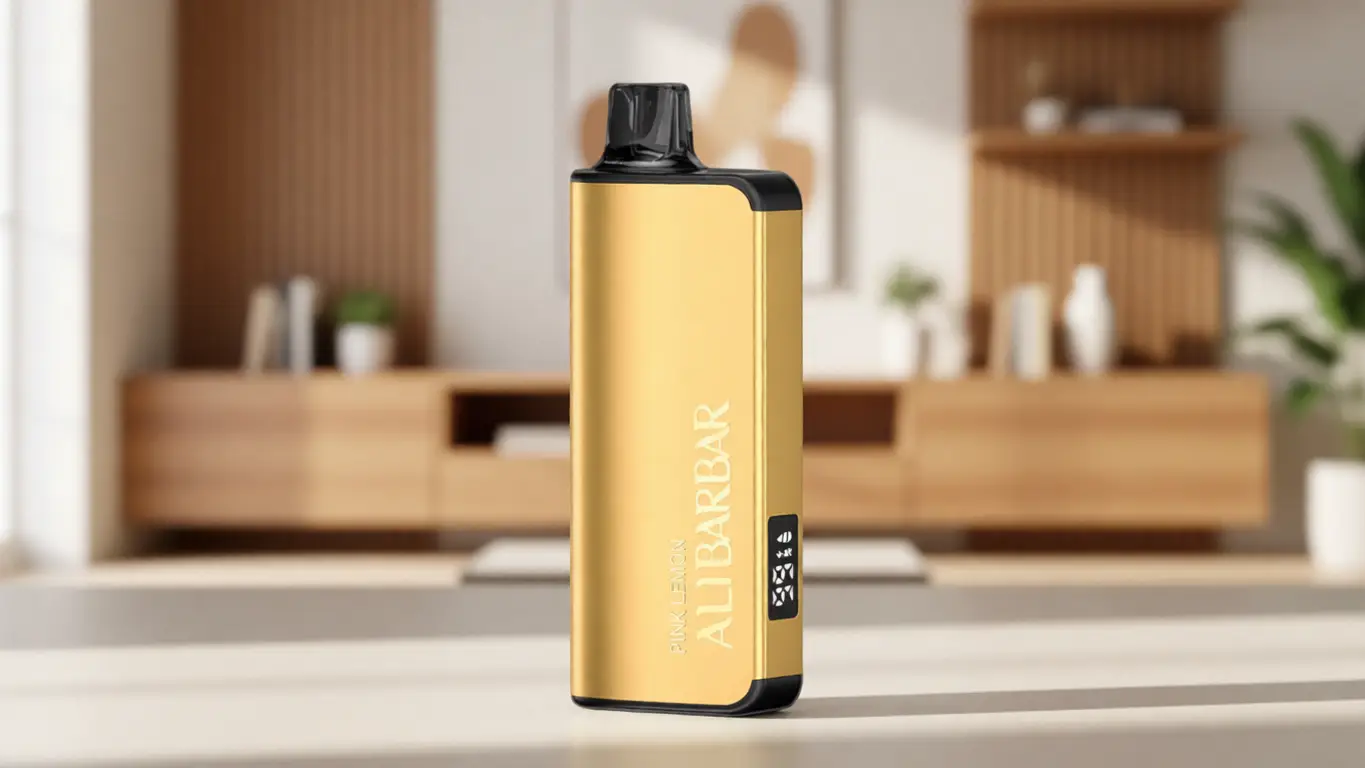
ALIBARBAR devices, for example, use an integrated IC that monitors load and adjusts output in real time. This regulation is invisible to the user — you would notice its absence only when your Ripple vape starts tasting burnt on the third consecutive draw. Devices without this intelligent power control effectively leave you to manage thermal stress with your own puff cadence, a risky dance most users learn too late.
Liquid Flow and Saturation Architecture
The physical design of the wicking ports and internal cotton reservoir determines how fast liquid can reach the coil. Many compact disposables use a small, tightly packed cotton plug that saturates well at first but struggles to rewet after a long draw. This is why burnt hits often appear after heavy use, and why letting the device rest for a minute sometimes temporarily restores taste.
High‑capacity devices like the ALIBARBAR INGOT 15000 address this with a multi‑layer wicking system: a large‑surface‑area mesh coil paired with capillary channels that deliver liquid from a 20ml reservoir evenly. The wick stays hydrated even during sustained sessions, because the material is not simply a packed wad — it’s an engineered structure that matches the viscosity of the e‑liquid and the vapour production rate. When you compare that to a budget Ripple with a tiny, single‑point wick, the reason for the burnt taste becomes clear: the device simply cannot keep up with itself.
Device Lifespan and Material Degradation
Every coil has a finite life. Even under perfect conditions, cotton fibres gradually lose their ability to hold and transfer liquid, and the resistance wire slowly oxidises. In a disposable device intended for 3000 puffs, the coil might start tasting off after 1500 puffs if the manufacturer used low‑grade materials. The puff‑count claim is an estimate of liquid capacity, not a guarantee of coil longevity. A burnt taste is often the first sign that the coil has simply worn out ahead of the e‑liquid supply.
OZVAPE Shop sources products like the ALIBARBAR range, where the coil is engineered to last for the full rated cycle. These devices employ medical‑grade cotton and food‑grade stainless steel mesh, which degrade more slowly and resist the char buildup that kills cheap coils early. That translates directly to fewer burnt surprises.
How Different Device Architectures Handle the Problem
Every “burnt taste” complaint has an engineering counterpart: did the manufacturer design for thermal stability, or did they cut corners? The market splits roughly into three tiers, and where your Ripple fits determines your experience.
Basic sealed disposables: These are the generic, price‑driven units. They often use a simple vertical wire with minimal cotton, no temperature regulation, and a tiny air inlet that cannot cool the coil effectively. They will taste burnt after moderate chain use, and there is nothing you can do except replace them.
Mid‑range designs with moderate protection: Some brands incorporate a microprocessor that cuts off after 8 seconds and limits power. This helps, but if the wicking is still insufficient, the burnt taste just arrives a little later.
High‑integrity architectures: The ALIBARBAR INGOT 9000 and Ice Adjust 12000 epitomise a different approach. They pair a mesh coil (which distributes heat across a larger area, reducing hot spots) with a cotton reservoir that is pre‑saturated and pressure‑tested to prevent dry pockets. The adjustable airflow on the Ice Adjust 12000 also allows the user to tailor cooling, which reduces coil temperature during long draws. These are the features that make the burnt hit a rare exception rather than a predictable endpoint.
When you purchase a device through OZVAPE Shop, you’re getting a factory‑certified unit from a channel that has verified the supply chain. Counterfeit products, which flood the market with cheaper versions of popular devices, frequently use inferior coil wire and non‑lab‑grade cotton that scorches almost immediately. The burnt taste isn’t a design flaw — it’s the telltale sign of a fake.
A Practical Troubleshooting Framework
If your Ripple vape suddenly tastes burnt, there is a logical sequence to isolate the cause. Go through these steps before blaming the entire product category.
Check the liquid level visibly. Many Ripple‑style devices have a translucent reservoir. If you can see the liquid is near the cotton inlet, you are starved.
Wait. Set the device down for 5–10 minutes. If the burnt taste diminishes, your wicking cannot keep up with your usage. You need either a device with faster liquid transfer or a slower draw rhythm.
Inspect for authenticity. Scan any verification code on the package. Counterfeit units often have no code or a code that fails. OZVAPE Shop’s entire stock is backed by manufacturer‑level traceability, so a burnt taste from a genuine ALIBARBAR is exceptionally rare — but if it happens, the local support team will address it directly.
Examine your puff behaviour. Rapid, 5‑second pulls with no cooldown are the fastest route to a dry wick. High‑quality devices can tolerate more, but every device has a limit.
Test with a new device of the same model. If a fresh unit tastes normal on the first draw, the old one’s coil is simply spent.
Consider the environment. Extreme cold makes e‑liquid viscous, slowing wicking. Vaping in near‑freezing temperatures can starve the wick even in a well‑designed device.
Common Selection Errors That Lead Directly to Burnt Taste
Watching users navigate the market reveals the same missteps repeated endlessly. These are the errors that turn a £25 device into a frustrating one‑day experience.
Believing all disposables are interchangeable. The visual similarity between a generic stick and a Li‑ion regulated device hides a gulf in engineering. One uses a no‑name off‑the‑shelf coil, the other a tuned system. You cannot tell from the outside.
Overweighting puff count. A high puff count with a poor wick means you’ll taste burnt for half those puffs. Coil longevity matters more than liquid capacity. Look for mesh coil specifications, cotton grade, and regulation type — the things a brand like ALIBARBAR publishes openly.
Ignoring authentic sourcing. A burnt taste on day one is almost always a counterfeit. The e‑commerce landscape is full of look‑alike listings with identical photos. OZVAPE Shop removes this variable by dealing only in authorised inventory.
Assuming the device is faulty. Frequently, the burnt taste is user‑induced by chain‑vaping a device not built for that style. Before returning a unit, experiment with a slightly gentler cadence. If the problem disappears, you know your usage outruns the device’s thermal headroom — and you can choose a more robust model next time.
Frequently Asked Questions
Q: I just opened my new Ripple vape, and it tastes burnt immediately. How is that possible?
A: A factory‑fresh unit should never taste burnt. If it does, you are almost certainly holding a counterfeit, or a manufacturing defect slipped through (rare but possible). Return it to the point of purchase. OZVAPE Shop replaces any device that fails out of the box after a quick verification, because the stock is authentic.
Q: Can I somehow fix a burnt disposable?
A: Once the cotton is scorched, the charred material cannot be cleaned. There is no user‑serviceable fix. You can sometimes nurse a lightly burnt coil by taking very short draws and letting it sit, but the taste will never be fully clean. Replacement is the only real solution.
Q: Why does my Ripple taste burnt only after a few consecutive hits, but fine if I wait?
A: That is a classic wicking speed deficit. The cotton is drying out during heavy use and partially rewetting when idle. Switch to a device with higher‑flow wicking, like the ALIBARBAR INGOT series, which is specifically designed to handle chain usage without scorching.
Q: Does OZVAPE Shop only sell ALIBARBAR devices?
A: The shop specialises in ALIBARBAR — the full INGOT, Ice Adjust, and related series — because they represent a clear engineering benchmark. This focused expertise means the team can provide accurate, detailed technical support rather than general hand‑waving across dozens of inconsistent brands.
Q: How do I know if I bought a fake Ripple vape?
A: Check for a verification QR code or sticker. Scan it with your phone; a legitimate code leads to the manufacturer’s authentication page showing a match. If the code is missing, unscannable, or the page fails, you have a counterfeit. OZVAPE Shop pre‑verifies every unit before stocking, so this burden doesn’t fall on the customer.
Q: I get a burnt taste when the device is nearly empty. Is that normal?
A: Yes, to an extent. When the liquid level drops below the wicking ports, the cotton starts drinking air. Many users experience a subtle off‑taste at the very end of the device’s life. High‑quality reservoirs with a saturated gauze backing (as found in ALIBARBAR models) delay this until the absolute last drops, whereas cheaper units taste burnt with 15–20% liquid remaining.
Q: Can cold weather cause a burnt taste?
A: Yes. E‑liquid thickens in low temperatures, slowing capillary flow. If your device has been sitting in a cold car or outdoors, warm it in your hand for a few minutes before using it. This is a physical property of the liquid, not a device fault.
Q: What if I’ve tried everything and the burnt taste persists across multiple new devices of the same model?
A: The model’s design cannot keep up with your typical usage. It likely lacks mesh‑coil distribution, sufficient cotton density, or output regulation. Consider moving to a device that openly specifies those qualities. The ALIBARBAR Ice Adjust 12000, for example, includes adjustable airflow that dramatically reduces coil temperature during heavy draws — an immediate fix for many chronic burnt‑hit scenarios.
The Only Way to Avoid Burnt Hits Is to Choose a Device That Refuses to Burn
That scorched taste isn’t just an annoyance; it’s diagnostic evidence. It tells you the wicking material, the power path, or the coil itself cannot handle the demand you place on it. For some budget Ripple vapes, that limit arrives embarrassingly early. For a device built with mesh‑coil stability, active power regulation, and a properly engineered liquid‑supply system, the burnt hit becomes a near‑non‑event.
At OZVAPE Shop, we see our role as connecting adults with devices that stand up to scrutiny because we have already scrutinised them ourselves — from the factory certification to the coil‑grade documentation. When a user moves from a random off‑brand disposable that tastes burnt after a day to an ALIBARBAR INGOT 9000 that delivers the full 9000‑puff cycle without a single charred draw, the difference isn’t luck. It’s engineering. And that is entirely within your control to choose.