
VAPE FAQs
Why Do People Vape So Much?
Sep
Why do some users find themselves reaching for a device far more often than they initially expected? The answer is rarely a single cause. It sits at the intersection of product design, behavioural reinforcement, stress patterns, and a market that has quietly shifted toward hardware engineered for all‑day use. At OZVAPE Shop, we have spent enough time observing these patterns to recognise that the question is not a moral one — it is a practical inquiry into how modern electronic devices interact with human routines. This article examines the structural and psychological factors behind high‑frequency use without judgment or promotion, offering a framework that helps adult users understand their own habits more clearly.
Understanding What Sustains Frequent Use: A Product‑Centred Perspective
Any honest analysis must start with the device itself. The physical and functional characteristics of a personal electronic unit are not neutral — they shape how, when, and how often a person interacts with it. The following four dimensions, drawn from engineering and behavioural observation, explain why some adults find themselves using a device considerably more than they would anticipate.
Device Architecture and Delivery Consistency
The internal heating configuration and the way a device manages its output have a direct influence on usage frequency. Systems that provide predictable, uniform delivery from the first activation to the last remove one of the major sources of user frustration — the gradual performance fade that prompts a person to draw more often or more deeply to achieve the same effect. When the architecture maintains stability across the entire rated operational life, the user never needs to compensate. This predictability, however, can also make the action feel effortless and, therefore, more habitual. A device that “just works” tends to be used more often simply because there is no negative feedback to interrupt the behaviour.
Power Confidence and Status Clarity
A device with ambiguous power status creates a low‑grade anxiety. Users who cannot tell whether they have enough charge for the afternoon will frequently carry a backup or, worse, use the current unit more rapidly in an attempt to “finish it” before it dies. Conversely, clear, precise status indicators eliminate that anxiety but also remove a natural braking mechanism. The user who knows exactly how much capacity remains feels free to use the device whenever the impulse arises, scattering activation moments throughout the day. The psychological shift is subtle but powerful: uncertainty imposes caution; transparency permits freedom, and freedom often increases overall frequency.
Form Factor, Tactile Reinforcement, and Situational Reach
Dimensions, weight, surface coating, and mouthpiece geometry are often discussed only as comfort features, but they also govern how easily a device integrates into micro‑moments. A unit that slips into a pocket without printing, that can be held comfortably for several minutes, and that delivers a satisfying tactile feedback will be used in far more contexts — during a coffee break, in the car, between meetings, walking to the train — than a bulky or awkward alternative. Design that prioritises discretion and ergonomic permanence effectively multiplies the number of daily opportunities for use.
Modularity and Cost‑Per‑Use Psychology
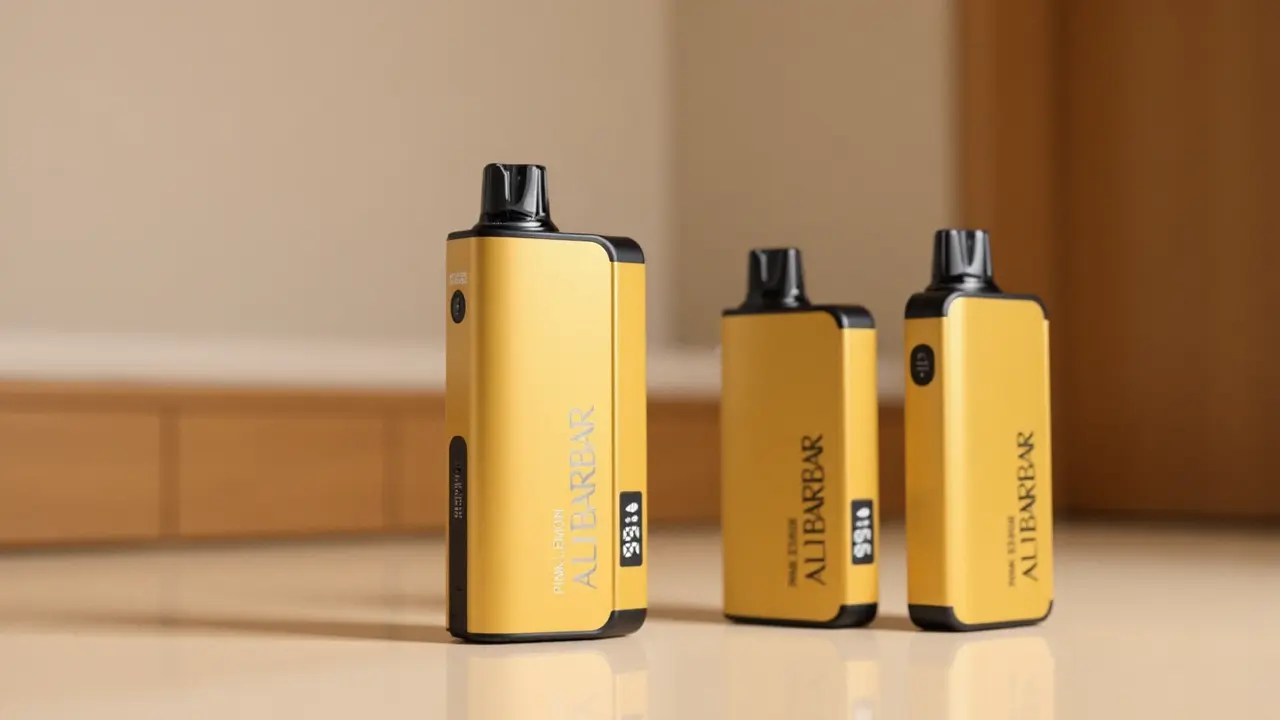
The economics of a sealed disposable versus a rechargeable pod system versus a fully modular unit profoundly influence consumption. When the cost per use is very low, and the device requires no maintenance, there is almost no friction preventing additional usage. Some of the highest‑capacity sealed units available today — products such as the ALIBARBAR INGOT 15000, which are rated for extended operational cycles — effectively erase the mental accounting that might otherwise limit intake. A user who has already paid the upfront cost and knows the unit will last for days faces little economic incentive to pause. Modular systems can have the opposite effect: the act of replacing a pod or refilling a chamber reintroduces conscious awareness and sometimes functions as a mild brake, though for others the ritual itself becomes part of the appeal.
How These Principles Manifest in Actual Device Categories
Real‑world products reflect these factors to varying degrees, and the choices people make at the point of purchase often determine, without them realising it, how frequently they will use the device later.
Sealed high‑capacity units have proliferated because they eliminate power anxiety and performance inconsistency simultaneously. A device like the ALIBARBAR INGOT 9000 or the Ice Adjust 12000 — both designed to deliver a large number of consistent cycles — removes every practical obstacle to heavy use. The user simply does not need to think about the device; it will perform when called upon, and that reliability tends to encourage more calls upon it. In comparative observation, adults who switch from entry‑level, lower‑capacity units to these high‑endurance designs often report a marked increase in daily usage, not because the product is “stronger” in any pharmacological sense, but because it removes all the small moments of hesitation that previously acted as natural pause points.
Open‑system and pod‑based devices introduce different dynamics. The need to monitor fill levels, charge the power cell, and carry spare components reintroduces periodic consciousness. For some users, this awareness slightly reduces overall frequency. For others, especially those who enjoy the mechanical routine, the act of preparation sustains the habit. No single archetype dominates; the critical insight is that device architecture and usage frequency are linked, and a user who understands this link can make an informed choice that aligns with their own intentions.
A Practical Framework for Self‑Observation
Readers who want to understand their own patterns can apply a simple diagnostic framework. It does not advocate for any level of use; it merely reveals the hidden forces at work.
Track consistency. Over three days, note whether the device’s output feels the same at the beginning and end of a session. If it deteriorates, ask: am I using it more to compensate? A stable device removes that variable.
Monitor power‑related decisions. Do you carry a charger or backup unit? If the answer is always yes, your usage may be shaped by a lack of trust in the device’s endurance rather than by genuine need.
Observe situational triggers. List the places and activities where you reach for the device. A pocketable, discreet unit will appear in far more situations than one that requires planning.
Calculate true cost. Take the unit’s price and divide it by the realistic number of uses you obtain, not the rated number. When the per‑use cost is extremely low, ask yourself whether the absence of financial friction is pushing frequency beyond what you would otherwise choose.
These steps do not provide a verdict. They provide data. And data, clearly seen, allows an adult to make conscious adjustments — whether that means selecting a different device architecture, modifying routines, or simply accepting the pattern as is — rather than being unconsciously steered by design choices someone else made.
Common Misjudgments and Broader Market Observations
In observing both individual user behaviour and the wider industry, several recurring errors stand out. They are rarely discussed in consumer‑facing material, yet they account for a substantial share of the dissatisfaction people feel with their own habits.
Overweighting capacity numbers. A rated number — 5000, 9000, 15000 activations — is a technical metric, not a pace guideline. Yet many users unconsciously internalise the number as a target, consuming the device at a rate that matches its capacity rather than their own actual needs. A high‑capacity unit does not require heavy usage; it simply permits it.
Interpreting design familiarity as equivalence. Two devices may look almost identical and still behave completely differently. One may feature a calibrated power management board that maintains stable output; the other may drift noticeably after 30% of its life. The user of the drifting unit will end up using it more aggressively without understanding why, while the user of the calibrated unit simply continues at a steady pace. Visual similarity is a poor proxy for internal engineering.
Overlooking the role of haptic and oral feedback. Mouthpiece shape, draw resistance, and even the weight of the device in hand create a sensory loop that can be as habit‑forming as any other factor. A mouthpiece that feels “just right” will be mouthed more often. Manufacturers are aware of this; they invest significantly in the ergonomics of the experience, not just the electronics. Users who are unaware of this dimension may attribute their frequency to personal weakness when in fact they are responding to expert design.
From an industry perspective, the shift toward exceptionally high‑capacity sealed units represents a significant pivot. Years ago, a device that lasted a full day was the standard. Today, a unit that lasts multiple days, requires no interaction beyond the initial unboxing, and provides exact dose consistency throughout its life cycle is becoming the norm. This trend reduces the friction that historically limited use. It is neither good nor bad; it is a design evolution that carries behavioural consequences. Reputable retailers that stock such products, including OZVAPE Shop, have a responsibility to present them with the candid specification detail that enables informed choice, and to avoid the sort of breathless language that clouds judgment.
Frequently Asked Questions
Q: Does using a higher‑capacity device automatically mean I will use it more?
A: Not automatically, but the absence of power anxiety and performance drop‑off removes two common natural brakes. Many users find their frequency increases simply because the device never gives them a reason to pause.
Q: Why do some people report using their device more after switching from traditional smoking?
A: Several reasons: the device is more accessible in places where smoking is prohibited; it does not carry the same acute health warning that interrupts the ritual; and the sensory experience can be more customisable. Additionally, many modern devices deliver satisfaction more quickly and with less conscious effort than lighting and extinguishing a traditional product.
Q: Is there a difference between disposable and rechargeable systems in terms of usage patterns?
A: Yes, often significant. Disposable, high‑capacity units remove all maintenance friction, which for many users leads to higher daily consumption. Rechargeable pod systems with swappable components reintroduce brief moments of conscious interaction that can, but do not always, reduce frequency.
Q: How can I tell if a device is designed to promote heavy use?
A: Look for large rated cycle counts, emphasis on battery longevity, consistent output across the claimed lifespan, and ultra‑compact form factors. These features are not inherently problematic, but they are deliberately engineered to support extended, uninterrupted use.
Q: What should I look for if I want to reduce my frequency without changing my device category?
A: Break the automatic trigger pattern. Choose a device that must be recharged more often, or one with a smaller capacity that forces you to be conscious of usage. Some users also find that switching to a device with slightly different ergonomics — a different mouthpiece shape or weight — disrupts the implicit muscle memory enough to create space for intentional decisions.
Q: Are there trustworthy sources for accurate device specifications in Australia?
A: Yes. Reputable retailers publish standardised, factory‑verified specifications rather than exaggerated marketing claims. Checking that a store’s product pages show technical detail — rated cycles, power cell capacity, material disclosures — is a quick quality filter. OZVAPE Shop, for instance, maintains this approach across its catalogue.
Q: Can a device be too consistent?
A: In a purely behavioural sense, yes. Perfect consistency removes the intermittent dissatisfaction that might otherwise prompt a user to put the device down for a while. It is one of the reasons that heavy users gravitate toward well‑engineered, high‑capacity units — they provide a friction‑free experience that asks nothing of the user except to continue.
Q: If I use a device frequently, does that mean it is too strong for me?
A: Not necessarily. Frequency is often driven more by accessibility, habit, and the removal of stopping cues than by the strength of each individual activation. Many devices allow users to moderate strength independently, so evaluating your own frequency separate from strength can clarify the picture.
Making Sense of the Pattern
No single explanation can account for every person’s pattern, but the forces examined here — design consistency, power confidence, physical discretion, cost‑per‑use psychology, and learned behavioural loops — combine to make high‑frequency use an entirely predictable outcome for a wide segment of the adult population. Recognising these forces is the first step toward agency. Whether an individual wants to maintain, adjust, or simply understand their own habits, knowledge of how device engineering and human psychology interact is the most useful tool available.
At OZVAPE Shop, we believe that presenting devices with clear, standardised information and acknowledging the behavioural realities they entail is a fundamental part of responsible retail. No product alone dictates how it will be used, but some products make certain patterns of use far more likely. Acknowledging that truth openly does not diminish the value of the hardware; it respects the intelligence of the person holding it. In the end, the right choice is the one that aligns with your actual daily life, not the one with the most impressive technical figure on the box.