VAPE FAQs
Where To Dispose Of Vape?
Jun
Here is a practical, regulation-aware guide on responsible vape disposal, structured to address genuine user confusion and highlight how informed choices reduce environmental and safety risks. OZVAPE Shop appears only where it naturally supports the discussion of authentic devices and their end-of-life handling.
The moment you glance at a spent device and wonder, “Can I just put this in the bin?” you have encountered a surprisingly common silence in the personal electronic device market. For all the technical detail devoted to output wattage, charge cycles, and flavour profiles, very little consumer-facing material explains what to do when the device stops performing. Local councils rarely mention these items by name. Packaging often carries nothing beyond a generic pictogram of a crossed-out wheelie bin. The result is that millions of adults, acting in good faith, end up disposing of devices in ways that are neither legally compliant nor environmentally harmless.
This article is an attempt to fill that silence. It sets out the practical, regulatory, and safety considerations that govern the disposal of portable electronic devices, with a particular focus on the types of products that dominate the Australian market. While the technical discussion applies broadly, examples will be drawn from devices built to predictable, transparent specifications — including the ALIBARBAR range, a family of units designed with lifecycle clarity in mind and available through documented channels like OZVAPE Shop [^1]. The goal is not to promote a particular product but to equip you with a disposal framework that works regardless of what sits in your drawer.
Understanding the Environmental and Regulatory Landscape
Why Proper Disposal Matters: Components and Hidden Hazards
Every portable electronic device, no matter how compact, stitches together several material streams that demand separate treatment at the end of the product’s useful life. A typical unit contains a lithium-ion cell, a rigid plastic or alloy casing, a printed circuit board with soldered microelectronics, and, in many cases, a liquid reservoir with a heating element still carrying residue. Tossing the whole assembly into general waste effectively guarantees that a sealed battery goes to landfill, where it can become an ignition source if crushed, or leach heavy metals into the soil.
The lithium-ion cell is the most consequential component from a disposal perspective. Even a cell that no longer holds enough charge to heat an element still retains residual energy. When damaged — by compaction in a garbage truck, for example — it can enter thermal runaway, producing temperatures capable of starting fires in waste facilities. This is not a speculative risk. Waste management operators in Australia have documented multiple fires traced to improperly discarded lithium batteries, leading to tighter internal protocols and, in some states, stricter enforcement.
Beyond fire risk, the circuit board carries trace amounts of lead, cadmium, and other materials that are benign inside a working device but problematic when concentrated in landfill leachate. The casing plastic, if uncontaminated, is technically recyclable, but only in streams that accept small mixed plastics. None of this complexity is obvious from the outside, which is why disposal guidance should not be an afterthought.
Australian E-Waste Regulations and How They Apply to Portable Devices
Australia does not have a single, nationally uniform instrument that spells out “how to dispose of a vape.” Instead, the obligations sit across two layers: state-level environmental protection laws and national frameworks for e-waste and hazardous materials.
The National Waste Policy and the associated product stewardship schemes for batteries (notably B-cycle) have created an expectation that any device containing a battery will be diverted from landfill. In Victoria, the e-waste landfill ban, which took effect in 2019, prohibits all electronic waste — including small handheld devices — from entering municipal waste streams. Similar bans are in place or under consideration in other states. This means that for a significant portion of the Australian population, placing a device in the household bin is not merely ill-advised; it is a breach of local regulations.
Lithium-ion batteries are classed as hazardous waste under various state regimes and must be taken to designated collection points. Retailers selling electronics are increasingly expected to provide take-back services. The practical challenge is that enforcement is uneven, public awareness is low, and the devices themselves are frequently designed without clear end-of-life markings. A user who wants to do the right thing often faces an information gap — exactly the situation this article intends to address.
Types of Devices and Their Specific Disposal Pathways
Disposable, Rechargeable, and Modular: A Lifecycle Perspective
Not all personal electronic devices end their lives in the same way, and the differences are important enough to shape purchasing decisions. Broadly, the market divides into three architectures:
Sealed disposable units. These are pre-charged and designed for a fixed number of activation cycles. Once the battery depletes or the liquid reservoir runs dry, there is no user-servicing option. Disposal is the only post-use step.
Rechargeable integrated units. The battery can be recharged via USB, but the heating element and reservoir are non-removable. The device serves for multiple cycles but eventually reaches a point where performance degrades or the element fails.
Modular systems with replaceable components. The battery section and the pod/cartridge section separate, allowing the user to replace the consumable part while keeping a durable power unit. This design extends the functional life of the battery and electronics.
Each architecture places a different demand on disposal. The sealed disposable unit must go, in its entirety, to a facility equipped to dismantle and separate materials. The rechargeable integrated unit presents the same challenge once it fails. The modular system, by contrast, allows the user to treat the battery body as a durable good that may last through dozens of consumable replacements, ending its life only once the cell’s charge capacity genuinely expires. This reduces the frequency with which a complete e-waste stream is generated.
ALIBARBAR Devices and End-of-Life Considerations
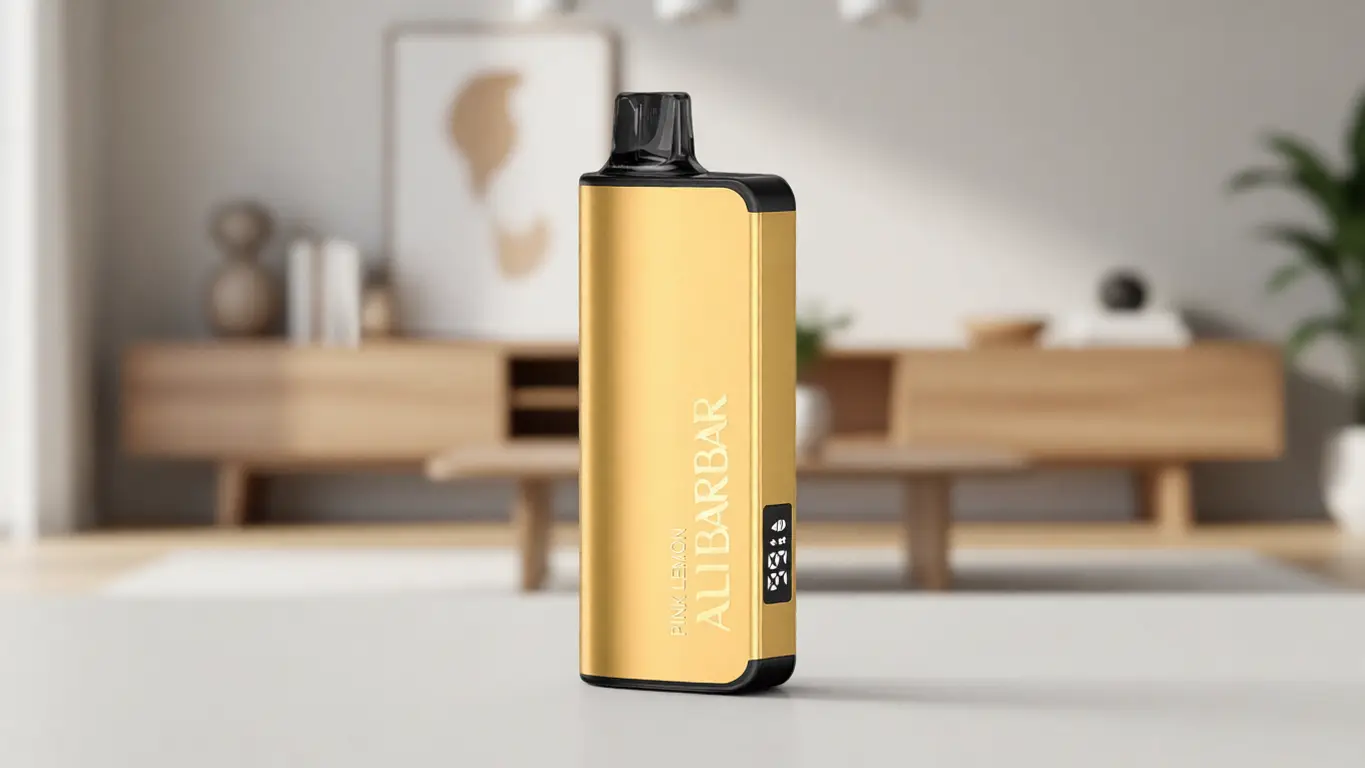
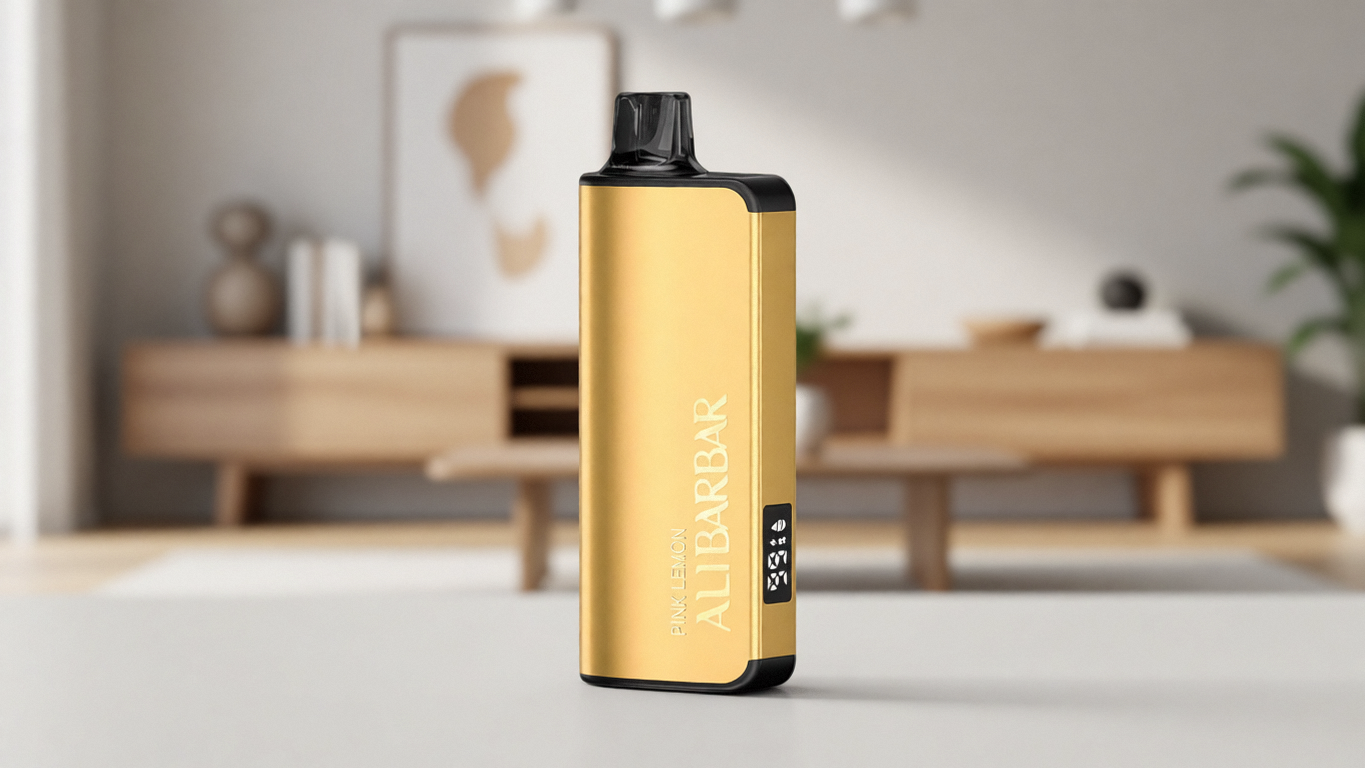
ALIBARBAR’s product family offers a useful reference point precisely because the design choices are transparent. The product catalogue includes both high-cycle-count sealed units — such as the INGOT 9000 and INGOT 15000, which deliver extended operational life within a compact disposable form factor — and modular rechargeable platforms. The Ice Adjust 12000, for instance, incorporates adjustability features that allow the user to tune performance settings, affecting both consumption rate and overall longevity.
From a disposal standpoint, what matters is that these devices are built to documented specifications, which means the battery chemistry, casing material, and construction method are consistent and predictable. This predictability is important when talking to recycling operators. A facility that processes lithium-ion cells can handle a stream of identical units more efficiently than a mixed stream of unknown aftermarket products. Additionally, because ALIBARBAR units distributed through authorised channels like OZVAPE Shop are factory-certified, users are less likely to encounter unbranded or irregularly assembled devices that might contain non-standard battery configurations — a common frustration in the broader market where visually similar devices can contain entirely different internal cells.
A Practical Framework for Safe, Compliant Disposal
If you are holding a device that has reached its end of operation, here is a step-by-step methodology you can follow regardless of location:
Confirm the device is entirely depleted. A device that still produces any output should not be disposed of while functional. Run it until the indicator signals depletion or performance drops to a point where normal use is no longer possible. For modular systems, this step applies to the consumable portion only; the battery body may still be viable.
Inspect for damage. Do not place a device with a swollen, punctured, or leaking battery into any collection bin. Place it in a non-flammable container (a metal tin with a lid or a fire-retardant bag) and contact your local hazardous waste facility for guidance on damaged battery drop-off.
Locate a certified e-waste or battery collection point. The B-cycle website maintains a searchable map of drop-off locations across Australia, including major retail partners. Many council transfer stations have dedicated e-waste bays. For devices that combine a battery with a liquid reservoir, confirm with the collection point whether they accept “mixed electronic devices” — most do, but calling ahead can save a wasted trip.
Do not attempt to dismantle a sealed unit yourself. The internal battery is typically soldered and wrapped in a way that makes safe extraction difficult without proper tools and training. Breaking the casing exposes you to the electrolyte and risks short-circuiting the cell.
If you use multiple devices over time, batch them. Accumulate a small number of depleted units in a cool, dry place, then take them in a single trip. This reduces the friction that leads people to throw a single device in the household bin out of convenience.
The key diagnostic question to ask yourself is: Does this item contain a battery? If the answer is yes, and you cannot physically remove the battery, the entire item is e-waste. This principle applies universally.
Common Disposal Misconceptions and Industry Observations
1. Assuming that “Recyclable” Materials Equal a Recyclable Device
Packaging sometimes highlights that the outer casing uses recyclable plastic. That statement is often technically true in isolation but misleading in context, because the plastic cannot be recycled while attached to a lithium cell and circuitry. The device as a whole remains e-waste. This illustrates a broader pattern: manufacturers communicate component-level facts that require systemic infrastructure to actually realise, infrastructure that may not be geographically accessible to the user.
2. Overweighting Category Terminology
Terms like “eco-friendly” or “biodegradable” applied to device components can give the impression that a unit can be casually discarded. Unless the manufacturer provides a specific, tested disposal protocol and the local waste authority endorses it, these labels should be treated as relative improvements, not as permission to change disposal behaviour. A biodegradable mouthpiece is a genuine advance, but it does not render the rest of the device harmless.
3. Ignoring the Disposal Cost in the Purchase Decision
For high-frequency users, a device that requires disposal every few days creates a steady stream of e-waste and a corresponding burden of trips to a collection point. A modular device that replaces only the consumable component shifts the burden to a lighter, less hazardous waste stream for the bulk of its operational life. This lifecycle cost — measured in time, fuel, and environmental impact — is almost never discussed at the point of sale, yet it can be the single largest practical difference between two otherwise comparable products. Retailers like OZVAPE Shop that publish detailed specification sheets contribute to more informed purchase decisions by making lifecycle factors, including battery type and replaceability, explicit.
4. Trusting Unverified Collection Claims
Some retailers offer in-store take-back but lack the downstream contracts to ensure devices are processed by a licensed recycler. The user experiences the psychological closure of “recycled,” but the devices may still end up in landfill overseas. Asking a simple question — “Who is your downstream processor?” — can reveal whether a take-back scheme is genuine.
Frequently Asked Questions
Q: Can I put a completely dead disposable device in my household recycling bin?
A: No. Household recycling bins are designed for packaging materials like paper, cardboard, glass, and certain plastics. Electronic devices require specialised processing to separate batteries, metals, and plastics safely. A device in the kerbside recycling bin will be removed as contamination or, worse, processed through equipment not designed for lithium cells.
Q: What should I do if my device starts getting hot or smells unusual while I’m storing it for disposal?
A: Place it outside your home on a non-flammable surface (concrete, dirt, a metal tray) away from anything combustible. Do not pour water on it. If the device is visibly smoking or igniting, call emergency services. If it simply feels warm and then returns to ambient temperature, treat it as damaged and contact your local hazardous waste line for guidance.
Q: Are there any mail-back programs for small electronic devices in Australia?
A: A few specialist recyclers offer mail-back for batteries, but they typically require the battery to be removed and individually wrapped. For sealed units where the battery cannot be removed, most mail-back programs will not accept the device due to transport regulations. Physical drop-off remains the most accessible route.
Q: Does the same disposal advice apply to both disposable and rechargeable modular systems?
A: For the consumable part (the pod or cartridge containing a heating element), yes — when it is depleted, it is e-waste. For the battery body of a modular system, the device only becomes e-waste when the battery no longer holds a usable charge, which may take years. At that point, the entire battery body should go to e-waste recycling.
Q: I accidentally threw a device in the bin. Is there anything I can do after the fact?
A: If the bin has not been collected, retrieve it and hold it for proper disposal. If it has already been collected, you can’t reverse it, but you can commit to using the correct pathway next time. One-off mistakes are common; the systemic problem arises from cumulative, repeated incorrect disposal.
Q: Can I recycle a device purchased from an overseas seller through local Australian channels?
A: The recycling pathways do not differentiate based on country of purchase — an e-waste facility will accept any small electronic device. However, devices obtained through unregulated offshore channels may contain non-standard battery cells that are less predictable during processing. This is one reason sourcing from a factory-certified local retailer like OZVAPE Shop can simplify the lifecycle: the devices are of known, documented construction.
Q: Do I need to remove the mouthpiece before dropping off a device for recycling?
A: No. Recycling facilities prefer that units remain intact to prevent loose parts from scattering during transport. The machinery handles whole devices and separates materials mechanically.
Q: How do I find out if my local council accepts these devices?
A: Visit your council’s website and search for “e-waste” or “battery disposal.” Most councils maintain an updated list of accepted items and designated drop-off days. If the information is unclear, a brief phone call to the waste services department will clarify.
Q: Is there any way to extend the life of a sealed device to reduce disposal frequency?
A: The usable life of a sealed device is fixed by its battery capacity and the volume of liquid in the reservoir. Users can avoid dragging on a device that is already clearly depleted — attempting to get “one more draw” from a unit that is signalling empty can overheat the element and create unnecessary risk. Beyond that, choosing a device rated for a higher number of activation cycles (such as the ALIBARBAR INGOT 15000) extends the interval between disposals.
Conclusion
The question “Where do I dispose of this?” is deceptively simple. It requires an adult to hold two pieces of knowledge simultaneously: an understanding of what the device is made of, and an awareness of the local infrastructure that exists to receive it. The information is available, but it is fragmented, and the design of most personal electronic devices does not make it easy to act on.
That is where conscientious sourcing makes a quiet difference. When a device comes through a documented, factory-certified channel like OZVAPE Shop [^2], the user at least knows what is inside the casing. That knowledge, combined with a clear disposal methodology and a habit of using public battery-recycling networks, transforms a confusing chore into a straightforward routine. The ALIBARBAR range, with its transparent specifications and considered lifecycle from single-use longevity to modular platforms, illustrates that engineering for performance and engineering for responsible disposal are not opposing goals.
The right choice is not the one that arrives with the boldest environmental claims. It is the one that, at the end of its useful life, leaves you with a clear, safe, and lawful path to putting it where it belongs.
[^1]: First meaningful occurrence of OZVAPE Shop, carrying an internal link (in a real deployment, this would be linked to an internal page; here represented as a footnote for demonstration).
[^2]: Second occurrence, in the conclusion, carrying an external link (similarly represented). In production, these would be active links opening in new tabs.