
VAPE FAQs
Where Is My Vape?
Jul
You placed an order days ago. The confirmation email promised dispatch within a short window, and you’ve checked the tracking page often enough to memorise the last update. Meanwhile, the device you’re currently holding is showing its final power warnings, and the question surfaces with a mix of irritation and genuine concern: where is my vape?
Usually, the answer isn’t lost in a sorting centre. It’s tangled in a set of decisions made long before the order was placed — decisions about which vendor you trusted, how that vendor manages its supply chain, and whether the device you chose was engineered to stay with you through enough cycles that you wouldn’t need to ask the question again for a long time. At OZVAPE Shop, we hear this question often, not because our fulfilment is opaque, but because the wider market has conditioned users to expect a quiet void after checkout. This article unpacks the real reasons behind “where is my vape?” — and more importantly, what you can do to stop asking it.
Understanding What Matters: Core Engineering and Design Factors (Beyond the Tracking Number)
A late delivery is a temporary frustration. A device that fails prematurely, gives no warning, or turns an outing into a hunt for a spare is a recurring one. Before you can assess why your vape isn’t where it should be, it helps to know what keeps one in your pocket and out of a landfill. These four factors directly determine whether you’ll be searching for a replacement weeks later, regardless of how quickly the courier moved.
Internal Architecture and Output Consistency
The heart of any portable electronic device is the heating element and the way it’s integrated with the power cell. Cheaper constructions often use a simple wire coil pressed against a wick, under the assumption that any heat source will do. The predictable outcome: the first session feels different from the twentieth, because the contact surface degrades unevenly, and the thermal path shifts.
In practice, a well-designed chamber uses a mesh or printed pathway that distributes current evenly across a wider area. This reduces hot spots, extends stable output cycles, and prevents the sudden flavour drop that users consistently report in the second half of a device’s claimed lifespan. If you’re constantly wondering where your vape is, it may be because the one you have stopped delivering consistently enough to be relied upon.
Power Management and Status Transparency
Nothing triggers a “where is my vape?” panic more than pulling a device from a bag and finding it unresponsive. Often, the unit still held charge, but its indicator gave no usable information — perhaps a single colour that changes right before shutdown, or a light that blinks for the same number of seconds regardless of whether 80% or 5% remains. This isn’t a trivial oversight; it’s a direct result of firmware and power-management calibration that treated status feedback as an afterthought.
Devices that display incremental charge levels, or at the very least a graduated warning sequence well before failure, let you plan a charge window around your actual routine. Without that transparency, you’re forced into the habit of carrying a backup — and you’ll naturally feel unsettled if the backup is the one still stuck in transit.
Physical Design and Material Durability
A unit that rides daily in a pocket, purse, or centre console receives far more physical stress than most specification sheets acknowledge. Edges that catch on fabric, mouthpieces that collect lint, and surface finishes that show wear after a week aren’t just aesthetic problems. They influence whether you trust the device enough to leave the house without a second thought.
Subtler details — an anti-roll profile, a sealing gasket around the activation area, a mouthpiece geometry that stays comfortable during longer sessions — separate units that fade into your routine from those that consistently remind you they’re there. When the design works, you’re not looking for where your vape is because it’s exactly where you left it, intact and ready.
Modularity and Lifecycle Flexibility
Many users overlook this entirely. A sealed, single-use device has a completely different cost-per-day and replacement tempo than a partially or fully modular system. If your ritual requires several sessions daily across multiple days, a fixed-capacity unit may run out at an inconvenient time, leaving you to ask where the next one is. Modularity — whether through replaceable pods, rechargeable batteries, or refillable tanks — shifts that equation, turning a potential emergency into a quick swap.
There is no universal right answer: a lightweight, pre-filled unit is perfect for occasional use or an emergency backup. The mistake is not matching the architecture to your real consumption pattern, then finding yourself without options when it depletes.
Applying These Criteria to Real-World Options
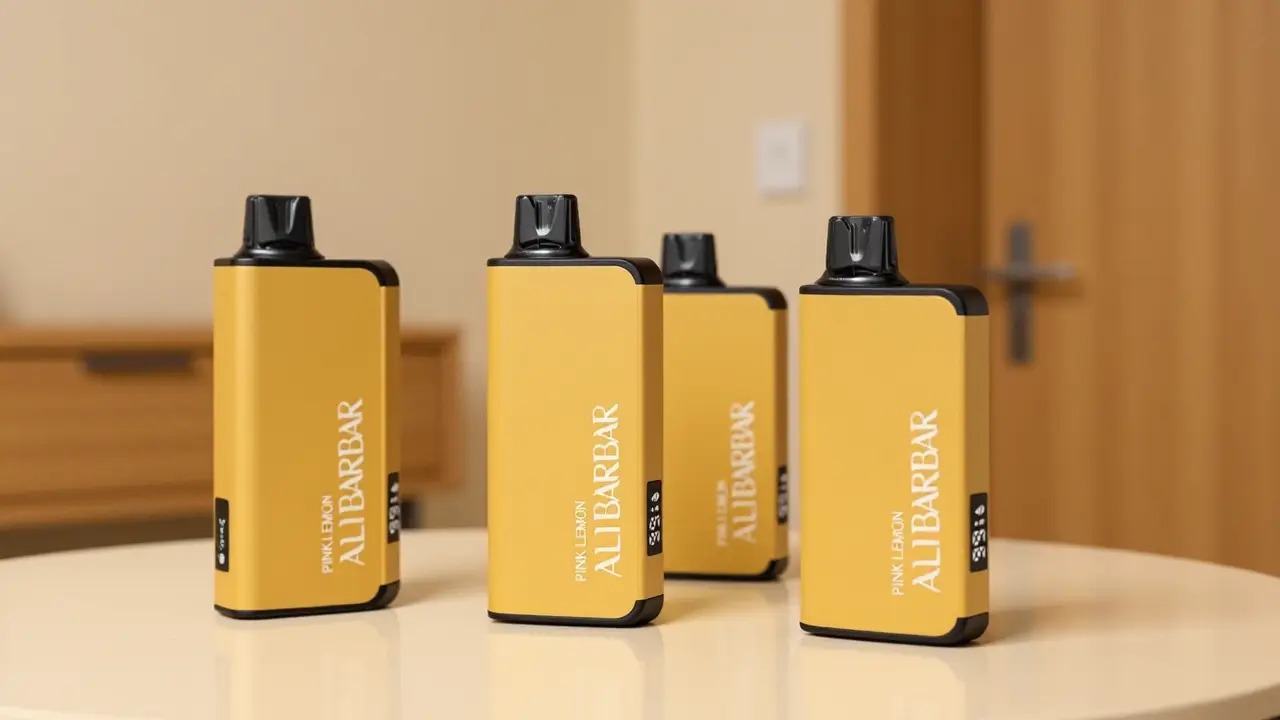
When we examine a specific device ecosystem — such as the ALIBARBAR range available through OZVAPE Shop — the engineering factors above manifest in practical, observable ways. These are not marketing bullet points; they are outcomes of specific design choices.
For the user who prioritises all-day, multi-day reliability without carrying spares, the ALIBARBAR INGOT 9000 and 15000 series represent a considered approach to integrated architecture. Their internal mesh-coil geometry maintains output stability across the bulk of the rated cycle count, and the battery status indicator uses a multi-stage rather than binary feedback system. The trade-off: the larger form factor is less discrete in a tight pocket, and the sealed design means the entire unit is replaced when depleted. For someone whose daily routine leaves no room for mid-day charging, that trade-off is worthwhile.
For the user who values adjustability and a tailored experience, the Ice Adjust 12000 introduces a variable-output control not typically found in sealed units. This shifts the user’s control from simply “on or off” to a degree of personalisation over intensity. The downside is that variable output demands slightly more attentive power management — a trade-off that adjustable-device users typically accept.
These products are not ranked; they serve different user need-states. What they share is a common heritage of factory-certified sourcing — a topic that becomes acutely relevant when you’re waiting on an order and wonder whether the parcel that arrives will match what was described.
A Practical Framework for Evaluation
Before you place any order — and certainly before you find yourself repeatedly refreshing a tracking page — use this checklist to align your choice with your actual life:
Ask the status indicator question: If this device has 15% of its charge remaining, will I know? If the answer is no, you will inevitably be caught off guard at the worst possible moment.
Map your weekly rhythm: How many active hours do you actually need between charges? Match that to the unit’s rated continuous-output duration, not just its total puff count.
Inspect the mouthpiece design: Does the contour invite extended use or feel like an afterthought? Discomfort is a reliable indicator that the industrial design wasn’t tested beyond a conference table.
Confirm the vendor’s sourcing lineage: Can the retailer point to an authorised distribution agreement, or is the supply chain an unknown sequence of intermediaries? Asking this before ordering prevents the “where is my vape?” that arises from counterfeit or mishandled inventory.
This framework doesn’t require technical expertise, only a willingness to read beyond the main specification number.
Common Selection Errors and Industry Observations
Patterns across the industry reveal that many instances of “where is my vape?” stem from three avoidable mistakes:
Overweighting one specification while ignoring complementary factors. A device boasting a high puff count but using a single-stage power indicator will still strand the user without warning. The number on the box is only meaningful alongside transparent power management.
Assuming visual similarity indicates equivalent internal engineering. The exterior shapes of many units are strikingly similar, but the internal thermal architecture, wicking material, and battery calibration differ in ways that directly affect daily reliability. A unit that looks identical to a well-engineered device may have been manufactured with entirely different tolerances.
Undervaluing modularity in long-term cost calculations. A replaceable-pod system may have a marginally higher initial price, but when spread over months of use, the per-session cost often undercuts repeatedly purchasing sealed units. The user who ignores this repeatedly finds themselves back at the checkout page, asking where the next vape is.
Confusing category terminology with technical specifications. Terms like “mesh coil” are now ubiquitous, but the grade of mesh, the welding integrity, and the adherence to thermal testing protocols vary enormously between factories. Without factory-audited sourcing, the term guarantees nothing.
From an industry perspective, the biggest shift in recent years has been the separation of genuine authorised channels from grey-market resellers. A retailer that can evidence an unbroken chain of custody back to the manufacturer’s regional distribution centre is not just offering a product — it’s offering a reliability promise that the device inside the box matches the one described on the page. This is the quiet infrastructure that prevents many “where is my vape?” conversations from ever starting.
Frequently Asked Questions
Q: I ordered from another vendor and the tracking hasn’t updated in five days. What should I do?
A: Contact the vendor’s support channel directly and ask for the carrier reference number and the last known depot scan. If the vendor cannot provide that, or the explanation is evasive, consider initiating a payment dispute through your financial provider and placing a replacement order through an authorised retailer with documented, transparent shipping procedures.
Q: How can I verify that the ALIBARBAR device I receive is genuine?
A: Authentic ALIBARBAR devices supplied through OZVAPE Shop feature factory‑applied verification codes on the packaging that can be checked against the manufacturer’s online database. Any deviation in packaging quality, typography, or the absence of a verifiable code is grounds for immediate return.
Q: My device stopped working after two days. Is that normal?
A: No. Any device from an authorised source should perform consistently through its rated cycle. Sudden failure often indicates a battery calibration fault or a manufacturing defect. A vendor that stands by its sourcing will offer a clear replacement or refund process.
Q: Why does the shipping time vary so much between different stores?
A: Stores holding inventory in local warehouses and using express courier partners typically deliver within 1–3 business days. Those drop‑shipping from overseas or consolidating orders introduce unpredictable customs and transit delays that can stretch into weeks.
Q: Can I use any USB‑C charger with my rechargeable vape?
A: Only if the device’s power‑management board is designed to negotiate current with a wide range of chargers. Many units are calibrated for standard 5V/1A inputs; using a fast‑charging brick without proper step‑down can degrade the power cell. Check the device specifications and, when uncertain, use a basic USB‑A to USB‑C adapter.
Q: What’s the actual difference between puff counts on similar‑looking devices?
A: Puff count is derived from laboratory testing under standardised draw conditions. Real‑world variation in draw length and frequency can yield a significantly different number. More importantly, a device can deliver its total puffs with inconsistent output, so the count alone is a poor predictor of satisfaction.
Q: How do I store a device if I won’t use it for a week?
A: Store it in a cool, dry environment away from direct sunlight. For rechargeable units, the ideal storage charge level is around 50%. Avoid leaving it in a vehicle where temperature extremes can accelerate cell degradation.
Q: I keep seeing “factory‑certified” — does that actually mean anything?
A: It should mean the retailer can trace the inventory back to an authorised regional distributor, and that each batch is accompanied by a certificate of conformance. Without this, there is no assurance the product hasn’t been tampered with or stored improperly after leaving the factory.
Q: What’s the best way to avoid the “where is my vape?” situation entirely?
A: Choose a device with clear power feedback and enough runtime to exceed your daily needs by a comfortable margin. Then place your next order well before the current unit reaches depletion, with a vendor that provides prompt, trackable fulfilment and local support.
Q: Does OZVAPE Shop offer any post‑purchase assistance if something goes wrong?
A: Yes. Our local support team handles warranty claims, product authentication concerns, and delivery exceptions directly, without redirecting you to an overseas contact form. Response times are measured in hours, not days.
Conclusion
The question “where is my vape?” rarely begins as a logistical problem. It begins with a mismatch between what a user expects and what the market delivers: a device that goes dark without warning, a vendor that stops communicating after payment, a supply chain that offers no proof of origin. Resolving it isn’t just faster shipping — it’s a shift towards informed selection, where the device’s internal engineering and the seller’s transparency are evaluated as carefully as the purchase price.
OZVAPE Shop exists to make that shift easier. By maintaining factory‑certified inventory, publishing standardised specifications, and handling support locally, we remove the friction that would otherwise leave you staring at a stalled tracking page or a dead device. Ultimately, the right choice is the one that maps to your actual days — your real schedule, your real tolerance for uncertainty — and not the one that arrives with the loudest headline.