
VAPE FAQs
When Was The Vape Invented?
Sep
If you have ever held a sleek, pocket-sized device and wondered about the chain of engineering decisions that led to its current form, you are not alone. The question “When was the vape invented?” is one of the most frequently asked by adults exploring the category for the first time, and the answer is more nuanced than a single date on a patent filing.
Understanding the timeline of this technology is useful for more than satisfying curiosity. It reveals how design priorities shifted over decades, why certain architectural choices dominate today, and what that history means for the device you might choose now.
At OZVAPE Shop, we believe informed users make better decisions. This article traces the invention of the modern personal electronic device from its conceptual roots through its commercial breakthrough, examining the engineering milestones that defined each era. We will separate documented fact from popular mythology, and show you how a device’s lineage can tell you something about its likely reliability.
The First Recognisable Prototype: Herbert Gilbert’s 1963 Patent
The earliest documented attempt at creating a device that could deliver a flavoured aerosol without combustion belongs to Herbert A. Gilbert. In 1963, Gilbert filed a patent for a “smokeless non-tobacco cigarette” that used heated, moist air to produce a flavoured vapour.
Key characteristics of Gilbert’s design:
A battery-powered heating element
A replaceable cartridge containing flavoured liquid
No combustion, no ash, no smoke
A design that physically resembled a traditional cigarette
Gilbert’s device was conceptually ahead of its time, but it faced two insurmountable barriers. First, the battery technology of the early 1960s was not compact enough to make the device genuinely portable for extended use. Second, there was no established market demand. Smoking was still socially ubiquitous, and the health concerns that would later drive innovation had not yet penetrated public consciousness.
Gilbert’s patent expired without ever reaching commercial production. However, his core insight — that heating a liquid to produce an inhalable aerosol could replace combustion — remains the foundational principle of virtually every device on the market today.
The Modern Breakthrough: Hon Lik and 2003
The device that most people recognise as the “first modern vape” was invented by Hon Lik, a Chinese pharmacist and former smoker. The commonly cited date is 2003.
Hon Lik’s motivation was deeply personal. His father, a heavy smoker, had died of lung cancer. Lik, himself a smoker, began searching for a way to deliver nicotine without the carcinogenic byproducts of burning tobacco.
What Hon Lik’s prototype achieved that Gilbert’s could not:
Ultrasonic nebulisation: Lik’s early designs used a piezoelectric element vibrating at ultrasonic frequencies to atomise a nicotine solution into a fine mist. This was a marked departure from Gilbert’s heated-air approach.
Compact power management: By 2003, lithium-ion battery technology had advanced sufficiently to power a device small enough to hold in one hand.
Cartridge-based liquid delivery: Lik’s design used a disposable cartridge pre-filled with a propylene glycol-based liquid containing nicotine.
The device was patented in 2003, and by 2004 it was introduced to the Chinese domestic market under the company name Ruyan (meaning “like smoke”). Ruyan began exporting internationally in 2005–2006, and the modern category was born.
There is a common misconception that Hon Lik invented the device in its entirety from nothing. In reality, he built upon prior art — Gilbert’s concept, ultrasonic nebulisation technology used in medical inhalers, and lithium-ion battery chemistry developed for consumer electronics. Lik’s contribution was synthesising these existing technologies into a commercially viable, consumer-friendly form factor.
The First Generation: Cigalikes (2006–2010)
When the first devices arrived in Western markets around 2006, they closely resembled traditional cigarettes in size, shape, and even the glow of an LED at the tip. These “cigalikes” were the first generation of commercially available devices.
Architectural characteristics of first-generation devices:
Two-piece design: a battery section and a disposable cartridge containing both liquid and atomiser
Limited liquid capacity (typically 0.5–1.0 mL)
Short battery life requiring frequent recharging
Inconsistent vapour production, particularly as the cartridge emptied
No user-adjustable settings
From an engineering standpoint, early cigalikes were compromised. The small battery capacity meant users had to charge multiple times per day. The cartridges often failed to deliver consistent output from first draw to last. But they represented a genuine breakthrough in accessibility — anyone could buy one, use it immediately, and understand the concept within seconds.
The limitations of cigalikes became the design challenges that the next generation would solve. OZVAPE Shop carries modern devices that have evolved well beyond this early architecture, but understanding why these limitations existed helps explain why contemporary designs look and function the way they do.
The Second Generation: Vape Pens and Clearomisers (2010–2014)
The period from 2010 to 2014 saw rapid and significant engineering evolution. Two innovations defined this era:
The clearomiser: A transparent, refillable tank that allowed users to see their liquid level and replace the heating coil independently of the tank.
Variable voltage batteries: Users could adjust the power output to suit different liquids and personal preferences.
Why this generation mattered:
Transparency: Clearomisers eliminated the “guess and discard” problem of sealed cartridges. Users knew exactly how much liquid remained.
Modularity: Coils could be replaced, extending the life of the device significantly.
Customisation: Variable voltage provided real control over the experience.
This generation moved the category from a disposable consumption model toward a refillable, user-serviceable paradigm. Vape pens remain popular today for their simplicity and reliability, and many users find they offer the best balance of performance and convenience.
The Third Generation: Box Mods and Sub-Ohm (2014–2018)
Between 2014 and 2018, device design bifurcated. One branch pursued higher power, larger clouds, and extreme customisation — these became known as “box mods.” The other branch pursued simplicity, compactness, and accessibility.
Box mod characteristics:
High-capacity internal or external batteries (often dual 18650 cells)
Power output exceeding 100 watts
Sub-ohm coil designs (resistance below 1.0 ohm)
Temperature control and variable wattage
User-rebuildable atomisers
This period also saw the emergence of nicotine salt formulations, which allowed higher nicotine concentrations to be delivered smoothly at lower power levels. This innovation was crucial — it enabled compact, low-power devices to satisfy heavy smokers effectively.
The Fourth Generation: Pod Systems and Closed Systems (2018–Present)
The current generation, which began around 2018 and continues to evolve, is defined by pod systems — compact devices that use pre-filled or refillable pods rather than tanks.
Key architectural features:
Draw-activated firing (no buttons)
Magnetic pod attachment
Small footprint and light weight
Nicotine salt compatibility
Low power consumption
This generation directly addressed the frustrations that emerged from earlier designs. Users wanted simplicity — something that worked reliably without tinkering. They wanted discretion — devices small enough to carry comfortably. And they wanted consistency — predictable performance from first use to last.
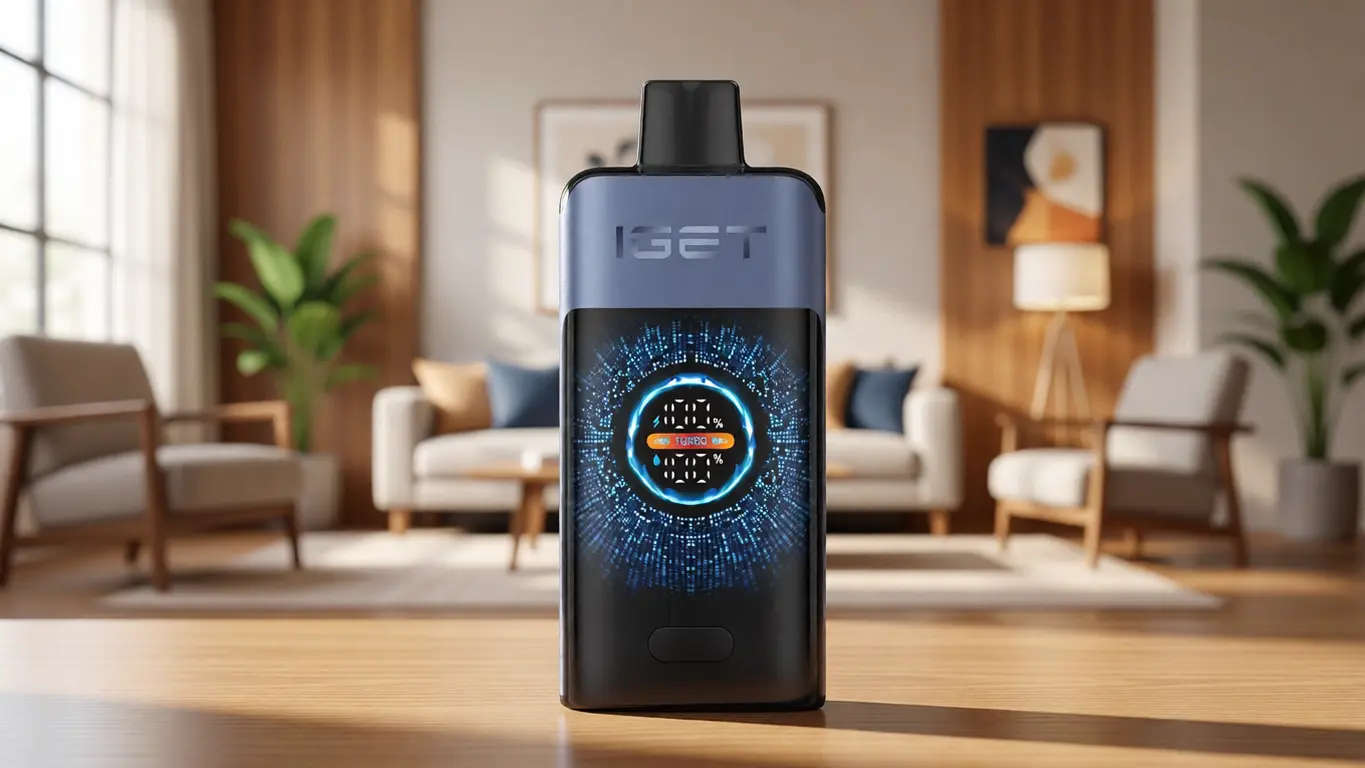
The ALIBARBAR line available at OZVAPE Shop exemplifies this generation’s engineering philosophy. Devices like the INGOT 9000 and INGOT 15000 prioritise consistent output, transparent status indicators, and durable construction. They represent the accumulated knowledge of two decades of iterative improvement.
A Timeline Summary
| Era | Years | Defining Innovation | Key Limitation |
|---|---|---|---|
| Conceptual | 1963 | Heated aerosol concept (Gilbert) | Battery technology; no market demand |
| Breakthrough | 2003–2004 | Ultrasonic nebulisation (Hon Lik) | Early production scale |
| First Generation | 2006–2010 | Cigalike form factor | Limited battery; inconsistent output |
| Second Generation | 2010–2014 | Clearomiser; variable voltage | Bulkier form factor |
| Third Generation | 2014–2018 | High-power box mods; sub-ohm | Complexity; battery management |
| Fourth Generation | 2018–Present | Pod systems; nicotine salts | Still evolving |
Frequently Asked Questions
Q: Did Herbert Gilbert actually build a working prototype?
A: Yes, Gilbert constructed at least one working prototype. However, no evidence exists that it was ever produced in meaningful quantities or sold commercially. The device remained a concept demonstration.
Q: Was Hon Lik the first person to sell a device commercially?
A: Yes. Hon Lik’s company, Ruyan, began selling devices in China in 2004 and exported internationally from 2005 onward. This is widely recognised as the beginning of commercial availability.
Q: Why did it take 40 years between Gilbert’s patent and Hon Lik’s device?
A: Two primary factors: battery technology had to advance to make portable devices practical, and public awareness of smoking-related health risks created market demand for alternatives. Neither condition existed in 1963.
Q: How has device reliability changed over these generations?
A: Dramatically. First-generation devices often failed due to poor seal integrity, inconsistent heating, and battery degradation. Fourth-generation devices benefit from improved manufacturing tolerances, better battery management circuitry, and more durable materials. The ALIBARBAR series, for example, uses factory-certified cells and precision-wound coils to ensure consistent performance across the rated lifecycle.
Q: What is the single most important engineering improvement across all generations?
A: Power management. Early devices provided no status feedback, leaving users uncertain about remaining capacity. Modern designs incorporate clear battery indicators and consistent output regulation, eliminating the guesswork.
Q: Should I choose a pod system or a tank system?
A: This depends entirely on your usage pattern. Pod systems are superior for portability, discretion, and simplicity. Tank systems offer greater liquid capacity and coil customisation. There is no universally correct answer — only the right choice for your routine.
Q: Can I still buy first-generation devices?
A: Some cigalike-style devices remain available, but they are increasingly rare. Modern devices offer substantially better performance and reliability. Most users find the convenience and consistency of current-generation designs worth the slightly higher initial cost.
The Practical Takeaway
Knowing when the vape was invented is more than a historical footnote. It tells you that the devices available today are the product of two decades of iterative engineering, not a single moment of inspiration. Each generation solved problems that the previous one could not — better batteries, clearer status indicators, more consistent output, more durable construction.
When you evaluate a device, you are evaluating the accumulated knowledge of that entire timeline. A well-designed fourth-generation device like those in the ALIBARBAR range benefits from everything that came before it: the compact ambition of cigalikes, the transparency of clearomisers, the power management of variable voltage systems, and the user focus of pod architectures.
At OZVAPE Shop, we curate our selection based on this understanding. The devices we carry are not judged by novelty alone, but by whether they represent genuine engineering progress. The question “When was the vape invented?” leads naturally to a more important one: “What does that history teach me about choosing the right device today?”
The right device is the one whose engineering matches how you actually live — not the one with the most impressive claims, but the one whose design respects your time, your routine, and your expectations. That is the lesson of the timeline, and it remains as relevant now as it was in 1963.