VAPE FAQs
When Can I Vape After Wisdom Tooth Extraction?
Jun
When someone leaves the dental clinic with fresh sutures and a printed sheet of post‑operative instructions, the warnings are unambiguous: no straws, no vigorous rinsing, no smoking. The reasoning is familiar — any negative pressure inside the mouth can dislodge the protective blood clot, leading to the painful and avoidable condition known as dry socket. What those instructions rarely address, however, is the question that occupies the mind of many adults who rely on personal electronic devices: what about a device that is neither a straw nor a cigarette, yet still moves air through the mouth by deliberate inhalation?
This article does not offer a simple count of days, because no universal number would be honest. Healing varies, and so do the physical demands of different devices. Instead, we will examine the engineering characteristics that determine how much mechanical stress a device places on a healing surgical site. Understanding that relationship allows an adult to make a defensible, personalised choice about when — and with which device — to resume use. For those who want to go further, a retailer that provides thorough, standardised technical descriptions can help convert abstract specifications into practical safety signals. When you browse a catalogue such as OZVAPE Shop , the activation method, airflow architecture, and temperature control parameters are listed plainly, making it possible to evaluate a device’s physical burden long before you pick it up.
Understanding the Physical Dynamics of Modern Devices
The risk after a wisdom tooth extraction is overwhelmingly mechanical. A clot sits loosely in a bony socket, and anything that creates suction or turbulence can tug it free. The question, then, is not whether a device inherently causes a problem — it is which design behaviours most influence the pressure differentials generated in the oral cavity. By applying a handful of engineering concepts, a user can estimate the likely stress any particular unit will impose.
Activation Mechanism and Negative Pressure Generation
Devices fall into two broad activation categories: draw‑activated and manual. In a draw‑activated system, a sensor detects the airflow created by the user’s inhalation and engages the heating circuit. On the surface, this sounds like it would demand a strong pull — yet many modern sensors are calibrated to respond to a breath so gentle that it barely registers as a sip of air. The critical variable is the activation threshold, the minimum flow rate required to wake the device. A low‑threshold system can be operated without ever sealing the lips around the mouthpiece, substantially reducing the vacuum that forms inside the mouth.
Manual activation (a button held while inhaling) has a different profile. The pressure generated is determined entirely by the force with which the user draws, and because there is no sensor waiting for a minimum flow, the user can inhale very softly and still receive vapour. However, human habit often works against this flexibility — many people instinctively pull harder than necessary, especially if they are accustomed to higher‑resistance designs. In surgical recovery, that instinct can be costly.
Airflow Architecture and Control
The internal air path, the diameter of the mouthpiece opening, and the presence of an adjustable airflow collar all shape the resistance the user feels. A device with a wide, open airway and a broad mouthpiece requires very little pressure difference to move vapour. Conversely, a narrow, restrictive draw — intentionally designed for a stronger throat sensation — can demand suction forces that mimic those of a drinking straw.
Adjustable airflow, found on some of the more advanced portable designs, gives the user an extra lever. By opening the inlet as wide as possible, the inhalation effort drops to near‑zero. This does not eliminate all pressure fluctuation, but it shifts the functional demands from “pulling against resistance” to “breathing with a directed current.” During the early days of healing, that distinction matters enormously.
Temperature Regulation and Mucosal Sensitivity
Heat is a secondary but real irritant. The vapour exiting a device can vary from ambient‑temperature mist to noticeably warm aerosol, depending on how the heating element is tuned. Tissue that is still inflamed reacts poorly to repeated thermal stimulation, and a device that runs cooler may allow a user to test the waters with less discomfort — and less risk of triggering the kind of reflexive flinch that sucks air across the socket.
The temperature characteristic is partly a function of power management. A system that delivers energy in short, precisely timed pulses tends to keep vapour temperature lower than one that applies sustained current. While no mainstream product markets itself on post‑surgical thermal safety, reading between the lines of the technical material can reveal which devices operate in a gentler thermal range.
Device Flexibility and Output Adjustability
Modularity is often discussed in the context of cost and waste, but it also has a role in post‑operative decision‑making. A device that allows the user to swap between different power settings, airflow inserts, or even mouthpiece profiles is a device that can be progressively “tuned down” as healing progresses. A sealed, single‑mode unit offers no such gradient; the user’s only choice is to use it exactly as designed or not at all. For someone cautiously reintroducing a behaviour after surgery, the ability to step through a spectrum of increasingly involved usage is a significant advantage.
How Modern Design Choices Lower the Physical Burden
The principles above are not hypothetical. A close look at the ALIBARBAR collection — a range of portable electronic devices that has gained traction among Australian adults — reveals how deliberate engineering decisions directly address the very factors that influence post‑extraction risk.
The ALIBARBAR INGOT 9000 and INGOT 15000, for instance, employ a draw‑activated sensor whose sensitivity has been refined over multiple product cycles. The activation occurs with a breath so shallow that many users report they barely need to form a seal with their lips. That behaviour translates into a vacuum level that sits at the extreme low end of what is possible in a handheld device. And because the heating element is energised only when air is actually moving, there is no period of the draw where the user is pulling against a closed system, which would otherwise create a spike of negative pressure.
The ALIBARBAR Ice Adjust 12000 goes further by incorporating a user‑rotated airflow collar. Opening the collar fully reduces the inhalation resistance to a level that feels akin to breathing through an open tube. Even someone with significant post‑surgical anxiety can test the device gently, gradually closing the collar over subsequent days as they gauge comfort. No other design choice has as direct a relationship to the suction forces that post‑operative guidelines are trying to prevent.
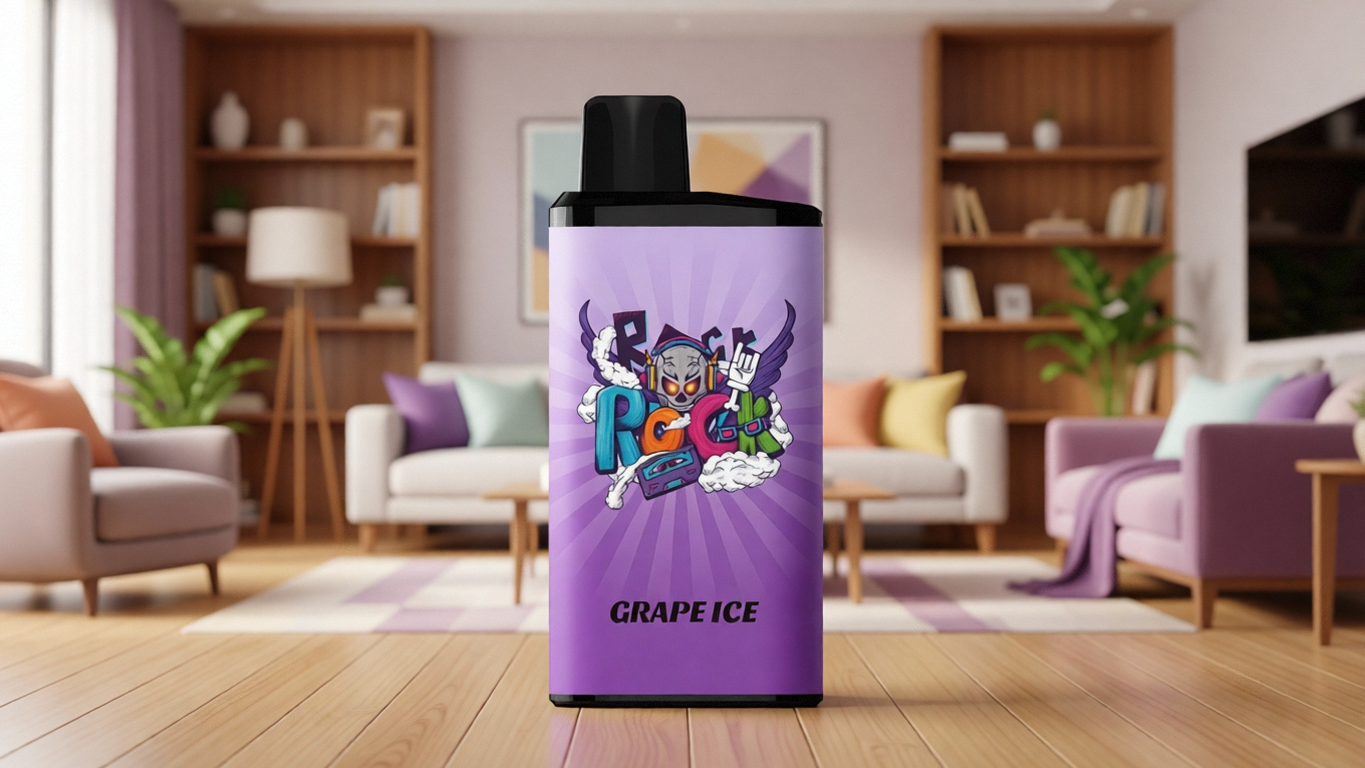
None of this should be misinterpreted as a claim that these devices are “safe” immediately after surgery. The point is narrower and more technical: if the mechanical risk of dry socket is driven by pressure drop, then devices engineered for minimal pressure drop logically belong on a different part of the risk curve than devices that require a seal‑lipped, forced draw. Recognising that difference is a form of informed adult decision‑making — exactly the kind that a detailed product listing supports.
A Structured Self‑Assessment for Device Use After Oral Surgery
Instead of asking “How many days must I wait?”, more reliable information comes from asking a sequence of diagnostic questions about the device in hand. This framework is designed to be applied independently, and it requires no specialised tools — only careful attention to physical sensations.
Does the device activate when you barely breathe through it?
Hold the mouthpiece loosely near your lips, without sealing them, and inhale as gently as you would when walking slowly. If the indicator light activates, the device’s suction demand is extremely low. If it does not, any harder pull will generate progressively more negative pressure, and you should be mindful of that threshold.
If you must form a lip seal, can you achieve activation with a momentary “sip” rather than a sustained draw?
Short duration minimises the time that suction acts on the site. A device that ramps up power quickly and delivers its output in the first half‑second of airflow is mechanically friendlier than one that requires a long, building pull.
Is the airflow path adjustable, and have you opened it fully?
If yes, test the draw with the widest setting first. Notice how it compares to a normal relaxed breath. If the draw still feels tight, the device is creating more oral vacuum than may be comfortable in the early healing phase.
Can you reduce the thermal output by lowering power or selecting a less aggressive setting?
Even if the pressure concern is under control, thermal irritation can generate a defensive reaction. Starting with the coolest vapour the device can produce adds an extra layer of comfort.
Does the device offer visual, unambiguous status feedback?
While not directly related to suction, clear feedback prevents you from drawing on a device that did not activate correctly. When a draw fails to fire, a user often instinctively pulls harder — a dangerous reflex if the socket is still vulnerable.
Using this checklist, a person can chart their own path back to regular usage. On day one after extraction, they may find that even the gentlest device still feels risky. A week later, the same device may pass all five questions with ease. The key is that the decision is informed by measurable device behaviour, not guesswork.
Common Oversights When Evaluating Safety After Extraction
Industry observation suggests that most post‑surgical complications related to personal device use stem not from malicious misbehaviour but from a simple underestimation of mechanical forces. Below are the patterns that repeat most often.
Oversight 1: Treating all devices as mechanically identical.
Because the external form factor of many portable devices is similar — a slim cylinder with a mouthpiece — users assume the engineering inside is equally generic. In reality, activation thresholds, airflow resistance, and heating profiles can differ by orders of magnitude. A unit that activates with a 0.2‑second light puff creates a fundamentally different physical environment than one that needs a 3‑second sealed‑lip pull. Ignoring this distinction collapses a wide range of risk into a single, unhelpfully broad category.
Oversight 2: Relying exclusively on time since surgery without checking functional readiness.
A common rule circulating online is to wait three to seven days. While that may be reasonable as a baseline for tissue stability, it measures biology and ignores technology. A person on day four using a high‑resistance device may be at greater physical strain than a person on day seven using a low‑resistance one. Both the clock and the tool deserve equal weight.
Oversight 3: Assuming that button‑activated devices are inherently safer.
Because no draw sensor is involved, some users believe that a button removes the need for suction altogether. The vapour still needs to travel from the device into the airway — and unless the user is relying purely on passive diffusion (which no handheld device supports), some degree of inhalation is required. The button eliminates the requirement to pull for activation, but it does not prevent the user from pulling anyway. It is the act of inhaling against a restriction that generates the vacuum, not the trigger mechanism itself.
Oversight 4: Under‑valuing adjustable features during recovery.
Many adults purchase a device with adjustable airflow or selectable power settings but never change them from the out‑of‑the‑box configuration. In the context of post‑surgical reintroduction, a fully open airflow setting and the lowest functional power level can create a “test mode” that imposes far less physiological demand. Leaving those settings untouched is a missed opportunity.
From a manufacturing standpoint, the drift toward sensitive, low‑threshold activation has been one of the more consequential trends of the past several product cycles. It was not driven by medical considerations — it emerged because users wanted devices that felt responsive and effortless. The side effect, however, is that the same engineering which makes a device feel “premium” also happens to align with the physical caution required after an extraction. It is a coincidence worth exploiting.
Frequently Asked Questions
Q: Is there a universally agreed safe waiting period before using any personal electronic device after wisdom tooth removal?
A: No. Dental professionals generally recommend avoiding any behaviour that creates oral suction for at least 48‑72 hours, but the risk period can extend longer depending on the complexity of extraction and individual healing. Because devices vary so widely in the suction they demand, a blanket timeline cannot account for device‑specific risk.
Q: What is the specific mechanical cause of dry socket, and why is suction dangerous?
A: After a tooth is removed, a blood clot forms in the socket to protect the underlying bone and nerve. Any significant negative pressure inside the mouth — such as that generated by drinking through a straw, spitting, or forceful inhalation — can physically pull the clot from its seat. Once exposed, the bone becomes intensely painful and requires professional intervention.
Q: Can I use a device that is activated only by a button, without any inhalation?
A: No handheld device on the market today is designed to be used without some form of inhalation. The vapour must exit the device and enter the airway, which necessarily involves drawing air through the mouthpiece. A button removes the flow‑sensor requirement, but the physical act of inhaling still creates pressure changes.
Q: How does adjustable airflow help reduce risk?
A: Airflow adjustment changes the diameter of the inlet through which air enters the device. A wide‑open setting minimises resistance, meaning the user can achieve vapour delivery with a very shallow, low‑pressure breath. This reduces the magnitude of the vacuum generated inside the mouth compared to a restricted, tight‑draw configuration.
Q: Are some mouthpiece shapes less likely to create a seal?
A: Yes. A broader, flatter mouthpiece that rests against the lips without entering the mouth tends to produce less of a sealed chamber than a narrow, tapered nozzle that fits inside the lips. The difference is subtle but can meaningfully alter the pressure profile, especially if the user is deliberately trying to avoid a full seal.
Q: Does the temperature of the vapour matter for healing?
A: While it does not directly cause dry socket, excessively warm vapour can irritate inflamed tissue and provoke reflexive muscle movements that increase the chance of dislodging the clot. Devices that are calibrated to deliver vapour closer to ambient temperature are generally less likely to provoke such responses.
Q: How can I verify the activation sensitivity of my device without testing it in my mouth?
A: Most manufacturers do not publish suction force in pascals, but a simple proxy test can be done by hovering the mouthpiece near your open lips and breathing naturally. If the device’s indicator light turns on, the activation threshold is low. Some product pages — such as those on OZVAPE Shop — include qualitative descriptions of draw effort, which can help benchmark devices before purchase.
Q: If I experience discomfort during a test draw, what should I do?
A: Stop immediately and wait at least another 48 hours before attempting again. Discomfort is a signal that the forces being applied are not yet compatible with the current stage of healing. Switching to a device with lower activation threshold and wider airflow may be necessary.
Q: Is it better to use a device with a pre‑set power level or one that allows output adjustment during recovery?
A: A device with adjustable power offers finer control. You can start on the lowest setting, which often produces the coolest vapour and shortest heating pulses, and slowly increase as your comfort permits. A fixed‑output unit removes that graduated reintroduction path.
Q: What role does OZVAPE Shop play in helping users understand these factors?
A: OZVAPE Shop publishes standardised technical information for every device it offers, including activation method, airflow characteristics, and adjustability. This consistent formatting lets users directly compare the mechanical demands of different units, which can be an important part of evaluating a device’s compatibility with post‑operative caution.
Conclusion
The question of when to resume using a personal electronic device after wisdom tooth extraction does not have a one‑size‑fits‑all answer because it is not a single‑variable problem. Healing tissue follows its own timeline, influenced by age, surgical complexity, and aftercare. Meanwhile, the device in your hand generates a specific mechanical signature — a combination of activation force, airflow resistance, and thermal output — that either amplifies or moderates the physical stress placed on the extraction site.
A responsible approach, therefore, is not to fixate on a date but to learn how to read the device. Assess whether it activates with a whisper of breath, how much effort is required to sustain vapour production, and whether its design allows you to back the demand down to the gentlest setting possible. This framework moves the decision from guesswork to informed autonomy.
Transparent product data, of the kind found on OZVAPE Shop , supports this process by giving you the specifications you need to match a device to a temporary physical limitation. The right device for a healing mouth is not the most powerful or the most feature‑rich — it is the one that asks the least of the tissue still doing the quiet work of repair. The choice belongs to you, and understanding the engineering puts you in control of how and when that choice is made.