
VAPE FAQs
What\’S Inside A Vape?

Sep
It’s a reasonable question. You hold a small, self-contained device that delivers a consistent experience for days or weeks, yet gives away almost nothing about how it works. The exterior is deliberately seamless. That silence invites two things: curiosity, and — when something finally goes quiet or stops producing — confusion. This article unpacks what sits beneath that sealed surface, not to encourage tampering, but to give you the language, the concepts, and the evaluation framework that let you spot the difference between a device engineered around the user and one engineered around a price point. At OZVAPE Shop, we see that clarity as a prerequisite for trust.
Understanding What Matters: The Hidden Engineering That Shapes Your Experience
If you strip away branding, colourways, and marketing language, only four things determine whether a device becomes something you rely on or something you quietly replace next time. The sections below group those four things, and they explain why two externally similar units can feel radically different after the first full day of use.
Internal Architecture and Output Consistency
The core of any portable device is the heating assembly, and how that assembly manages temperature over time. In most sealed units, you are dealing with a resistance wire — typically a mesh or a round-wire coil — wicking liquid from a saturated fabric or cotton reservoir and converting it into an inhalable aerosol when current passes through it. The engineering differentiator is rarely the material itself; it is thermal stability. A well-designed heating chamber maintains an even temperature band across the entire activation cycle, preventing hot spots that degrade the wick prematurely and produce a harsh, inconsistent output in the later stages of the device’s life.
Why this matters: one of the most common frustrations we hear is that a device “tastes burnt” or “loses quality” well before it stops functioning. That premature decline is almost always a sign that the heating surface is operating outside its intended thermal window, either because the power delivery is unregulated or because the wicking material cannot keep up with the rate of consumption. When you evaluate a device, note whether the manufacturer specifies the resistance range and wicking architecture — those details indicate that thermal management was a design priority, not an afterthought.
Power Management and Status Transparency
A lithium-ion cell sits inside every self-contained device. The capacity is usually given in milliampere-hours (mAh), but the figure that matters more is how intelligently the discharge curve is managed. A well-tuned power management circuit does two things: it delivers stable voltage to the coil until the battery reaches a defined cut-off, and it communicates the remaining capacity honestly through a visible or haptic indicator.
The hidden cost of poor power transparency is something most people only recognise after they have been caught out. A device that dies without warning at 2 p.m. on a long day forces you to carry a backup. A device with a multi-stage LED or, better yet, a small digital readout gives you agency. You can plan. This is not a cosmetic feature; it materially changes the reliability of the device as a daily companion.
Physical Design and Material Durability
You carry these things in pockets with keys, coins, and phones. You hold them for minutes at a time, often repeatedly across a full day. So surface finish is not about luxury — it is about grip retention after weeks of handling, resistance to scratches that turn a device into something you’d rather hide, and a mouthpiece contour that doesn’t create pressure points against the lip.
Devices with a soft-touch matte coating often look great on day one, but they are more prone to peeling or absorbing oils from skin. A hard-anodised or deeply textured polycarbonate shell tends to show far less wear over the same period. Similarly, a mouthpiece that narrows gradually distributes contact force better than a sharply tapered tip, reducing fatigue during prolonged use.
Modularity and Lifecycle Flexibility
Sealed units offer convenience: no maintenance, no decisions. Rechargeable-but-sealed systems extend that convenience across multiple charges. Replaceable-component architectures go further, letting you swap a power source or a reservoir independently. None of these approaches is universally superior; the right choice depends on how you weigh upfront cost versus per-day cost, and how much you value the ability to reduce waste by replacing only what is depleted.
Understanding this helps you avoid a classic selection trap. A user who prioritises simplicity might choose a fully sealed unit with a high stated capacity, but if that capacity depletes unevenly due to thermal issues, the true cost per day may be higher than a modular alternative that gives fine control over each element.
Applying These Criteria to Real-World Options
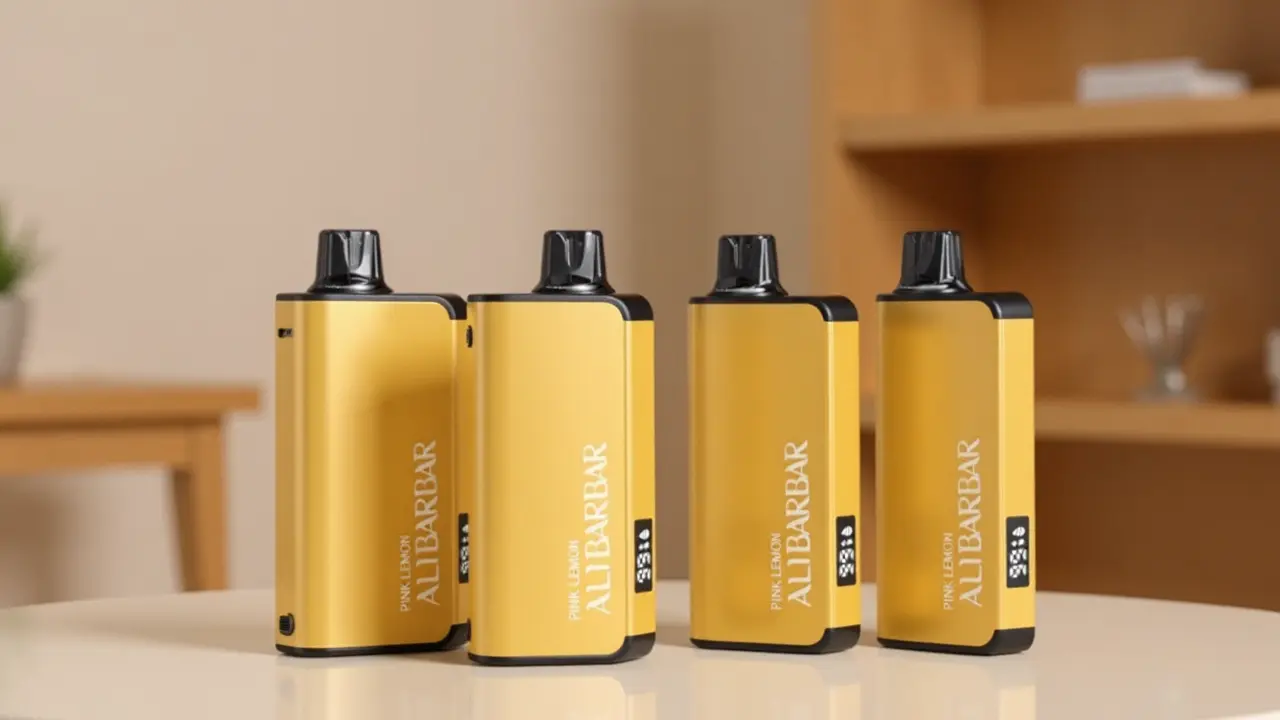
No manufacturer builds devices that score perfectly on every dimension; trade-offs are inherent. The ALIBARBAR range — available through OZVAPE Shop as a factory-certified collection — offers a useful illustration of how those trade-offs are managed deliberately rather than accidentally.
The INGOT 9000 is built around a high-capacity sealed architecture. Observing its internal specifications, the mesh heating surface is paired with a multi-layer wicking system that keeps saturation consistent across the full reservoir volume. Users who prioritise a single, uninterrupted operational life from activation to depletion will find that the thermal stability is the crucial variable, and the engineering attention given to wicking suggests the designers understood exactly that.
The INGOT 15000 extends that same philosophy into a larger reservoir, but the more significant engineering shift is in power management. It includes a digital status display that removes ambiguity entirely. That one change transforms the user experience from reactive (“I think it might be low”) to proactive (“I have 30% left; I’ll recharge when convenient”). For anyone who has ever been caught without a backup, the value of that information is immediate.
The Ice Adjust 12000 adds a layer of user control over output characteristics, which introduces a different set of design considerations. Introducing adjustability means the power delivery circuit must accommodate variable loads while maintaining stable temperature. That requires tighter component tolerances and more rigorous quality control — the kind of detail that separates a device you can rely on from one that drifts as the battery ages.
Other commonly encountered device families sometimes prioritise a lower component count or a flashier exterior, and those choices are visible once you know what to look for: a lack of status feedback, uniformly high failure rates in the last third of the reservoir, or surface materials that degrade faster than the device depletes. The benchmarking framework in the next section lets you evaluate any option against facts, not promises.
A Practical Framework for Evaluation
When you have to choose without physically handling a device, you need a repeatable mental checklist. The following steps are designed to surface the engineering trade-offs discussed above, using only the information that should be publicly available from a credible retailer or manufacturer.
Check the heating element specification. Look for mesh vs. round wire, resistance value in ohms, and any mention of wicking material or structure. If none of these is disclosed, assume thermal stability was not a primary design constraint.
Confirm the power transparency mechanism. Does the device have a multi-stage LED, a digital display, or simply a single blink before it dies? The difference between those tiers is the difference between controlled depletion and an unexpected dead device.
Examine the surface material and mouthpiece geometry. Look for descriptions like “hard-anodised,” “textured polycarbonate,” or “food-grade polymer with rounded contour.” Aspirational adjectives (“premium feel”) without material specifics usually indicate a finish that will show wear faster.
Map the lifecycle model. Is it single-use sealed, rechargeable-sealed with limited operational life, or partially modular? Calculate the likely cost per day based on the stated capacity and your own typical usage pattern; sealed units with high stated capacity may cost more per day if thermal fade sets in early.
Check for verification infrastructure. A trustworthy supply chain will offer means to confirm authenticity. If a retailer provides no information about sourcing or batch records, you are relying entirely on chance.
When you compare two devices side-by-side on these five dimensions, the superficial similarities often dissolve, and the choices that actually affect your daily experience become visible.
Common Selection Errors and Industry Observations
Having seen the decisions that lead people back to us with either satisfaction or quiet disappointment, a few patterns stand out. They are worth naming directly.
Overweighting a single specification. A large battery capacity number on a sealed unit feels reassuring, but if that battery is powering an inefficient heating circuit or a coil that degrades unevenly, the effective usable capacity can be significantly lower than the label suggests. A slightly lower mAh rating with documented thermal management will usually deliver more consistent output across its life.
Assuming visual similarity equals internal equivalence. The supply chain is full of devices that look identical on the outside but use different coil materials, different wick densities, and different battery cells. The exterior is the cheapest part to replicate. The internals are where cost pressures either raise quality or degrade it. Without supply chain transparency from the retailer, you cannot verify which version you are getting.
Undervaluing modularity in cost-per-use calculations. A fully sealed device with a high upfront price can seem like a simple choice, but if you regularly deplete only 60% before the output quality degrades, you are paying for capacity you cannot use. A modular or rechargeable design that lets you replace one element at a time often carries a lower true cost over months of use — but that only becomes apparent when you track it deliberately.
Confusing category terminology with technical specifications. Words like “mesh,” “dual coil,” or “adjustable” have real engineering meanings, but they are often deployed in marketing without the supporting specifications that prove they are implemented robustly. A “mesh” coil that runs too hot because of poor power regulation will not perform like a well-implemented mesh coil. The term alone is not enough; you need the engineering context.
From an industry-level perspective, the devices that build the most durable trust are those where the manufacturer accepts that the user is capable of understanding the trade-offs. That means publishing resistance values, stating wicking architecture, and including status feedback systems that give honest information rather than optimistic approximations. It also means working with retailers like OZVAPE Shop that refuse to obscure the provenance of the products they sell.
Frequently Asked Questions
Q: What exactly is inside a sealed disposable device?
A: A power cell (typically lithium-ion), a resistive heating element (mesh or round wire), a fibre-based wicking material saturated with liquid, an airflow sensor or switch, and a simple control circuit. Some models add a charging port and a status LED or digital display.
Q: Why do some devices start tasting harsh before they are empty?
A: Harshness usually indicates that the wick is not staying saturated, causing the coil to overheat and partially burn the wicking material. This can result from poor wick design, high ambient temperatures, or a power curve that pushes too much current as the battery drains.
Q: How can I tell if a device’s battery is near depletion?
A: Devices with a transparent power indicator — a multi-colour LED or a digital percentage — give you clear warning. Devices without this feature require you to guess, which often means carrying a spare.
Q: Is it safe to recharge a device that was not designed to be rechargeable?
A: No. Sealed units designed for single use lack the protection circuits necessary to manage the charging current safely. Attempting to recharge them can cause the cell to fail dangerously.
Q: What does a “mesh coil” actually do differently?
A: A mesh coil distributes heat across a larger, flatter surface area compared to a round wire, producing more even heating and reducing the chance of localised burning. The practical effect is typically a more consistent output, provided the power delivery is stable.
Q: How can I verify that a device I bought is authentic?
A: Authentic products from the ALIBARBAR range should be purchased through a factory-certified channel. OZVAPE Shop sources inventory directly from authorised distribution, and each product comes with traceable batch information. Look for a verification sticker or code and check it against the manufacturer’s system.
Q: Why do two devices that look identical sometimes cost very different amounts?
A: Externally similar shells can house different generations of internal components. A lower price may reflect an older battery cell, a less robust coil, or thinner wicking material. Without a known supply chain, you cannot be certain what you are paying for.
Q: What should I do if a device stops working before it is depleted?
A: First, confirm the issue is not simply a drained battery (if rechargeable, check the charge status). If the device is genuinely faulty, a reputable retailer will have a clear returns or support process. Keep your proof of purchase and any batch or authenticity information.
Q: Are devices with adjustable output more complex to maintain?
A: In a sealed device, you are not maintaining anything — the adjustment is handled electronically. The complexity lies in the engineering required to deliver stable output across the adjustment range. That complexity is a cost the manufacturer bears, and it is reflected in component quality. If done correctly, the device should be no less reliable than a fixed-output equivalent.
Q: How long should a device of a stated capacity realistically last me?
A: That depends entirely on your usage pattern. A given reservoir size (e.g., 9000 or 15000 puffs) is a factory-estimated figure based on a standardised test protocol; your actual duration will vary with draw length, rest time between uses, and ambient conditions. Use the puff count as a rough comparative guide between models, not as a precise promise.
Conclusion
Once you know what is inside a vape — the cell, the coil, the wick, the air switch, the power logic — the questions worth asking become more specific. Does this heating element stay within its thermal window for the full life of the device? Will I know before it dies? How long will the surface I hold actually look and feel the way it does today? The right device is not the one with the most eye-catching exterior or the highest number on the package. It is the one whose internal architecture matches the rhythm of your days. A factory-certified channel like OZVAPE Shop simply gives you the transparent starting point from which that evaluation becomes possible.