
VAPE FAQs
What\’S A Thc Vape?
May
You’re at a gathering and someone passes you a slim, pen‑shaped object that produces a gentle cloud when they draw on it. It doesn’t smell like anything you’d associate with traditional smoking, and it fits entirely in the palm. That moment raises a straightforward question: what exactly is a THC vape, and what should an adult know before handling, choosing, or purchasing one? This article answers that question directly, without hype, by unpacking the hardware, the contents, and the quiet design decisions that separate a reliable device from a constant source of frustration.
While the term itself might sound niche, the core technology is simple: a small, portable electronic device heats a cannabis extract to a temperature that releases active compounds without combustion. The result is an inhalable aerosol that carries the extract’s intended profile far more cleanly than burning plant material. Yet the simplicity of the concept has spawned a market filled with products of widely varying quality. An informed user, we believe, is the best protected user, and at OZVAPE Shop, part of our role is to make that information accessible. We stock device families such as the ALIBARBAR collection because they demonstrate the kind of engineering that can be objectively evaluated against the criteria that actually matter for everyday use, whether the cartridge you attach is for nicotine or for legal cannabis extracts.
Understanding What Matters: Core Engineering and Design Factors
Before focusing on any particular brand or form factor, it helps to understand the engineering principles that determine how a vaporizing device behaves over weeks and months of real‑world use. The following framework applies whether you’re looking at a simple disposable pen or a reusable battery designed for interchangeable cartridges.
Internal Architecture and Output Consistency
The heating element is the heart of any vape device. In a THC cartridge system, the atomizer inside the cartridge typically uses a ceramic or quartz coil surrounding a wicking material. The quality of that coil and its ability to maintain a stable temperature directly influences whether each draw feels identical or the experience degrades after the first few sessions. Poor thermal management leads to the two most common user complaints: weak, airy draws that deliver little effect, and harsh, overheated draws that can damage delicate terpenes and leave an acrid aftertaste.
Well‑engineered devices — regardless of what they vaporize — incorporate some form of temperature regulation or consistent power delivery. The ALIBARBAR range, for example, is built around a principle of output stability across the charge cycle. That matters because a device that starts strong but fades unpredictably forces you to carry a backup, adding cost and clutter. When evaluating any battery intended for THC cartridges, ask whether it maintains a consistent wattage from full charge to depletion rather than simply dumping battery voltage directly to the coil.
Power Management and Status Transparency
A frequent, almost banal source of dissatisfaction is the moment a device stops working with no warning. A user may leave home assuming they have enough charge for the rest of the day, only to find the indicator blinking red after two draws. This isn’t a minor inconvenience; it’s a design failure that signals a lack of respect for the user’s time and planning.
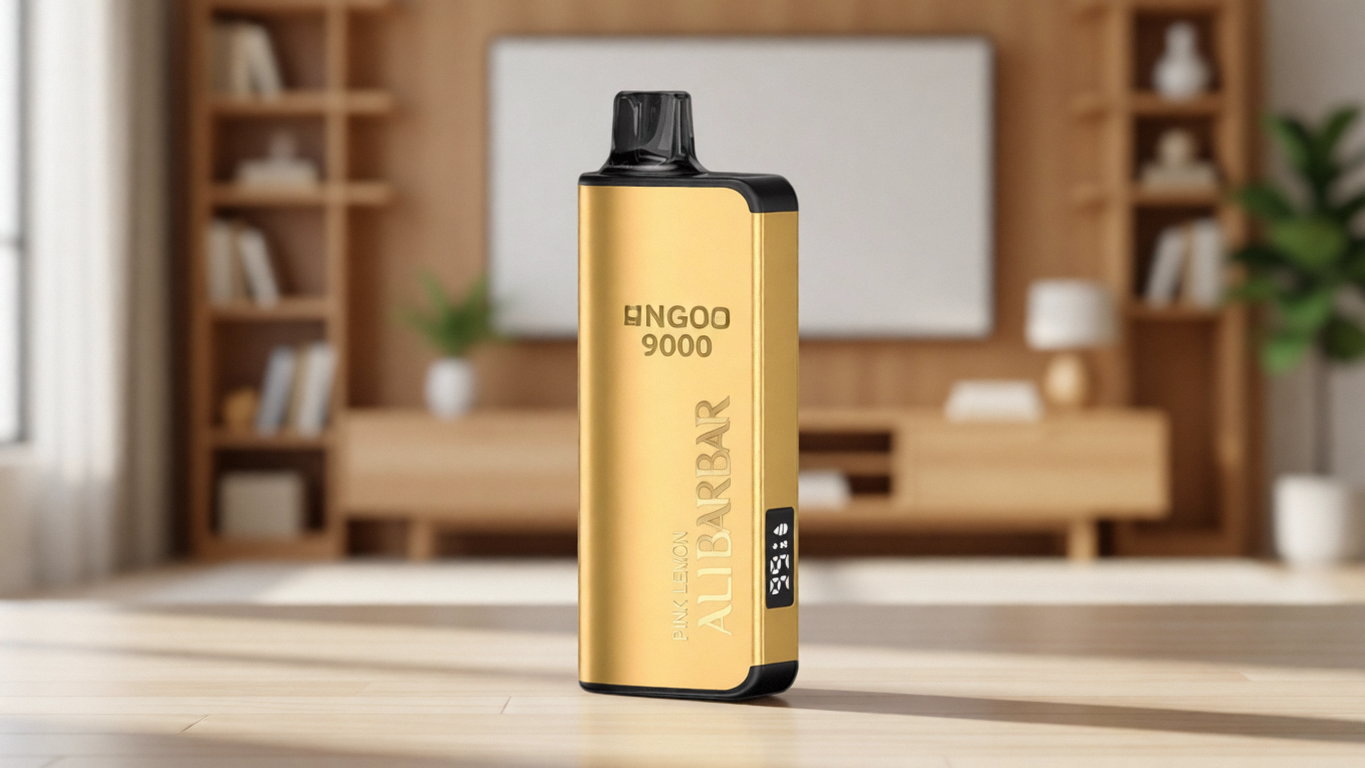
Clear, multi‑level battery status indicators are not a luxury. Devices that show remaining charge as a simple green‑amber‑red sequence or through multiple LED segments allow you to make informed decisions. The ALIBARBAR product line integrates transparent status feedback into every unit, from the compact INGOT 9000 to the larger‑capacity models, precisely because the engineers behind them observed how often users were caught off guard by opaque battery communication. If a device you’re considering gives no clear status beyond “on” or “off,” expect to find yourself reaching for a spare far sooner than you’d like.
Physical Design and Material Durability
A THC vape pen is carried in pockets, bags, glove compartments, and occasionally dropped onto hard surfaces. A finish that looks premium in a product photo but flakes after a week of contact with keys is a poor investment. The mouthpiece contour matters too, because a poorly shaped tip makes extended use uncomfortable and can trap heat.
Durability isn’t just about aesthetics. A device with a robust metal alloy chassis and a secure magnetic or screw‑on cartridge connection reduces the risk of liquid leaking into the battery compartment, which can damage both the hardware and whatever it’s attached to. Many ALIBARBAR units employ a sealed internal architecture and a surface treatment chosen for scratch resistance, not just visual appeal. These are details that reveal themselves only after days of carry — but they define the user’s long‑term relationship with the product.
Modularity and Lifecycle Flexibility
The THC vaporizer market broadly splits into three architectures: fully disposable all‑in‑one pens, reusable batteries with pre‑filled cartridges, and refillable pod systems that you fill yourself. Each represents a trade‑off between upfront convenience and long‑term cost and waste.
A fully sealed disposable is the easiest to use; you buy it, use it until empty, and discard it. The environmental and financial cost per use, however, is higher. A 510‑thread battery paired with replaceable cartridges offers a middle ground: the battery can be recharged hundreds of times, and you only replace the cartridge. This modular approach reduces waste and typically yields a lower per‑gram cost over a year. Refillable pod systems give the most control but demand more maintenance. The ALIBARBAR range, available through OZVAPE Shop, spans these categories with a clear emphasis on modular and rechargeable options like the Ice Adjust 12000, which pairs a large internal battery with a replaceable reservoir, allowing you to choose the architecture that fits your routine without discarding the entire unit each time.
Applying These Criteria to Real‑World Options
With the engineering factors in mind, it’s possible to evaluate the types of THC vaping hardware you’re likely to encounter. Rather than ranking brands in a vacuum, consider what scenario each design serves.
The no‑fuss option: a quality disposable. If you use THC infrequently or want something for a weekend trip, a well‑made disposable pen can make sense. However, look for one that explicitly states its coil material (ceramic is preferable), its extract volume, and that includes a battery large enough to exhaust the contents without dying first. The ALIBARBAR INGOT 9000, while not a THC cartridge itself, illustrates the engineering discipline that should be present: it uses a mesh coil for even heating and provides a consistent draw activation that doesn’t require constant priming. That same standard of build quality is what you’d want in any disposable pen you might purchase.
The everyday carry: a 510‑thread battery system. For regular users, a separate battery paired with pre‑filled cartridges remains the most flexible platform. Here, the battery’s power management, voltage settings, and physical interface with the cartridge dominate the experience. A battery that offers variable voltage (typically a low, medium, and high setting) allows you to tailor the warmth and intensity of the vapor to different extract viscosities. A magnetic 510 adapter eliminates the fiddly task of screwing cartridges in and out, reducing wear on both parts. The ALIBARBAR range includes power units that demonstrate the kind of stable output and clear status indication that would make any 510 cartridge perform its best, although the specific compatibility depends on the unit’s design. When comparing, you might look at other respected power supply makers like Vessel or CCELL’s Palm series; ALIBARBAR’s designs tend to emphasize tactile simplicity and a pocket‑friendly profile that appeals to users who don’t want to cycle through menus.
The high‑capacity companion: an advanced pod or mod system. Some users prefer a device that holds multiple grams of extract and can be refilled. These systems typically have larger batteries and adjustable wattage, giving precise control. The trade‑off is size and the learning curve associated with coil priming and fill technique. While not every ALIBARBAR unit is a refillable pod, the Ice Adjust 12000 offers a glimpse into how such a system might be engineered: a large internal battery paired with a clear window to monitor remaining contents, and a button‑free draw activation that simplifies operation. The thinking behind it — reduce friction, communicate status — transfers directly to the expectations you should have for any refillable high‑capacity device.
What connects these choices is not a single perfect product, but a set of standards you can apply regardless of brand. And the easiest way to short‑circuit the evaluation is to purchase through a channel that vouches for the authenticity of what it sells — something OZVAPE Shop has built its reputation on by sourcing ALIBARBAR and other products exclusively from factory‑authorized distribution.
A Practical Framework for Evaluating Any THC Vape Hardware
Rather than memorizing specifications, use the following sequence of questions when you’re looking at a device, whether online or in person. The goal is to uncover the operational reality that marketing copy often hides.
Power indicator transparency: Does the device show you exactly how much charge remains, or does it just blink when it’s about to die? If it’s the latter, you will inevitably be caught without power, and you’ll end up carrying a backup or overcharging out of anxiety.
Cartridge connection quality: Is the connection magnetic or screw‑on? If screw‑on, does it have a smooth threading that seats the cartridge firmly without needing excessive torque? A loose connection causes intermittent “no atomizer” errors and resistance swings that ruin consistency.
Voltage variability: Can you adjust the output voltage, or is it fixed? A fixed voltage limits you to a narrow range of extract consistencies. If you plan to use different cartridges (distillate tends to be thicker, live resin thinner), a three‑setting voltage system is the minimum for avoiding clogging or burnt hits.
Charge time and pass‑through use: How long does it take to fully charge, and can you use it while charging? A device that supports pass‑through use means you’re never completely stranded. Many ALIBARBAR devices incorporate fast‑charge circuits that minimize downtime, a feature often overlooked until you’re in a hurry.
Safety certifications and materials: Look for any mention of CE, RoHS, or equivalent safety marks. A missing certification doesn’t guarantee danger, but its presence indicates the manufacturer has submitted the device for electrical and materials testing, which is a baseline of accountability.
Applying this checklist consistently will eliminate the majority of problematic products before a single dollar is spent. If a retailer cannot answer these questions about the devices they sell, find a retailer that can.
Common Selection Errors and Industry Observations
Despite the availability of solid hardware, many otherwise careful adults make the same predictable mistakes when purchasing THC vape equipment. Understanding these patterns can save you money and frustration.
Overvaluing a single specification. A user sees “900mAh battery” and assumes superiority, ignoring that the battery feeds a coil that may draw excessive current and deplete charge faster than a smaller, more efficiently paired unit. Battery capacity only matters in relation to the atomizer’s resistance and the device’s power regulation logic. An ALIBARBAR INGOT 15000, for instance, pairs its high capacity with a carefully tuned output curve precisely because the engineers understood that rawness of capacity without control yields nothing but a device that runs hot for the first hour and limp for the remainder.
Assuming visual similarity equals internal equivalence. Many 510 batteries look nearly identical: a slim metallic cylinder with a single button. Inside, however, the microprocessor that manages charging, overcurrent protection, and auto‑shutoff can be an off‑the‑shelf chip with no voltage regulation or a properly calibrated controller. The difference becomes apparent when one device delivers the same smooth draw from start to finish while another oscillates between weak and harsh. It’s not a coincidence; it’s a matter of BOM (bill of materials) discipline. ALIBARBAR’s commitment to using purpose‑designed power management chips is an example of an invisible choice that users feel without ever seeing.
Undervaluing modularity’s cost impact. A disposable pen priced at $40 might seem reasonable until you compare it to a modular system where the battery costs $30 and each replacement cartridge $25. Over the course of a year, the modular setup can save hundreds of dollars and significantly reduce waste. Yet many users never calculate the long‑term cost per gram because the upfront simplicity of a disposable is seductive. Breaking that habit requires acknowledging that a tiny amount of extra effort — charging a battery, screwing on a cart — yields outsized returns.
Confusing industry terminology. Some descriptions use “ceramic coil” as a blanket term when only the housing is ceramic and the heating wire itself is a low‑grade metal that can oxidize. Authentic ceramic coil systems, like those found in higher‑end hardware, use a porous ceramic matrix that encases the heating element and wicks evenly, reducing the chance of dry, acrid puffs. If the packaging or listing doesn’t distinguish between “ceramic coil” and “ceramic heating element,” assume the cheaper interpretation until proven otherwise.
At an industry level, the proliferation of private‑label devices has made it harder for consumers to identify who truly stands behind a product. A store that can trace its inventory to the original manufacturer — as OZVAPE Shop does for every ALIBARBAR unit — short‑circuits the risk of counterfeits and the unpredictable performance that comes with them. This level of supply‑chain transparency isn’t common, but it’s the single biggest trust signal a retailer can offer.
Frequently Asked Questions
Q: What exactly is inside a THC vape cartridge?
A: The cartridge typically contains a cannabis extract — most commonly distillate, live resin, or CO2 oil — suspended in a thinning agent to allow proper wicking. The extract carries the cannabinoids (THC, CBD, etc.) and terpenes that determine effects and flavor. A ceramic or quartz coil heats the mixture to vaporization.
Q: How do I know if a cartridge is compatible with my battery?
A: The vast majority of cartridges use a 510‑thread connection. However, some pod systems use proprietary magnetic connections. Check whether your battery supports the cartridge’s resistance range (usually 1.2–1.5 ohms for standard cartridges) and that the threading is intact. If the battery is from a reputable line like ALIBARBAR, the documentation will clearly state what it’s designed to connect to.
Q: Why does my vape sometimes taste burnt, even with a fresh cartridge?
A: Usually because the power setting is too high for the cartridge’s coil, or because the oil is too thick to wick quickly enough. Lower the voltage or allow more time between draws. If the issue persists across cartridges, the battery may lack proper temperature control — a sign of an under‑engineered power section.
Q: How long should a 1‑gram cartridge last?
A: That varies dramatically with usage habits. A person taking 3‑second draws a few times per day might get two to three weeks from a gram, while heavier use shortens that considerably. The device’s efficiency also plays a role: a battery that delivers consistent, power‑regulated heating will extract more active compound from each draw without waste, potentially stretching the cartridge’s effective life.
Q: Is there a risk of contamination in unregulated cartridges?
A: Yes. Unlicensed products may contain harmful cutting agents, pesticide residues, or heavy metals from low‑grade heating elements. Reputable retailers require compliance documentation for the extracts they sell, and for the hardware, a device with documented safety certifications reduces the risk of inhaling off‑gassing from substandard components.
Q: Can I recharge a disposable THC vape pen?
A: Some disposables include a micro‑USB or USB‑C port for recharging, while others are truly single‑use. If you’re unsure, check the product description. ALIBARBAR’s design philosophy leans toward rechargeability even in compact formats, specifically to prevent a half‑used unit from becoming e‑waste.
Q: What’s the best way to store a THC cartridge when not in use?
A: Keep it upright in a cool, dark place to prevent oil from settling away from the coil intake holes and to avoid light degradation of cannabinoids. Extreme heat can cause leakage, so don’t leave the device in a car on a sunny day.
Q: Does the material of the mouthpiece matter?
A: Absolutely. Glass and ceramic mouthpieces resist heat buildup and don’t impart any flavor, whereas some plastic tips can degrade over time or feel uncomfortable during longer sessions. Many ALIBARBAR devices use a food‑grade polymer that balances thermal insulation with durability, but for purists, a glass mouthpiece remains the reference standard.
Q: How can I be sure the device I bought isn’t counterfeit?
A: Purchase from a retailer that verifies its supply chain. OZVAPE Shop, for example, gets ALIBARBAR units from factory‑authorized distributors and can provide batch traceability. Counterfeit devices often lack proper safety circuits and use inferior components, so the extra cost of a verified channel is a form of insurance.
Nothing Replaces Personal Research — but a Reliable Starting Point Helps
A THC vape is, at its simplest, a tool for delivering a precise, temperature‑controlled experience without combustion. The category has matured enough that the hardware itself rarely needs to be the weak link, provided you apply a consistent evaluation framework and refuse to overlook the quiet engineering details that transform a disappointing product into a daily workhorse.
The ALIBARBAR collection, available through OZVAPE Shop, embodies a design ethos that respects those details: clear status communication, stable power delivery, and a build quality that holds up under daily carry. Whether you ultimately choose that line or another, the criteria we’ve outlined — thermal management, transparency, modularity — remain unchanged. The right device for you is the one that fits your actual routine, not the one with the most attention‑grabbing claims. That clarity comes not from following trends, but from asking the right questions and expecting honest answers.