VAPE FAQs
What Is The Average Amount Of Vape Puffs A Day?
Aug
The question itself seems simple enough: “What’s the average number of vape puffs a day?” A quick search will offer a number, often somewhere between 100 and 300. But a single figure obscures more than it reveals. Two people can both fall inside that range and have completely different expectations of their device — one may want something that barely needs charging all week, the other will run out of power before lunch. The more useful inquiry is not about the statistical mean, it’s about understanding your own consumption rhythm and then matching it to a piece of engineering that was actually designed to accommodate that rhythm.
If you have ever found yourself carrying a backup device because you couldn’t rely on the main one, or if you have been surprised by a device that lost its consistency well before its stated capacity was reached, the issue isn’t your usage. It’s that the device’s architecture was never aligned with your daily pattern in the first place. At OZVAPE Shop, we see this mismatch regularly, and we’ve found that a few straightforward engineering concepts can eliminate almost all of the uncertainty — provided someone is willing to explain them without the usual marketing fog.
Understanding What Matters: Core Engineering and Design Factors
Rather than beginning with puff counts, start with the demands your routine places on a device. These four factors are the ones that most directly determine whether a device will feel effortless or frustrating over a full day, a week, or a month.
Internal Architecture and Output Consistency
A device might be rated for thousands of puffs, but what really matters is whether the 500th puff feels the same as the first. In many mass-market designs, the heating element is arranged in a way that gradually changes the resistance characteristics as the power cell drains, leading to a perceptible drop in output quality after a certain number of cycles.
Well-engineered thermal management addresses this by stabilizing the energy delivered to the heating assembly across the entire discharge curve. When you evaluate a device, look for indications that the manufacturer has prioritized consistent output over peak numbers. A device that maintains its character from morning to evening removes the low-grade anxiety that makes people instinctively reach for a spare. Why people consistently report frustration after the first third of a device’s rated life usually points to an architecture that doesn’t regulate temperature or voltage tightly enough.
Power Management and Status Transparency
One of the most common reasons people replace a device earlier than necessary is not that it stopped working, but that they lost confidence in its ability to last through the next obligation. Ambiguous status indicators — a single LED that blinks in patterns you have to memorise — create exactly that uncertainty.
The hidden cost of poor status feedback is the habit of carrying an extra device “just in case.” Clear, multi-stage battery indication, or even a simple remaining-life gauge, changes the user’s relationship with the device from one of guarded dependency to one of informed control. When you know exactly where you stand, the backup stays at home.
Physical Design and Material Durability
Puff counts are sometimes discussed as if the device exists in a laboratory. In reality, it spends hours inside pockets, bags, and hands. Surface finishes that look elegant on a product page but wear to a dull, scratched patina after ten days in a jeans pocket introduce a different kind of dissatisfaction — the sense that the device has aged prematurely.
Mouthpiece geometry matters more over a full day than in a five-minute trial. A shape that sits comfortably during prolonged use reduces the subtle urge to stop earlier than you wanted to, which can actually lower your daily intake without conscious effort. Similarly, a body that resists collecting lint and doesn’t feel slippery when your hands are slightly damp is a sign that someone thought about the full user journey, not just the unboxing moment.
Modularity and Lifecycle Flexibility
The choice between a sealed disposable unit, a rechargeable device with a fixed reservoir, and a system with fully replaceable components is not a trivial one. It directly affects cost-per-use and how much waste you generate. A heavy user who goes through a sealed unit every few days is paying for packaging, a power cell, and circuitry repeatedly — components that could have lasted weeks longer in a rechargeable architecture.
Understanding your daily puff volume helps here. Someone averaging fewer than 80 puffs a day might comfortably live with a sealed, pre-charged device that simply runs out after eight or nine days. Someone at 250 puffs daily will almost certainly benefit from a rechargeable system. The right design choice isn’t about what looks advanced; it’s about matching the device’s lifecycle to your actual consumption speed.
Applying These Criteria to Real-World Options
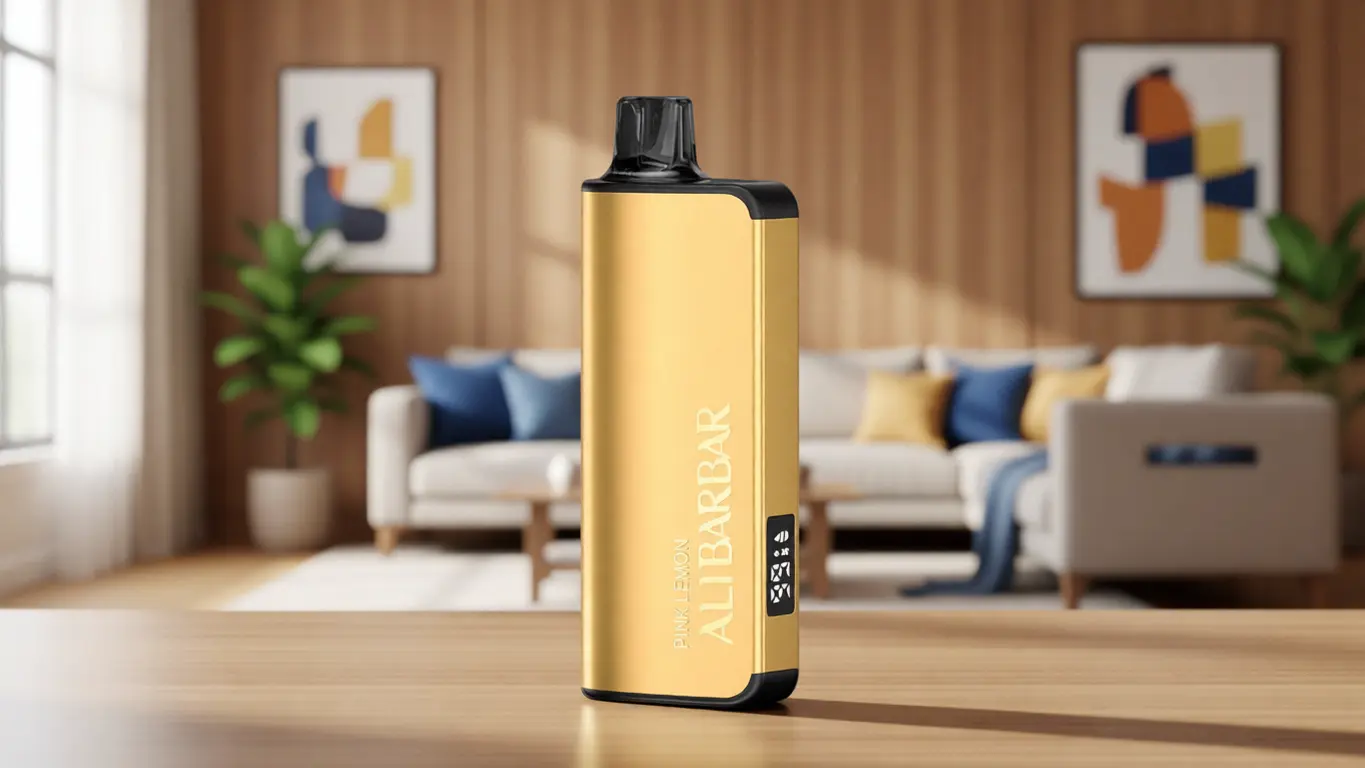
When you inspect the current market with these factors in mind, a device family like ALIBARBAR stands out because it was built around clearly defined use profiles rather than a single “flagship” number.
The ALIBARBAR INGOT 9000, for instance, pairs a compact sealed body with a stated capacity that translates to roughly 8–14 days for a moderate user. Its value isn’t in the headline puff count — it’s in the thermal architecture that keeps the output steady across that entire period. The power cell is calibrated to the reservoir so you’re never left with a functioning battery and an empty device, which is a common irritation in less carefully matched designs.
For users who routinely exceed 200 puffs a day and don’t want to think about replacement every week, the ALIBARBAR INGOT 15000 moves into rechargeable territory. The larger reservoir and USB‑C charging mean the device can go multiple days between charges even under heavy use, and the multi‑LED status indicator removes the guesswork. You don’t need to remember when you last plugged it in; the device tells you.
There is also the Ice Adjust 12000, which adds another layer: adjustable airflow. This matters because a user’s preference for draw resistance can change throughout the day. A tighter draw in the morning, a more open one later — having that control on the device itself means you aren’t locked into one sensation for weeks at a time. From an engineering perspective, the adjustability also signals that the internal sealing tolerances are precise enough to handle variable pressure without leaking.
Other commonly encountered devices in the market might offer a high puff count but compromise on status feedback, or they might feel premium in the hand but use a surface coating that quickly degrades. The difference with ALIBARBAR isn’t a single spectacular feature — it’s the deliberate absence of the small, daily frustrations that accumulate into a negative experience. And when you source through OZVAPE Shop, you gain the additional certainty that the unit you receive is factory‑certified and backed by a local support team that can actually answer questions about expected daily life rather than just reading the box back to you.
A Practical Framework for Evaluation
You don’t need to be an engineer to choose well. These questions, asked in order, will narrow the field faster than any list of specifications:
How many times a day do I reach for my device, and in what settings? Count for two typical days — one workday, one weekend. This gives you a practical floor and ceiling.
Do I have reliable access to charging during the day? If you’re at a desk or in a vehicle, a rechargeable device with moderate capacity might be ideal. If you’re frequently away from power for 12+ hours, a higher‑capacity internal cell matters.
Is consistency more important to me than novelty? If you want a device that behaves identically every time without requiring adjustment, favour sealed or single‑mode systems. If you like to vary your experience, adjustable airflow or modular components become valuable.
What is my tolerance for carrying a backup? Low tolerance means you need clear battery feedback and enough reserve capacity that you’re never near empty at an inconvenient moment.
Does the seller provide verifiable sourcing information? This isn’t about the device spec, but it directly affects whether the 10,000‑puff unit you bought actually lasts as long as the engineering intended. Authorized channels like OZVAPE Shop publish their supply chain standards, so you know the product hasn’t been substituted or improperly stored.
Apply this framework to a device like the ALIBARBAR INGOT 15000: a heavy daily user with no daytime charging access can check the battery gauge at a glance, trust the consistent output, and plan a single overnight charge every two to three days. A light user with the same device might only charge it once every ten days. The device adapts to the rhythm, not the other way around.
Common Selection Errors and Industry Observations
Years of observing how adults interact with these devices have surfaced a handful of predictable mistakes. They’re worth articulating because they are remarkably easy to make and remarkably costly in satisfaction.
Overweighting a single puff number. Manufacturers arrive at rated puff counts using standardised lab draws that may not reflect your inhalation length or intensity. A device rated at 8,000 puffs might deliver 5,000 under real conditions for one user and 9,000 for another. Far more reliable is to look at total reservoir volume and battery capacity, then cross-reference with your daily usage estimate. Two devices with the same puff rating can have completely different real‑world endurance if the power management is different.
Assuming visual similarity signals equivalent internal engineering. Two devices can share the same outer dimensions but use entirely different heating element configurations, wicking materials, and power regulation circuits. The visible shell tells you nothing about vapour consistency or battery calibration. This is why companies that are transparent about their design architecture — not just their aesthetics — earn long‑term trust.
Undervaluing modularity in cost calculations. A sealed device that lasts five days might seem attractively priced until you realise you’re replacing it seventy‑three times a year, paying for seventy‑three power cells and seventy‑three sets of packaging. A rechargeable device with a larger upfront cost but a month‑plus lifespan may be significantly cheaper on an annual basis. The calculation requires you to know your daily puff volume honestly.
Confusing category labels with technical specifications. Terms like “disposable” and “rechargeable” are broad. Some rechargeable devices still have a fixed reservoir and require disposal after a set period; others allow pod or coil replacement. The label alone won’t tell you whether the device’s lifecycle matches your routine. You need to understand the specific architecture.
From an industry perspective, the market is slowly shifting toward greater transparency — not because of regulation alone, but because users are becoming more educated. Supply chains are consolidating, and retailers that can prove traceability are separating themselves from those that cannot. This is a quiet but significant improvement: a device bought through a verifiable channel is not only safer but also far more likely to perform to its engineered parameters.
Frequently Asked Questions
Q: What is the actual average number of puffs per day for most users?
A: Observational data from user surveys and device lifecycle analytics typically cluster between 100 and 300 puffs per day, but this range is so wide that the average is rarely helpful. A better approach is to track your own usage over two to three representative days.
Q: How many days should a 9,000‑puff device last?
A: For someone taking 150 puffs daily, roughly 60 days. For someone at 250 puffs daily, roughly 36 days. These are estimates because puff duration and the device’s power efficiency influence the real number. ALIBARBAR’s engineering is calibrated to deliver consistent output for the full rated capacity, which reduces the gap between lab numbers and real‑world results.
Q: How can I verify that an ALIBARBAR device is authentic?
A: Genuine ALIBARBAR products include unique verification codes that can be checked through the brand’s official system. Purchasing through an authorised retailer like OZVAPE Shop eliminates the main avenue for counterfeits — unauthorised third‑party sellers — and provides a direct point of accountability if anything seems off.
Q: Does a rechargeable device last longer overall than a sealed unit?
A: Not necessarily. A rechargeable device can be re‑energised many times, but its total operational lifespan depends on the reservoir design. Some rechargeable devices are designed to be disposed of when the reservoir is empty, while others have replaceable pods. ALIBARBAR’s rechargeable models, such as the INGOT 15000, are built for extended use with sufficient reservoir capacity to match multiple charge cycles.
Q: Why does my device seem to lose flavour or vapour production well before it’s empty?
A: This is often a sign of inconsistent power delivery as the battery voltage drops. Devices with robust power regulation maintain stable output across the discharge curve. If you experience a sudden decline, the thermal management may not be keeping the heating assembly at the intended temperature.
Q: What should I do if a newly purchased device doesn’t perform as described?
A: Document the specific issue — number of days used, approximate puff count, any error indicators — and contact the retailer. At OZVAPE Shop, customer service teams are equipped to troubleshoot based on real device behaviour, not just scripted responses, and can facilitate warranty assessments where applicable.
Q: Is it normal to carry a backup device?
A: Many users do, but it shouldn’t be a necessity forced by poor battery feedback or unreliable performance. If you’re routinely carrying a second device because you can’t trust the primary one, it’s a signal that either the device’s capacity or its status communication is insufficient for your usage pattern.
Q: How does adjustable airflow affect daily usage?
A: Adjustable airflow lets you modify draw resistance, which can change the sensation and perceived intensity. This doesn’t affect mechanical lifespan but can influence how frequently you use the device, as a more comfortable draw might reduce the total number of puffs needed to feel satisfied throughout the day.
Q: What is the delivery timeline for ALIBARBAR products through OZVAPE Shop?
A: Orders processed through OZVAPE Shop are dispatched from Australian stock, with standard delivery times consistent with local courier networks. Specific estimates are available at checkout and are based on real‑time inventory location.
Q: Can a high‑puff‑count device really last a month without charging?
A: It depends on usage. A 12,000‑puff device used 150 times per day could theoretically last 80 days, but the battery’s self‑discharge rate and the consistency of use patterns mean most users will recharge more frequently. The key is that the device gives clear warning when a charge is needed, so you’re never caught out.
Conclusion
An average puff count is a starting point, but it’s a poor basis for a decision. The frustration of running out too soon, the quiet disappointment of a device that fades after a few days, and the habit of carrying a backup all stem from the same root cause: a mismatch between personal rhythm and engineering reality.
The devices that solve these problems aren’t the ones with the highest numbers on the box. They’re the ones that maintain consistency, communicate honestly, and fit into a daily routine without demanding constant attention. When you shop through OZVAPE Shop, you’re not just buying a product — you’re accessing a source that understands the architecture behind the specifications and can help you map them to the way you actually live.
Ultimately, the right choice is the one that lets you stop thinking about the device and simply go about your day. That’s a far more meaningful metric than any single daily puff count.