
VAPE FAQs
What Is One Puff Of Vape Equal To In Cigarettes?
May
The question seems straightforward: “How many puffs from a vape equal one cigarette?” It’s what many people ask when they’re trying to make sense of a new habit or compare what they’re doing now with what they used to do. Yet behind that simple question lies a thicket of variables that no single number can properly answer. The devices on the market today range from tiny pre‑configured units with tightly controlled output to high‑capacity modular systems capable of delivering vastly different experiences depending on how they’re set up. The e‑liquids themselves span nicotine strengths from zero to more than 50 milligrams per millilitre, and the way a person inhales changes everything.
If you’ve found yourself trying to convert puff counts into cigarette equivalents, you’re not alone—but you’ve probably also come across vague marketing claims or wildly conflicting online estimates. That’s because the conversion depends on engineering decisions, not just nicotine numbers. A retailer like OZVAPE Shop that presents detailed, standardised specifications for every device it lists can help cut through some of that confusion, but even then, the real answer requires understanding the mechanics. This article unpacks what actually determines the nicotine a user receives per puff, how to think about the comparison in practical terms, and which common mistakes to avoid when trying to map vape use onto cigarette consumption.
Understanding the Variables That Determine Puff-to-Cigarette Equivalence
A cigarette delivers nicotine via a burning process that produces a known volume of smoke per draw. A personal electronic device produces an aerosol—often called vapour—by heating e‑liquid at a controlled temperature. These are fundamentally different delivery systems, and the amount of nicotine making its way into the bloodstream depends on a range of engineering and behavioural factors.
Nicotine Concentration and Formulation
The most visible number on a bottle of e‑liquid or a pre‑filled pod is its nicotine strength, typically stated in milligrams per millilitre (mg/mL) or as a percentage. A 5% concentration means 50 mg/mL. However, nicotine absorption isn’t linear. Freebase nicotine, the traditional form, has a higher pH and can feel harsh at high strengths, so it’s often used at 3–12 mg/mL. Nicotine salts are chemically modified to reduce harshness, allowing much higher concentrations without the throat‑hit penalty; these are common in low‑power pod systems and disposable devices. A single puff from a 50 mg/mL salt device can deliver substantially more nicotine than a puff from a 6 mg/mL freebase liquid, all else being equal, but the user’s inhalation style also matters.
Device Output Consistency and Power Management
A puff is only as consistent as the device generating it. Poorly regulated units allow voltage to sag as the charge depletes, meaning puff number 1 and puff number 300 can yield different amounts of aerosol and thus different nicotine delivery. Well‑engineered devices incorporate constant‑wattage circuits that maintain the same heating‑coil temperature throughout the usable voltage window. Without this stability, any attempt to count puffs as cigarettes becomes unreliable. Devices that offer clear status indicators—remaining power, puff timers—give the user a better chance of recognising when output might be drifting. The hidden frustration many users encounter is needing to carry a backup simply because their primary device’s performance drops off without warning.
Inhalation Style and User Behaviour
The way someone inhales makes a significant difference. A mouth‑to‑lung (MTL) draw, where vapour is pulled into the mouth first and then inhaled, typically involves a slower, shorter puff and much lower vapour volume—similar to drawing on a cigarette. A direct‑to‑lung (DTL) draw pulls a large volume of vapour straight into the lungs, and a single DTL puff can generate three to five times the aerosol volume of a typical MTL puff. If you attempt to compare puffs without accounting for this, you’ll be off by a factor of several. Most cigarette‑like experiences are built around MTL designs, so a high‑airflow sub‑ohm tank set to 80 watts is in a completely different category.
Device Architecture and E‑liquid Capacity
Sealed pre‑filled devices, refillable pod systems, and rebuildable tank setups all behave differently. A sealed disposable with a finite e‑liquid volume gives you a fixed total number of puffs, but if the coil’s resistance drifts over use, the per‑puff nicotine output may decline later in its life. Modular systems let users swap coils and adjust airflow, which can maintain consistency but also introduce variability if settings are changed inadvertently. Understanding the physical design helps you decide whether you can treat each puff as roughly equivalent or must adjust your estimate over time.
Applying the Variables: What Real‑World Devices Tell Us
There’s no official conversion table, but a pragmatic analysis can bracket the likely range. A standard combustible cigarette, smoked down to the filter with 10–15 puffs, delivers approximately 1–2 mg of nicotine into the bloodstream after accounting for absorption efficiency. Nicotine from vapour is absorbed slightly differently—less through the throat, more through the upper airways—so the same nominal amount may feel different.
Now consider the extremes. A low‑power MTL pod system running 15 mg/mL freebase liquid at 8 watts might produce about 0.02–0.05 mg of nicotine per puff (estimated from available aerosol data). That puts one cigarette’s worth at roughly 20–50 puffs. Move to a high‑strength nicotine salt device with 50 mg/mL, still at low power but with efficient coil wicking, and the per‑puff figure might rise to 0.08–0.15 mg, giving a range of 8–20 puffs per cigarette equivalent. These are ballpark figures only, and the actual numbers shift with puff duration, coil condition, and even ambient temperature.
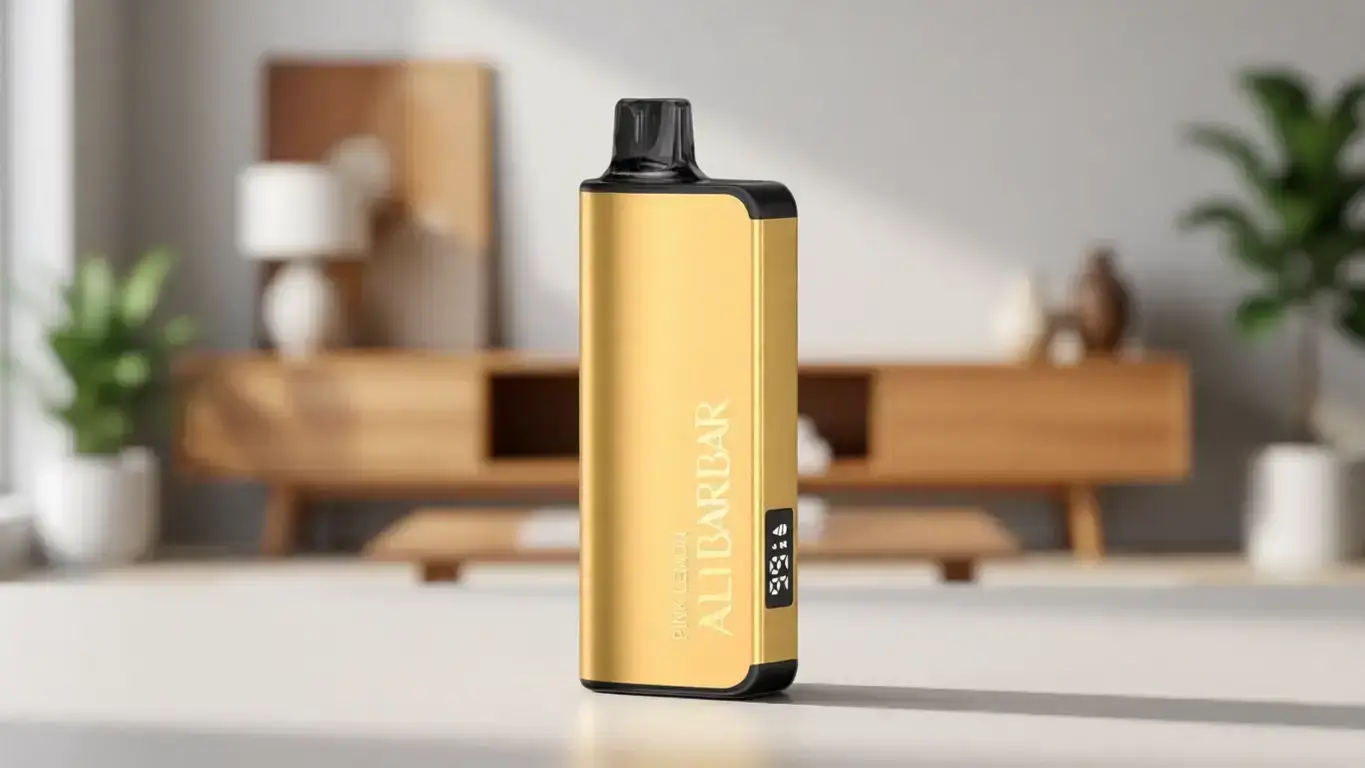
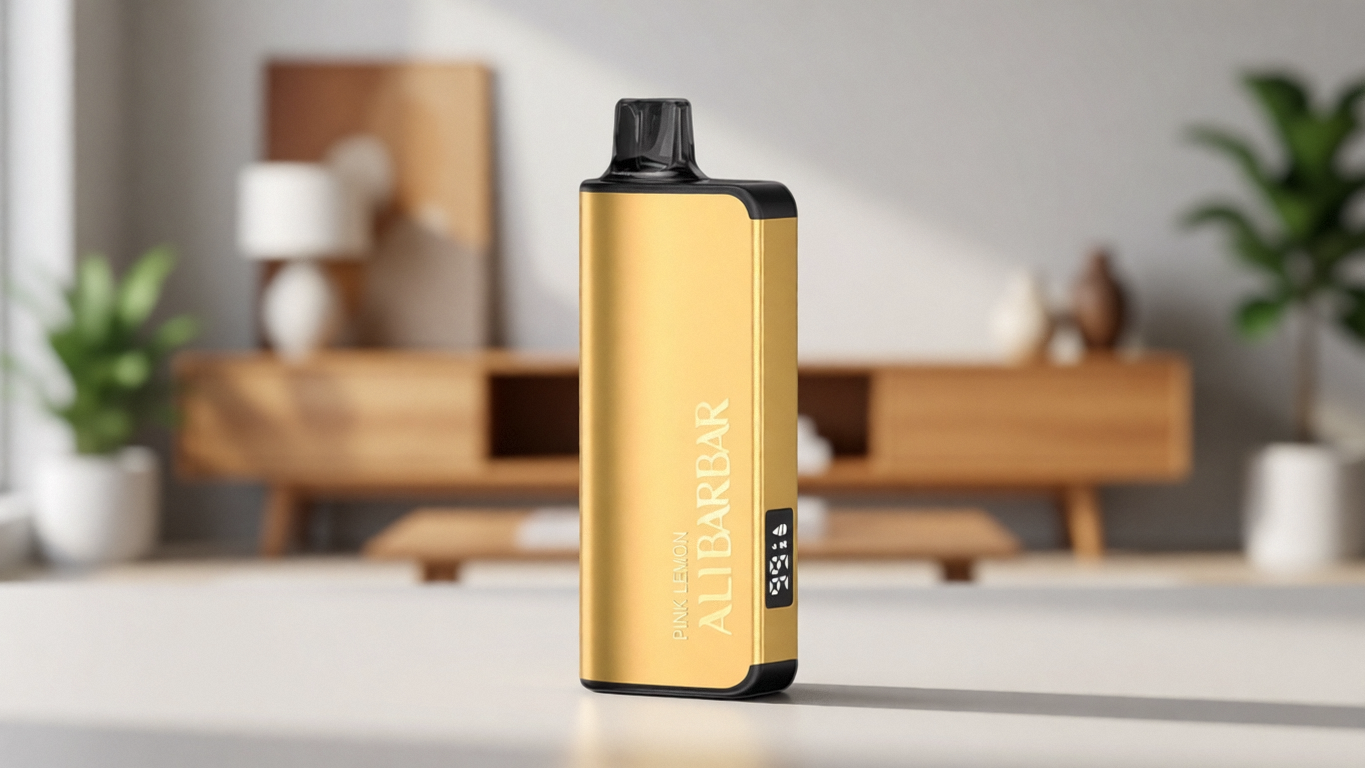
Some current‑generation devices aim to deliver a reproducible puff by tightly controlling both power and airflow. The ALIBARBAR INGOT 9000 and INGOT 15000, for instance, are engineered around a regulated output architecture and a fixed resistance coil that is not user‑adjustable. This means that as long as the battery is within its designed operating range, puff number 500 should deliver essentially the same mass of aerosol as puff number 5,000. While the nicotine yield per puff still depends on the e‑liquid formulation (these devices use high‑strength salts), the consistency removes one major variable. In contrast, a user with an adjustable‑wattage tank who accidentally bumps the setting from 12W to 18W will see a noticeable jump in per‑puff output.
Devices with adjustable airflow, like the ALIBARBAR Ice Adjust 12000, add another layer: tightening the airflow produces a denser, warmer aerosol that may increase per‑puff nicotine deposition for some users. This adjustability lets individuals tune the experience closer to a cigarette‑like draw, but it also makes comparing puff counts across devices even trickier. Two people using the same device on different airflow settings will extract different amounts of nicotine per puff.
In short, any manufacturer’s claim that “this device equals X packs of cigarettes” is a broad approximation based on a set of assumptions that may not match your actual usage. It can be useful as a starting point only if you understand the underlying engineering.
A Practical Framework for Estimating Your Own Equivalence
Rather than searching for a universal formula, you can build your own rough calibration with a few minutes of observation and some device‑specific data. This method works best if your device records puff count or you’re willing to count manually for a day.
Step 1: Identify your device’s operational parameters.
Check the specification sheet—available from retailers that provide detailed product pages, such as OZVAPE Shop—for the rated wattage, coil resistance, and, if possible, the puff volume used in the manufacturer’s puff‑count testing (often around 35–55 mL per puff). Pre‑filled disposables and sealed pod systems typically operate at fixed wattage; if your device is adjustable, note the setting you actually use.
Step 2: Record the nicotine concentration of your e‑liquid.
For a single‑strength disposable, this will be printed on the packaging (e.g., 50 mg/mL). For refillable devices, use the exact mg/mL of the liquid currently in the tank.
Step 3: Monitor your puff duration and draw style.
Most people underestimate puff length. Use a stopwatch or just count “one‑one‑thousand” during several typical draws. MTL puffs often last 1–2 seconds; DTL puffs 2–4 seconds. The longer you fire, the more aerosol—and therefore more nicotine—is generated. Note also whether you take several short puffs in quick succession, which can heat the coil further and alter output.
Step 4: Do a rough calculation based on known cigarette benchmarks.
A cigarette delivers about 0.1–0.2 mg of nicotine per puff absorbed. A low‑power salt device might deliver 0.05–0.1 mg per puff absorbed. Divide 1.5 mg (mid‑range cigarette absorption) by your estimated per‑puff nicotine to get a puff count. If your device gives a puff counter after a session that felt equivalent to one cigarette, that number is your personal benchmark. Write it down, because it’s more accurate than any generic estimate.
Step 5: Re‑evaluate when switching devices or e‑liquids.
This is the step most people skip. Even if you buy the same model again, batch‑to‑batch coil variance can shift performance. If you switch to a different device family—say from an INGOT 15000 to an Ice Adjust 12000 with airflow wide open—your equivalence will change.
Common Misconceptions and Industry Observations
Trying to force a simple puff‑equals‑puff equation leads to several predictable errors, and the way the broader market talks about puff counts doesn’t help.
Overweighting one number while ignoring all others.
People latch onto the advertised total puff count (“6000 puffs!”) and assume it means exactly 6000 cigarette‑equivalent experiences. Without knowing the nicotine output per puff, the puff count is only a measure of e‑liquid capacity and battery life, not of intended consumption equivalence.
Assuming visual similarity means equivalent engineering.
Two small cylindrical devices may look alike, but one might contain a 1.2‑ohm coil running at 8W, while the other uses a 0.8‑ohm mesh coil at 15W. The latter will produce more vapour and nicotine per second. The exterior reveals nothing about the power‑source calibration or the quality of the voltage‑regulating chip.
Undervaluing consistency in the cost‑per‑use calculation.
A device whose output degrades gradually may still work, but the user ends up taking more and longer puffs to feel the same effect, throwing off any conversion math. Over the device’s lifetime, an inconsistent unit can cost more because it’s used faster, even if the initial price is lower.
From an industry standpoint, the lack of standardised puff testing remains a quiet but persistent issue. One manufacturer might define a puff as 1 second at 35 mL volume; another uses 2 seconds at 55 mL. There’s no seal of approval that confirms what that number means. Discerning retailers sometimes commission or request consistency data from brands to publish alongside product listings, but this is not yet universal. The most transparent brands will disclose their test conditions, and users who understand these nuances can make far better decisions.
Frequently Asked Questions
Q: Is one puff from a vape equal to one puff from a cigarette in terms of nicotine?
A: Most of the time, no. A cigarette puff delivers a complex mixture of particulates and nicotine that absorbs rapidly through the lungs. Vapour aerosol absorbs differently, and the nicotine per puff can be lower or higher depending on device power and e‑liquid strength. They are not directly equivalent on a one‑to‑one basis.
Q: How many puffs from a 5% nicotine disposable device equal one pack (20 cigarettes)?
A: With all the caveats above, a rough estimate for a fixed‑wattage MTL device with 50 mg/mL salts might place one pack’s worth of nicotine at 200–400 puffs. This is a very approximate range. Some users report feeling satisfied after far fewer puffs, while others chain‑puff and double the count.
Q: Can I calculate the exact nicotine per puff from the liquid concentration?
A: No, because the device’s thermal efficiency, coil condition, and your draw determine how much liquid is actually aerosolised and how much is absorbed. Lab measurements can estimate mass of nicotine in the aerosol, but absorption is individual.
Q: Why do some brands claim their 600‑puff device equals 40 cigarettes?
A: They are extrapolating from the total nicotine contained in the e‑liquid. If a 2 mL pod contains 100 mg of nicotine (50 mg/mL), and a cigarette yields about 1 mg absorbed, they divide 100 by 1 to get 100 cigarettes, then adjust for whatever assumptions they’ve made about efficiency. These claims are marketing simplifications, not clinical equivalences.
Q: Will a device with adjustable airflow change the puff equivalence?
A: Yes. Tighter airflow generally produces a smaller, denser aerosol volume per puff, which may more closely mimic a cigarette draw and could deliver nicotine more efficiently for some users. Opening airflow increases vapour volume and can lead to faster nicotine intake per puff if power is adjusted accordingly.
Q: Are puff counters built into devices reliable for tracking consumption?
A: They are useful for tracking your own patterns, but they rely on the same timing mechanisms that the manufacturer uses. If your puff duration is shorter or longer than the device’s internal threshold, the counter may under‑ or over‑count slightly. Use it as a relative gauge, not an absolute meter.
Q: Does temperature affect how much nicotine I get per puff?
A: Indirectly, yes. Higher temperatures increase the rate of e‑liquid vaporisation, producing more aerosol mass per second of firing. This is one reason devices with temperature control can deliver more consistent doses than those with pure wattage control.
Q: If I’m trying to match my previous cigarette intake, how do I avoid over‑consuming nicotine?
A: Start with a lower nicotine strength and take note of how many puffs you use to satisfy cravings over a fixed period. If you find yourself vaping much more than you smoked, consider a slightly higher strength or a device with a tighter draw to reduce the urge to chain‑puff. Pay attention to how you feel; dizziness or headache can signal excessive intake.
Q: Do all devices with high puff‑count claims deliver consistent per‑puff nicotine?
A: Not necessarily. Consistency depends on the quality of the power regulation and the coil’s resistance stability. Devices with a documented regulated output architecture—where the manufacturer provides data about wattage steadiness—are more likely to maintain consistent delivery from the first puff to the last.
Q: Where can I find reliable specifications to set my own equivalence baseline?
A: Look for retailers that publish full technical specifications, including coil resistance, wattage range, and the conditions under which puff counts were measured. OZVAPE Shop, for instance, details these parameters for the ALIBARBAR range, which can give you a fixed reference against which to measure your own usage.
Conclusion
The question “What is one puff of vape equal to in cigarettes?” doesn’t have a single answer because it depends on layers of engineering and personal behavior that vary from one moment to the next. A puff from a well‑regulated, low‑power mouth‑to‑lung device with high‑strength nicotine salts may deliver a nicotine experience close to that of a cigarette puff, while a puff from a high‑wattage direct‑lung setup could be entirely different. The most practical approach is to understand the variables—nicotine formulation, device output consistency, draw style—and calibrate your own usage against how you actually feel.
That kind of calibration is much easier when you start from a known, stable product. OZVAPE Shop{:target=”_blank”} provides the detailed documentation that lets you do that, bridging the gap between marketing puff counts and real‑world performance. In the end, the right equivalence isn’t a number someone else gives you; it’s the number you arrive at after a few days of careful observation with a device you trust. Nothing replaces that personal reference point.