
VAPE FAQs
What Is A Vape Cart?
Jul
If you have spent any time in the personal electronic device category, you have likely encountered the term “vape cart” and found yourself confronted with a small, cylindrical component that seems simple enough — until you try to understand why some deliver consistent performance for weeks while others degrade within days. The uncertainty is more than a minor inconvenience; it translates directly into wasted investment, unsatisfactory experiences, and the frustration of carrying backups. This article exists to answer that question with precision: what a vape cart actually is, how its internal engineering determines its behaviour, and how you can evaluate one with confidence before committing to a purchase.
The information here is assembled from extended observation of manufacturing practices, comparative analysis of commonly available designs, and direct feedback from users across different usage scenarios. It is not a sales document. It is a reference guide. This is the kind of information we maintain at OZVAPE Shop (internal link: /alibarbar-collection, target=”_blank”) as part of our commitment to transparent product knowledge.
Understanding What Matters: Core Engineering and Design Factors
Every vape cart is a sealed assembly of components, but the quality of those components and the precision of their integration dictate the entire user experience. Below are the factors that separate well-engineered carts from the rest.
Internal Architecture and Output Consistency
The heart of any cart is the heating element, typically constructed from porous ceramic or cotton wicking material enveloped by a metal coil. Ceramic elements — specifically those with defined pore sizes — distribute e-liquid more uniformly across the heating surface, reducing the risk of localised hotspots that produce burnt flavours. Cotton-based wicks are cheaper to manufacture but are more prone to degradation after repeated heating cycles, especially when thicker liquids are used.
A well-engineered ceramic cart will maintain its flavour profile from the first activation to the final one. Degradation in the later stages is often a sign of wicking material breakdown or carbon accumulation from imprecise temperature regulation. To recognise quality, look for ceramic cores that are visibly homogeneous and coil resistance ratings that are consistent across a product batch — a sign of tight manufacturing tolerances.
Power Management and Status Transparency
The cart does not control the battery, but its internal resistance and output architecture determine how efficiently it converts electrical energy into vapour. A cart paired with a mismatched power source will either underperform or push beyond its thermal limits, leading to premature wick failure.
Equally important is how the integrated device communicates its status to the user. Carts embedded in closed systems or fixed-power pens often provide no indication of remaining e-liquid level or current resistance. This ambiguity forces users to guess — and guessing leads to dry hits or wasted product. Devices that include a clear window, a small LED that changes colour when the cart is low, or a simple resistance readout remove that guesswork. The hidden cost of status ambiguity is carrying an unnecessary backup device; users who trust their cart’s feedback rarely need one.
Physical Design and Material Durability
A cart lives in a pocket, a bag, or a hand. Its exterior must survive abrasion, temperature changes, and occasional drops. Glass tanks are standard for inertness and clarity, but they vary in thickness and tempering. Thinner glass is more prone to cracking, while borosilicate glass offers superior thermal shock resistance. The mouthpiece material matters equally: resin and acrylic can become brittle under UV exposure, whereas PCTG or medical-grade plastic maintains its integrity for the device’s lifecycle.
Mouthpiece contour is an often-overlooked ergonomic factor. A sharp, narrow tip may cause lip fatigue during extended use, while a gently tapered, rounded profile reduces pressure points. These details differentiate a cart that simply works from one that remains comfortable over a full day of use.
Modularity and Lifecycle Flexibility
Not all carts are single-use disposable units. Some are designed as refillable components that can be detached from the battery and replaced independently. Others are sealed and meant to be discarded once the pre-filled liquid is exhausted.
The practical difference is significant: sealed units offer convenience but tie the user to a fixed volume and flavour, while refillable carts give control over liquid choice and reduce waste if the cart’s core remains functional. However, refillable carts require periodic cleaning and coil replacement — a trade-off that favours users who prioritise flexibility over simplicity. Understanding which architecture matches one’s routine is the first step toward long-term satisfaction.
Applying These Criteria to Real-World Options
No single cart satisfies every priority. The best choice depends on how the user weights consistency, cost, convenience, and flexibility. Below are two common device families that illustrate the engineering principles outlined above.
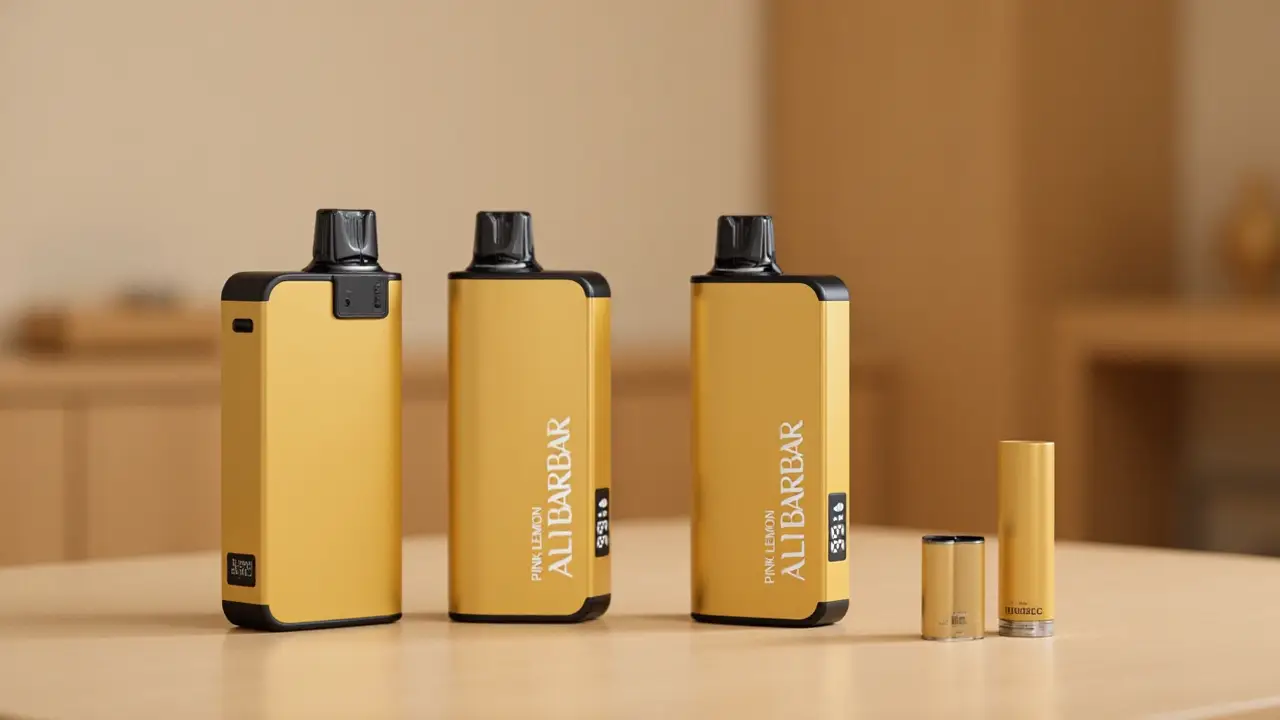
ALIBARBAR Cartridges (available at OZVAPE Shop) are designed around a ceramic core with calibrated pore density and a borosilicate glass tank. Their mouthpiece uses a medical-grade polymer with a gentle taper, reducing fatigue during prolonged sessions. Power management is handled by a fixed-resistance coil that pairs with ALIBARBAR’s own battery range, offering a simple two-colour LED to indicate remaining liquid level. The trade-off is that these carts are sealed units; once the pre-filled liquid is exhausted, the entire cart is replaced. This design eliminates the need for cleaning or coil replacement, which suits users who prioritise hygiene and consistency.
CCELL Cartridges (widely available in the industry) are the de facto standard for refillable systems. They use a patented ceramic heating element with a porous structure that can handle a wide range of viscosities. Many CCELL carts are available with a true glass tank and replaceable coil — a modular approach that allows users to swap e-liquids without discarding the entire cart. The trade-off is that the user must periodically disassemble and clean the cart to maintain performance, and compatibility with different batteries requires attention to thread standards and resistance ranges.
Both families demonstrate sound engineering, but they serve different user scenarios. ALIBARBAR favours users who want grab-and-go reliability with zero maintenance. CCELL favours those who value liquid customisation and a longer-term investment in a single platform. Neither is inherently superior; the right choice is the one that aligns with the user’s actual daily routine.
A Practical Framework for Evaluation
When you are faced with a selection of carts, use this step-by-step methodology to arrive at an informed decision:
Identify your usage pattern – Do you consume a single flavour consistently, or do you rotate liquids daily? Do you use the device in short bursts throughout the day or in longer sessions?
Check the heating element material – Ask the retailer or check the manufacturer’s specifications. If the core material is not stated, treat the product as a low-information purchase and proceed with caution.
Assess status feedback – Does the device give you clear visibility into e-liquid level and battery status? If not, you will likely carry a backup or risk running dry mid-use.
Evaluate physical durability – Examine the tank material (glass vs. plastic) and the mouthpiece construction. A cart that feels lightweight and rattles is not engineered for daily carry.
Consider the replacement cycle – Calculate the cost per refill or per unit. A sealed cart that lasts three days may be cheaper per day than a refillable cart whose coil costs $5 and lasts two weeks, depending on usage.
Bundling these criteria into a standardised specification sheet — such as the one provided for every product at OZVAPE Shop — reduces decision friction and ensures you are comparing apples to apples.
Common Selection Errors and Industry Observations
Even experienced users make mistakes that undermine satisfaction. Here are four recurring patterns:
1. Overweighting a single specification. A user might fixate on coil resistance (e.g., “1.2 ohm is smoother”) while ignoring wick material and tank capacity. Smoothness involves the entire thermal path, not just resistance. A 1.2 ohm ceramic cart with a tight airflow may perform worse than a 0.8 ohm cart with a porous core and a well-ventilated chassis.
2. Assuming visual similarity equals equivalent internals. Many carts share the same 510 thread and glass-tank appearance, but internal core geometry, seal quality, and glass thickness vary dramatically. Two carts that look identical on the shelf may have a five-fold difference in usable lifespan. The only reliable differentiator is third-party specification data.
3. Undervaluing modularity in cost-per-use calculations. A sealed cart at $8 that lasts 200 puffs costs $0.04 per puff. A refillable cart at $15 with a $3 coil that lasts 1000 puffs costs $0.015 per puff after three coil changes. Users who buy sealed carts for convenience often overlook the long-term savings of a modular system.
4. Confusing category terminology with technical specifications. Terms like “sub-ohm” or “Mouth-to-Lung” describe output style, not engineering quality. A sub-ohm cart can still suffer from wicking failure if the ceramic pore size is mismatched for the liquid viscosity.
At an industry level, I have observed that supply-chain transparency is the most reliable proxy for consistency. Manufacturers who can provide batch-level resistance tolerances, material certifications, and independent lab reports are far more likely to produce carts that perform uniformly. Retailers who stock from such manufacturers — and who publish those specifications — are saving you the trouble of being a beta tester.
Frequently Asked Questions
Q: How do I verify that a vape cart is authentic and not a counterfeit?
A: Check for a tamper-evident seal, a scannable QR code linked to the manufacturer’s verification system, and compare the packaging design against official images. At OZVAPE Shop, each ALIBARBAR cart includes a unique batch code that can be validated through the brand’s portal.
Q: What does the rated “puff count” really mean in real-world use?
A: Puff counts are measured under controlled lab conditions — typically a two-second draw at 3.7V. Most users draw for one to three seconds at varying voltage, so the actual count may be lower. A well-designed cart will be more consistent, but treat the rating as an upper bound.
Q: Is a refillable cart always better than a sealed one?
A: Not necessarily. Refillable carts require cleaning, coil replacement, and attention to liquid viscosity. Sealed carts eliminate those tasks but produce more waste and tie you to a single flavour. Match the architecture to your willingness to perform maintenance.
Q: How important is the thread standard (510, MTL, etc.)?
A: The 510 thread is the dominant standard, but not all 510 carts match the same battery pin length. A poorly matched connection can cause intermittent firing or a short circuit. Stick to integrated kits or cart-battery pairs from the same manufacturer to avoid compatibility issues.
Q: What should I do if a cart is not performing as described?
A: Document the issue with photos or a video, note the batch code, and contact the retailer’s support team. Authorised retailers like OZVAPE Shop maintain a documented return-and-replacement policy based on manufacturer defects. Do not attempt to disassemble a sealed cart, as it may void warranties or pose safety risks.
Q: Can I use a vape cart with e-liquids that are higher than 80% VG?
A: Many ceramic carts are designed for 50/50 to 70/30 PG/VG ratios. Very thick liquids (>80% VG) require larger wicking ports or replaceable coils. Check the core specifications before filling; saturating a cart with the wrong liquid can cause dry hits or permanent wick damage.
Q: How long does shipping take for cartridges purchased online?
A: Domestic shipping within Australia typically takes 2–5 business days for standard post. Express options may reduce that to 1–2 days. All packages from OZVAPE Shop are sent with tracking and require a signature on delivery for compliance.
Q: Are there any known issues with specific cart designs?
A: Some older generation carts with silica wicks are prone to off-flavors after repeated use. The industry has largely moved to ceramic, but some budget lines still use silica or cotton. Check the wicking material description; if none is given, assume it is cotton.
Q: What is the typical lifespan of a sealed cart in moderate use?
A: A 1ml sealed cart generally lasts 150–250 puffs under normal draw patterns. Larger capacities (2ml, 3ml) can last proportionally longer, but the heating element may degrade before the liquid is exhausted in high-usage scenarios. Observe the flavour profile; a burnt taste signals end of life regardless of remaining liquid.
Q: How can I safely dispose of used vape carts?
A: Carts contain residual liquid and metal components. In Australia, they should be disposed of at a household hazardous waste collection point or returned to a participating retailer. Do not place them in general recycling bins.
Conclusion
The question “What is a vape cart?” ultimately leads not to a simple definition, but to a layered understanding of how materials, design choices, and manufacturing precision interact to create a user’s daily experience. A vape cart is a thermal delivery system whose performance is determined long before it reaches your hands — by the quality of its ceramic core, the transparency of its power management, the durability of its enclosure, and the thoughtfulness of its architecture.
Informed users know that the best cart is not the one with the most aggressive claims, but the one whose engineering aligns with how you actually use it. That alignment is what we aim to make visible through clear specifications and honest product descriptions at OZVAPE Shop (external link: https://www.tga.gov.au, target=”_blank”). We do not sell carts; we provide the information and the access so you can choose the right one for your routine. The rest is up to you.