
VAPE FAQs
What Is A Cart Vape?
Aug
If you have spent any time looking at portable electronic devices for personal use, you have likely encountered the term “cart vape” with no clear consensus on what it actually means. Some retailers use it to describe any device that accepts a pre-filled cartridge. Others apply it to the cartridge itself. A few treat it as a synonym for a pod system. This ambiguity is not accidental — it reflects a market where product categories have expanded faster than shared terminology.
The purpose of this article is to give you a clear, technically grounded definition of what a cart vape is, how it differs from related device architectures, and what engineering principles separate well-designed units from the rest. By the end, you will have a practical framework for evaluating any device that uses a cartridge-based delivery system, whether you are considering a compact unit for everyday carry or a higher-capacity model for extended use. At OZVAPE Shop, we regularly see users who made purchasing decisions based on superficial characteristics rather than the internal design that actually determines performance. This article aims to close that gap.
Understanding What Matters: Core Engineering and Design Factors
A cart vape is, at its simplest, a device that consists of two physically separate components: a battery section (often called the “base” or “power unit”) and a disposable or refillable cartridge that contains the substance and the heating element. The defining characteristic is that the cartridge is user-replaceable, and the battery unit is typically reusable. This contrasts with fully disposable devices where everything is sealed, and with pod systems where the pod contains the coil but the battery is often integrated.
However, the term’s usefulness depends on how well the engineering addresses the user’s everyday frustrations. Below are the critical factors that determine whether a cart vape performs reliably over its intended lifespan.
Internal Architecture and Output Consistency
The heart of any cart vape is the heating element housed inside the cartridge. Most cartridges use a ceramic or quartz coil that wicks the substance from a reservoir. Well-engineered cartridges maintain consistent thermal conductivity throughout the coil’s life — meaning the first draw and the last draw produce similar vapour density and flavour clarity. This is not trivial.
Inferior cartridges often use low-density wicking materials that degrade after partial use, leading to a characteristic “burnt” taste. The user experiences a steep drop-off in quality, sometimes losing half the cartridge’s contents to poor performance. To evaluate this, look for cartridges that specify the coil material (ceramic is generally more consistent than silica) and the resistance rating. A stable resistance curve over time is a strong signal of good engineering.
Power Management and Status Transparency
Since the battery unit is reusable, its power management directly affects cartridge performance. A cart vape relies on the battery delivering a consistent voltage to the coil. If the voltage fluctuates — either because the battery is poorly regulated or because the user cannot see the charge level — the cartridge’s output becomes unpredictable.
The practical consequence is that users who cannot monitor their battery status will inevitably be caught with power running out at an inconvenient moment. Clear status indicators — typically LED colours or a digital screen — allow the user to plan recharging before the device depletes. Some high-end cart vapes include adjustable wattage, which gives the user control over the heating profile. However, adjustable wattage is only useful if the cartridge’s coil resistance matches the selected power range. Mismatched settings degrade both vapour quality and cartridge lifespan.
Physical Design and Material Durability
Because the cartridge is the part that is replaced frequently, its physical construction matters enormously. The connection between cartridge and battery is usually a 510 thread or a proprietary magnetic mount. Threaded connections are industry-standard but can wear over time if the metal is soft. Magnetic mounts are more user-friendly but may introduce slight connection resistance changes.
The cartridge itself should be made of borosilicate glass or high-grade PCTG plastic. Glass is chemically inert and preserves flavour, but it is fragile. PCTG is nearly unbreakable and still safe for most substances, though it may affect thermal transfer slightly. Also consider the mouthpiece geometry: a flat-tipped mouthpiece is comfortable for prolonged use, while a narrow tip often causes lip fatigue. Material quality directly affects how long the cartridge holds up during a full workday or a trip away from home.
Modularity and Lifecycle Flexibility
The true value of a cart vape lies in its modular architecture. Unlike sealed disposable devices, a cart vape allows the user to replace only the cartridge when it is empty, keeping the battery unit for multiple cycles. This reduces waste and lowers the long-term cost per fill.
But not all cart vapes offer the same flexibility. Some use proprietary cartridges that are difficult to source, turning a modular system into a de facto single-use product if the retailer discontinues that specific cartridge shape. Others use standard 510 cartridges that are widely compatible, giving the user freedom to choose from multiple manufacturers. The decision between a proprietary and open-standard system depends on whether the user prioritizes convenience (proprietary usually offers a more seamless fit) or long-term supply chain independence (open-standard gives more options).
Applying These Criteria to Real-World Options
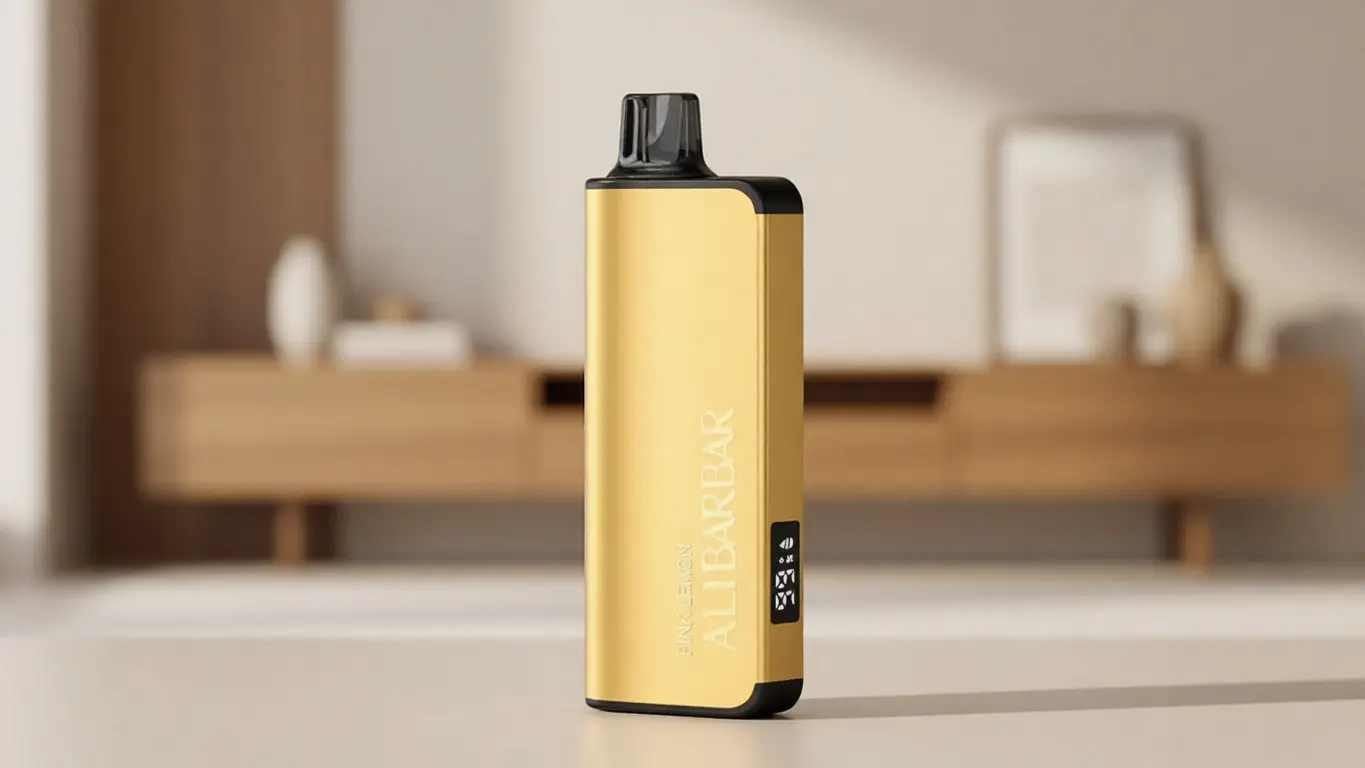
Consider a device family like the ALIBARBAR range, which includes the INGOT 9000, INGOT 15000, and Ice Adjust 12000 series. These are cart-style devices where the cartridge is pre-filled and the battery unit is integrated into the device, meaning the entire unit is disposed of after use. While they share the external appearance of a cart vape, they are strict disposable systems — not true cart vapes in the modular sense. The distinction is important: users who expect to replace only the cartridge will be disappointed.
However, the ALIBARBAR Ice Adjust 12000 includes a notable design choice: an adjustable airflow mechanism that lets the user tune the draw resistance, a feature more common in modular cart systems. This shows that hybrid designs exist, blending the convenience of a sealed system with some of the customizability of a true cart vape.
On the other end of the spectrum, brands like SMOK and Vaporesso produce modular cart vapes where the cartridge snaps onto a rechargeable battery. The SMOK Nord series, for example, uses a pod but functions similarly to a cart vape. The key difference is that the coil is often replaceable separately from the pod, giving even finer control over maintenance costs.
Every design involves trade-offs. A fully sealed disposable like the INGOT 15000 offers zero maintenance and maximum convenience for a fixed number of draws, but it generates more waste per use. A modular cart vape requires the user to keep track of spare cartridges and charge the battery, but each refill costs less and the overall ecological footprint is smaller. Match the architecture to your routine, not to the most attractive packaging.
A Practical Framework for Evaluation
When assessing any cart vape — or any device marketed as one — run through these diagnostic questions:
Is the cartridge user-replaceable, or is the battery unit disposable with the cartridge? If the battery is sealed inside, it is not a true cart vape. It is a disposable that looks like a cart vape.
What material is the cartridge made of? Glass? PCTG? Unknown plastic? Unknown materials often correlate with inconsistent flavour and potential degradation.
Does the device provide a clear battery status indicator? If not, you will carry a backup, which defeats the purpose of a compact device.
What is the coil resistance, and is it fixed or adjustable? Lower resistance (e.g., 0.5 ohms) produces more vapour but drains the battery faster. Higher resistance (1.5 ohms) is more battery-efficient but gives a cooler output.
Are cartridges widely available, or are they proprietary? Check whether the cartridge is a standard 510 thread or a custom mount. Standard cartridges give you flexibility; proprietary ones tie you to a single retailer.
How many fills does a typical cartridge last before the wick degrades? This is rarely stated publicly, but you can approximate by looking at the coil material and user reviews. Ceramic coils typically last 5–10 refills; cotton coils degrade faster.
Using this framework, you can compare any two devices without relying on marketing claims. A simple table comparing coil type, cartridge material, battery capacity, and connectivity standard will often reveal which device offers genuine engineering value and which is form over function.
Common Selection Errors and Industry Observations
Over several years of observing how adult users choose cartridge-style devices, several recurring patterns undermine satisfaction:
1. Overweighting puff count while ignoring coil quality. A device that claims 15,000 puffs may use a coil that degrades after 5,000. The user ends up discarding a half-full battery because the vapour quality is unacceptable. Always focus on the coil’s rated lifespan rather than the total device puff count.
2. Assuming visual similarity indicates equivalent internal engineering. Two devices that look nearly identical on the shelf may have completely different wicking materials, heating element geometries, and battery regulation circuits. Low-cost clones often use inferior components that fail prematurely. The old rule holds: you are paying for the engineering inside, not the shell.
3. Undervaluing modularity in cost-per-use calculations. Many buyers compare the upfront price of a cart vape kit to a disposable device and conclude the kit is more expensive. They ignore that the kit’s battery lasts for hundreds of refills. Over ten cartridges, a modular system typically costs 40–60% less than buying ten disposables.
4. Confusing category terminology with technical specifications. The term “cart vape” is used interchangeably with “pod system,” “vape pen,” and “disposable cartridge device.” This lack of precision leads to purchases that do not match the user’s expectations. Always verify the physical architecture — is the battery user-replaceable? Is the cartridge standard? — before relying on category labels.
From an industry perspective, the cart vape market has been shaped by the desire to lower the barrier to entry. Early designs required users to fill their own cartridges. Then pre-filled cartridges removed the mess but increased per-use cost. Today, many brands are moving toward fully integrated disposables that kill the modular advantage entirely. This trend favours retailers who offer reliable volume discounts on replacement cartridges rather than one-time device sales. At OZVAPE Shop, we maintain separate inventory categories for modular systems and sealed disposables precisely because the user’s long-term costs diverge so significantly.
Frequently Asked Questions
Q: What is the main difference between a cart vape and a disposable vape?
A: A cart vape has a reusable battery unit and replaceable cartridges. A disposable vape integrates the battery and cartridge into a single unit that is thrown away after use. True cart vapes are modular; disposables are sealed.
Q: Can I use any cartridge with any cart vape battery?
A: Only if both use the same connection standard. The most common standard is the 510 thread, which is compatible across many brands. Proprietary magnetic or snap-fit connections are brand-specific.
Q: How do I know when a cartridge needs to be replaced?
A: When the vapour flavour becomes muted, burnt, or harsh, or when you notice significantly less vapour production despite a full battery. These signs indicate the coil is degrading.
Q: Are ceramic coils better than cotton coils?
A: Ceramic coils tend to last longer and produce cleaner flavour over their lifespan, but they cost slightly more. Cotton coils are cheaper but degrade faster and can produce a burnt taste earlier if the substance is thick.
Q: How many times can I refill a single cartridge?
A: It depends on the coil material and the viscosity of the substance. With ceramic coils and a properly maintained system, many cartridges last 5–10 refills before performance drops. Some high-quality cartridges can last up to 15 refills.
Q: What should I look for in a battery unit for a cart vape?
A: Look for adjustable voltage or wattage (to match different coil resistances), a clear battery level indicator, and a durable threaded connection. Battery capacity should be at least 650 mAh for all-day use with standard cartridges.
Q: Is it safe to leave a cartridge attached to the battery when not in use?
A: Generally yes, but for long-term storage (more than a week), remove the cartridge to prevent leakage and to avoid discharging the battery through the coil. Store cartridges upright.
Q: Why does my cartridge sometimes leak?
A: Leaks occur if the cartridge is stored on its side, if the temperature changes significantly causing the substance to thin, or if the coil is damaged. Using thicker substances and storing the device upright reduces leakage.
Q: How do I verify that a cartridge is made from safe materials?
A: Look for cartridges that specify borosilicate glass or high-grade PCTG plastic. Avoid unknown plastics. Reputable manufacturers publish material safety data; if it is not available, treat the cartridge as suspect.
Q: What recourse do I have if a cartridge does not fit my battery properly?
A: First, check whether the connection is 510 threaded. If it is, the issue is often overtightening or a dirty thread. Clean the contacts with isopropyl alcohol. If the cartridge is physically incompatible, contact the retailer — OZVAPE Shop offers a standard compatibility guarantee for all 510-thread cartridges sold through our platform.
Conclusion
A cart vape is not simply a device that holds a cartridge — it is a modular system whose value depends on the quality of its engineering and the compatibility of its parts. The most important takeaway is to evaluate the architecture, not the label. Understand whether the battery is reusable, what material the cartridge uses, and how the coil performs over its life. The framework provided here gives you a repeatable method to assess any device, whether it is a true cart vape or a sealed disposable that merely looks like one.
Better-informed users consistently report higher satisfaction for two reasons: they avoid devices with fundamental design weaknesses, and they match the device architecture to their actual usage patterns rather than to marketing claims. At OZVAPE Shop, we have organized our product information, including the full ALIBARBAR range, around this principle — because a user who understands what they are buying is a user who stays satisfied longer.
Ultimately, the right choice is the one that fits your routine. If you value zero maintenance and a fixed number of draws per device, a sealed system like the ALIBARBAR INGOT 9000 may serve you well. If you prefer lower long-term costs and less waste, a modular cart vape with standard 510 cartridges is the more rational path. The decision is yours, and it should be made with full awareness of the trade-offs involved.