
VAPE FAQs
What Happens When I Vape?
Sep
Introduction
When you activate a personal vaporizer, you set off a quiet but carefully orchestrated chain of physical and chemical events. The device draws current from a power cell, heats a conductive element, and transforms a precisely formulated liquid into an inhalable aerosol—all within the span of a single breath. Yet for many adult users, what happens between that initial draw and the resulting vapour remains an opaque, even mysterious, process. This lack of clarity often leads to misplaced expectations, premature device frustration, and decisions based on superficial specifications rather than meaningful engineering.
The purpose of this article is to demystify that internal sequence of events. It does so not as a marketing narrative, but as a senior analyst’s technical walkthrough—grounded in how these devices are actually designed, manufactured, and used day to day. By the end, you will have a working mental model of what constitutes a well‑engineered device and how to identify one before you commit to it. Retailers who take this educational approach, such as OZVAPE Shop, provide a valuable counterbalance to a market saturated with vague claims and cosmetic branding.
Understanding What Matters: Core Engineering and Design Factors
To grasp what happens when you use a device, you first need to understand the four architectural pillars that determine the quality of the experience. These are not abstract concepts; each one addresses a specific, recurring frustration reported by long‑term users.
Internal Architecture and Output Consistency
At the heart of any device is the heating assembly, comprising a resistive element (typically a wire coil, or more recently a mesh structure) and a wicking medium that draws the formulation to the heat source. The physical arrangement of these components directly controls how evenly the liquid is aerosolised.
Poorly designed assemblies suffer from “hot spots”—localised overheating that degrades certain flavour compounds before they can be carried in the vapour. Over time, this leads to a perceptible drop in quality, often described as a burnt or thinning taste, even though the device still produces visible aerosol. By contrast, devices that use mesh‑style heating elements distribute temperature more uniformly, reducing thermal stress on the liquid and producing a stable output from the first draw to the last.
Why this matters: users consistently report that the quality of the experience degrades noticeably in the final quarter of a device’s rated life, particularly in disposable units. Recognizing whether a device uses a standard coil or a engineered mesh can help you anticipate whether you will encounter that disappointment.
Power Management and Status Transparency
Power delivery seems simple: the cell supplies current, the coil heats up. In practice, the relationship between battery chemistry, discharge curve, and output regulation is where many devices fail silently. An unregulated device will deliver a gradually diminishing voltage as the cell drains, leading to weaker vapour production and cooler aerosol long before the battery is actually empty. A well‑engineered device incorporates a constant‑voltage chipset that maintains consistent output across the majority of the charge cycle.
Equally critical is how the device communicates its remaining life to you. Some units offer only a faint, hard‑to‑read LED that blinks once before cutting off. Others provide a clear, multi‑stage indicator—often a digital display or a graduated light bar—that lets you know not just that the device is about to stop, but roughly how many sessions remain. The practical value is immense: when a device offers no meaningful status feedback, the user is operating blind and will naturally compensate by carrying a backup, doubling the daily carry load. That is a direct design‑induced cost, not a user preference.
Physical Design and Material Durability
The outer shell is often the first thing a buyer notices, but its real performance unfolds over weeks of pocket carry, key‑scratching, and temperature fluctuation. A device that looks pristine in a retail photograph can show significant abrasion after only a few days if the finish is a simple painted layer. Higher‑quality units use anodised aluminium, soft‑touch rubberised coatings, or textured polycarbonate that resists scratching and maintains grip even when damp.
Mouthpiece geometry is another under‑examined factor. A poorly contoured mouthpiece can cause noticeable fatigue during extended use, while a flared, tapered, or duckbill‑style design distributes contact pressure more evenly. These are not luxury details; they are the difference between a device you reach for confidently and one that becomes an irritation.

Modularity and Lifecycle Flexibility
The industry broadly sorts devices into three architecture types: sealed disposable units, rechargeable disposables, and modular systems that allow the user to replace a pod, coil, or power cell independently. Each architecture represents a different trade‑off between initial convenience and long‑term cost or waste.
Sealed disposables offer the simplest experience—no buttons, no refilling—but the entire device must be retired when either the battery or the liquid is depleted. Rechargeable disposables extend usable life by allowing the power cell to be topped up, decoupling battery lifespan from consumable lifespan. Modular systems go further, letting you swap out only the depleted component, which dramatically reduces per‑use cost and material waste over months of use. Your choice should reflect your actual routine: a person who uses a device steadily throughout a long workday will experience the limitations of a non‑rechargeable unit far more acutely than someone who uses it only intermittently.
Applying These Criteria to Real‑World Options
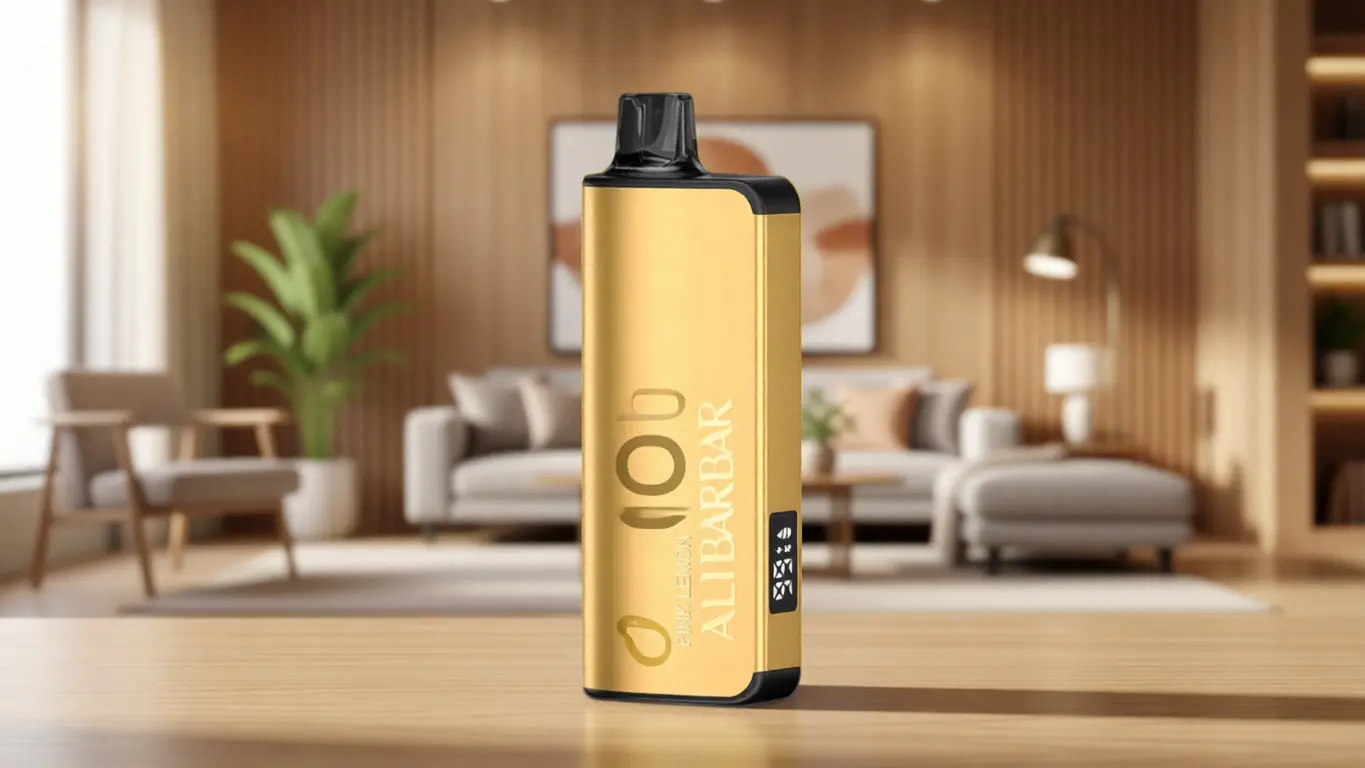
Moving from theory to practice means looking at how specific device families incorporate—or ignore—these principles. The ALIBARBAR range, available through authorised channels such as OZVAPE Shop, provides a useful case study because its successive generations have been built to solve precisely the user frustrations outlined above.
Take the need for consistent output. The Alibarbar INGOT 9000 uses a mesh coil architecture that maintains flavour stability across its rated life, a design choice that directly addresses the late‑stage degradation issue. Its battery indicator is a bright, easy‑to‑interpret light system that removes the guesswork of a dying cell. For users who need extended runtime, the INGOT 15000 pairs a larger liquid capacity with a high‑density rechargeable cell, allowing the device to last through an entire workday and then some without carrying a backup—an acknowledgement that status transparency alone is not enough if the device empties mid‑afternoon.
The Ice Adjust 12000 introduces a user‑controllable airflow slider, a feature that highlights the relationship between physical design and personal preference. Tighter airflow creates a warmer, more concentrated vapour; a more open draw cools the aerosol and increases volume. That kind of tactile control is rare in sealed units and speaks to a design philosophy that treats the user as an active participant, not a passive recipient.
Of course, no device is perfect for every scenario. High‑capacity units like the INGOT 15000 are physically larger and heavier than their lower‑capacity counterparts, which may matter if pocket discretion is your top priority. And while rechargeable disposables reduce the frustrating “dead unit halfway through” scenario, they still require a final disposal step that modular pod systems avoid. The point is not to crown a single winner, but to show how each engineering decision aligns with a particular user profile.
A Practical Framework for Evaluation
You can apply the criteria above to any device you encounter, whether you are comparing specifications on a retailer’s website or examining a unit in person. Use this five‑step process:
Assess heating technology. Look for language like “mesh coil” or “dual‑coil” in the specifications. If none is listed, ask the retailer. A simple wired coil is not inherently bad, but its performance will degrade more noticeably toward the end.
Test status communication. If possible, power on the device and note the battery indicator. Is it a single blinking LED, or a multi‑stage display? Ask yourself: would you know the difference between 30% and 10% remaining?
Examine build quality. Run a fingernail lightly over the finish. Does it feel like a coating that will peel? Is the mouthpiece comfortable against your lips for an extended period? These subjective checks matter more than colour options.
Calculate true cost. For disposable devices, estimate the real per‑draw cost by assuming that the last 10‑15% of the rated life will be unsatisfactory and factoring that waste in. For rechargeable units, add back the value of the extended runtime.
Verify sourcing. Confirm that the retailer sources directly from the manufacturer or an authorised distributor. Ask for batch codes or verification mechanisms. OZVAPE Shop, for example, publishes its supply chain policy and maintains factory‑certified inventory, which significantly reduces the likelihood of receiving a device with substandard internal components.
This framework is deliberately generic. It works whether you are shopping from a local storefront or an online catalogue, and it prevents the common mistake of over‑weighting a single numeric parameter.
Common Selection Errors and Industry Observations
Watching how users select devices over time reveals several recurring patterns of error that undermine satisfaction.
The puff‑count trap. The most visible number on a disposable device is its puff count, and manufacturers naturally compete on it. But a high puff count with a small battery will force the electrical system into its undervoltage regime for a large portion of that life, delivering a continually weakening experience. Conversely, a conservative puff count backed by an oversized battery can maintain full output until the very end. The number on the box is meaningless without the internal electrical balance to support it.
Surface similarity bias. Many devices look nearly identical from the outside—similar dimensions, similar colours, similar branding cues. Yet the internal architecture can vary radically. One unit may use a cheap cotton wick and a simple coil that burns out early, while another uses a temperature‑sensing chip and medical‑grade wicking material. The external similarity encourages price‑based selection, but that often leads to a worse experience despite the lower upfront cost.
Ignoring modularity in total‑cost calculations. A user who goes through three sealed disposables per week might dismiss a slightly more expensive modular system as costly, without accounting for the fact that replacement pods cost a fraction of a full unit. Over a year, the modular path can be significantly less expensive. The error is not in preferring disposables—it is in not running the arithmetic before deciding.
Confusing “rechargeable” with “reusable.” Some users believe a rechargeable disposable lasts indefinitely. In reality, the rechargeable battery may outlast the consumable liquid by only a few cycles. Understanding the distinction prevents the frustration of a device that still has power but no remaining formulation.
From a broader industry perspective, these user errors are partly enabled by a supply chain that rewards cosmetic novelty over engineering disclosure. Many brands operate as marketing companies that source generic hardware and apply their own labels. This means two visually distinct devices may be internally identical, while two look‑alikes can be worlds apart. The onus falls on the informed buyer to look past the branding and ask the engineering questions.
Frequently Asked Questions
Q: What actually creates the vapour when I draw on a device?
A: When you inhale, a pressure sensor or physical button activates the circuit. The battery delivers current to the heating element, which rapidly warms a small reservoir of liquid absorbed in the wick. The heat converts the liquid into a fine aerosol you can inhale. The key is temperature control: too low, and the aerosol is insufficient; too high, and the liquid can thermally degrade.
Q: Why does the flavour sometimes change or diminish toward the end of a device’s life?
A: Two mechanisms cause this. First, as the wick dries unevenly near the end, the coil may overheat residual liquid, creating a burnt note. Second, if the battery voltage sags, the heating element cannot reach the optimal temperature, altering the aerosol’s flavour profile. Devices with constant‑voltage regulation and efficient wicking significantly reduce both effects.
Q: Is a higher puff count always better?
A: Not necessarily. A high puff count device with a small battery will deliver a weakening experience over time. A better indicator is the balance between liquid capacity and battery capacity. Look for devices that specify sustained output characteristics, not just a maximum number.
Q: How can I verify that a device is an authentic, factory‑certified unit?
A: Reputable retailers provide batch codes or scannable verification labels. When buying from OZVAPE Shop, for instance, each device is sourced through authorised distribution networks, and the verification mechanism on the packaging allows you to confirm authenticity directly with the manufacturer.
Q: What is the difference between a mesh coil and a traditional wire coil?
A: A traditional wire coil heats along a thin filament, creating localized hot spots. A mesh coil spreads the same electrical power across a larger surface area, producing a more even temperature distribution. This results in a more consistent vapour profile and reduces the likelihood of scorching the liquid.
Q: If a device has a rechargeable battery, does that mean I can use it indefinitely?
A: No. In a rechargeable disposable, the liquid reservoir is still finite. Once it is consumed, the device must be retired. Rechargeability only ensures that the battery does not fail before the liquid is depleted, eliminating the frustration of a half‑used unit with a dead cell.
Q: Why do some devices feel hotter on my lips than others?
A: Heat transfer to the mouthpiece is influenced by the distance between the heating element and the tip, the material the mouthpiece is made from, and the airflow design. Devices with insulating mouthpiece materials and longer vapour paths tend to remain cooler during extended use.
Q: I purchased a device online and it arrived not working. What should I do?
A: First, contact the retailer immediately. A transparent operation will have a clear returns or support policy. OZVAPE Shop, for example, maintains a responsive local support team that handles such issues based on documented policies. Keep the original packaging and any verification details handy.
Q: What does “airflow control” actually do?
A: Adjusting airflow changes the ratio of air to vapour in each draw. A more restrictive setting produces a warmer, denser aerosol, while a more open setting creates a cooler, airier experience. It does not change the device’s power, only the draw style.
Q: Are devices that look similar on the outside likely to perform the same?
A: Not at all. Industrial design is often copied, but internal components—coil type, wick material, chipset—can differ dramatically between brands. Always read technical specifications rather than relying on external appearance.
Conclusion
The moment you activate a personal vaporizer, you are interacting with a system of interrelated engineering decisions—each one either aligning with or working against the experience you expect. When you understand what happens inside—how heat is managed, how power is regulated, how materials degrade—you stop selecting devices based on superficial numbers and start evaluating them as tools built to a standard, or not.
This is precisely why informed sourcing channels matter. A retailer like OZVAPE Shop that documents its supply chain, maintains factory‑certified inventory, and prioritises clear technical information over marketing superlatives allows you to shop with the same analytical lens this article has urged. The right device for you is not the one with the loudest claims or the highest puff count; it is the one whose internal architecture matches the rhythm of your daily life, and whose status feedback leaves you certain, rather than guessing, about when you’ll need to reach for a backup. That confidence comes from knowing what happens when you vape—and using that knowledge to choose accordingly.