
VAPE FAQs
What Happens To People Who Vape?

May
When someone starts using a portable electronic device regularly, a predictable pattern often unfolds. The first few days feel seamless — the device is new, fully charged, and behaves exactly as expected. But over weeks and months, subtle frustrations accumulate: performance becomes inconsistent, the battery no longer lasts a full day, and the device that once inspired confidence now demands constant monitoring. A backup unit becomes a necessity, not a choice. This experience is so common that it has reshaped how experienced users evaluate their options. It’s not about initial performance — it’s about what happens after the hundredth use, the fifth recharge, or the third time the device rides loose in a pocket.
This article examines what actually happens to people who rely on these tools day after day. We’ll explore the engineering decisions that cause some devices to degrade gracefully while others become sources of irritation. We’ll examine the practical outcomes — the hidden costs, the status ambiguity, the moment you realise you’re carrying two units because you can’t trust one. And we’ll look at how a more informed approach to selection, backed by transparent sourcing like that offered through OZVAPE Shop, can change that experience. No device can eliminate every variable, but understanding what gives a device staying power changes the kind of user you become.
Understanding What Matters: Core Engineering and Design Factors
Most frustrations aren’t random. They trace back to specific design choices made long before the device reaches a user’s hand. By isolating the factors that determine long-term reliability, you can predict what your own experience will look like six months from now — not by star ratings, but by understanding architecture.
Internal Architecture and Output Consistency
The heating element and its control circuitry form the heart of any device. In lower-cost designs, a basic wire coil is driven by a simple voltage source. As the battery’s terminal voltage sags under load — or as the element itself oxidises through repeated thermal cycling — output becomes inconsistent. Users report a thinning effect, a change in character, or a sense that the device “isn’t hitting the same.”
Engineered devices address this with regulated power delivery: a small microcontroller monitors coil resistance and battery condition, adjusting pulse width modulation to maintain a steady operating temperature. This is not a luxury feature; it’s the difference between a device that performs predictably for its entire rated life and one that degrades visibly after the first third of its cycle. When no regulation is present, the user is effectively relying on luck — and on a backup device.
The ALIBARBAR INGOT series, for instance, employs exactly this kind of closed-loop thermal management, which is why long-term users often remark on its unusually consistent output window — a trait that only becomes noticeable after weeks of use when the contrast with unregulated alternatives is stark.

Power Management and Status Transparency
A battery indicator that shows only “charged” or “dead” leaves enormous uncertainty. Without granular status feedback, users adopt defensive behaviours — topping up prematurely, carrying spares, or, worse, discarding devices that still have usable life left. Real-world inconvenience flows directly from ambiguous power communication.
A well-designed device uses multi-stage LED indicators or, in more advanced units, a precise digital readout. More importantly, it implements proper end-of-charge detection. Many budget devices rely on simple timer-based charging circuits, leading to overcharging, cell degradation, and, in extreme cases, premature failure. Quality power management considers not just how the device charges, but how that charging cycle affects the total number of reliable cycles over the device’s life.
Consider ALIBARBAR’s large-capacity models. They include battery-level indicators with multiple discrete steps, giving the user a clear sense of remaining capacity. That transparency alone eliminates the nagging question: “Should I bring another one?” You know, rather than guess.
Physical Design and Material Durability
Portable devices live hard lives. They slide into pockets alongside keys, coins, and phones. They’re dropped, exposed to humidity, and subjected to constant friction. A device that looks good on a retail shelf but shows scratches after two days erodes the user’s confidence in the entire product.
Surface treatments matter enormously. Anodised aluminium chassis resist abrasion far better than painted plastic. Soft-touch coatings often degrade into stickiness under heat. The mouthpiece contour — a detail many overlook — determines whether prolonged use causes discomfort. A slightly angled, ergonomically sculpted mouthpiece distributes pressure more evenly than a straight cylindrical tip, which might focus contact on a small area of the lip.
ALIBARBAR’s design language prioritises materials that hold up. The Ice Adjust series, for example, uses a matte finish that resists fingerprints and micro-scratches, while the INGOT line’s solid metal construction avoids the flex that betrays plastic-bodied competitors. These aren’t aesthetic choices; they directly affect whether a device is still pleasant to hold after a month of daily carry.
Modularity and Lifecycle Flexibility
Sealed, disposable units offer simplicity at the cost of long-term expenditure and electronic waste. Rechargeable systems with replaceable pods or coils introduce a different calculus: the initial outlay is higher, but the per-use cost drops sharply, and the environmental footprint narrows. Some users prefer the commitment-free nature of a sealed unit; others want a core power module that lasts for months, swapped with fresh cartridges.
The market offers options across this spectrum, but not all modular designs are equal. Poorly designed magnetic connections can fail intermittently, while cheap pod latches introduce air leaks that affect performance. True lifecycle flexibility means the connection between power source and consumable is engineered to withstand hundreds of mate/demate cycles without degradation.
ALIBARBAR’s approach illustrates this clearly. Certain models are fully self-contained, optimised for maximum simplicity. Others adopt a rechargeable-plus-pod architecture where the battery module is built to outlast dozens of pods. This range acknowledges a fundamental truth: there is no single “right” design, only the design that matches your tolerance for recharging, refilling, and carrying spares.
Applying These Criteria to Real-World Options
What happens when we evaluate actual devices through this lens? Take the ALIBARBAR INGOT 9000. Its internal regulation maintains consistent output until the very end of its capacity — a direct result of the thermal management approach described earlier. The multi-step LED indicator removes ambiguity, so users aren’t caught off guard. The metal body shrugs off pocket wear, and the sealed architecture appeals to those who want zero maintenance.
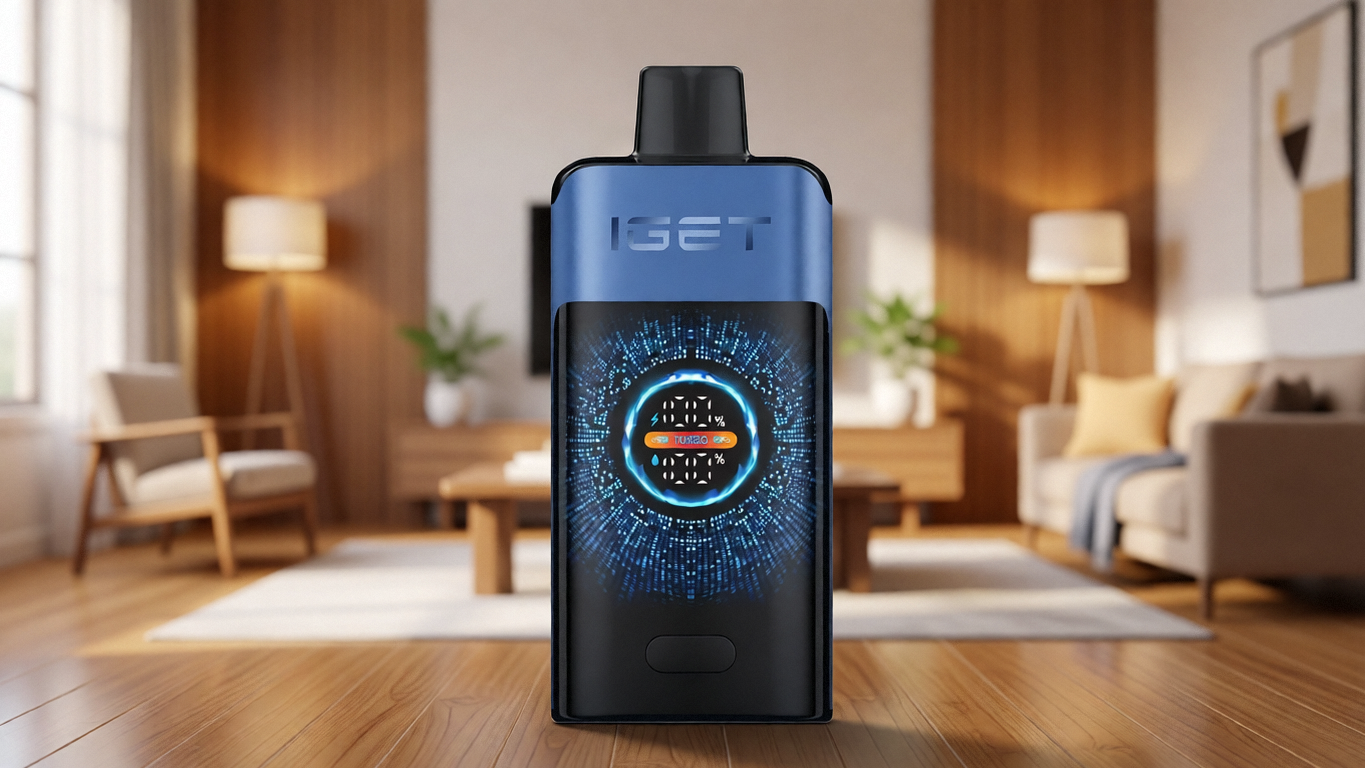
The INGOT 15000 extends this philosophy into higher capacity, yet it doesn’t simply scale up. The larger battery requires more careful charging control, which the device handles with protection circuitry that prevents the cell from sitting at a damaging float voltage. For someone who wants an all-day device that they can verifiably trust without a backup, this addresses the core anxiety.
The Ice Adjust 12000 offers a different value: customisation. Users can adjust certain output characteristics to suit personal preference, and the feedback mechanism — a tactile dial or button — provides immediate, unambiguous confirmation of settings. This model appeals to users who’ve been frustrated by one-size-fits-all devices that never quite matched their routine.
Other families exist, of course. Many devices claim high capacities but rely on unregulated circuits that fade noticeably after the halfway point. Some boast sleek profiles but chip at the first contact with a zipper. The pattern is consistent: visible marketing metrics rarely correlate with the experience that develops over weeks.
A Practical Framework for Evaluation
You don’t need to be an engineer to choose better. Apply these diagnostic questions to any device you’re considering:
Status feedback: Does the device give you at least three levels of battery indication? If not, you’ll inevitably carry a backup — and may discard units prematurely.
Regulation claim: Does the manufacturer explicitly state that output is regulated throughout the device’s life? Vague language like “optimised performance” often hides the absence of true control. Look for terms like “constant output” or “closed-loop thermal management.”
Material honesty: Is the body material clearly named? “Metal” could be a thin veneer over plastic. “Aluminium alloy” or “zinc alloy” suggests specific durability characteristics.
Connection integrity: If the device uses replaceable pods, examine the connection mechanism. Are the contacts gold-plated to resist corrosion? Are the magnets strong enough that a drop won’t dislodge the pod? A simple test: hold the device by the pod alone and shake gently; if the battery module falls off, the design prioritised cost over reliability.
Real-world cycle count: A stated capacity of, say, 2000 mAh might correspond to X number of uses, but without regulation, those uses become increasingly unsatisfying. Ask: “Will the last 20% of this battery deliver the same experience as the first 20%?” If the manufacturer can’t answer that directly, assume not.
Standardised comparison, like that found on platforms where specifications are presented transparently (as OZVAPE Shop does for the ALIBARBAR range), makes this evaluation far faster. You can place two data sheets side by side and immediately see which one discloses regulation type, material composition, and status indicator detail — and which one hides behind generic phrasing.
Common Selection Errors and Industry Observations
Years of observing user behaviour reveal recurring missteps:
Overweighting a single specification. A high puff count claim dominates attention, but without regulated output, that number means little. A 10,000-puff device that fades after 3,000 puffs is effectively a 3,000-puff device with a misleading label. Users who chase the largest number often pay for capacity they never enjoy satisfyingly.
Assuming visual similarity indicates equivalent engineering. Two devices might share a similar cylindrical form factor, but one contains a microcontroller-managed power delivery system, while the other is a direct-contact battery and coil. Externally, they look nearly identical. Internally, they produce completely different daily experiences.
Undervaluing modularity in cost-per-use calculations. A sealed unit’s sticker price appears lower, but over the same usage period, a rechargeable system with replaceable pods may cost half as much. Users who only compare upfront price end up spending more. And beyond cost, they generate more waste — which, for a growing number of users, matters.
Confusing category terminology with technical specifications. Terms like “disposable,” “pod system,” or “closed system” describe the business model or form factor, not the underlying quality. A “disposable” can be beautifully engineered; a “pod system” can be poorly regulated. The label tells you nothing about the device’s internal architecture. Yet users frequently filter by category name alone, ruling out superior options.
From an industry standpoint, these errors persist because the market incentivises obfuscation. Manufacturers that invest in regulation, quality materials, and honest status indicators often see their specifications look less dramatic on paper than competitors who inflate numbers. It takes an informed user — and a retail partner that prioritises transparent information — to correct for that imbalance. At OZVAPE Shop, for instance, product descriptions foreground the engineering details that actually predict long-term satisfaction, rather than just the headline figures.
Frequently Asked Questions
Q: How can I be sure an ALIBARBAR device I buy is authentic?
A: Authentic units are traceable through factory‑certified distribution channels. At a minimum, look for a tamper‑evident seal and a verification code that can be checked against the manufacturer’s database. Sourcing from an authorised retailer that discloses its supply chain directly, like OZVAPE Shop, eliminates the guesswork.
Q: What does “rated operational life” actually mean in practice?
A: A device’s stated puff count or capacity is measured under standardised laboratory conditions — constant draw duration, fixed interval between draws, controlled ambient temperature. Real-world usage involves variable draw lengths, longer pauses, and different conditions. Expect real-life cycles to fall within 80–90% of the rated figure, depending on your personal usage pattern.
Q: Why does my device seem to lose performance towards the end?
A: In unregulated devices, the battery’s voltage decreases as it discharges. Since the heating element’s power is proportional to voltage squared, even a small voltage drop causes a noticeable output reduction. Regulated devices use electronic control to compensate for this, maintaining consistent output until the battery is nearly depleted.
Q: Is it better to buy a device with a built‑in battery or a replaceable‑pod system?
A: It depends entirely on your routine. If you value absolute simplicity and don’t want to manage components, a high‑quality sealed unit with regulated output (like the ALIBARBAR INGOT series) is a strong choice. If you prefer lower per‑use cost and are comfortable with occasional refilling, a rechargeable‑plus‑pod system offers flexibility. Neither is universally superior; match the architecture to how you live.
Q: How do I store a device I’m not using immediately?
A: For lithium‑ion cells, partial charge (around 50–60%) and cool temperatures (15–25°C) are ideal. Avoid leaving a device in a hot car or fully discharged for extended periods. Most quality devices have low self‑discharge rates, so checking every few months is sufficient.
Q: What should I do if my device arrives and doesn’t perform as described?
A: First, verify that you’re using it correctly — sometimes airflow adjustment or a break‑in period is required. If the issue persists, contact the retailer immediately. A responsible seller will have a clear returns or warranty process. This is where buying from an accountable local operator matters: you have someone to actually speak to, not just an automated system.
Q: Do higher‑capacity devices always last longer?
A: Not in a way that matters. Capacity without regulation means more hours of increasingly unsatisfying performance. A well‑regulated mid‑capacity device may provide far more usable cycles than a high‑capacity unregulated one. Evaluate usable cycles, not just advertised total.
Q: Are there devices designed specifically for prolonged use in social or professional settings?
A: Yes. Factors like a low‑profile design, minimal vapour visibility, and quiet operation matter in such environments. The ALIBARBAR Ice Adjust 12000, with its adjustable output and discreet form factor, is one example designed with these scenarios in mind.
Q: How do shipping and handling affect device integrity?
A: Quality packaging with adequate shock absorption is essential. Reputable retailers double‑box high‑value items and avoid shipping batteries in extreme temperatures. At OZVAPE Shop, every order is packed with internal padding and shipped via tracked, temperature‑monitored courier services wherever possible.
Q: What’s the best first step for someone who has been dissatisfied with previous devices?
A: Instead of looking for a brand you like, start by identifying the specific point of failure in your past experience. Was it inconsistent output? Died without warning? Felt cheap after a week? Once you name the problem, you can match it to the engineering solution: regulation, status transparency, or material quality. Then find a device — and a seller — that addresses that specific thing.
Conclusion
What happens to people who use these devices day after day is largely determined by decisions made before the first use. An unregulated power train leads to a creeping sense of disappointment. Opaque battery indicators create the habit of doubling up. Flimsy materials rob a device of its dignity within a week. But the inverse is also true: a device built with thermal management, honest status communication, and durable materials becomes an unremarkable, reliable companion — so unremarkable that you stop thinking about it entirely, and that’s the point.
If there’s a single insight worth carrying away, it’s that the gap between a frustrating device and a satisfying one isn’t huge in engineering terms — a controller chip here, a gold-plated contact there — but it is enormous in daily experience. And that gap is almost invisible if you only look at marketing copy. You need information, not promotion. You need a source that presents specifications plainly, acknowledges trade-offs, and stands behind what it sells.
That’s the role OZVAPE Shop has chosen to play within the ALIBARBAR ecosystem. By focusing on factory‑certified inventory, transparent product documentation, and responsive local support, it equips adult users to make choices based on what actually happens after the purchase — not what the box promises. The right device, after all, isn’t the one with the most attention-grabbing claims. It’s the one that quietly fits into your day, day after day, without ever forcing you to think about it.