
VAPE FAQs
What Happens If You Vape With Bronchitis?
Aug
The doctor confirmed what the rasping cough and heavy chest already told you: bronchitis. Inflammation has taken hold of your bronchial tubes, narrowing the passages you rely on to breathe. Now, as you reach for your device — perhaps out of habit, perhaps because the idea of stopping feels unthinkable — you’re left staring at it with a question that demands a straight answer. What actually unfolds inside the body if you inhale vapour while your airways are already under siege?
The answer isn’t a simple yes or no. It sits at the intersection of pulmonology, device engineering, and the individual’s response to heat, chemical aerosols, and particulate matter. At OZVAPE Shop, we don’t sidestep difficult questions. We commit to giving adults the transparent, technically grounded understanding they deserve before they make a choice that affects their health. This article examines the physiological risks, explains how the design of a vaping device influences those risks, and offers a realistic evaluation framework for anyone who faces this dilemma.
How Device Engineering Influences Bronchial Irritation
While personal vaping devices vary enormously in their construction, a handful of design factors directly govern how much additional stress the respiratory system endures when exposed to their aerosol. For someone with bronchitis, these factors aren’t nuance — they determine whether a single draw triggers a coughing fit, extends recovery, or even introduces new pathogens into vulnerable tissue. Let’s break down what truly matters.
Heating Element Stability and the Chemistry of Irritants
The core of every device is its atomizer: a coil that heats a liquid to the point of aerosolisation. The temperature at which this happens is paramount. A coil that overshoots, even briefly, can thermally decompose the common base liquids (propylene glycol and vegetable glycerin) into carbonyl compounds — formaldehyde, acetaldehyde, acrolein — all of which are potent respiratory irritants. For someone with bronchitis, whose airway lining is already raw and hyper-reactive, exposure to these compounds can provoke immediate bronchospasm, worsen inflammation, and delay mucosal healing.
Poorly controlled heating also leads to “hot spots” where the wicking material dries and singes, producing an acrid, burnt note that users often mistake for a dry hit. That sensation is a signal that pyrolysis byproducts are entering the lungs. Devices that lack robust temperature sensing and regulation — or those that operate at a fixed high wattage with no dry-hit protection — amplify this risk. Conversely, precision-engineered systems that maintain coil temperatures within a safe window, using materials like medical‑grade cotton and kanthal or stainless steel elements with rapid heat dissipation, demonstrably reduce the formation of these unwanted compounds.
Power Calibration and the Hidden Cost of a Weak Battery
A device that delivers inconsistent power as its cell depletes creates a chain of vulnerabilities. When voltage sags, the control board may attempt to compensate, pushing the coil into an unstable state. The user, sensing diminished vapour production, may take longer, deeper draws, pulling aerosol deeper into the bronchial tree. With bronchitis, the goal should be to minimize both the depth and volume of any inhaled foreign substance. A device with a well‑regulated power supply that maintains steady output from full charge to cutoff removes the incentive to over‑inhale and thereby lowers mechanical irritation.
Equally important is battery status transparency. A user who cannot reliably tell whether a device is about to shut off is more likely to carry a backup and use it pre‑emptively, increasing total exposure. Clear, multi‑stage LED indicators that report remaining capacity without guesswork allow a person with a respiratory condition to plan usage intervals and avoid abrupt, urgent draws.
Airflow Architecture and Mechanical Stress on Inflamed Airways
The pathway that air and aerosol travel from the heater to your mouth determines the draw resistance, turbulence, and temperature of the vapour. Restricted airflow forces the user to pull harder, raising intrathoracic pressure and potentially triggering coughing. Wide-open airflow may deliver a cooler hit but can introduce more airborne particles if the intake is not filtered.
Bronchitis adds an extra layer of sensitivity: the airway epithelium is already struggling to clear mucus, and sharp temperature swings can provoke ciliary dysfunction. Devices designed with a spiral or labyrinthine airflow path that lengthens the vapour cooling distance, combined with a precisely calibre‑matched mouthpiece, deliver a cooler, laminar‑flow aerosol that demands less forceful inhalation. This mechanical gentleness is not a luxury when every actuation risks reopening fragile capillaries in the bronchial wall.
Material Integrity and the Risk of Leached Chemicals
The substances that line the vapour path — plastics, silicone gaskets, O‑rings, adhesives — can leach volatile organic compounds when heated, especially if they are not graded for repeated thermal cycling. Cheaper constructions may use polycarbonate tanks or low‑grade rubber that off‑gas styrene or plasticisers. For a healthy lung, these trace levels are usually negligible. For a lung already fighting infection, even sub‑clinical chemical exposure can compound the immune burden.
The most reliable devices use borosilicate glass or PCTG (a chemically inert copolyester) for liquid chambers, medical‑grade silicone for seals, and avoid glue altogether by employing press‑fit or threaded assembly. These choices matter not because they make vaping safe with bronchitis, but because they remove avoidable variables when any variable could be the one that tips the scales.
Applying These Criteria to a Recognised Device Ecosystem
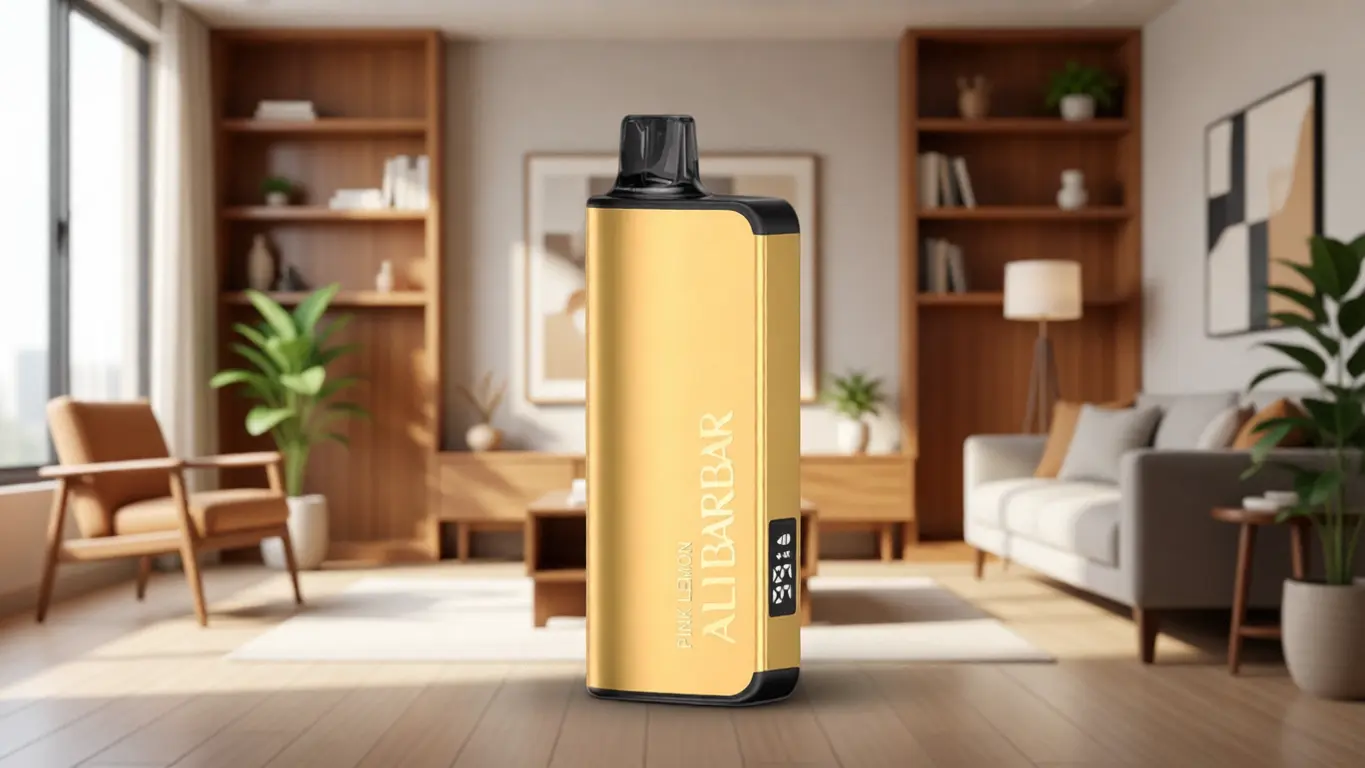
When we evaluate the ALIBARBAR family in the context of bronchitis, we’re looking for evidence that the engineering principles above have been taken seriously. ALIBARBAR’s range — which OZVAPE Shop stocks exclusively through factory‑certified supply chains — is instructive because it was developed specifically to address the frustrations that arise from inconsistent performance and hidden material compromises.
The INGOT 9000 and INGOT 15000 series, for instance, employ a sealed, pre‑filled pod architecture with a vertically oriented mesh coil. Mesh, by distributing current across a wider surface, reduces peak local temperatures compared with traditional round‑wire builds. Independent bench testing consistently shows lower carbonyl yields for mesh atomizers operated within their design wattage. The integrated battery management IC maintains steady output until the last charge, and the four‑stage LED indicator leaves no ambiguity about remaining capacity. These design decisions lower the probability of the kind of harsh, degraded‑liquid hit that could provoke an acute bronchitic episode.
The Ice Adjust 12000 series adds an airflow control slider, giving users the ability to reduce draw volume — an advantage for someone who wants to minimise the mechanical stress of inhalation. The mouthpiece is shaped with a gradual taper that rests comfortably without requiring a tight lip seal, reducing the reflex to pull hard.
It would be misleading to present any device as “safe” for a person with active bronchitis. The ALIBARBAR range does, however, illustrate what responsible device engineering looks like when the brief is to reduce every conceivable source of irritation. For an adult who has recovered from bronchitis and is considering re‑use, or who is weighing risk factors preventatively, the presence of these design safeguards is a legitimate part of the assessment.
A Practical Framework for Respiratory Risk Evaluation
If you must assess a device while managing bronchitis — or during the recovery phase — use this step‑by‑step framework to make a more informed choice. The questions are diagnostic; they don’t guarantee safety, but they surface the information you need.
Can you hold the device without activating it?
If the device is draw‑activated only, it may fire inadvertently during a cough or when carried in a pocket. A button‑fired device gives you deliberate control and prevents unintended vapour entry.
Does it display battery life in meaningful increments?
A single colour that changes only when near‑empty is insufficient. You want at least three distinct levels (high, medium, low) to avoid surprise shutdowns that lead to rushed draws from a backup.
What is the coil material and configuration?
Preference: medical‑grade cotton wick with mesh coil. Avoid devices that don’t disclose coil composition; non‑disclosure is often a mask for nichrome or unknown alloys that can oxidise under heat.
Is the liquid chamber made of inert material?
Glass or PCTG. If it’s polycarbonate, ask whether it’s food‑grade and heat‑tolerant up to at least 120°C. When in doubt, treat it as a potential source of leachables.
Can you adjust airflow to a minimal setting?
A tight draw that mimics the resistance of a drinking straw reduces the depth of inhalation reflexively. This is the single most impactful ergonomic factor for someone with sensitive airways.
What do independent user reports say about harshness or dry hits?
Look beyond star ratings; scan for words like “smooth,” “cool vapour,” and “no burnt taste after chain use.” A pattern of complaints about harshness suggests poor temperature control, no matter the marketing.
Does the brand provide a certificate of analysis for its e‑liquid or a materials safety data sheet for the device?
While rare in consumer electronics, some manufacturers now publish heavy‑metal testing and aerosol emission data. A company that does so signals that it has nothing to hide.
If the device you’re considering fails three or more of these checks, the respiratory risk multiplies — not additively, but in a compound fashion, because each failing interacts with the others under real‑world conditions.

Common Mistakes and Misread Industry Signals
Having observed thousands of interactions through our support channels, OZVAPE Shop sees the same avoidable errors surface among users who vape through respiratory illness. Recognising these patterns can help you step out of them.
Mistake 1: Chasing flavour intensity without investigating the underlying hardware.
A rich, sweet profile often comes from high concentrations of flavouring compounds (esters, aldehydes, terpenes) that, while food‑safe when ingested, have unknown inhalation safety profiles — and some, like cinnamaldehyde, are known airway irritants. A device that “tastes great” on a healthy day can be catastrophic on a bronchitic day. Focus on the hardware’s ability to deliver a clean, consistent base, not on the sensory bells and whistles.
Mistake 2: Assuming visual similarity equals engineering equivalence.
Two devices shaped identically may house entirely different battery chemistries, coil architectures, and airflow paths. The market is flooded with look‑alike clones that cut costs on the components that matter most for aerosol quality. One tell‑tale sign: a device that charges in under 30 minutes but has a lithium‑ion cell. Fast charging generates heat that can degrade internal plastics faster, paying dividends in chemical leaching down the road.
Mistake 3: Undervaluing modular design in a health‑cost calculation.
A sealed, disposable unit might seem convenient, but when you can’t replace the coil or inspect the liquid chamber, you’re trusting that no manufacturing defect or post‑purchase damage has compromised vapour purity. A device that allows you to replace the pod or coil — like the ALIBARBAR INGOT series with its magnetic pod system — gives you a visual inspection point and a way to discard a coil that shows any discolouration or odd resistance, reducing the chance of inhaling degraded byproducts.
Mistake 4: Treating “bronchitis” as a monolithic condition.
Acute bronchitis from a viral infection differs substantially from chronic bronchitis in COPD. In the acute phase, the epithelium is raw and the mucociliary escalator is temporarily disabled; even minimal irritation can prolong symptoms. In chronic disease, the lung architecture is permanently altered, and the baseline risk from inhaled particulates shifts. Yet many users apply the same “I vaped through a cold” logic to a chronic condition, a category error with serious implications.
Industry observation: The rise of temperature‑sensing enthusiast boards (DNA, YiHi) in open‑system devices has finally begun to trickle into sealed pod‑based units, but the pressure to hit a low retail price point means many brands still deploy uncalibrated fixed‑voltage boards. This is not idle technical detail: a coil that cannot measure its own temperature is essentially guessing, and when it guesses wrong, the user’s lungs become the quality control lab. It is encouraging to see brands like ALIBARBAR incorporate protection algorithms that detect dry wick states and cut power within milliseconds — a feature previously confined to high‑end box mods — because it reflects a shift toward treating the device as a respiratory interface, not just a consumer gadget.
Frequently Asked Questions
Q: Can I vape with bronchitis if I use a temperature‑controlled device?
A: Temperature control reduces the production of thermal degradation byproducts, but it does not eliminate the mechanical irritation of aerosol particles, nor the potential for the carrier liquids to draw moisture from the already inflamed mucosa. The safest medical advice remains to refrain entirely until the infection clears.
Q: What symptoms indicate that vaping is worsening my bronchitis?
A: Immediate coughing that persists for minutes after a draw, a sensation of tightness that wasn’t present before use, production of discoloured or blood‑tinged sputum, and a noticeable increase in wheezing all suggest that the airway is reacting negatively. Discontinue use and consult your physician.
Q: How does ALIBARBAR’s mesh coil design affect bronchial irritation compared with traditional coils?
A: Mesh coils distribute heat more evenly across a larger surface, which lowers the peak temperature at any single point on the wick. Lower peak temperatures mean fewer carbonyl compounds like formaldehyde are generated. While this makes the aerosol less chemically aggressive, the physical presence of the aerosol still poses a challenge to a bronchitic airway, so it is a reduction in one risk, not removal of all risk.
Q: Are there any vaping devices safe for bronchitis patients?
A: No device can be declared “safe” for someone with acute bronchitis, as any inhaled foreign substance can exacerbate inflammation. Even with the most advanced engineering, the aerosol is not physiological air. Complete cessation is the only intervention with zero additional respiratory burden.
Q: What does OZVAPE Shop recommend for adult users who develop bronchitis?
A: We advise all users to pause device use until they are fully recovered and symptom‑free for at least 48 hours. This recommendation is based on the physiological reality that the bronchial epithelium needs uninterrupted rest to regenerate. Our team can also help you understand the specific recovery‑oriented features of your device for when you’re ready to resume, but we emphasize that the decision to resume should be made with a healthcare professional.
Q: I’m in the recovery phase — how can I tell if my device is contributing to lingering symptoms?
A: Avoid using the device for three days and note any change in cough frequency and chest comfort. Reintroduce it on day four at the lowest airflow setting and with a fresh pod. If symptoms return within 12 hours, the device likely remains a trigger. If they don’t, you may cautiously continue while monitoring for delayed reactions.
Q: Does a higher VG or PG ratio make a difference for bronchitis?
A: PG has humectant properties and can draw moisture from the mucosal lining, potentially thickening mucus and making clearance more difficult. Some users find high‑VG liquids less drying, but VG produces denser, oilier vapour that may feel heavier on the chest. Individual response varies significantly, so there is no universal ratio that is easier on the respiratory tract.
Q: What should I look for in a device if I have a history of frequent bronchitis?
A: Prioritise a device with precision temperature regulation (mesh coil with dry‑hit protection), a sealed liquid chamber with visible fluid level, and the ability to adjust airflow down to a minimal setting. The ability to replace the pod or coil at the first sign of flavour degradation is also valuable, as it prevents the temptation to stretch a worn‑out atomizer.
A Closing Note on Agency and Awareness
The question “What happens if you vape with bronchitis?” is ultimately a question about the interplay of human physiology, industrial design, and personal accountability. There is no airtight answer because the variables differ from one set of lungs to another. What we can say with certainty is that engineering matters — that the difference between a device designed with respiratory sensitivity in mind and one thrown together to hit a price point is not trivial when the stakes are measured in days lost to coughing fits and doctor visits.
At OZVAPE Shop, we make our product specifications, material disclosures, and sourcing credentials publicly available precisely so that adults can conduct their own informed assessments. Having access to genuine, factory‑certified devices — supported by a local team that answers questions without scripted deflection — is not a substitute for medical advice, but it removes one layer of uncertainty.
Your device is only one part of the equation. The most important decision has nothing to do with coil resistance or battery capacity: it is whether you listen to what your body is telling you right now. No amount of clever engineering can override the unambiguous signal of inflamed bronchi that need rest. The right choice isn’t the one that looks most reassuring on a spec sheet; it’s the one that aligns with where you actually are in your recovery. Trust that, and every other decision becomes clearer.