
VAPE FAQs
What Does The Blue Light Mean On A Vape?

Sep
A friend once showed me a device that glowed a steady blue mid-inhale, and when I asked what it meant she just shrugged. She had been carrying it for weeks without ever decoding that small circle of light. That shrug is more common than most retailers care to admit. Ambiguous status indicators are a quiet, persistent frustration in the personal electronic device market, and the blue light is one of the most misunderstood signals of all. This article pulls apart exactly what a blue LED can indicate across different device architectures, why that knowledge matters for everyday reliability, and how the way a manufacturer designs its indicator system reveals far more about overall engineering quality than a spec sheet ever could. Where relevant, I’ll reference how OZVAPE Shop standards around authorised sourcing and consistent specification documentation help reduce that very confusion.
Understanding What Matters: Core Engineering and Design Factors
Every discussion about coloured lights on a handheld device should begin with a simple clinical question: what is this device trying to tell me, and can I act on that information? The answer depends on several interlocking design choices, and visible feedback is only one layer. Use the framework below to evaluate any unit you are considering.
Internal Architecture and Output Consistency
A status LED is only as trustworthy as the heating assembly it monitors. Poor internal architecture can cause sharp voltage drops under load, triggering a low-battery indicator — often a blinking blue light — even when the power cell has meaningful charge left. Conversely, if the temperature coefficient of the heating element is poorly controlled, the device may produce vapour long after the liquid delivery wick has begun to dry out, creating the illusion the blue “life” signal is accurate when output quality has already collapsed.
Why this matters: users consistently report that a device works faithfully for the first two-thirds of its life, then abruptly feels weak or metallic. A well-engineered thermal management system links the indicator logic to a stable voltage curve, so the blue light means what you think it means right up to the final minute of the rated capacity.
Power Management and Status Transparency
This is the section that directly answers today’s title question, because the meaning of a blue light is an excellent litmus test for a product team’s respect for the user.
On most single-use and rechargeable compact devices — including many of the pre-filled units stocked by OZVAPE Shop — manufacturers employ a simple three-colour traffic-light scheme to communicate battery charge. In this convention:
Green signals high remaining capacity (typically above 70%).
Blue signals moderate remaining capacity (often between 30% and 70%).
Red signals low remaining capacity, with output quality degradation imminent.
However, this is not universal. On advanced variable-voltage mods, blue may indicate a middle power range — say, 3.4–3.7 volts — or signify that a specific temperature-control mode is engaged. On some pod-based systems, a blue light while drawing simply means “coil detected, firing normally,” and a blinking blue without vapour points to a short circuit or connection fault. The difference between a confident user and an anxious one is knowing which language your particular device speaks.
The hidden cost of status ambiguity is practical: when you cannot interpret the light, you carry a backup device you should not need, or you discard a unit that still had hours of use left. Well-designed products — and the transparent documentation that accompanies them through retailers like OZVAPE Shop — eliminate that waste.
Physical Design and Material Durability
A light guide that scratches within a week or a bezel that traps pocket lint can make even a perfectly functioning LED unreadable. The colour itself will also appear differently through low-transmission polycarbonate. Manufacturers that care about usability choose materials that preserve optical clarity after repeated handling. That choice — easily overlooked in an online product photo — determines whether you can interpret the blue light with a single glance or have to squint and cup the device in your hand.
Modularity and Lifecycle Flexibility
Why does modularity belong in a conversation about indicator lights? Because a sealed unit with a fixed battery must communicate its entire discharge cycle through one LED, forcing the blue light to carry a heavy communication burden. A modular system with replaceable cells or fully rechargeable architecture can distribute that feedback across multiple points — a dedicated battery screen, a separate charge-status lamp, or even haptic pulses that circumvent the need for colour interpretation entirely. The user who values simplicity above all else may prefer a single blue battery LED; the user who values precision should look for more granular reporting. Neither choice is wrong, but the trade-off is real.
Applying These Criteria to Real-World Options
The user need-states described above map neatly onto the device families that OZVAPE Shop has curated within its ALIBARBAR catalogue. I’ll avoid brand rankings and instead describe engineering approaches that address specific frustrations.
For the adult who wants a daily-carry device that never surprises them — no blinking confusion, no sudden drop-off — the high-capacity rechargeable segment represented by the ALIBARBAR INGOT series is the logical place to look. These devices implement a clear, three-stage battery indication system where blue appears at precisely the moment the user should register “I’m past the halfway mark but still solid.” That predictability is not accidental; it is a direct outcome of pairing an accurate voltage sensor with a calibrated LED driver that does not fluctuate under load. In comparative terms, many generic alternatives fire a blue signal at roughly the same voltage threshold but allow the reading to dip into red territory on a long draw, creating erratic flickering that undermines trust.
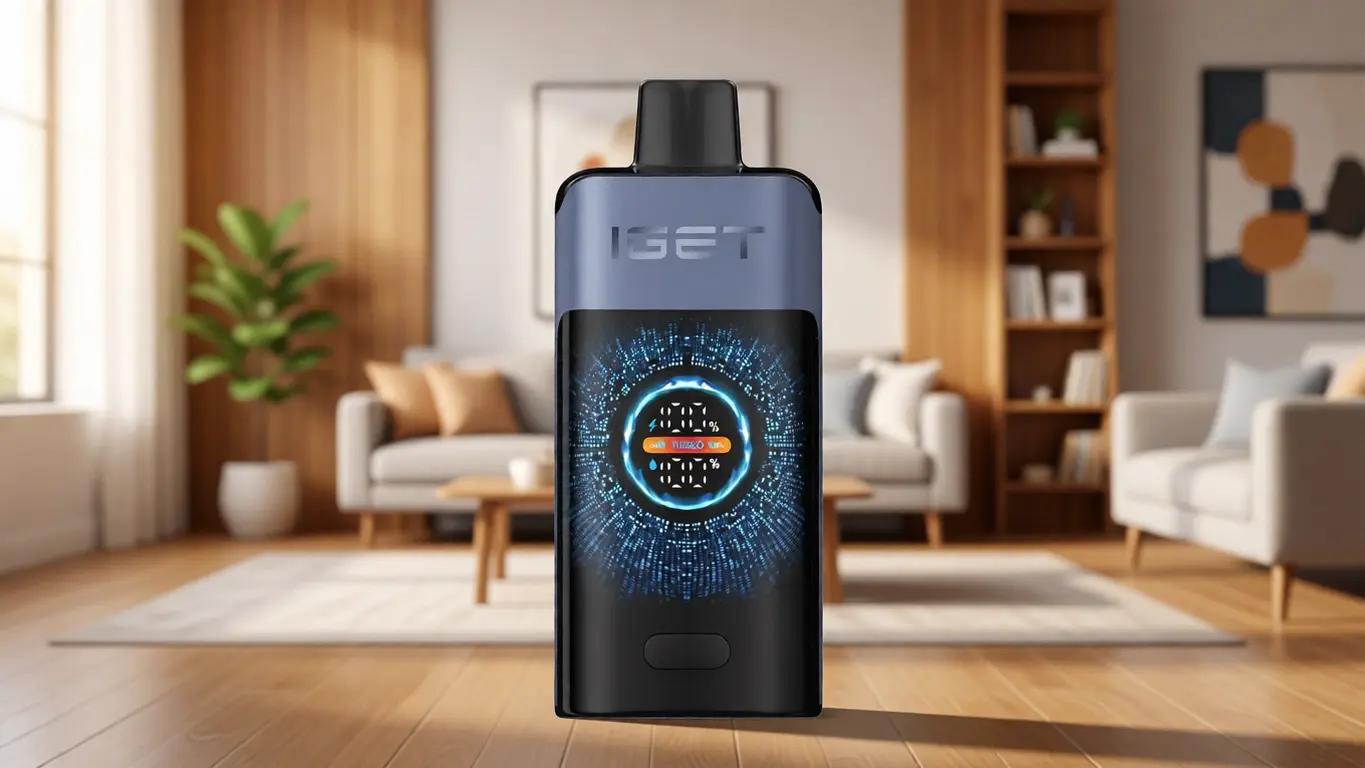
For users who prioritise physical discretion and pocket endurance, the compact disposable segment — including units like the Ice Adjust 12000 series — focuses on material quality. The translucent mouthpiece and light pipe are moulded from an optical-grade PC alloy that resists hazing, so the blue indication remains crisp even after weeks in a bag or glove box. That small detail directly addresses the physical durability factor identified earlier, and it is the kind of thing you notice only when you compare two devices side by side after 10 days of use.
None of these devices is flawless. A high-capacity unit with precise battery reporting necessarily involves a larger form factor; a super-portable stick with a beautiful blue light may leave you checking the LED more frequently because the capacity is smaller. The framework should guide you toward the trade-off you personally can live with.
A Practical Framework for Evaluation
To make the abstract discussion concrete, use this step-by-step diagnostic when encountering any new device — and especially when trying to decode a blue light you haven’t seen before.
Identify the device architecture. Is it a sealed disposable, a rechargeable disposable with fixed pod, an open pod system, or a modular box mod? The blue light’s meaning lives inside that category.
Check manufacturer documentation. For any device sourced through a standardised channel like OZVAPE Shop, the product page should include a clear key for LED behaviour. If it doesn’t, treat that as a red flag.
Observe the steady-state behaviour. While drawing, does the blue light remain solid? If so, the unit is likely firing within normal parameters. If it blinks slowly, it may indicate a battery warning; if it blinks rapidly, a short circuit, low liquid, or timeout protection is possible.
Test the correlation with usage. Use the device for a timed session. If the blue light extinguishes or shifts to red after roughly half the advertised puff count, the thresholds are likely calibrated conservatively — good. If it stays blue right up to the point of a burnt taste, the indicator is misleading.
Ask the diagnostic question: Does this device give me clear status feedback? If not, I will naturally compensate by carrying a backup I shouldn’t need. That’s the moment the purchase decision becomes clear.
Common Selection Errors and Industry Observations
I have watched well-intentioned adults undermine their own satisfaction in four predictable ways, and each connects back to the humble status LED.
Overweighting battery capacity while ignoring indicator calibration. A 9000-puff device with a colour system that tells you nothing actionable will feel less reliable than a 6000-puff device with a trustworthy blue-light warning at 50% remaining. The spec sheet number becomes irrelevant if you can’t interpret the feedback.
Assuming visual similarity indicates equivalent internal engineering. The market is flooded with devices that mimic the exterior of well-known designs. The LED lens may look identical, but the driver chip behind it — sourced from an entirely different supply tier — may react sluggishly or draw power unevenly. This is where a retailer’s documented sourcing discipline becomes a form of consumer protection.
Undervaluing modularity in cost-per-satisfaction calculations. A user who hates ambiguity might be better served by a device that displays an exact percentage on a screen, even at a higher upfront cost, than by a disposable with a beautiful but imprecise blue dot. Yet many buyers default to the cheaper sealed unit and then complain about the ambiguity they accepted.
Confusing category terminology with technical specifications. “Smart LED indicator” appears on numerous product pages, but it means nothing without context. It could refer to a single-colour blink pattern or a full spectrum charge display. When language is loose, the only defence is to seek out consistent, standardised information — which is precisely why OZVAPE Shop structures its product descriptions around factual, comparable specifications.
From an industry perspective, the LED supply chain itself is instructive. High-quality surface-mount LEDs with tight wavelength tolerances cost only fractions of a cent more than their unreliable counterparts, yet that small investment cascades through the user experience for the entire operational life of the device. The fact that some manufacturers still choose the cheapest component tells you everything about how they view long-term user satisfaction.
Frequently Asked Questions
Q: Why is the blue light on my vape blinking and no vapour comes out?
A: A blinking blue light without vapour typically indicates a connection issue (in pod systems), a low-battery timeout (in disposables), or a short-circuit protection trigger. For rechargeable units, try cleaning the contact points. For a sealed disposable, the blinking usually signals that the internal cell has fallen below the minimum operating voltage, and the device should be replaced.
Q: Does a blue light mean the device is fully charged?
A: Usually no. In the common three-colour system, blue indicates moderate charge. Green is full charge. If your device uses only two colours, a solid blue may indeed indicate full charge — always check the user guide specific to your unit, or review the standardised product information available through authorised retailers.
Q: My device stays blue for a long time then suddenly jumps to red and dies. Is that normal?
A: It indicates a voltage sensing algorithm that is either poorly calibrated or designed to maximise vapour output at the expense of warning time. More refined devices provide a gradual colour transition or a clear steady blue phase that lasts long enough for you to plan a recharge. This is a key difference between generic and well-engineered indicator systems.
Q: Can I disable the blue light on my vape?
A: That depends on the hardware. Some advanced box mods allow LED control through a settings menu. Most compact and disposable devices have a fixed LED that cannot be turned off without physically covering it. Discretion-oriented users should look for devices with side-positioned or recessed light guides that are less visible in low-light settings.
Q: Why does the blue light stay on for a few seconds after I stop drawing?
A: That’s typically a normal “post-draw” indication meant to confirm the firing cycle completed. Some devices also use that brief illumination to display a charge status. It’s not a cause for concern unless it persists indefinitely, which would point to an auto-draw switch malfunction.
Q: Does OZVAPE Shop guarantee that the blue light works the same across all ALIBARBAR models?
A: While each ALIBARBAR series uses a consistent indicator language, model-to-model variations exist in the exact voltage thresholds. OZVAPE Shop lists these specifications transparently on each product page so you know in advance what to expect — solid blue versus blinking blue, and at which stage of the battery cycle the colour shift occurs.
Q: Is a solid blue light safer than a blinking one?
A: Safety is not determined by the light pattern. Both solid and blinking blue lights are standard status signals. Safety depends on the internal protection circuitry — over-discharge, over-charge, and short-circuit protection — which is independent of the LED behaviour. A reputable retailer will verify that all products carry these protections as part of factory certification.
Q: Can environmental temperature affect the blue light’s accuracy?
A: Yes. Lithium-ion cells perform differently in extreme cold or heat, and the voltage sensor that drives the LED colour may show a false low-battery reading on a very cold day, turning blue to red prematurely. Allowing the device to return to room temperature before use usually resolves this.
Q: What should I do if my device shows a blue light but tastes burnt?
A: A burnt taste alongside a normal status light suggests the wicking material has run dry or the coil has accumulated residue, while the battery still holds charge. In a sealed device, this means the liquid has been exhausted before the battery, and the unit has reached the end of its functional life. In a pod system, replace the pod.
Conclusion
The blue light on a vape is a small but revealing diagnostic tool. In the best-engineered products, it speaks a clear language you can learn once and rely on for the life of the device. In lesser products, it adds noise to an already uncertain user experience. The difference is never about the colour itself; it’s about the engineering discipline behind the driver chip, the voltage sensor, the light guide material, and the product team’s willingness to document what the signal actually means.
An informed user makes better decisions. When you buy through a channel like OZVAPE Shop — one that prioritises factory-certified inventory and standardised specification data — you remove at least one layer of guesswork. You still need to evaluate the device architecture against your own daily routine, but you do so with facts rather than marketing shorthand. The right choice is the one that matches your actual pattern of use, not the one with the most attention-grabbing claims. And if you know exactly what that blue light is telling you, you have already made a better choice than most.