
VAPE FAQs
What Does A Vape Sound Like?
Oct
When a personal electronic device produces an unexpected noise, the first instinct is often concern. Is it failing? Is it dangerous? For adult users of portable vaporizing equipment, the range of sounds — from a gentle hiss to a sharp crackle — can be disorienting, particularly when no clear reference exists for what normal operation sounds like. This uncertainty can undermine confidence in a device and lead to premature disposal of perfectly functional units.
This article provides a technically grounded explanation of the acoustic signatures produced by modern vaporizing devices, focusing on the physical processes that generate each sound, the design features that influence them, and a practical methodology for distinguishing normal operating noises from those that signal a need for attention. Throughout, examples are drawn from the engineering principles observed in devices available through OZVAPE Shop, a retailer known for carrying factory-certified equipment that demonstrates careful acoustic tuning — not as a primary feature, but as a byproduct of thorough engineering.
The Physics of Vape Sounds: What You’re Actually Hearing
Every audible signal from a device is the result of a physical interaction between power delivery, e-liquid phase change, and airflow dynamics. Understanding these interactions removes the mystery from the experience and equips you to monitor device health without guesswork.
Airflow and Wick Saturation: The Crackle and Pop
The characteristic crackling or popping sound arises at the interface where e-liquid meets the heating element. When the wick is adequately saturated, applied heat causes rapid, localized boiling that produces small vapor bubbles. As these bubbles form and collapse, they generate a series of sharp, intermittent pops. This is a normal and even desirable indicator during initial activation.
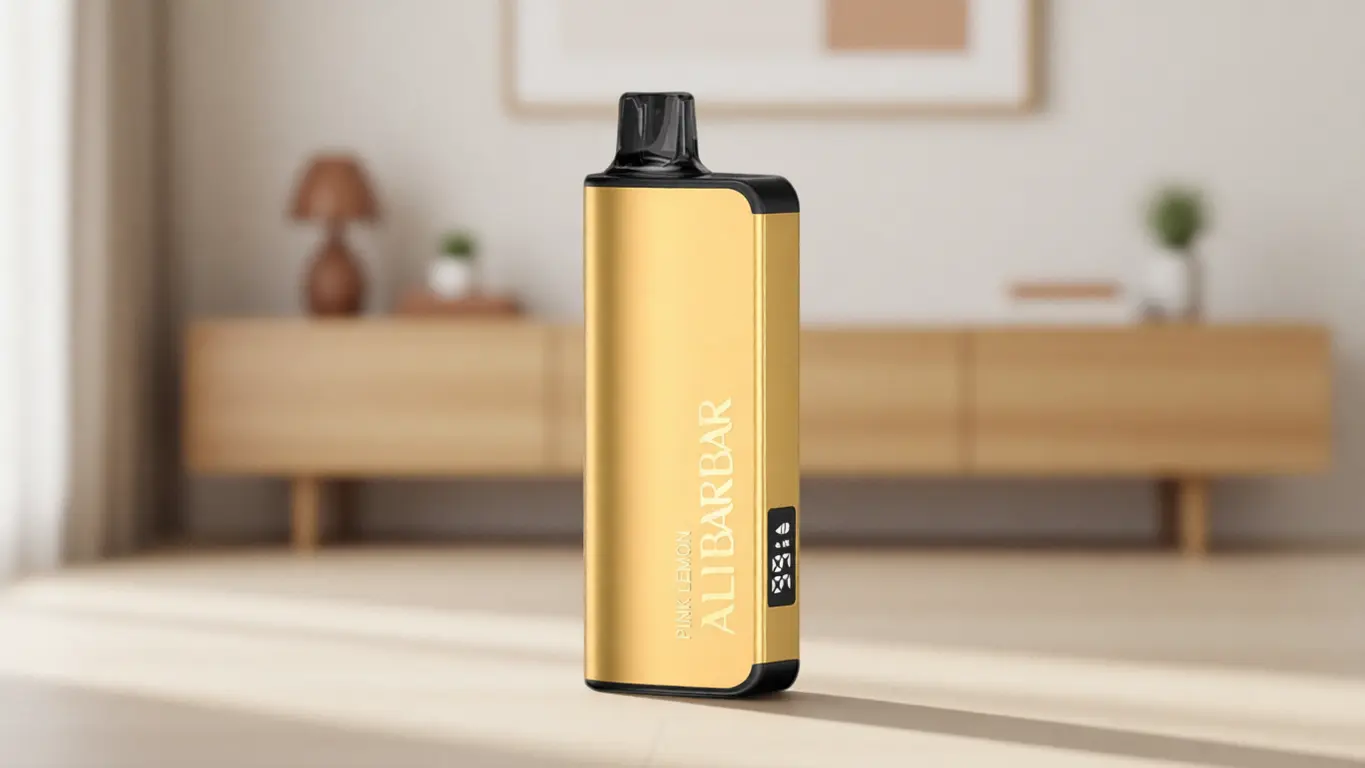
However, excessive or persistent popping — especially when accompanied by hot droplets reaching the mouthpiece — often points to one of two conditions: oversaturation from a flooded coil chamber, or a heating element that is not reaching consistent temperature quickly enough. Design choices at the manufacturing level sharply influence this behavior. Devices with precision-machined coil housings and tightly controlled wick densities, such as those found in the ALIBARBAR INGOT series, tend to produce a brief, controlled crackle that subsides into a steady sizzle, whereas poorly toleranced units may pop uncontrollably throughout the draw. The difference lies in how evenly the e-liquid is delivered across the heating surface.
Power Delivery and Coil Response: The Hiss and Sizzle
A steady, low-amplitude hissing sound is the acoustic signature of continuous vaporization. It occurs as e-liquid is converted to gas across the heated surface, creating a turbulent boundary layer of vapor that interacts with the incoming air. This sound is directly tied to the electrical power curve applied to the coil. Devices with stable power regulation produce a uniform hiss that remains consistent from the beginning to the end of a puff. Fluctuations in pitch or volume often indicate that power delivery is not maintaining its set point — either due to battery voltage sag under load or because the controlling circuitry lacks responsive feedback.
In practice, this means that the sound of a well-engineered device acts as an informal diagnostic tool. If a user notices that a once-quiet hiss has become harsher or more irregular over days of use, it is frequently a sign that the coil resistance has drifted due to accumulated residue, or that the power management system is compensating in ways that affect output. A device that maintains its acoustic consistency across its entire rated operational life, like the high-capacity ALIBARBAR INGOT 15000, is demonstrating disciplined power regulation rather than simply luck.
Airflow Path and Turbulence: The Whistle and Whoosh
The pitch of the airflow sound is determined by the geometry of the intake channels, the shape of the mouthpiece, and the velocity of air moving through them. Users frequently encounter an audible whistle — a result of air passing over a sharp edge or through a constriction that creates periodic vortex shedding. This phenomenon is not inherently a fault; it is an engineering trade-off. Achieving a quiet, laminar flow requires careful radiused edges, gradual air-path transitions, and optimized chimney diameters, all of which add complexity to injection molding and assembly.
When a device produces a whooshing sound without prominent whistling, it generally indicates that the designer prioritized noise reduction through aerodynamic smoothing. In adjustable-airflow models, such as the ALIBARBAR Ice Adjust 12000, the user can tune the draw resistance and, consequently, the acoustic character. A restricted setting will generate higher-frequency noise, while an open setting drops the pitch. The ability to minimize turbulence across the adjustment range is a meaningful indicator of manufacturing refinement.
Structural Integrity and Loose Components: Rattling and Buzzing
A rattle that occurs independently of activation almost always signals a mechanical issue: a loose magnet in the pod connection, a battery that is not securely seated, or an exterior panel that fits poorly. Because vaporizing devices are carried in pockets and bags alongside keys, coins, and other hard objects, they are subject to constant micro-impacts. Over time, weak snap-fit assemblies or poorly bonded joints can begin to vibrate audibly during normal handling.
This category of noise is almost entirely absent in devices built with unibody or tightly tolerance-controlled enclosures. For example, the ALIBARBAR INGOT form factor uses a chassis that minimizes separate attached parts, reducing potential vibration points. In contrast, devices assembled from multiple clip-on panels may develop an audible buzz after a few months of daily carry. Evaluating a device’s solidity before purchase — how it feels when lightly tapped, whether anything shifts — is a practical step that correlates directly with long-term acoustic stability.
Applying Sound Diagnostics to Real-World Devices
The acoustic principles above translate differently across device categories, and recognizing those differences helps set realistic expectations.
Compact, sealed disposable units typically prioritize a straightforward user experience and minimal acoustic complexity. A well-executed disposable will produce a clean, steady hiss with only occasional soft crackling on the first draw after a rest period. The ALIBARBAR INGOT 9000, for instance, is engineered to deliver a consistent sound profile that remains stable because the coil assembly is permanently fixed and the wicking material is precisely specified. Any sudden loud popping or a change in pitch after the device is partially depleted should prompt the user to consider whether the unit has been exposed to temperature extremes that may have altered e-liquid viscosity.
Rechargeable systems with adjustable airflow, like the Ice Adjust 12000, offer variable sound signatures that are under user control. The key diagnostic here is repeatability: when returning to a previously preferred airflow setting, the sound should match what was heard before. A change suggests that the coil is beginning to accumulate residue or that the airflow path has become partially obstructed.
Users who migrate between product families — moving from a disposable to a modular pod system, for example — sometimes misinterpret the increased acoustic feedback of a higher-powered device as a defect. The louder hiss of a sub-ohm coil operating at higher wattage is appropriate for that configuration. The danger lies in assuming that because a device is quiet, it is superior; an unusally muted device may indicate that the coil is not reaching vaporization temperature, resulting in reduced output despite the apparent refinement.
A Practical Framework for Evaluating Device Sounds
Use the following sequence when first activating a device and periodically throughout its life. No special equipment is needed, only attention to pattern.
Establish a Baseline
Take three slow, steady draws in a quiet environment. Note the dominant sound: hiss, crackle, whistle, or silence. Pay attention to any difference between the first and third draw. A change suggests wick recovery time or thermal inertia effects.
Check for Amplitude Consistency
Listen specifically at the beginning and end of each puff. A device that produces a sharper sound at puff onset but quickly stabilizes is likely managing a small liquid reservoir that temporarily floods after resting. If the sound intensifies toward the end of a puff, the wick may be struggling to resupply e-liquid at the required rate.
Test Across Airflow Settings (if adjustable)
Cycle through the full airflow range. Identify positions that produce abrupt changes in pitch — these indicate airflow bypasses or internal gaps that might not be intended. A smooth pitch gradient across the range is a sign of a well-designed air path.
Listen When Idle
After setting the device down, tap it gently against a soft surface. Any rattle unrelated to activation points to a mechanical issue that will not self-correct.
Respond to a New Sound
If a previously stable device suddenly produces a new noise, clean any accessible contacts, let the device rest upright to drain excess e-liquid away from the coil, and retest. If the sound persists and is accompanied by a drop in output or an unpleasant taste, the coil assembly has likely reached the end of its effective life. In sealed units, the entire device should be retired.
Common Misconceptions and Industry Observations
The gap between how users interpret device sounds and what those sounds actually indicate is widened by several recurring errors.
Overweighting Crackling as a Defect
Many users equate any popping with a fault, when modest crackling is simply evidence of active vaporization near the coil surface. The real concern is not the presence of sound but its character: a sharp, isolated pop versus a continuous, wet gurgle that suggests the coil chamber is flooded. Designers in the industry often face pressure to eliminate all audible feedback, which can lead to over-damping the airflow and sacrificing performance for silence.
Ignoring a Shift in Pitch Over Time
A device that begins to produce a higher-frequency hiss as it ages is not just getting louder; it is frequently running hotter due to coil buildup, which insulates the wire and forces it to reach a higher surface temperature to vaporize e-liquid at the same rate. This thermal escalation can degrade the e-liquid and alter the experience long before the device stops functioning.
Assuming Acoustic Similarity Equals Engineering Similarity
Two devices that produce a similar hissing sound may have done nothing comparable in their internal architecture. One might achieve it through careful airflow channel design and consistent coil spacing; the other might simply be operating at a lower power level that masks its inconsistencies. The quietness of a device is not, by itself, a reliable metric of quality.
Confusing Category Norms with Individual Device Behavior
Different form factors have distinct acoustic envelopes. A high-capacity disposable will never sound like a direct-lung rebuildable atomizer, and comparing them as though they should is a category error. Understanding what is normal for the specific device class is the first step toward useful diagnosis.
From an industry perspective, acoustic consistency across mass-produced units remains one of the most difficult quality-control targets. Micron-level variations in coil winding, wick density, and seal compression all affect the sound. The fact that certain device families — including those regularly stocked by OZVAPE Shop — demonstrate repeatable acoustic signatures across large production batches is evidence of tight manufacturing controls that extend beyond what is visible in a product photo.
Frequently Asked Questions
Q: Is it normal for my device to make a popping sound on the first draw after I haven’t used it for a while?
A: Yes. E-liquid can settle around the coil during idle periods, and the initial heat application causes rapid boiling on the surface. This should subside after one or two draws. If it continues, the wick may be oversaturated.
Q: What does a gurgling sound indicate, and how can I resolve it?
A: Gurgling suggests excess liquid in the airflow chimney. Try holding the device with the mouthpiece pointed downward and flicking it gently to expel any pooled e-liquid. If the gurgling returns immediately, the coil is likely flooding due to a wicking defect or overly thin e-liquid viscosity.
Q: Should I be concerned if my device makes a high-pitched whistling noise?
A: Not inherently. Whistling is an aerodynamic effect caused by air moving over an edge or through a constriction. It does not affect safety. If the whistle is irritating, it can often be reduced by slightly altering the airflow setting or by adjusting how firmly you place your lips on the mouthpiece. If the device has no adjustable airflow, the whistle is simply a feature of that model’s internal geometry.
Q: My device suddenly sounds much quieter than before. Is something wrong?
A: A sudden drop in volume often correlates with a blocked airflow path or a coil that is not heating properly. Check for debris in the mouthpiece or intake. If the airflow is clear but output feels diminished, the coil may be failing to reach temperature, which requires replacement in a modular system or device retirement in a sealed unit.
Q: Can the sound of a device tell me when the coil needs changing or the device is depleted?
A: Yes. A change from a steady hiss to a raspy, irregular sound often indicates coil degradation. In disposable devices, a persistent burnt or acrid sound — even if output continues — means the wicking material is scorched and the device should be replaced.
Q: Why does my device sound different when I use it outside versus indoors?
A: Temperature affects e-liquid viscosity. Cold e-liquid is thicker and vaporizes less readily, which can result in a quieter draw with fewer pops. Hot conditions thin the liquid, potentially increasing gurgling and popping. These changes are normal and typically reverse once the device returns to room temperature.
Q: Is a completely silent device better engineered than one that makes some noise?
A: Not necessarily. Some of the quietest devices achieve silence by restricting airflow so heavily that vapor production suffers. A moderate, steady hiss is a sign that vaporization is occurring efficiently. The goal should be a consistent acoustic signature, not silence.
Q: Do devices from different brands have characteristic sounds, or are they all essentially the same?
A: Different brands and model families can have distinct acoustic fingerprints based on coil design, airflow architecture, and power management. For example, the ALIBARBAR INGOT line tends to produce a subdued, consistent sizzle, while other devices with more open airflow designs produce a louder, breathier sound. These differences are the result of intentional engineering choices.
Q: My device makes a buzzing noise when I press the button. Is it unsafe?
A: A buzzing sound during activation could indicate the power regulation circuitry operating at an audible frequency. While not necessarily harmful, it is unusual in modern devices. If the buzzing is loud or accompanied by heat, discontinue use and contact the retailer for guidance. Devices with no manual button (draw-activated) should not produce any buzzing.
Q: How can I be sure the sound my device makes is not a sign of a counterfeit or defective product?
A: Purchase from retailers that source directly from authorized distributors. Genuine products that have passed quality control, such as those verified through OZVAPE Shop, are far less likely to produce alarming mechanical noises or exhibit acoustic inconsistency. If a device sounds dramatically different from an identical model you’ve used before, the unit may be from an unvetted batch.
Conclusion
The sounds a personal electronic device makes are not a nuisance to be tolerated; they are a continuous, real-time report on the state of its internal processes. Learning to interpret that report shifts the user from passive consumer to informed monitor, capable of anticipating when a device needs attention and distinguishing between a genuine fault and a harmless acoustic byproduct of normal operation.
Engineering teams that take acoustics seriously do not advertise it, but their work is audible. They control crackling through coil geometry and wick material selection. They shape airflow to suppress whistles without sacrificing draw comfort. And they select power management components that deliver a consistent electrical voice across the entire life of the device. When you encounter products that demonstrate this care — and you can find a comprehensive selection of such equipment through OZVAPE Shop — you are holding a device that has been refined beyond the checklist of features visible on a specification sheet.
Ultimately, the right device for you is not the one that makes no sound at all, nor the one that sounds most dramatic. It is the one whose acoustic signature remains predictable, matches your personal tolerance, and aligns with the way you actually use it, day after day. Pay attention to that sound; it is telling you something worth hearing.