VAPE FAQs
What Do Vape Do?
Jul
It’s a question that arrives with genuine curiosity, often from people who have seen the devices in daily life but never had the mechanics explained in plain language. A small portable unit, a gentle light, a visible puff — and yet, behind that simple exterior is a carefully calibrated system of heating, power management, and material science. Understanding what a vape actually does, beyond the visible mist, is the first step toward evaluating any device on its own engineering merits, rather than on its marketing claims.
At OZVAPE Shop, we OZVAPE Shop have catalogued a wide range of these devices, and we’ve observed that the most satisfied users are those who grasp the fundamentals before they compare specifications. This article is a technical and practical explanation of what vapes do, how they differ internally, and why those differences shape your daily experience — from first activation to the last consistent output of a long cycle.
Understanding What Matters: Core Engineering and Design Factors
No two vape devices are identical, even when they share a similar silhouette. The real explanation of what a vape does lies in its architecture, not its paint job. Here’s a structured framework to interpret any device you encounter.
Internal Architecture and Output Consistency
At its core, a vape is a thermal delivery system. A heating element — typically a mesh or coil — draws power from a cell to heat a reservoir medium, producing an aerosol. The composition of that element, the precision of its temperature management, and the uniformity of the medium’s saturation all determine whether the 50th activation tastes and feels like the 5th.
Users often report that devices degrade noticeably after a certain point. This is rarely a failure of capacity; it’s usually a failure of thermal regulation. In well‑engineered units, the heating architecture maintains stable temperature across the discharge curve. In cheaper designs, the temperature drifts, scorching the medium or leaving it under‑volatilised. When you’re evaluating what a vape does, ask whether the heat source can self‑correct, not just whether it can heat up.
Power Management and Status Transparency
Every portable device is a compromise between energy density and operational simplicity. A vape with a sophisticated power management IC will drain its cell evenly, protect against deep discharge, and prevent the cell from sagging under load. That’s not glamorous, but it’s the difference between a device that stops without warning and one that gives you clear, progressive feedback.
Status transparency is the user‑facing side of this coin. A device whose only feedback is a blinking light at the moment of failure tells you nothing useful. Better designs use graduated indicators — multiple LEDs, haptic pulses, or even simple digital displays — so you know when you have a quarter of your operational life remaining, not just when you have zero. The practical benefit: you don’t need to carry a backup “just in case.”
Physical Design and Material Durability
External finish isn’t just aesthetics. The texture of a device’s body, the radius of its edges, and the closure mechanism for its mouthpiece all influence pocketability and comfort during prolonged use. A matte, soft‑touch surface may feel pleasant on day one but can show wear within a week. Anodised metals or certain polycarbonate blends sacrificially protect visual appearance far longer.
Mouthpiece contour matters more than users expect. A narrow, straight mouthpiece concentrates aerosol and can feel harsh; a wider, curved profile blends air and produces a cooler, more even sensation. All these physical factors contribute to what a vape does for you across an entire day, not just in a five‑minute trial.
Modularity and Lifecycle Flexibility
What a vape does is also a function of how long it can keep doing it. Some devices are permanently sealed; when the reservoir is depleted or the cell reaches end‑of‑life, the entire unit is retired. Others accept replaceable components — pods, cartridges, or even user‑rechargeable cells — extending the device’s useful life and shifting the cost model from a commodity purchase to a platform investment.
Modularity doesn’t just reduce waste; it lets you adapt. You can keep one core power unit and select different reservoirs for various situations. If you’re assessing what a vape does for your routine, ask whether the design locks you into a single configuration or evolves with your preferences.
Applying These Criteria to Real‑World Options
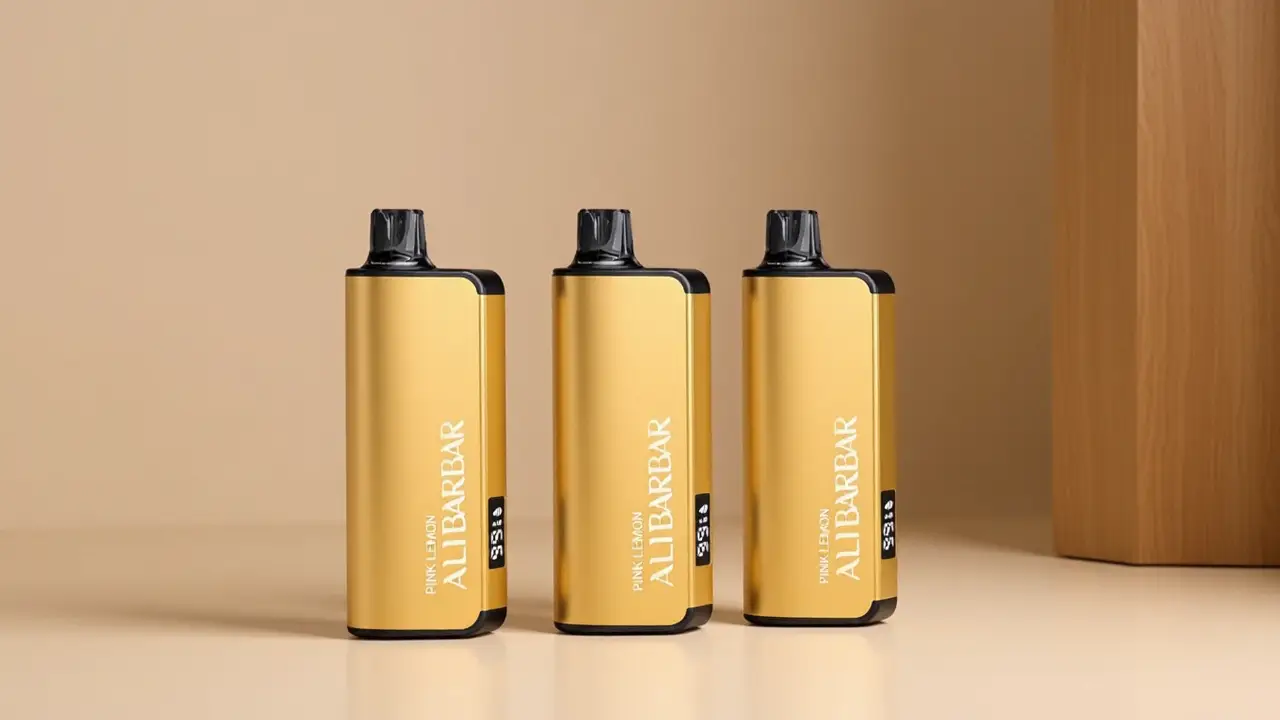
The ALIBARBAR device family illustrates how these principles manifest in products built for different need‑states. Each series takes a clear architectural position, and understanding that position helps you connect what the device does to what you actually require.
Consider a user who prioritises reliability above all else: a sealed, pre‑configured unit that eliminates user‑serviceable parts and delivers consistent output for its entire rated life. The ALIBARBAR INGOT 9000, for instance, pairs a calibrated mesh heating system with a transparent power indicator — a strip of LEDs that progressively dims as remaining life decreases, answering the “how much is left?” question without guesswork. That’s a direct engineering response to the frustration of surprise shutdowns.
For someone who needs a longer duration, the INGOT 15000 extends that architecture, using a higher‑capacity cell and a larger reservoir, while retaining the same thermal management discipline. The design doesn’t just increase capacity; it accounts for the behavioural reality that a device lasting multiple days is more likely to be carried, pocketed, and subjected to temperature variations. Accordingly, its outer finish and mouthpiece materials are chosen for sustained tactility, not just initial appeal.
Then there’s the Ice Adjust 12000, which adds a user‑controlled airflow mechanism. This addresses what vapes do on the sensory level: the difference between a tight, warm draw and an open, cooler one isn’t trivial — it’s central to satisfaction. By integrating a mechanical adjustment ring, the device allows the user to tune the draw resistance without switching cartridges, a feature that acknowledges that preferences are personal and can change throughout the day.
Other device families in the broader market take different approaches — some focus on ultra‑compact disposability, others on maximal customisation through replaceable atomisers and variable wattage. Each has trade‑offs. A miniature sealed device sacrifices duration for concealability. A fully adjustable system demands more user knowledge and maintenance. The key is to match what a vape does to your real routine, not to an imagined ideal.
A Practical Framework for Evaluation
When you encounter a new device, whether you’re reading specifications online or holding it in a shop, run through this diagnostic sequence:
Thermal stability: Does the manufacturer describe the heating element’s composition and temperature control? If not, assume the output will shift as the cell drains.
Status feedback: Can you gauge remaining life at a glance? If the only indication is a dead‑stop blink, you will inevitably carry a backup — and that’s a sign the device hasn’t fully solved your problem.
Physical integrity: Rub a fingernail over the surface. Does it feel like it will retain its finish after a week in your pocket with keys and coins? Would the mouthpiece remain comfortable during a long evening?
Lifecycle fit: Is it sealed, rechargeable, or modular? Sealed units promise simplicity; modular systems offer long‑term economy. Neither is “better” — but one matches your behaviour.
Documented specifications: Compare the rated puffs, cell capacity, and reservoir volume against others in its class. Standardised specification sheets — like those provided by OZVAPE Shop for the ALIBARBAR range — turn this from guesswork into a straightforward checklist.
Common Selection Errors and Industry Observations
People undermine their own satisfaction in predictable ways. Here are four errors we see repeatedly, gathered from support conversations and industry observation.
1. Overweighting a single number. A device marketed as “15000 puffs” sounds superior to one rated at “9000 puffs,” but if the 15000 unit has poor thermal management, the last 5000 activations may deliver weak, unsatisfying output. What a vape does isn’t captured by a single headline figure; consistency matters as much as volume.
2. Assuming visual similarity equals internal equivalence. Two devices with the same form factor and colour palette can have completely different heating elements, power chips, and quality‑control standards. The external resemblance is often a manufacturing coincidence, not a signal of shared engineering. Always verify sourcing.
3. Underestimating the cost of status opacity. A device without clear feedback forces you to carry a backup, effectively doubling your purchase cost per outing. That’s a design tax paid by you, not by the manufacturer.
4. Confusing category labels with technical specifications. Terms like “mesh coil” or “adjustable airflow” are thrown around loosely. A true mesh element has a broad, uniform heating surface; a cheap imitation may simply be a wire shaped into a grid. Ask for specifics: What is the coil material? What is the resistance range? If the information isn’t provided, the feature may be more marketing than engineering.
From an industry perspective, the move toward lifecycle‑conscious design is unmistakable. Manufacturers are slowly recognising that users resent the disposability of sealed units when they still have value left in the cell or the chassis. Devices that allow simple recharging or component swapping, even in a “closed” system, are gaining ground because they align economic incentives with user satisfaction. It’s a slow shift, but the companies paying attention are the ones building loyalty.
Frequently Asked Questions
Q: What does a vape actually produce when it activates?
A: It produces an aerosol — a suspension of fine particles in a gas — created when the heating element warms a liquid medium to its boiling point. This is not steam; it’s a dense mist of vapourised compounds that re‑condense rapidly in the air.
Q: Do all vapes work the same way?
A: The basic thermodynamic principle is universal, but the engineering varies widely. The heating element type, power delivery, airflow design, and medium composition all affect output temperature, density, and consistency.
Q: Why do some vapes lose flavour or hit halfway through their rated life?
A: Usually because the heating element’s temperature fluctuates as the cell voltage drops, or because the wicking system fails to keep the element saturated. This is a sign of inadequate thermal regulation.
Q: How can I tell if a vape has good power management?
A: Look for graduated battery indicators, low‑voltage cut‑off protection, and consistent output across the charge range. If the manufacturer doesn’t mention voltage regulation, it’s probably minimalist.
Q: Are devices with replaceable pods better than sealed ones?
A: They serve different needs. A replaceable‑pod system extends the life of the power unit and reduces waste, but introduces a tiny maintenance step. A sealed unit is simpler but must be discarded entirely when depleted. Choose based on whether you prefer minimal interaction or long‑term economy.
Q: What should I do if a device I purchased doesn’t perform as advertised?
A: Document the shortfall (e.g., it stopped after a fraction of the stated puffs). Contact the retailer. Reputable sellers, like OZVAPE Shop, maintain records of factory‑certified inventory and can verify whether the unit matched specifications. If it didn’t, they typically arrange a resolution.
Q: How can I be sure I’m buying an authentic device, not a copy?
A: Purchase through authorised channels that source directly from factory‑certified distributors. Look for verification codes where available. Retailers that publish standardised specifications and maintain transparent supply chains reduce the risk significantly.
Q: Do I need a device with adjustable airflow?
A: Not universally, but it’s valuable if you find some draws too loose and others too tight. Adjustability lets you tune the draw resistance to your comfort, which affects how the aerosol feels and how much you take in with each activation.
Q: What’s the difference between a mesh coil and a traditional coil?
A: A mesh coil uses a flat, grid‑like heating surface that distributes heat more evenly and wicks more effectively, leading to consistent aerosol production. Traditional round‑wire coils can create hot spots and may require more power to reach the same output.
Q: Can I travel with these devices?
A: Yes, but you must comply with airline regulations regarding lithium cells and portable electronics. Always check current rules, carry devices in carry‑on luggage, and ensure they are off or locked to prevent accidental activation.
Conclusion
What a vape does, stripped of marketing language, is convert stored energy into a controllable, predictable aerosol via a disciplined thermal process. The quality of that conversion — how stable it remains, how transparently it reports the energy remaining, how comfortably it fits into a living breathing day — is what separates a device that serves you from one that surprises you in the worst ways.
The engineering principles outlined here are not exclusive to any single brand. They apply across the landscape. But they are visible with unusual clarity in a series like ALIBARBAR, where the design decisions map directly onto the frustrations users report most often. Having a channel that documents these specifications in a standardised, comparable format reduces the evaluation burden considerably.
At OZVAPE Shop, we’ve seen that informed users make better decisions and experience fewer disappointments. Whether you choose a compact single‑use unit, a high‑duration workhorse, or a device that lets you fine‑tune every draw, what matters is that the device fits your actual routine — not the routine someone else imagined for you.
Your next step is simple: take the framework from this article, look at whatever device you’re considering, and ask the hard questions. If the answers are clear, documented, and supported by a transparent supply chain, you’ve found something worth your attention. The right choice isn’t the one with the most attention‑grabbing claims; it’s the one that does precisely what you need, day after day, without demanding anything extra in return.