
VAPE FAQs
Is Vape Smell Noticeable?
Jun
She hadn’t been seated for five minutes when her friend leaned over, voice low. “Is that… vanilla? Are you using one of those things in here?” Clara froze. She had been careful — two quick draws on a slim, palm-sized device, held low, exhaled toward her lap. Yet the unmistakable trace of warm custard hung between them, subtle but undeniable. The question wasn’t hostile; it was curious. And it exposed a quiet worry that many adults who rely on portable electronic devices carry every day: just how noticeable is the smell, really?
That question doesn’t have a simple yes-or-no answer. Noticeability is a function of engineering choices, room conditions, and the simple physics of aerosol dispersion. For anyone who values discretion — whether in a shared office, a rented apartment, or a family home — understanding these variables is the difference between feeling in control and constantly scanning the air for signs of detection. At OZVAPE Shop, we sell devices to adults who ask pointed questions about exactly this topic, and we believe that an honest, technically grounded explanation serves them better than any vague reassurance. This article walks through the factors that determine if, when, and how strongly a portable electronic device’s output is perceived by others, and what you can do to make informed choices.
Understanding What Matters: The Science and Variables Behind Vapor Aroma
The smell associated with vaping does not come from a single source; it is a byproduct of the liquid’s chemistry, the device’s thermal characteristics, and the environment where it is used. To evaluate noticeability, you need a framework that addresses each layer independently. The following factors are the ones that field observations and user reports consistently identify as decisive.
The Chemical Foundation: E-liquid Composition and Stability
Most portable devices use a liquid composed primarily of vegetable glycerin, propylene glycol, food-grade flavour compounds, and — in many cases — a stimulant component. The aroma you perceive is dominated by the volatile organic molecules within the flavouring. Some of these, particularly esters and aldehydes, are remarkably potent even at concentrations below 1%. They are designed to be perceived by the human nose at minuscule levels.
Fresh liquid held in a well-sealed reservoir under consistent temperature conditions retains its intended aromatic profile. But if the reservoir degrades, if the liquid is exposed to air or excessive heat, or if the formulation itself is poorly stabilised, the volatile fraction can change. Oxidised or heat-degraded flavour compounds often produce a sharper, less pleasant scent that people notice more readily — and attribute to “stale vape smell.” Choosing a device with an airtight storage system and a track record of delivering liquid at the rate it was formulated for matters immensely here.
Device Architecture: Temperature Control and Vapor Volume
The most underappreciated variable in aroma projection is thermal accuracy. Inside every device, a heating element brings the liquid to its vaporisation temperature. If that temperature is too low, the user gets a thin, unconvincing output. If it’s too high, large molecules break apart unpredictably, and the aerosol can carry burnt or acrid notes that cling to fabrics and draw attention.
Well-engineered devices maintain a narrow, stable temperature band through careful calibration of coil resistance, power output, and airflow. That consistency doesn’t just improve the experience — it directly affects how the plume behaves. A denser, warmer aerosol will carry aromatic compounds further and hang in still air longer. A cooler, finer aerosol dissipates more quickly. So the noticeability of the smell is partly a design choice, baked into the product’s heating kinetics.
Power Management and Consistency: Why Fluctuations Amplify Odor
A device that cannot deliver a steady power draw over its operational life introduces a second, subtler problem. As the internal cell voltage sags — or as low-quality power regulation lets the output spike — the user experiences inconsistent vaporisation. One moment the output is mild; the next, it’s briefly overheated. Those overheated moments, even if barely perceptible in sensation, can produce volatile compounds with a much stronger, more lingering odour than the base recipe would predict. It’s a classic case where a cheap voltage regulator becomes a direct contributor to unintended olfactory presence.
Users who report that a device “smelt fine for a few days and then started reeking” are often describing power-management fatigue, not a problem with the liquid itself.
Physical Design and Leak-Proof Integrity: Containing the Source
Even microscopic leaks matter for smell. When liquid seeps past seals and sits in the body of a device, it gradually evaporates into the surrounding air. Even if the device is idle, it can emit a low-level scent that accumulates in a pocket, bag, or room. Devices with snap-fit plastic seams and minimal sealing are particularly prone to this slow-burn olfactory footprint.
Mouthpiece design matters too. A wide-bore, open airway can allow more residual aerosol to condense near the exit, leading to a faint persistent odour on the device exterior. A contoured, precisely machined tip with anti-condensation baffles reduces this wicking effect and keeps the scent signature tighter.
Applying These Principles: Comparing Device Categories and Real-World Behavior
When adults approach OZVAPE Shop looking for a device that won’t announce itself unnecessarily, we walk them through how different architecture families perform against these criteria. It’s not a matter of good versus bad — it’s a matter of what trade-offs you accept.
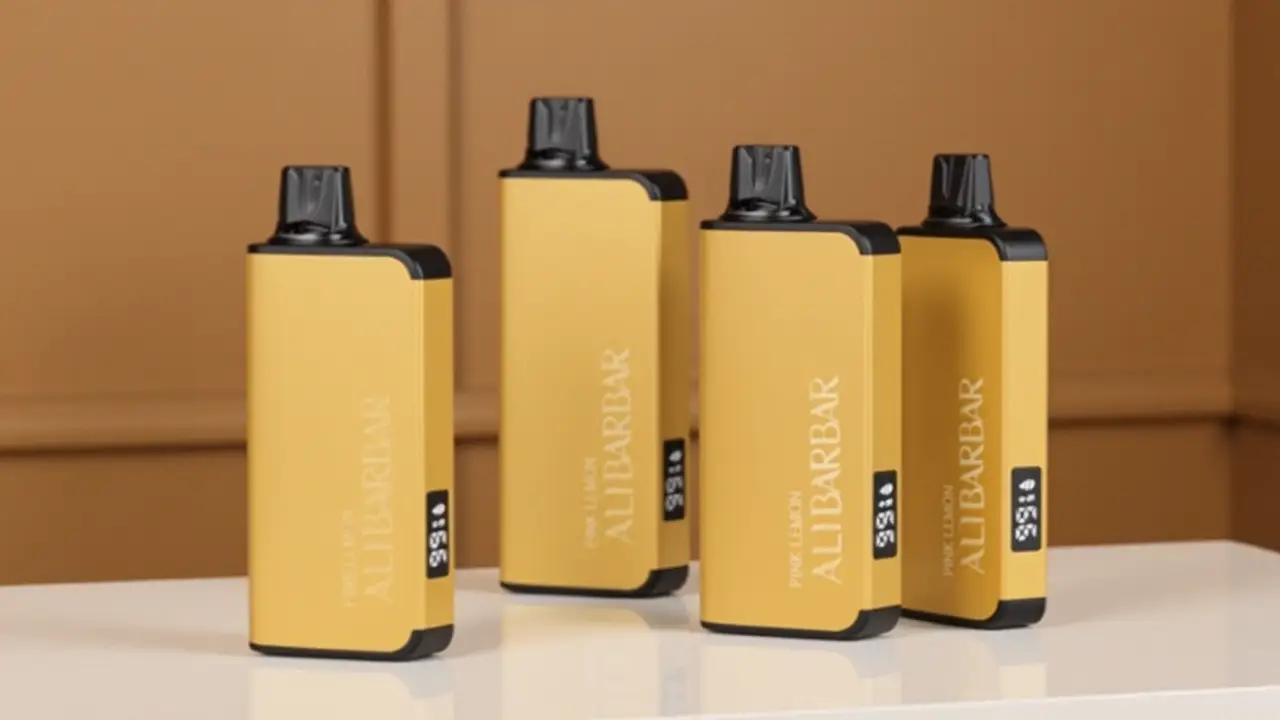
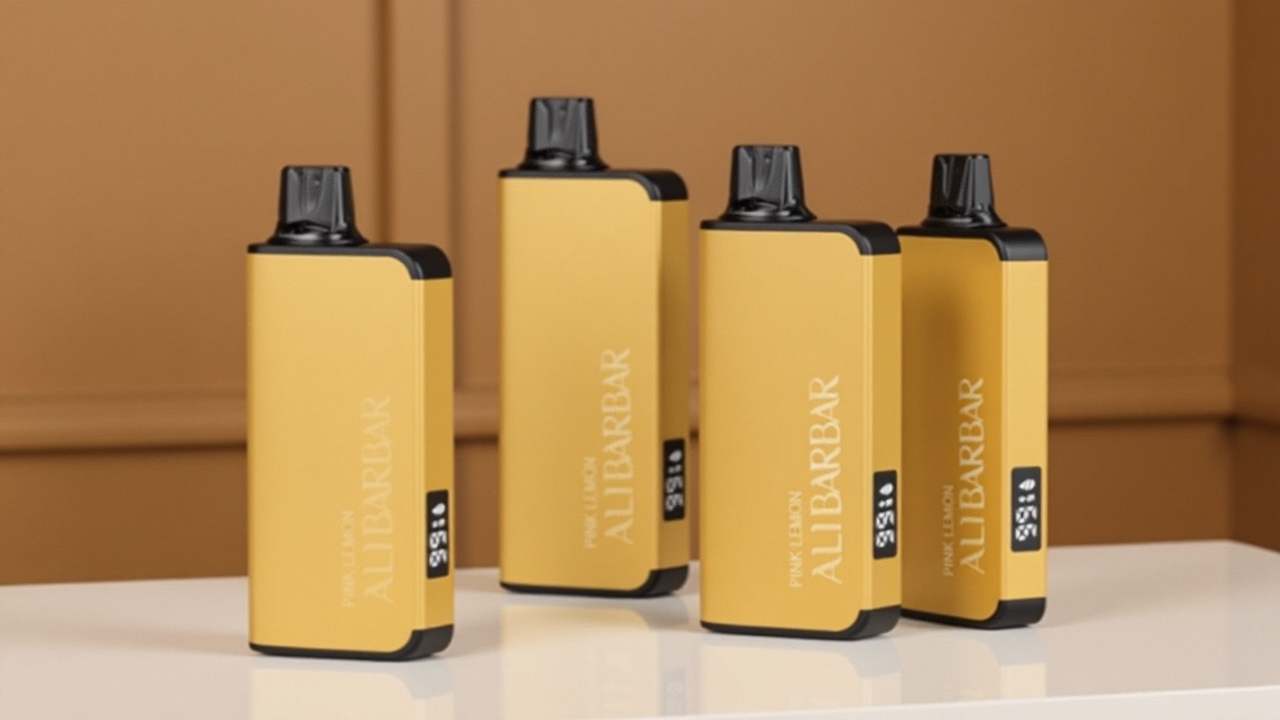
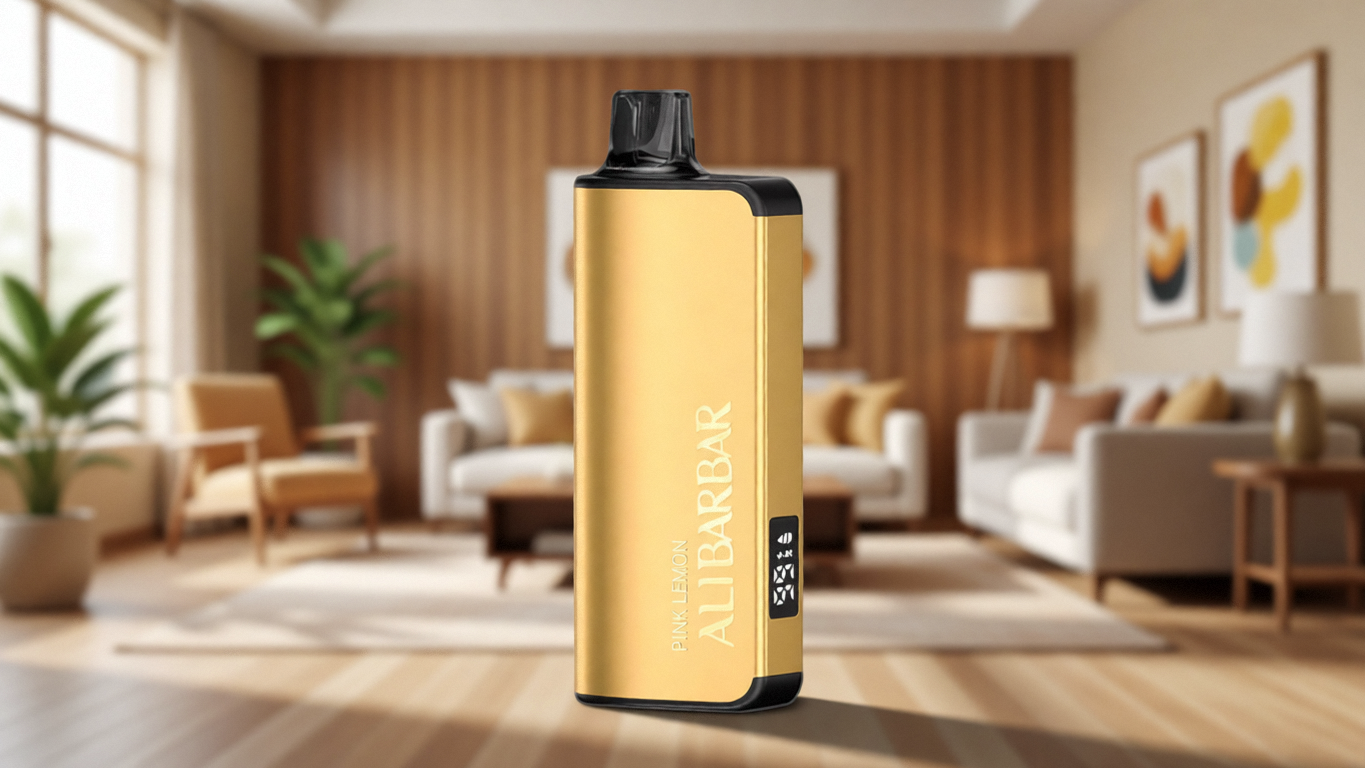
The ALIBARBAR range, which OZVAPE Shop carries exclusively through authorised distribution, illustrates a tightly controlled approach. Devices in the INGOT 9000 and 15000 series use sealed, high-capacity reservoirs that minimise oxidation and air exchange. Their heating elements are calibrated to a consistent wattage floor, and the power-management firmware reports status honestly — so the user isn’t caught off guard by a failing cell that produces erratic, smelly spikes. The Ice Adjust 12000 line adds an airflow adjustment mechanism that lets you reduce vapour volume without burning the liquid, directly lowering the aroma projection when near other people. In practical terms, that means a user can leave a room, and within minutes the scent is no longer discernible to someone entering fresh.
By contrast, many older-generation open-pod systems rely on user-filled tanks that invite spillage, inconsistent wicking, and variable power settings. Under these conditions, the same e-liquid can produce dramatically different olfactory profiles depending on how full the tank is, when the coil was last changed, and whether the user remembered to lock the wattage. A device from a major brand like Vaporesso or Uwell, with a well-tuned chipset and a tight-fitting pod, can perform admirably, but the sheer number of user-adjustable variables introduces risk. One misstep — a dry hit at 20W too high — and the room can carry the memory for an hour.
Closed-system, factory-sealed devices remove that uncertainty. They sacrifice some flexibility but gain reliability, which is why so many adults who prioritise discretion gravitate towards them. The ALIBARBAR design philosophy is explicitly rooted in removing the small irritations that erode satisfaction, and odour unpredictability is absolutely one of those irritations.
A Practical Framework for Evaluating Smell Output
You don’t need a laboratory to assess how a device will perform in real life. Here is a diagnostic sequence you can apply, whether you’re examining a specification sheet or holding a product bought from a verified source.
Ask about temperature regulation. Does the device specify a constant-output architecture, or is it an unregulated direct-voltage unit? If the latter, expect wider swings in aroma character as the battery drains.
Inspect the airflow path. Can you see clear condensation traps? Is the mouthpiece removable and cleanable? Residual liquid in the airway is a persistent, low-level fragrance emitter.
Evaluate the fill-and-seal mechanism. For pre-filled or refillable systems, check for silicone bungs, o-rings, and friction-fit tolerances. Any sign of weeping around the seam is a warning.
Test in a small, still-air space. A bathroom with no fan is a useful test environment. After using the device normally, leave for three minutes and re-enter. If the scent is immediately detectable, the aroma is aggressive.
Run a power-drop-off simulation. If possible, use the device until the battery indicator shows one bar, then assess the smell. If it’s noticeably harsher than at full charge, the power-management system is the culprit.
This isn’t abstract theory. It’s the kind of structured thinking that OZVAPE Shop encourages customers to apply because it puts the evaluation back in the user’s hands, where it belongs.
Common Misconceptions and Industry Observations About Vapor Odor
Over years of fielding questions and observing how people use portable electronic devices, a few patterns stand out. These errors aren’t failures of character; they’re failures of the information ecosystem, which often oversimplifies or avoids the topic entirely.
Oversimplifying to “it smells like what it tastes like.” That’s only partially true. Many volatile aroma compounds are perceptible at much lower thresholds than the taste counterparts. A liquid that tastes very mild can leave a surprisingly persistent scent note, especially in a warm, closed environment. The correlation breaks down quickly at low concentrations.
Assuming all devices in the same category perform identically. Two disposable-looking units may share similar external dimensions but have fundamentally different internal architectures. One might use a cotton-wicked kanthal coil driven by a cheap MOSFET; the other might employ a mesh element with temperature compensation. The visual similarity masks enormous variation in aroma output. This is why simple brand name recognition isn’t enough — you need to understand the build.
Ignoring maintenance and end-of-life behaviour. Even sealed devices have a finite lifespan, and in their final hours, they can produce off-notes if the wicking material starts to char. Users who push a device to its absolute last puff are often the ones complaining that “it suddenly stank.” A manufacturer that clearly communicates the rated operational life (as ALIBARBAR does for its INGOT series) gives the user a decision point before degradation sets in.
From an industry standpoint, the move toward higher-capacity, factory-sealed devices represents a direct response to the smell problem. When a user could chain-smoke cigarettes and leave a residual stench on clothing for days, the bar was low. But the portable electronic device market now competes on discretion, and manufacturers that fail to address odour engineering will lose the trust of the demographic that cares most — the ones who use their devices around others.
Frequently Asked Questions
Q: How long does the smell typically linger in a ventilated room?
A: In a room with open windows and standard air exchange, most vapour aroma dissipates within 30–120 seconds. Heavier, warmer clouds generated by unregulated devices may take several minutes more.
Q: Does the odour stick to clothing like cigarette smoke?
A: It does not bond to cotton fibres in the same way as tar-rich smoke. However, repeated heavy use in a small, unventilated space can leave a faint scent that is detectable for a few hours, especially with certain custard or bakery flavourings.
Q: Can others smell it in a different room?
A: It is uncommon unless there is a shared ventilation system, a draft path under a door, or the device is producing an unusually high volume of aerosol. Low-volume, low-temperature devices are unlikely to be perceived beyond a personal bubble.
Q: Are there any design features that specifically reduce smell?
A: Yes. Devices with temperature clamping, effective condensation management, and sealed reservoirs tend to produce a narrower, faster-dissipating aroma profile. Airflow control that allows reduction of vapour volume without overheating is also valuable.
Q: Is the smell from a new device different from one that’s heavily used?
A: A fresh device with an uncontaminated heater typically produces a cleaner, truer aroma. As the element ages or the liquid oxidises slightly, some users notice a gradual shift toward a duller, sometimes faintly burnt character. That’s the signal to stop and replace.
Q: Do high-capacity devices smell more than smaller counterparts?
A: Not inherently. Capacity affects how long you can use the device before the taste (and associated smell) degrades. A well-regulated high-capacity unit can maintain a clean profile across its entire rated life, while a cheap low-capacity alternative may deteriorate after a few hours.
Q: Can you test noticeability without involving someone else?
A: The re-entry test described earlier works well. Alternatively, use the device in a car with the windows up, exit for two minutes, and then re-enter. If you can identify the scent, it qualifies as noticeable in that setting.
Q: Do more expensive devices guarantee less smell?
A: Price correlates with quality of power regulation and sealing, but it’s not a guarantee. You need to look at the specific engineering claims, not the price tag. A mid-range device with a documented constant-output driver can outperform a luxury unit that prioritises aesthetics over thermal management.
Q: What should I do if a device I bought has a strong, unpleasant odour from day one?
A: A brand-new unit with an off-putting chemical or burnt scent is likely defective, or its liquid has degraded through improper storage. Reputable retailers like OZVAPE Shop accept returns or exchanges for factory-sealed products that don’t perform to specification, provided the issue is reported promptly.
Conclusion
The question “is vape smell noticeable?” deserves the same answer as “is a candle noticeable?”: it depends entirely on the size of the flame, the composition of the wax, and the room you’re in. In the context of portable electronic devices, noticeability is neither a fixed property nor a sign of quality — it is the outcome of a design chain that begins with the liquid formulation and ends with the last power pulse before the cell quits.
Adults who choose devices with deliberate temperature control, honest power management, and leak-proof architecture find themselves worrying about this issue a lot less. That’s not a marketing claim; it’s an observable pattern that holds across countless usage scenarios. When sourcing such devices, dealing with a supplier that verifies authenticity, provides standardised specifications, and offers transparent post-purchase support is a significant advantage. OZVAPE Shop has built its reputation around those exact principles, connecting customers with the ALIBARBAR range and ensuring every unit matches its documentation.
Whether the faint trace of vanilla is a problem or a mere curiosity is ultimately your call to make. But you can make that call from a position of knowledge, not guesswork. The device that fits your life is the one that leaves you free to think about the conversation you’re having, not the scent you might be leaving behind.