
VAPE FAQs
Is Vape Illegal In Us?

Aug
Confusion surrounds the legal status of vaping in America. One news cycle declares a state ban; another reports that a federal agency has authorized a new product. Adult consumers are left wondering whether the device in their pocket is contraband, a regulated product, or something in between. The question is not academic: misunderstanding the law leads to interrupted routines, forfeited purchases, and the frustration of discovering that what appeared to be a straightforward transaction was, in fact, non‑compliant. Clarity matters, and few sources provide it without agenda, exaggeration, or sales pressure.
OZVAPE Shop exists to close that information gap. As a retailer that sources only factory‑certified inventory from authorized supply chains, we have a direct stake in ensuring that the adults we serve understand exactly where the legal boundaries sit — and where legitimate, regulated products fit within them. This article is not a legal opinion or a substitute for professional advice. It is a structured, factual reference that examines federal authority, the patchwork of state rules, and the practical implications for anyone trying to navigate the American market with confidence.
Federal Regulation: The FDA’s Authority Over Vaping Products
The starting point for any conversation about vaping legality in the United States is the Food and Drug Administration (FDA). Since 2016, the agency has held comprehensive regulatory power over all tobacco products, a category that Congress explicitly extended to include e‑cigarettes, vape pens, and their components. This is not a suggestion or a guideline; it is statutory authority granted by the Family Smoking Prevention and Tobacco Control Act, as amended. Understanding how the FDA exercises that authority is the only way to separate lawful products from those that exist in a gray zone — or that are being sold in direct violation of federal law.
The Deeming Rule and Premarket Authorization
In May 2016, the FDA finalized what is widely called the Deeming Rule. It did not make vaping illegal. Instead, it deemed all products that met the definition of a “tobacco product” to be subject to the same regulatory framework that already applied to cigarettes and smokeless tobacco. The key mechanism for market access became the premarket tobacco application (PMTA) pathway. Manufacturers were required to submit applications demonstrating that their products are “appropriate for the protection of public health.” Products that were on the market as of August 8, 2016, were initially allowed to remain available while the FDA reviewed those applications. New products introduced after that date needed authorization before they could be sold.
A common misunderstanding is that the FDA has banned vaping. It has not. What it has done — and continues to do — is enforce a pre‑market authorization system. Products that have not received a marketing granted order are, legally, being marketed unlawfully. The agency has prioritized enforcement based on factors such as youth appeal, product type, and company compliance history. The result is a market where certain products have been formally authorized, many others remain under review, and some categories — notably flavored cartridge‑based systems that lack authorization — have been subject to warning letters, seizures, and import refusals.
Current Enforcement: What’s Actually Allowed on the Market
As of early 2025, the FDA has authorized a limited number of specific e‑liquid and device combinations. These are predominantly tobacco‑flavored products submitted by large manufacturers that invested heavily in long‑term scientific studies. The agency has denied millions of applications, mostly for flavored products that it judged did not provide sufficient evidence to outweigh risks, particularly youth initiation. It is critical to note that an authorization is product‑specific; it covers an exact formulation, nicotine strength, and device pairing. There is no blanket “FDA approval” that applies to a brand as a whole.
For the adult consumer, the practical takeaway is this: purchasing from a retailer that cannot demonstrate a clear chain of custody back to an authorized manufacturer puts you at risk of possessing a product that is being sold in violation of federal law. That does not automatically make possession a criminal offense for individual users — the FDA’s authority is primarily directed at manufacturers and retailers — but it does mean the quality controls, ingredient disclosures, and manufacturing standards that the law requires have likely not been verified. OZVAPE Shop addresses this by carrying only inventory that arrives through documented, factory‑certified channels, with specifications matched to what the manufacturer has submitted to regulators. This is not a guarantee of FDA authorization for every item in every jurisdiction, but it is a transparency commitment that severely limits the chance of a customer unknowingly buying a product that is being marketed unlawfully.
State and Local Laws: A Patchwork of Restrictions
Even when a product is fully compliant with federal requirements, state and local governments remain free to impose additional restrictions. This is where the legal landscape becomes genuinely disorienting. Two neighboring states can have radically different rules, and some municipalities have enacted ordinances stricter than their own state’s laws. The consequence is that “is vaping illegal?” cannot be answered with a flat yes or no — it depends on where you are standing.
Flavor Bans and Age Restrictions
The most visible state‑level action has been the prohibition of flavored vaping products. California, Massachusetts, New York, New Jersey, and Rhode Island are among the states that have enacted comprehensive flavor bans, generally prohibiting the sale of any flavored e‑liquid or prefilled device other than tobacco‑flavored varieties. Other states — Maryland, Utah, and Washington, for example — have taken more narrow approaches, restricting certain flavors or limiting sales to adult‑only tobacco shops. The reasoning behind these laws is almost always articulated in terms of reducing youth appeal, but the net effect is that a product that is federally legal may be entirely unavailable for purchase at a retail counter in a given state.
Age restrictions are another layer. Federal law sets the minimum purchase age at 21, a standard that every state must now enforce as a condition of receiving federal substance abuse block grants. Some states have gone further by imposing excise taxes that significantly increase the cost of vaping products, while others have added retail licensing requirements that make it harder for smaller shops to operate. These measures do not make possession illegal for an of‑age adult, but they fundamentally shape where and how a product can be purchased.
States with Broader Prohibitions
A small number of states have taken steps that approach, or actually constitute, a blanket ban on retail sales. In 2019, Massachusetts enacted a temporary ban on all vaping products, which was later replaced by a permanent flavored product ban and a high excise tax. Other states, such as Vermont, have considered bills that would impose outright prohibitions, though none have been signed into law as of this writing. More commonly, states have used their regulatory authority to create negative lists: products that have not received FDA marketing authorization are automatically banned for sale at the state level, regardless of the federal enforcement posture. This creates a situation where a retailer could face state penalties for selling a product that the FDA has simply not yet acted on.
The takeaway is not to treat state law as an afterthought. Before ordering online, especially from a source that ships nationally, verify that the specific product can be legally sold in your state. Responsible retailers, including OZVAPE Shop, go to significant lengths to maintain current knowledge of state‑level restrictions and to flag products that cannot be lawfully shipped to certain destinations. If a seller is indifferent to your zip code, the burden of compliance shifts to you — and that is a burden few people are equipped to carry accurately.
What This Means for Adult Consumers: Navigating Legal Access
Once you move past the legal jargon, the practical question remains: how does a responsible adult obtain a vaping product without running afoul of the law? The answer lies not in finding a single “legal” product but in building a habit of verifying three things: the product’s federal regulatory status, the state’s specific restrictions, and the retailer’s commitment to selling only compliant inventory.
Purchasing from Authorized Retailers
The simplest safeguard is to buy from retailers that openly describe their sourcing and that demonstrate a working knowledge of the regulatory environment. An authorized retailer will typically:
List the manufacturer’s name and the specific product’s SKU or batch code.
Provide a point of contact for questions about regulatory compliance.
Conspicuously decline to ship to states or localities where the product is prohibited.
Offer product‑specific documentation upon request, such as a copy of the FDA submission acknowledgment or the manufacturer’s certificate of compliance.
No retailer can promise that a product you buy today will never be subject to future regulatory action. The legal landscape shifts. What a responsible retailer can promise is that it has done its due diligence on the front end — that the products it offers were sourced from a manufacturer that has followed the required federal application pathway and that the products are not subject to an active state‑level ban at the point of sale.
The Importance of Product Verification
A persistent problem in the American market is counterfeit and diverted product. Devices that look exactly like a well‑known brand can be manufactured in unregulated facilities, filled with substances of unknown origin, and sold through unauthorized online marketplaces. Purchasing such a product is not just a quality risk; it is a legal risk, because the product is being trafficked outside the controlled distribution chain that federal law contemplates.
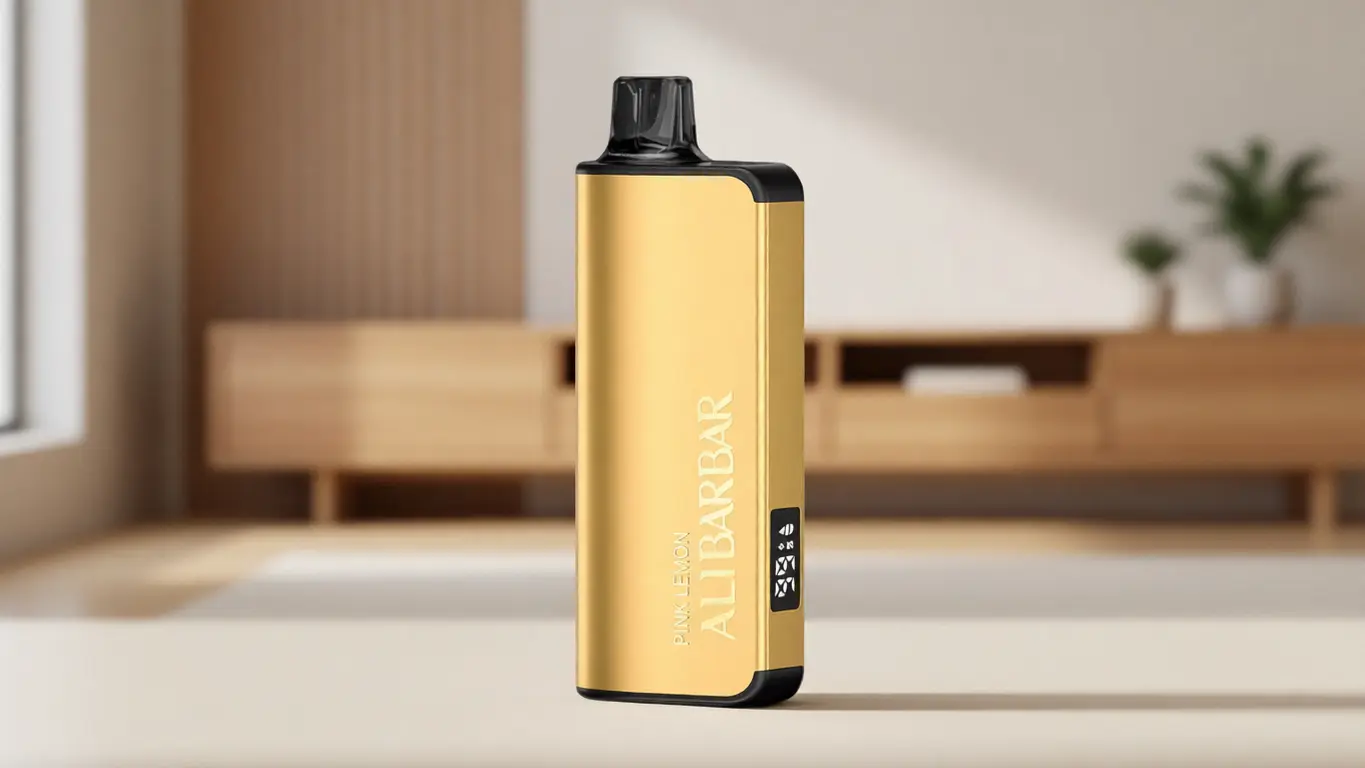
For adult users of ALIBARBAR devices — a brand that has gained attention for its built‑in status indicators and modular, high‑capacity architectures — product verification is straightforward when sourced through an authorized channel. OZVAPE Shop’s inventory carries trackable manufacturing dates and batch information, allowing any customer to confirm with the manufacturer that the device is genuine. This is the kind of simple, integrity‑driven practice that separates a lawful transaction from an unknowing violation.
Common Misconceptions About Vaping Legality
Misinformation spreads faster than regulation. Clearing away the most persistent myths helps anyone make decisions from facts rather than fear.
Myth: Vaping is illegal nationwide.
Reality: There is no federal statute that criminalizes the possession or use of a vaping product by an adult. Many products remain available, particularly those that have received marketing authorization or that are still under review. The legal risks lie in the sale, distribution, and manufacturing of unauthorized products, not in individual adult use.
Myth: If a product is sold online, it must be legal.
Reality: The internet is full of unregulated storefronts that ship products across state lines without verifying compliance. The presence of a product on a website is not evidence of its lawfulness. Enforcement resources are finite, and illegal products can remain available for extended periods before the FDA or a state attorney general takes action.
Myth: All flavored products are banned everywhere.
Reality: Flavor restrictions vary dramatically by state. Some states ban all flavors except tobacco; others have no flavor restrictions at all. Even within a state, local ordinances can differ. The only way to be sure is to check the specific law by jurisdiction.
Myth: You can be arrested for possessing a vape pen.
Reality: While possession of an unregistered vaping product is theoretically a violation of the Federal Food, Drug, and Cosmetic Act, the FDA has explicitly stated that its enforcement priorities do not target individual consumers. The agency focuses on retailers, manufacturers, and importers. State laws generally follow a similar pattern, penalizing sales to minors and unlicensed commercial activity rather than adult possession. Exceptions exist where a state has specifically criminalized possession (which is rare), but for the overwhelming majority of adults, personal use does not carry a risk of criminal charges.
Frequently Asked Questions
Q: Is it legal to order vaping products online and have them shipped to my home?
A: Under federal law, yes, provided the seller complies with age verification, delivery tracking, and the PACT Act’s reporting and tax requirements. However, many states and some municipalities prohibit or restrict direct‑to‑consumer shipments. Always confirm that the seller will ship to your specific location and that the product is not banned in your state.
Q: Can I bring a vape device on a plane when traveling within the U.S.?
A: The Transportation Security Administration (TSA) permits e‑cigarettes and vape devices in carry‑on baggage but prohibits them in checked luggage. Devices must be protected against accidental activation. As for legal status, if the device is lawful in both your departure and destination states, travel does not generally create a new legal risk. International travel introduces separate customs regulations that are beyond this article’s scope.
Q: What happens if I bought a product that later gets denied by the FDA?
A: FDA marketing denial orders are directed at the manufacturer and retailer, not the individual consumer. You are not required to surrender or destroy the product. However, continued sale of the product is unlawful, and the retailer may no longer offer it. This is one reason to purchase from a retailer that monitors regulatory status and adjusts its inventory proactively.
Q: Are there any vaping products that are fully FDA‑approved?
A: As of early 2025, the FDA has authorized a limited set of specific e‑liquid and device combinations, mostly tobacco‑flavored. No vaping product has received “full FDA approval” in the sense of being deemed safe and effective like a pharmaceutical. The authorization standard is “appropriate for the protection of public health,” which is a risk‑benefit determination.
Q: Do state flavor bans apply to nicotine‑free products?
A: State laws vary. Some define “tobacco product” broadly enough to include zero‑nicotine vaping liquids if they are intended for use with a device; others tie the definition to nicotine content. Always check the specific statutory language of your state’s ban.
Q: How can I verify that an online retailer is selling legitimate, legally sourced products?
A: Ask for the manufacturer’s certificate of authorization, verify the batch code with the manufacturer, and check whether the retailer publishes a clear sourcing policy. If a retailer refuses to provide this information or treats verification as an unusual request, consider it a red flag.
Q: Is it illegal to vape in public?
A: Vaping in public is generally not criminalized, but state and local smoke‑free air laws may restrict where you can use an e‑cigarette. Many jurisdictions treat vaping the same as smoking for purposes of indoor clean air acts, meaning use is prohibited in restaurants, offices, and public buildings. Check local ordinances.
Q: What are the penalties for retailers who sell unauthorized products?
A: The FDA can issue warning letters, pursue civil money penalties, seek injunctions, and coordinate seizures with U.S. Marshals. State attorneys general can also bring enforcement actions under consumer protection and public nuisance laws. Retailers face real financial and legal exposure, which is why the market has increasingly gravitated toward verifiably compliant supply chains.
Conclusion
Vaping is not flatly illegal in the United States. What exists instead is a highly granular regulatory system: federally authorized products can be lawfully sold in many states, while unauthorized products — particularly flavored ones — face an uncertain and often restrictive environment. The distinction matters because it directly affects what you can buy, where you can buy it, and whether your purchase will result in a product that you can use with the confidence that it meets basic manufacturing and disclosure standards.
An informed consumer is a protected consumer. That principle guides every aspect of how OZVAPE Shop sources and presents its ALIBARBAR inventory — by providing traceable, factory‑certified devices through a channel that respects the regulatory framework rather than working around it. The legal landscape will continue to evolve. New authorizations, new state bills, and new enforcement actions will reshape the market further. But the fundamental strategy remains constant: deal with retailers that are transparent about what they sell and where it comes from. The right choice is not the one that ignores the law; it is the one that makes compliance effortless for you.