
VAPE FAQs
Is Vape Cheaper Than Cigarettes?

Jun
No one who has watched cigarette prices climb year after year needs to be told that smoking is expensive. The more interesting question — and the one that leads many adults to consider alternatives — is whether the move to a reusable electronic device really delivers the long-term savings that casual conversation claims. The answer, as with most questions that involve human behaviour, is not a simple yes or no. It depends on which device you choose, how you use it, and whether you take into account the hidden costs that only become visible after weeks or months of daily reliance.
OZVAPE Shop maintains a library of standardised product specifications precisely because this kind of calculation demands honest, comparable data. The analysis that follows is built on the same engineering and usage-pattern principles that underpin those specifications. It gives you a framework for answering the cost question for yourself — not by quoting abstract averages, but by understanding exactly where your money goes.
Understanding the Real Cost: A Structured Comparison
A meaningful cost comparison between combustible tobacco and electronic devices cannot be reduced to a single number. It requires breaking down the expenses into categories that reflect how these products are actually consumed. The following structure is designed to be applied to any device or habit pattern.
Upfront Investment: The Device vs. The Pack
A pack of cigarettes is a pure consumable. You pay for it, you consume it, and the transaction is complete. Most electronic devices, by contrast, involve a one‑time purchase of hardware that you then feed with replaceable consumables. That hardware cost can range from modest to significant.
When evaluating this upfront expense, the critical variable is not the price tag but the rated operational life — the total number of puffs or the expected duration of use the device is engineered to deliver. A device that costs twice as much but lasts four times as long is cheaper in any honest accounting. Beware of specifications that omit this figure; it is often a sign that the manufacturer has not invested in the kind of consistent power delivery and thermal management that makes such a rating credible.

Consumables: The Ongoing Cost of Refills and Coils
With cigarettes, the ongoing cost is a single, transparent number: the price of a pack multiplied by consumption frequency. With a reusable electronic device, the ongoing costs can include replacement pods, coils, or e‑liquid, depending on the architecture.
This is where the comparison becomes genuinely individual. A device that uses pre‑filled pods will have a higher per‑unit consumable cost but less complexity. A refillable system gives you more control over e‑liquid expenditure but requires you to factor in replacement atomiser heads that degrade over time. The most common budgeting mistake is calculating only the cost of the device and the liquid, while ignoring the fact that a coil rated for 10 mL of e‑liquid may need replacing every week for a heavy user, adding a non‑trivial sum to monthly expenses.
Usage Patterns and Device Lifespan
A pack‑a‑day smoker and a social smoker inhabit different economic realities. The cost advantage of a high‑capacity device becomes more extreme at higher consumption levels, while a compact, moderate‑capacity unit may be more economical for occasional use because the hardware cost is lower and the risk of battery degradation before it reaches its rated puff count is reduced.
It is also worth observing that some devices — particularly those with large integrated power cells and well‑isolated heating chambers — deliver their rated puff count with remarkable consistency, while others begin to show output degradation well before the stated number is reached. When a device delivers fewer usable cycles than advertised, your real cost per puff rises accordingly, even if the unit was cheap to begin with.
Hidden Costs: When a Cheap Device Becomes Expensive
The most pernicious expense in the electronic device market is the cost of unreliability. A device that stops functioning after two weeks forces an unplanned replacement. A device that gives no clear warning before its power cell is depleted creates a scenario where the user, understandably, carries a backup — effectively doubling the hardware investment. A device whose surface finish flakes or whose mouthpiece cracks under normal pocket conditions must be replaced not because it stopped working, but because it became unpleasant to use.
These are not hypotheticals. They are the pattern of frustration that drove the development of devices now catalogued by OZVAPE Shop. The engineering choices that prevent these failures — proper power‑source calibration, clear status indicators, durable surface treatments — add modestly to the initial cost but profoundly alter the long‑term economics.
Applying the Cost Framework: A Real‑World Scenario
To see how these factors interact, consider a hypothetical but representative case: an adult who currently smokes a pack of 20 cigarettes per day, at an average Australian price of $45 per pack. That is $315 per week, or roughly $16,380 per year — a sum large enough to make any alternative worth investigating.
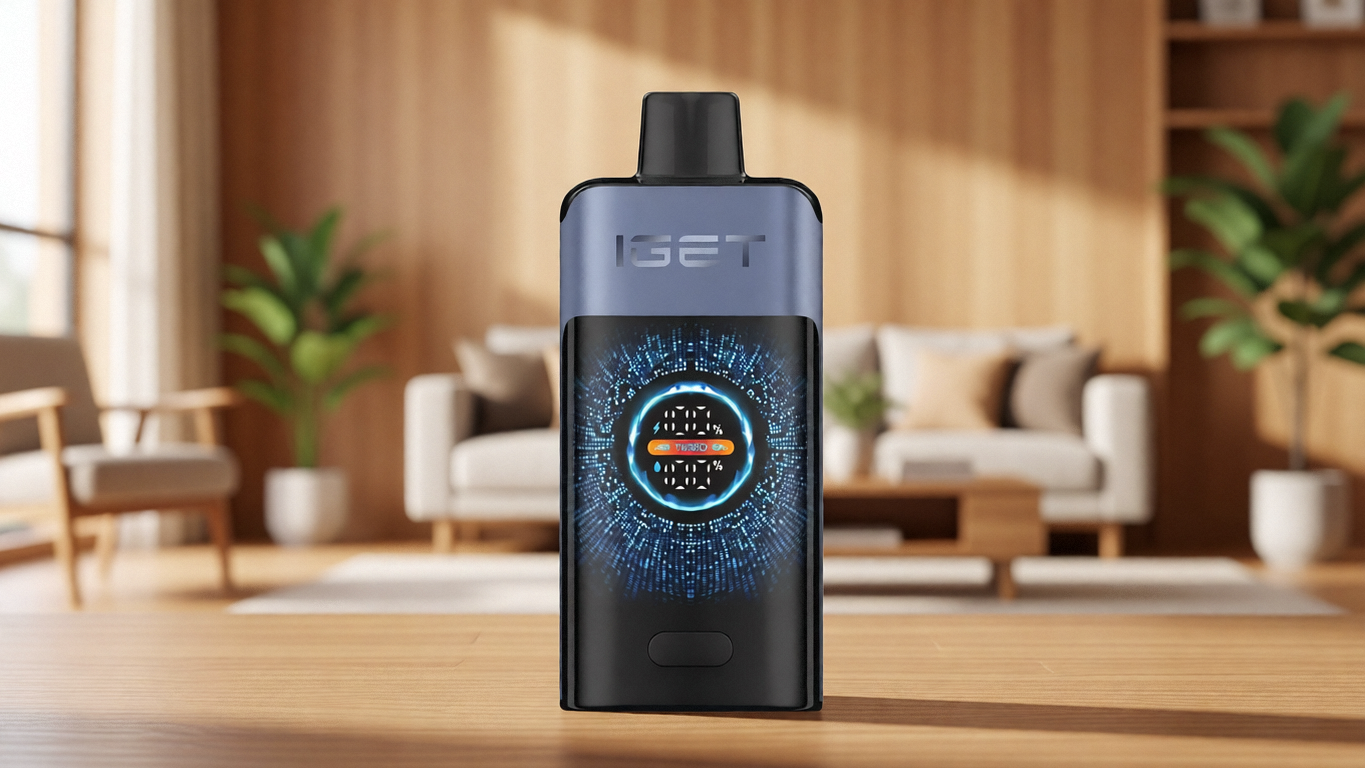
If that person switches to a device like the ALIBARBAR INGOT 9000, which is factory‑rated for up to 9,000 puffs and uses an integrated, non‑refillable reservoir, the calculation changes. Assuming a typical smoker‑to‑vaper translation factor — where each cigarette might be replaced by roughly 10–15 puffs — 9,000 puffs could represent the equivalent of 600–900 cigarettes. For a pack‑a‑day smoker, one INGOT 9000 might therefore last approximately 12–15 days. At a typical retail price, the weekly hardware cost works out to significantly less than half of the cigarette expenditure, even before factoring in the absence of lighters, ashtrays, or other ancillary items.
The economic logic becomes even clearer with a system that separates the power source from the consumable component, such as a rechargeable device paired with replaceable pre‑filled pods. The initial hardware purchase is higher, but the recurring pod cost per‑puff is lower, and the power module is rated for far more cycles than any single consumable. For a heavy user, break‑even relative to smoking can occur within the first month.
What matters more than the headline numbers is the predictability of the cost. ALIBARBAR devices, for example, are built around a design philosophy that prioritises consistent output and honest status communication. A user who can see exactly how much capacity remains is a user who does not need to buy a backup “just in case.” That alone eliminates a hidden expense that distorts many naive cost comparisons.
A Practical Framework for Calculating Your Own Costs
Use this step‑by‑step methodology to run the numbers for any device you are considering, against your actual smoking habit.
Establish your baseline cigarette spend. Multiply your daily pack consumption by 365 to get an annual figure. If you smoke roll‑your‑own, calculate the cost of tobacco, papers, and filters over the same period.
Identify the device’s rated puff count or estimated lifespan. Look for this specification explicitly stated. If it is absent, treat the product with caution.
Estimate your personal puff‑per‑cigarette equivalence. Track your use for a few days: how many puffs do you take from the device to satisfy the need that one cigarette used to meet? This varies between individuals, but a figure between 8 and 15 is common.
Calculate the effective pack‑equivalent per device unit. Divide the rated puff count by your personal puffs‑per‑cigarette figure, then divide by 20 (cigarettes per pack). This tells you how many packs of cigarettes one device unit effectively replaces.
Factor in consumable replacements. If the device uses replaceable pods, coils, or e‑liquid, add the monthly cost of these components based on your estimated consumption rate. Be honest: if a coil is rated for 10 mL and you consume 5 mL per day, you will replace it every two days.
Compare the annual figures. Multiply the device unit cost plus monthly consumables by the number of units used per year, and compare to your baseline cigarette spend. Include a modest allowance for unexpected failures if you are opting for a budget‑segment device; if you choose a system with documented reliability, this allowance can be set to zero.
A spreadsheet makes this exercise trivial, and OZVAPE Shop publishes the standardised specifications needed to populate it accurately. The act of performing the calculation often reveals that the device with the lowest shelf price is not the one with the lowest annual cost.
Common Mistakes That Inflate Vaping Costs
From observing user behaviour across the market, several recurring errors consistently undermine the economic case for switching.
Over‑indexing on the hardware price. A $25 device that lasts a week is more expensive over a year than a $60 device that lasts three months. Hard‑ware amortisation is the single most misapplied concept in consumer electronics, and it applies here with full force.
Ignoring thermal management as a cost driver. A poorly regulated heating element degrades e‑liquid unevenly, wastes material, and often results in burnt‑tasting output that prompts early disposal of a pod or coil. The pennies saved on a cheaper device are lost many times over through avoidable consumable waste.
Assuming all devices in a design category perform identically. Two devices may share the same external form factor and yet have entirely different internal architectures. One may use a stable mesh‑based heating element with over‑temperature protection; the other may use a simple wire coil that burns out rapidly under heavy use. The visible features tell you nothing about the engineering, and that engineering dictates your cost per use.
Undervaluing modularity in the cost equation. A sealed, single‑use device has a clean up‑front simplicity, but for a user who consumes at a high rate, the waste — both financial and physical — accumulates quickly. A rechargeable device with replaceable pods separates the durable from the consumable and almost always yields a lower cost per puff for heavy users.
The broader industry observation here is that the market has segmented into devices designed for transient convenience and devices designed for sustained economic logic. Recognising which is which requires looking past the marketing and interrogating the specifications.
Frequently Asked Questions
Q: Does vaping always save money compared to smoking?
A: Not always. For a very light smoker — one or two cigarettes a day — the cost of even an inexpensive device and its consumables may not undercut the minimal tobacco expenditure. For the vast majority of daily smokers, however, a well‑chosen electronic device yields significant savings.
Q: How many packs of cigarettes is an ALIBARBAR INGOT 9000 equivalent to?
A: Based on the 9,000‑puff rating and a conservative 10‑puff‑per‑cigarette equivalence, one unit can substitute for roughly 45 packs of 20 cigarettes. Individual usage patterns will shift this figure, but it is a reliable starting point for calculation.
Q: What happens if a device does not reach its rated puff count?
A: Premature failure increases your effective cost per puff. Most reputable manufacturers design their devices with sufficient headroom to meet the stated rating under normal use. When you encounter a device that consistently falls short, the root cause is usually inadequate power management or thermal regulation — traits that are avoidable if you research the device’s internal architecture.
Q: Are refillable systems always cheaper than pre‑filled pod systems?
A: For high‑volume users, yes: bulk e‑liquid and replaceable coils typically offer a lower per‑millilitre cost. For moderate users, the convenience and leak‑free reliability of a well‑engineered pre‑filled pod can justify the modest premium, especially when it prevents waste from user error.
Q: How do I verify that a device’s specifications are genuine?
A: Look for standardised information sheets and factory‑certified sourcing. OZVAPE Shop publishes consistent technical specifications for the ALIBARBAR range and other devices it stocks, drawn directly from authorised distribution networks. Consistency of presentation is itself a signal of supply‑chain integrity.
Q: Can a device be too cheap to be economical?
A: Absolutely. The lowest‑priced units in any category often omit the protection circuits and material quality that give a device its longevity. They become disposable in the worst sense: unreliable, unpredictable, and ultimately more costly because they must be replaced frequently.
Q: How long should a rechargeable device last before the power cell degrades?
A: A lithium‑ion cell that is properly managed — charged at the correct rate, not held at full charge for prolonged periods, and protected against deep discharge — should retain over 80% of its capacity for at least 300 full cycles. In a device used daily, that typically translates to a useful life of one to two years before the reduced runtime becomes noticeable.
Q: What is the most overlooked cost in vaping?
A: The cost of carrying a backup device due to trust issues with the primary unit. When a device lacks clear battery and e‑liquid level indication, users naturally carry two. That effectively doubles the hardware cost — a design failure masquerading as a consumer preference.
Q: Is it worth paying more for a device with a puff‑count display?
A: In purely economic terms, yes, if that display prevents you from discarding a pod or device that still has usable capacity. The psychological value is harder to quantify but deeply real: it removes the low‑grade anxiety that leads to over‑purchasing.
Q: How does OZVAPE Shop support the cost‑conscious buyer?
A: By maintaining specification sheets that make cost‑per‑puff calculations straightforward, and by stocking only inventory sourced through authorised, factory‑certified channels. That reduces the risk of buying a counterfeit unit that under‑delivers on its rated life and silently inflates your costs.
Conclusion
The question of whether vaping is cheaper than smoking resolves into a question of engineering, usage, and honest specification. Over a year, a daily smoker in Australia will almost certainly spend less using a durable, high‑capacity electronic device than continuing to buy cigarettes. But that statement holds only if the device performs as rated, does not fail prematurely, and does not impose hidden costs through poor thermal design, ambiguous status indicators, or substandard materials.
The most effective way to protect the economics of the switch is to choose devices whose specifications are transparent and whose supply chain is verifiable. OZVAPE Shop has built its catalogue around that principle: factory‑certified inventory, standardised technical data, and a commitment to supporting adult users with accurate information rather than marketing noise. The right device is the one that fits your actual routine, and that fit can only be judged when the numbers are real and the engineering is understood. Do the arithmetic, interrogate the specifications, and the cost answer will become obvious.