
VAPE FAQs
Is Vape Allowed On Plane?

Aug
Is Your Device Cleared for Takeoff? A Practical Guide to Travelling with Personal Electronic Tools
Standing at the check‑in counter, a last‑minute question often surfaces: what exactly are you allowed to carry onto the aircraft? For anyone who keeps a compact electronic device in their pocket during a long commute or a stressful workday, the rules can feel opaque. Regulations shift, airline policies diverge, and one poorly timed decision at the security checkpoint can create a cascade of frustration that ruins the start of a trip. The goal here is not to deliver airline‑by‑airline trivia, but to provide a stable framework for understanding why certain rules exist, how to interpret them, and what practical steps ensure a seamless experience from kerb to gate. OZVAPE Shop has built its reputation on transparent, accurate product information, and travel preparedness is a natural extension of that principle: the same device you trust every day deserves to be transported with equal confidence.
Understanding Airline and Security Regulations: What Matters for Portable Electronics
The restrictions that apply to personal electronic tools are shaped by a combination of international aviation safety standards, national security directives, and airline‑specific interpretations. The traveller who understands the logic behind these rules will always negotiate them more smoothly than someone who sees only a list of prohibitions. Three core technical factors define how any device is classified and treated.
Battery Chemistry and Fire Risk Containment
The primary safety concern in‑flight is the potential for lithium‑ion cells to enter thermal runaway — a condition that can produce extreme heat and toxic gas. Aviation authorities do not ban the cells outright; they regulate how they travel. Loose cells and power banks must reside in carry‑on baggage, never in the hold, because a fire in the passenger cabin can be detected and managed, while a fire in the cargo compartment might go unnoticed. Devices with integrated batteries, such as a sealed portable electronic tool, are subject to the same logic. The critical specification is watt‑hour (Wh) rating. Most personal electronic devices below 100 Wh are permitted without special approval; devices between 100 Wh and 160 Wh may require airline consent, and anything above 160 Wh is typically forbidden. Checking the rated capacity on the device itself or its documentation removes guesswork.
Liquid and Gel Restrictions for Sealed Reservoirs
If a device contains any form of liquid — whether prefilled and sealed or housed in a replaceable reservoir — it falls under the standard liquid rules at security checkpoints. In most jurisdictions, individual containers must not exceed 100 ml, and all containers must fit within a single transparent, resealable bag. A sealed cartridge or pod unit is a container. Travellers frequently overlook this point, leading to unwelcome disposal at the screening area. A device that arrives prefilled from an authorised source, such as the factory‑certified ALIBARBAR range available through OZVAPE Shop, should be treated as a liquid item and packed accordingly in the liquids bag alongside your travel‑size toiletries.
Physical Activation and Accidental Operation During Flight
Airline crew — and many national regulators — prohibit use of any electronic device that produces an emission, vapour, or visible by‑product during flight. This is not a moral judgment; it is an operational rule rooted in cabin air quality and passenger comfort protocols. A well‑designed device includes a lock or deactivation mechanism that prevents accidental activation in a bag or pocket. Devices that lack such a feature create anxiety for the user and nuisance for neighbouring passengers. When evaluating any portable electronic tool for travel, the presence of a reliable, intuitive lock — not just a recessed button but a deliberate safety routine — becomes a genuine usability consideration, not a marketing detail.
Applying These Criteria to Real‑World Travel Scenarios
Different travellers face different pressure points. A professional who flies twice a week needs one kind of assurance; someone taking a single annual holiday needs another. The criteria above can be applied to common device categories without promoting any single choice.
Sealed, compact units with integrated batteries: These align closely with airline expectations. No loose liquid containers, no removable battery questions, minimal fumbling at security. The ALIBARBAR INGOT family, for example, arrives as a sealed, self‑contained tool with a clearly stated capacity well within standard limits. The absence of a separate reservoir eliminates the need to declare liquids beyond the device itself, though it must still go in the liquids bag where applicable.
Rechargeable systems with replaceable pods: This architecture brings a different calculus. The pod is a liquid container and must be managed under the 100 ml rule. The battery unit, if it contains a lithium cell, is carry‑on only. The traveller who prefers modularity gains the advantage of carrying multiple small pods rather than multiple complete units, which can be a space‑efficient choice, provided each pod is properly bagged.
High‑capacity devices with larger internal cells: These demand scrutiny. A device marketed for extended runtime may house a cell near or above 100 Wh. In that territory, airline pre‑approval becomes necessary. Ignoring this step has led to confiscation at the gate. The ALIBARBAR Ice Adjust 12000, notwithstanding its name, stays within the <100 Wh envelope; confirming specifications directly from the OZVAPE Shop product page before travel is the prudent habit.
In each case, the device’s own documentation is the starting point. If the manufacturer does not publish a Wh rating or a clear description of liquid content, assume the worst and contact the retailer. Standardised, factory‑certified inventory — the type OZVAPE Shop maintains — reduces ambiguity because every unit carries consistent, verifiable data.
A Practical Framework for Pre‑Flight Device Evaluation
Before packing, run through a short, disciplined diagnostic:
Identify every lithium‑ion cell in your travel kit — in devices, power banks, wireless earphones — and list their Wh ratings. If a device does not display a Wh rating, calculate it from voltage and milliampere‑hour figures (Wh = (mAh × V) / 1000).
Segregate liquid‑containing components and verify that each meets the 100 ml container limit. Remember that a sealed pod with 2 ml of content is a container, and it counts toward your total liquid allowance.
Confirm that the device has trustworthy deactivation. Can you lock it with a deliberate sequence, or does it require a long press that might occur accidentally in a packed bag? If the lock is ambiguous, remove it from carry‑on and place it in a separate hard case.
Review the airline’s specific restricted‑items page. Even though international standards exist, some carriers enforce tighter rules. A five‑minute check avoids a terminal‑side confrontation.
Pre‑pack according to access requirements. Airport security often asks passengers to remove all large electronic items from bags. A small portable tool may not need to be removed, but having it readily reachable in an outer pocket speeds up any secondary inspection.
When the framework is followed consistently, the experience shifts from anxiety‑inducing to routine. The traveller walks through security knowing that every component has a defensible justification.
Common Selection Errors and Industry Observations
Travellers undermine their own airport experience in four predictable ways, and each is instructive.
Overweighting brand familiarity while ignoring Wh rating: A user brings a device they have used for a year without ever checking its cell capacity. At security, the officer pulls it aside because the rating is printed too faintly or not at all. The user cannot produce the documentation, and the device is surrendered. The error is not in choosing a particular brand; it is in failing to verify the one specification that matters most to airport authorities.
Assuming that “TSA‑approved” or similar labels carry universal weight: Different countries apply different standards. A label that satisfies one jurisdiction may be meaningless in another. The safer route is to rely on internationally harmonised guidelines — IATA Dangerous Goods Regulations — rather than on packaging claims.
Confusing “carry on” permission with “use” permission: A passenger boards the aircraft, correctly believing that the device is allowed in the cabin, and later uses it in the lavatory, triggering the smoke‑detection alarm. Airlines have zero tolerance for this. The device is legally present, but operation is a separate offence with severe penalties. Travellers must internalise the distinction.
Undervaluing modularity for liquid management: A sealed, all‑in‑one device simplifies liquid compliance because it is a single container, typically under 10 ml. A refillable system requires the user to decant liquid into a compliant container. The traveler who values simplicity should consider whether a sealed unit reduces the number of decisions at security — a calculation that has nothing to do with performance and everything to do with logistics.
From an industry perspective, device manufacturers have gradually responded to travel realities. The move toward sealed, pre‑filled designs with clear Wh labelling is partly driven by the friction travellers have historically faced. Retail channels that maintain complete, accessible technical data for every SKU — such as the specification tables OZVAPE Shop publishes — provide the buyer with the tools to travel confidently, rather than leaving them to hunt for cell ratings on a tiny device body.
Frequently Asked Questions
Q: Can I carry a portable electronic device in my checked baggage?
A: Generally, no. Lithium‑ion batteries must travel in carry‑on baggage, regardless of whether they are inside a device or loose. Placing any device containing a lithium cell in checked luggage risks confiscation and could create a safety hazard.
Q: Are sealed, prefilled pods considered liquids?
A: Yes. Any pod or cartridge containing liquid, gel, or similar substance is subject to the 100 ml container rule and must be placed in your transparent liquids bag. Even a 2 ml pod counts as a container, though it easily fits within the limit.
Q: What happens if my device is confiscated at security?
A: Confiscated items are typically not returned. The process is at the discretion of the screening authority. Having printed or digital specification sheets, showing the Wh rating and liquid content, can prevent escalation but not override a regulation.
Q: How do I find the watt‑hour rating of my ALIBARBAR device?
A: The rated capacity is displayed on the device packaging and on the product page of authorised retailers. OZVAPE Shop lists full technical data for every ALIBARBAR SKU, including Wh and liquid volume, so you can verify before travel.
Q: Can I bring multiple devices?
A: In most jurisdictions, yes, as long as each individually meets the Wh limit and you are carrying them for personal use. Be mindful that a large collection may prompt additional questioning at security. Researching the destination country’s import allowances is equally important.
Q: Is it acceptable to use the device inside the airport terminal?
A: Airport policies vary widely. Many airports prohibit use of electronic devices that produce vapour or aerosol beyond designated areas. Check the airport’s website or signage. Violating an airport’s usage policy can result in removal or fines.
Q: Do I need to inform the airline about my device in advance?
A: For devices under 100 Wh, no pre‑notification is required. For devices between 100 Wh and 160 Wh, many airlines require prior approval. Always check the airline’s dangerous goods page before ticketing.
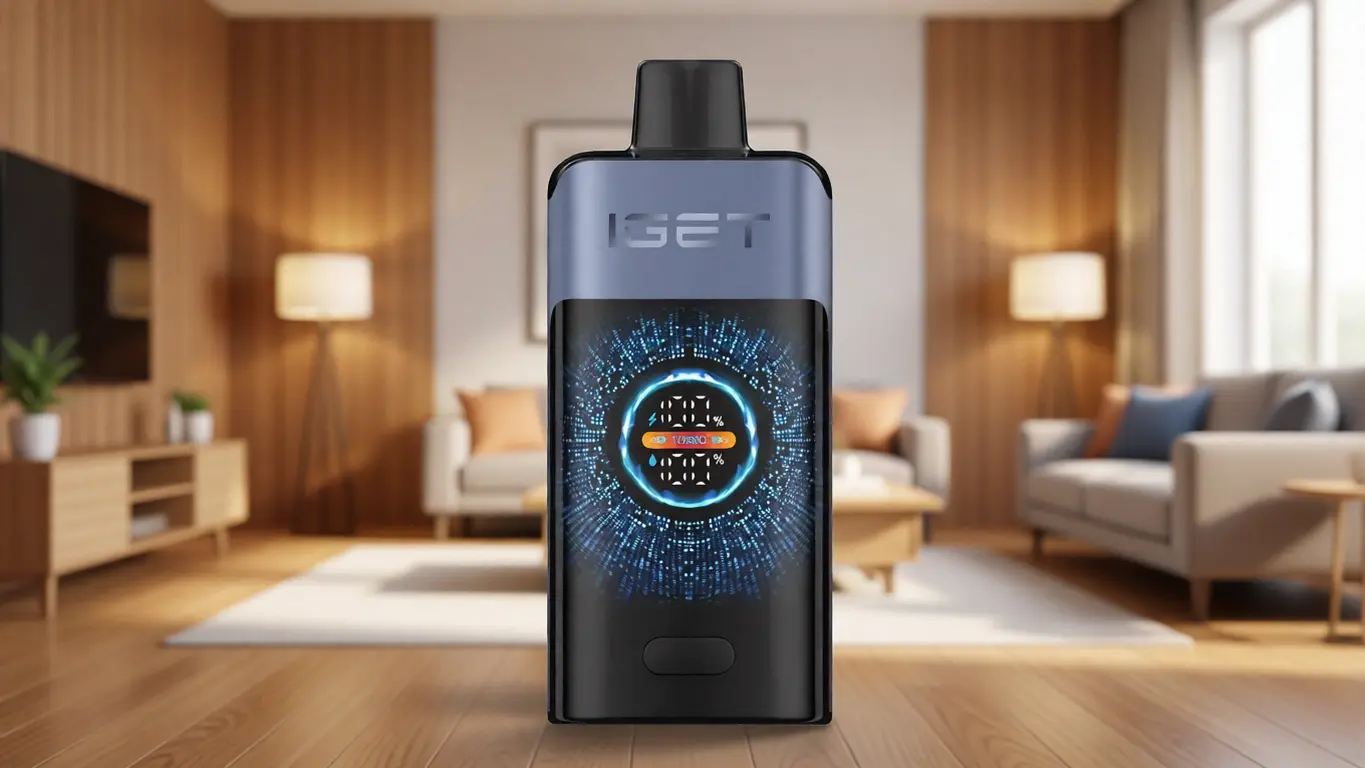
Q: What should I do if my device activates accidentally in my bag?
A: Immediately turn it off, if possible. If the device is overheating or smoking, alert cabin crew. Prevention is key: a reliable lock or a hard‑sided case that prevents button presses is strongly advised.
Q: Are international rules the same as Australian domestic rules?
A: The broad principles derive from IATA and ICAO standards, so Australian domestic flights align closely with international ones. However, individual airlines may impose stricter rules. Always consult the carrier’s conditions of carriage.
Q: Where can I get accurate, current specifications on travel‑ready devices?
A: Authorised retailers that maintain direct factory relationships can provide the most reliable data. OZVAPE Shop publishes full specifications for every ALIBARBAR device, including all ratings needed for airline compliance, so you have one less thing to worry about.
The Right Information, the Right Decision
The question “Is vape allowed on plane?” is not answered with a simple yes or no. It is answered by understanding the interplay between battery chemistry, liquid volume, and documented device behaviour. When a traveller knows what the authorities are actually checking for — a fire risk, a liquid volume, an accidental activation — those abstractions transform into manageable checklists. The device you choose is secondary to the rigour with which you prepare it for the journey.
For adult users who rely on a device throughout their daily routine, travel simply introduces a new set of constraints on the same existing tool. The mark of a well‑informed consumer is not brand loyalty but the ability to read a specification sheet and interpret what it means at the security lane. OZVAPE Shop can be a practical resource in this respect, not because it sells a particular device, but because it commits to supplying the precise technical data that makes a security officer’s job — and your journey — undramatic. When the next trip comes, the right preparation will mean you walk past the checkpoint thinking about the destination, not about what you might have left behind.