
VAPE FAQs
Is Vape Allowed In Hong Kong Airport?
Jul
No single answer applies everywhere, but at Hong Kong International Airport the legal position is unambiguous: vaping is not permitted, and possession of a vaping device is prohibited by law. The confusion that surrounds this topic is understandable. Travellers move between jurisdictions with radically different rules, and airport environments can feel like a legal grey zone. They are not. Hong Kong has enacted some of the most restrictive regulations on electronic smoking products in the world, and those regulations apply to every terminal, transit lounge, and aircraft at HKIA.
OZVAPE Shop has long observed that the most common source of friction for adult users isn’t the device itself — it’s the regulatory environment that travels with them. This article explains what Hong Kong’s legislation actually says, how it is enforced at the airport, and what it means for anyone passing through, whether for a layover or as a final destination. The goal is to replace anecdote and assumption with a clear, fact-based reference.
Understanding the Legal Framework in Hong Kong
Hong Kong’s approach to electronic vaping products and heated tobacco products (HTPs) changed fundamentally with the enactment of the Smoking (Public Health) (Amendment) Ordinance 2021, which came into full effect on 30 April 2022. The ordinance did not merely restrict use; it instituted a comprehensive ban on import, manufacture, sale, possession, and promotion of all electronic smoking products, including e-cigarettes, vape pens, pods, and HTPs intended for personal use. The ban applies uniformly across the Hong Kong Special Administrative Region, with no exemption for airports or international transit zones.
What the Law Specifically Prohibits
The legislation defines electronic smoking products to include any device that heats a substance to produce an aerosol for inhalation, regardless of whether the substance contains nicotine. The critical point for travellers is that the ban on possession covers both active use and simply carrying such a device on your person or in your luggage. There is no carve-out for devices that are switched off, empty, or disassembled. The act of possessing a vaping device within Hong Kong’s territorial boundaries — which includes the entirety of Hong Kong International Airport — is an offence.
Officers of the Hong Kong Customs and Excise Department and the Airport Security Unit are authorised to enforce these provisions. Unlike jurisdictions that differentiate between use and possession, or that allow possession in designated areas, Hong Kong’s law makes no such distinction. If you are in the airport, the law treats your vape no differently than if you were walking through Central.
Enforcement at Hong Kong International Airport
Hong Kong International Airport is a high-throughput environment, and enforcement is not passive. Customs officers conduct random and targeted baggage inspections, and security screening includes detection protocols designed to identify electronic smoking devices. Travellers found in possession can expect:
Immediate confiscation of the device and any associated cartridges or e‑liquids.
A fixed penalty or, in more serious cases, referral to a magistrate.
Potential delay to travel while documentation is processed.
Penalties under the ordinance include a maximum fine of HK$50,000 and imprisonment for up to six months. While first‑time offenders are more likely to receive a fine, the legal risk is real and the threshold for enforcement is low. The authorities do not need to prove intent to use; possession alone is sufficient.
How the Ban Affects Different Traveller Scenarios
The vast majority of travellers who encounter trouble at HKIA do so not because they intended to break the law, but because they assumed a different rule would apply. Three common scenarios illustrate where misunderstandings arise and how they intersect with the ban.
The Transit Passenger
A passenger flying from London to Sydney with a three‑hour layover in Hong Kong may believe that never leaving the transit area means local laws do not apply. That is incorrect. Hong Kong’s jurisdiction extends to all areas of the airport, including airside transit zones. If your carry‑on contains a vaping device when you disembark, you are in possession within Hong Kong, and the law applies exactly as it would at the arrivals hall. You will not be able to use a smoking lounge — those are for conventional cigarettes and are located post‑immigration — and you cannot legally carry the device while moving between gates.
The Departing Passenger
A traveller commencing their journey at HKIA who has been in Hong Kong for several days may not realise that the ban encompasses both public and private spaces. Possession in a taxi, on the Airport Express, or inside the terminal all constitute the same offence. The risk is compounded if the device was purchased locally before the ban, as there is no grandfathering provision for previously legal products. The law does not distinguish between old and new devices.
The Arriving Passenger
Passengers landing at HKIA from a jurisdiction where vaping is legal often carry their device not out of defiance but out of habit. Upon arrival, customs inspections can and do detect these items. A busy professional stepping off a long‑haul flight may find themselves facing confiscation and a financial penalty before they have even cleared immigration. The fact that the device was legally purchased overseas provides no defence under Hong Kong law.
In every scenario, OZVAPE Shop advises that the safest course is to hold no vaping equipment of any kind while inside Hong Kong’s borders. For travellers whose final destination allows vaping, purchasing from an authorised retailer after arrival eliminates the risk entirely.
A Practical Framework for Air Travel Compliance
Avoiding a regulatory misstep requires a deliberate pre‑travel routine, not just a last‑minute web search. A structured approach reduces the chance of carrying a prohibited item into a jurisdiction where the consequences are severe.
Identify every jurisdiction you will enter — not just your destination, but all transit points where you pass through immigration or, as in Hong Kong, remain airside but within territorial boundaries.
Check the specific legislation for each. Look for the words “possession,” “import,” and “use.” If possession is prohibited, you cannot carry a device even if switched off and packed. Government health department websites and official gazettes are the most reliable sources.
Confirm your airline’s policy separately. Carriage rules for lithium‑battery devices intersect with vaping regulations. Even if a jurisdiction allows possession, an airline may prohibit devices in checked luggage or require specific packaging. These are two distinct layers of compliance.
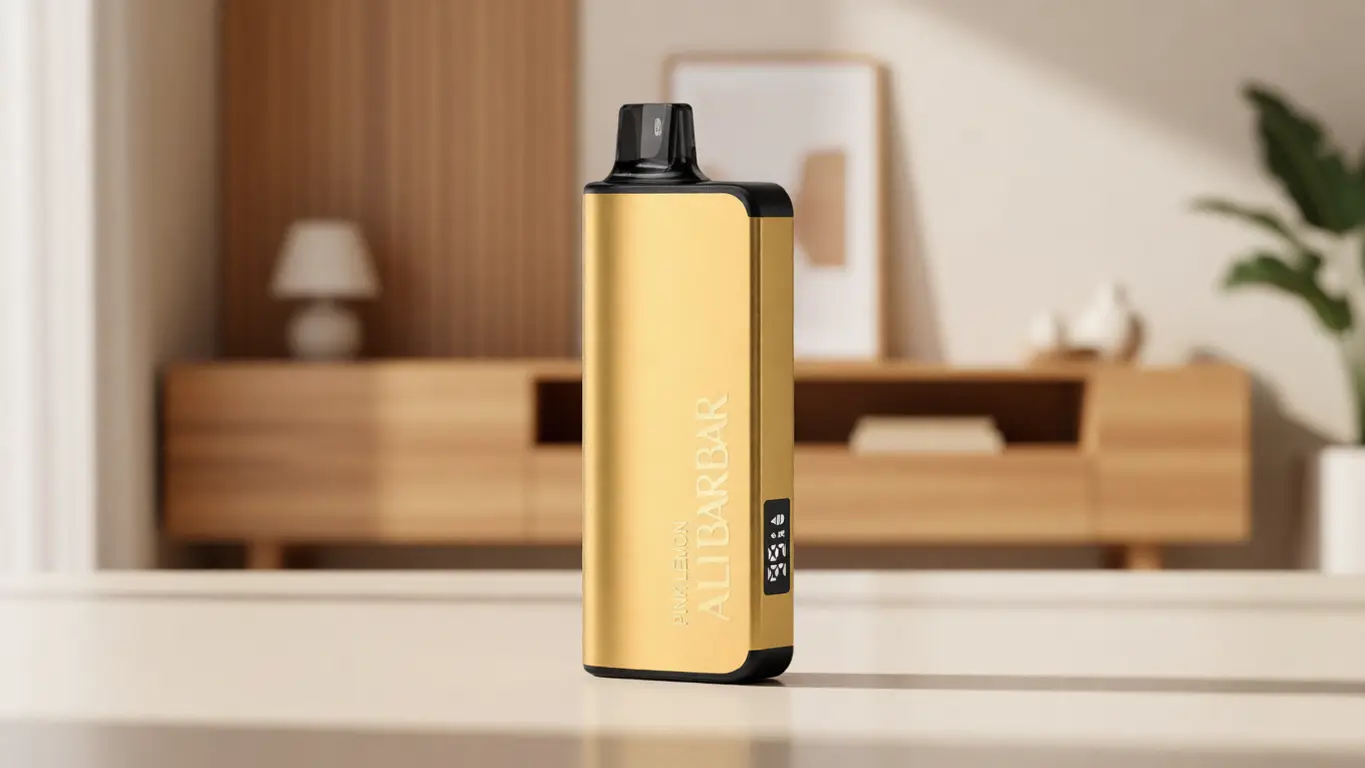
If any jurisdiction on your itinerary prohibits possession, leave the device at home. Alternatively, if your final destination is a country where vaping is legal and you are not transiting through a banned jurisdiction, consider sourcing a new device from a reputable, authorised retailer upon arrival. In Australia, for example, OZVAPE Shop supplies the full ALIBARBAR catalogue through a documented, factory‑certified channel, ensuring that what you receive meets local regulatory standards without the cross‑border risks.
Review your status just before travel. Laws change. The framework that applied six months ago may have been updated. A five‑minute check can avert a permanent legal record.
This process may seem cautious, but it reflects the reality that personal electronic devices are now subject to a patchwork of rapidly evolving regulations. A framework like this removes emotion and assumes nothing.
Common Misunderstandings and Industry Observations
The most frequent errors are not born of recklessness; they stem from plausible but incorrect assumptions. Recognising them is the first step toward better decision‑making.
Equating Vaping Devices with Conventional Electronics
Many users treat a vape as they would a phone or a laptop — an everyday electronic item that belongs in a pocket or hand luggage by default. From a regulatory standpoint, vaping devices are increasingly classified as tobacco‑related products, even when they contain no nicotine or tobacco. This categorisation triggers a separate set of laws that have nothing to do with lithium‑battery safety or aviation security protocols. Assuming that what looks like a USB stick is regulated like one is a mistake that has led to confiscations in multiple jurisdictions, Hong Kong included.
Assuming “Not in Use” Equates to “Not a Problem”
The legal distinction between use and possession is decisive here. Many frequent travellers are familiar with locations where use is restricted but carriage is tolerated. Hong Kong’s law is not structured that way. The prohibition on possession eliminates the gap that users routinely rely upon. When a Hong Kong customs officer detects a device during a baggage screen, the question is not whether you were using it; the offence is already complete.
Mistaking Transit Areas for Legal Exemptions
International transit zones are not extraterritorial. They remain under the jurisdiction of the host country. The airside area of HKIA is Hong Kong, and Hong Kong law is fully enforceable there. The fact that you do not pass through immigration does not confer immunity. This is a point of genuine confusion because it runs counter to the intuitive sense that “I haven’t entered the country.” Legally, however, you have entered it the moment your aircraft’s door opens.
Undervaluing Supply Chain Authenticity Once You Can Purchase Legally
A subtler industry observation: once a traveller arrives in a jurisdiction where vaping is legal, the instinct is often to buy whatever is available quickly. This urgency leads people to unfamiliar retailers, uncertified inventory, and products that may not have passed through authorised channels. The lifecycle cost of a poorly manufactured device — inconsistent output, premature failure, ambiguous status indicators — is frequently higher than the premium charged by a verified supplier. The ALIBARBAR devices available through OZVAPE Shop, for example, are built around transparent status communication and consistent thermal management, precisely the factors that become valuable when you rely on a single device away from home. The principle applies regardless of brand: the quality of the purchasing channel is as important as the specification sheet of the device itself.
Frequently Asked Questions
Q: Can I bring a vape device through Hong Kong airport if it’s packed in my checked luggage and I never take it out?
A: No. Hong Kong law prohibits possession, not just use. Whether in carry‑on or checked baggage, the presence of the device within Hong Kong’s jurisdiction constitutes an offence. Airlines also typically forbid vaping devices in checked luggage due to battery safety rules, creating a separate compliance issue.
Q: What happens if I’m caught with a vape at Hong Kong International Airport?
A: The device will be confiscated. You may be issued a fixed penalty or referred to prosecution. The maximum penalty is a fine of HK$50,000 and imprisonment for up to six months. Even if the outcome is a fine, you will lose your device and face a delay.
Q: Are there any designated vaping areas at HKIA?
A: No. The airport provides smoking lounges for conventional cigarettes in some departures areas, but these are exclusively for lit tobacco. Vaping is not permitted in any indoor or outdoor area of the airport.
Q: Can I carry e‑liquid or pods separately if they contain no nicotine?
A: Under Hong Kong law, the ban covers all electronic smoking products regardless of nicotine content. An e‑liquid bottle or a pod intended for use with a vaping device falls under the same prohibition. Customs officers will treat it as an accessory to a prohibited item.
Q: I’m transiting through Hong Kong from a country where vaping is legal to another where it’s legal. I won’t leave the airport. Is it really enforced?
A: Yes. Enforcement is sporadic in the sense that not every passenger is searched, but when detected, the consequences are consistent. Hong Kong Customs does not exempt transit passengers, and the risk of detection has increased with upgraded screening technologies. Deciding to carry a device through HKIA is a calculated gamble with a potentially serious downside.
Q: If I have a long layover and want a device, what are my options?
A: Legally, none. You cannot purchase, possess, or use a vaping device anywhere in Hong Kong. The only compliant option is to abstain until you reach a jurisdiction where possession is lawful. For those travelling on to Australia, that might mean ordering from an authorised local supplier like OZVAPE Shop ahead of time so that a compliant device is waiting upon arrival, rather than carrying one through a banned territory.
Q: Where can I find official information on Hong Kong’s vaping laws?
A: The Tobacco and Alcohol Control Office of the Department of Health publishes the legislative details. The Customs and Excise Department also issues travellers’ advisories. These are the authoritative sources, and they should be checked close to your travel date as amendments can occur.
Q: Does this apply to heated tobacco products as well?
A: Yes. The law covers all electronic smoking products, which includes devices that heat tobacco to produce an aerosol. IQOS, Glo, and similar products are subject to the same ban on import, possession, and use.
Q: I’ve seen people vaping at HKIA in online videos. Doesn’t that mean it’s tolerated?
A: Online content is not a reliable indicator of enforcement policy. Videos may be old, staged, or recorded in areas where enforcement was momentarily absent. Official policy and posted signage are unequivocal. Relying on what others appear to get away with is not a sound basis for personal compliance.
Q: If I bought a device from OZVAPE Shop in Australia, can I bring it through Hong Kong on my next trip?
A: No. The origin of purchase is irrelevant. If you are passing through Hong Kong, even in transit, possession of the device is illegal under local law. You should make arrangements to purchase a new device at your destination instead of carrying one through HKIA.
Conclusion
Hong Kong International Airport is not a legal grey area for vaping; it sits under a black-letter prohibition that encompasses possession, not merely use. The risks — confiscation, fines, potential prosecution — are real and well-documented. The framework for compliance is straightforward: if your itinerary touches Hong Kong, regardless of whether you clear immigration, travel without any electronic smoking product.
The wider lesson is that good travel habits depend on regulatory literacy as much as on device performance. When you do reach a destination where adult use is permitted, the quality of the device and the reliability of the retail channel matter enormously. OZVAPE Shop remains committed to supplying factory‑certified products with transparent specifications, so that when the legal environment allows, you have access to equipment that matches the rigour you bring to your decision-making.
In the end, the right choice is not the one that assumes leniency, but the one that aligns with your actual travel path and the laws that govern it. A device left at home is infinitely less costly than one seized at the border.