
VAPE FAQs
Is It Illegal To Vape In Public?
Sep
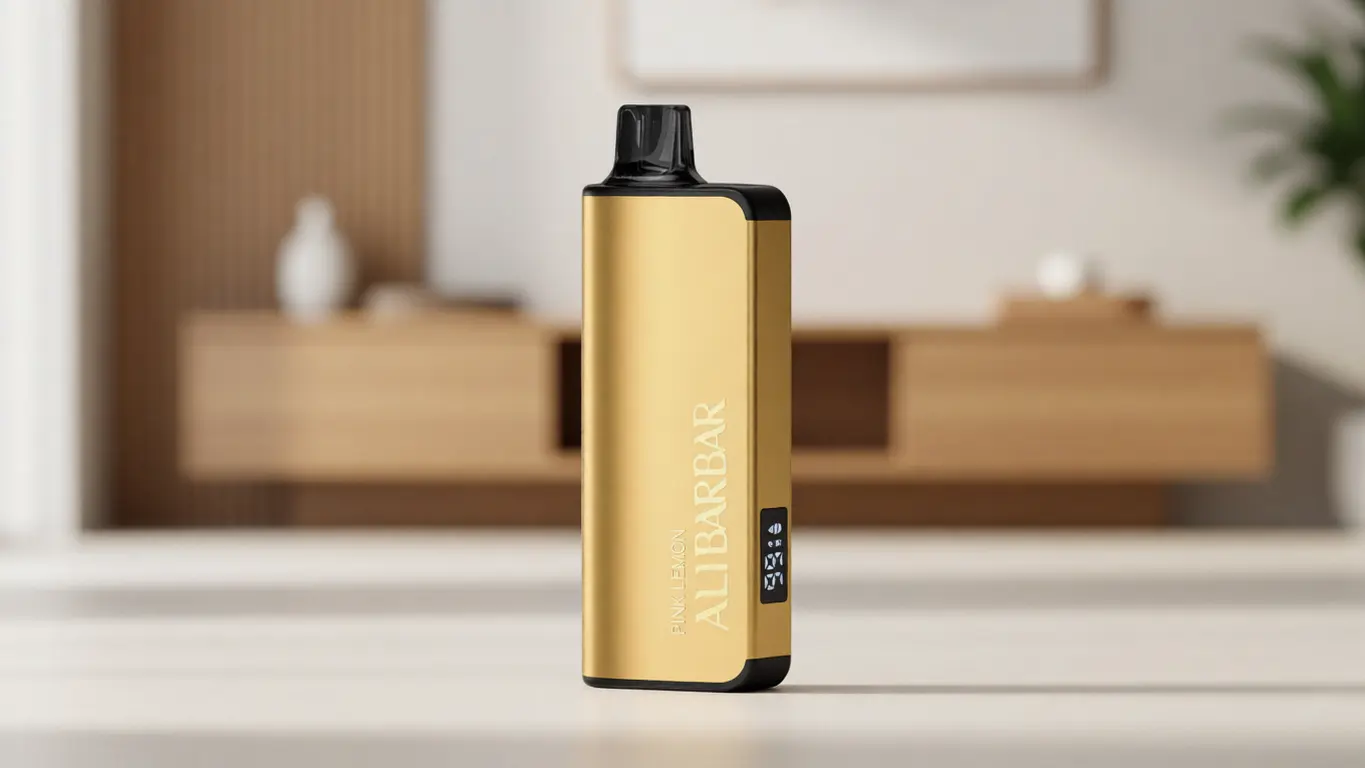
As adult users step out into the street, a coffee in one hand and a personal electronic device in the other, a subtle but persistent anxiety often tags along: Is this actually allowed here? The Australian regulatory landscape is a patchwork of state legislation, council by‑laws, and private‑property rules that can shift from one building entrance to the next. You might legally use a device on a footpath in one suburb yet risk a fine or a confrontation if you take two steps into a shopping‑centre forecourt. Added to this confusion is the device itself: its size, the visibility of what it emits, even the sound of a button click can determine whether a perfectly legal activity draws unwelcome attention.
This article is not legal advice, but a plain‑language field guide. It clarifies where public use stands under current Australian law, and then examines why the engineering of the device in your hand matters almost as much as the regulation. Throughout, we reference the ALIBARBAR family as a practical example because its design philosophy — quiet, leak‑resistant, and deliberately understated — directly addresses common friction points in public settings. For adults who want to be certain they are holding what they paid for, OZVAPE Shop maintains a factory‑certified inventory that provides a transparent reference point. Understanding both the rules and the tools transforms an uncertain walk into an unremarkable part of your day.
Understanding What Matters: Legal Frameworks and Device Discretion Factors
Navigating public use requires dual awareness: the statutory restrictions that apply where you stand, and the physical behaviour of your device that determines how it is perceived. Treat these as two layers of a filter — the law defines the boundary, but the device governs your experience even inside that boundary.
State and Territory Legislation: A Quick Reference
In Australia, there is no single federal law that answers the question. Instead, each state and territory regulates the use of electronic cigarettes and personal vaporisers largely by extending the same restrictions that apply to tobacco smoking.
Queensland: Use is prohibited in all enclosed public places, at outdoor public transport waiting points, within 10 metres of non‑residential building entrances, and at prescribed swimming areas. Fines apply.
New South Wales: The Smoke‑free Environment Act covers enclosed areas, commercial outdoor dining, within 4 metres of a pedestrian entrance, and public transport stops.
Victoria: Similar to NSW, with additional restrictions at train station platforms and in cars carrying children.
Western Australia, South Australia, Tasmania, ACT, NT: Each has its own mapping, but the principle is consistent: if you cannot light a cigarette somewhere, you cannot use a personal vaporiser either.
Moreover, private venues such as pubs, stadiums, and shopping centres frequently impose their own blanket bans. The result is that many outdoor urban spaces are de facto off‑limits. Checking the local signage is non‑negotiable, but what if you are in a permissive zone? The device you choose then becomes the deciding factor in whether your activity remains a private matter.
Vapour Output and Perceived Nuisance
A device that generates a dense, lingering cloud will attract eyes even where the act is lawful. The engineering behind this is straightforward: low‑temperature mesh coils produce a finer aerosol that dissipates much faster than the output from traditional wire‑and‑cotton assemblies. In practical terms, a device with a well‑calibrated coil and a slightly restricted airflow profile creates a discreet, wispy emission that is barely visible after a second in the air — something casual bystanders are unlikely to notice. Conversely, high‑wattage sub‑ohm devices designed for cloud production are best kept to private spaces.
Physical Discreteness and Carrying Convenience
Public use often means you want the device to disappear when not in hand. A unit that is slender enough to sit in a coin pocket without creating a visible bulge, and that can be palmed entirely during a short draw, becomes part of your routine rather than a conversation starter. The ALIBARBAR INGOT series, for instance, is engineered with a flat, pebble‑like profile that makes it feel more like a small power bank than an attention‑grabbing appliance. That absence of visual noise is a deliberate design outcome — the result of placing the battery and circuitry in a housing that prioritises pocket‑friendliness over flashy contours.
Odour and Airflow: Engineering Considerations
Even if vapour dissipates quickly, an acrid or lingering scent can draw complaints. The solution is not a fragrance (which can provoke a different kind of attention) but rather a coil architecture that maintains a consistent temperature, avoiding dry burns that produce unpleasant notes. Mesh coils, like those in the ALIBARBAR Ice Adjust 12000, contribute to a cleaner, more neutral aroma by vaporising evenly across a wide surface. Adjustable airflow serves a double purpose: a tighter draw reduces the overall aerosol volume and also shortens the exhalation distance, making it easier to direct vapour downward where it breaks up more rapidly.
Battery and Power Management for On‑the‑Go Use
An often‑overlooked aspect of public discretion is the absence of fuss. A device that dies mid‑afternoon forces you to carry a charging cable — and to find a power outlet in a café or a train station, which instantly transforms a private activity into a public one. A rechargeable unit with a large enough internal battery to last an entire workday, and with clear status indicators, lets you plan around it rather than react. The convenience factor here is not about luxury; it is about reducing the number of times you need to interact with the device where others can see.
Applying These Criteria to Real‑World Options
Imagine you have checked the map, noted the no‑smoking zones, and identified a bench in a park where use is permitted. Now, what does your device do? Does it produce a visible plume that rises over the backrest? Does it require a sharp, audible button press? Does it leak, leaving a stain on your jacket that becomes a telltale signal?
The current ALIBARBAR catalogue includes models specifically shaped by these considerations. The INGOT 9000, for example, deploys a 1.2‑ohm mesh coil that warms gently and yields a measured draw — no big clouds, no crackling sound, just a consistent delivery that feels almost incidental. Because it offers up to 9000 puffs from a sealed, palm‑sized chassis, you are not carrying spare units or liquids, which eliminates the ritual of refilling that can look suspicious even when it is not. The Ice Adjust 12000 adds another layer: a sliding airflow switch. If you transition from an open‑air park to a quiet bus stop where even a small visible breath might attract glances, you can tighten the draw in a second and reduce output to near invisibility.
These devices, of course, do not override the law — using them inside a prohibited zone will still breach the rules. But for the gaps where the law allows, they reduce the social friction that turns a silent, lawful activity into an unnecessary confrontation. Other device families exist that offer comparable discretion, but the ALIBARBAR line is notable for integrating these features into maintenance‑free, ready‑to‑use formats that suit adults who want to carry one less thing to worry about.
A Practical Framework for Evaluation
When selecting a device that you plan to use in public — always within legal boundaries — apply the following checklist. It will surface the real‑world behaviours that manufacturer specifications often gloss over.
Legal check first: Visit the website of your state’s health department and understand exactly where public use is banned. No device can compensate for being in the wrong place.
Observe the vapour signature: In a room with still air, take a normal draw and exhale. Does the vapour vanish in under two seconds? If it hangs, bystanders will see it. Look for mesh‑coil devices with moderate power output.
Pocket profile: Place the device in a front trouser or shirt pocket. Does it create a noticeable outline when you sit? If it feels like a hard rectangle against your leg, it is too prominent.
Auditory footprint: Activate the device by button, if applicable. Is the click loud enough to be heard at arm’s length in a quiet street? Auto‑draw mechanisms are inherently quieter.
Indicator lights: Check whether the activation LED faces outward or is easily cupped. Some devices flash a bright blue light with every draw, which draws the eye in dim light.
Odour test: After a session, check whether the hand that held the device retains any distinct smell. Residual scent can transfer to clothing and betray use even after the device is put away.
Daily endurance: Calculate your approximate usage. If you need to plug the device in before the end of a typical day, you risk being tethered to a public outlet, which invites scrutiny.
Run these questions against any device you are considering. They shift the focus from marketing figures to the lived experience of carrying and using the unit where others are present.
Common Selection Errors and Industry Observations
Even experienced users fall into traps that undermine their own goal of discreet, lawful public use.
Error 1: Equating small size with small vapour. Some ultra‑compact devices use a loose airflow that creates surprisingly dense aerosol. A device half the size of your palm can produce twice the visible output of a larger unit with a tighter draw. Check the coil resistance and airflow design, not just the dimensions.
Error 2: Over‑reliance on puff counts for consistency. A device rated for 10,000 puffs that loses consistency after 4,000 puffs will deliver uneven performance — spurts of weaker vapour followed by harder, louder draws as the user attempts to compensate. Stable output across the unit’s lifespan is a manufacturing quality, not a marketing number.
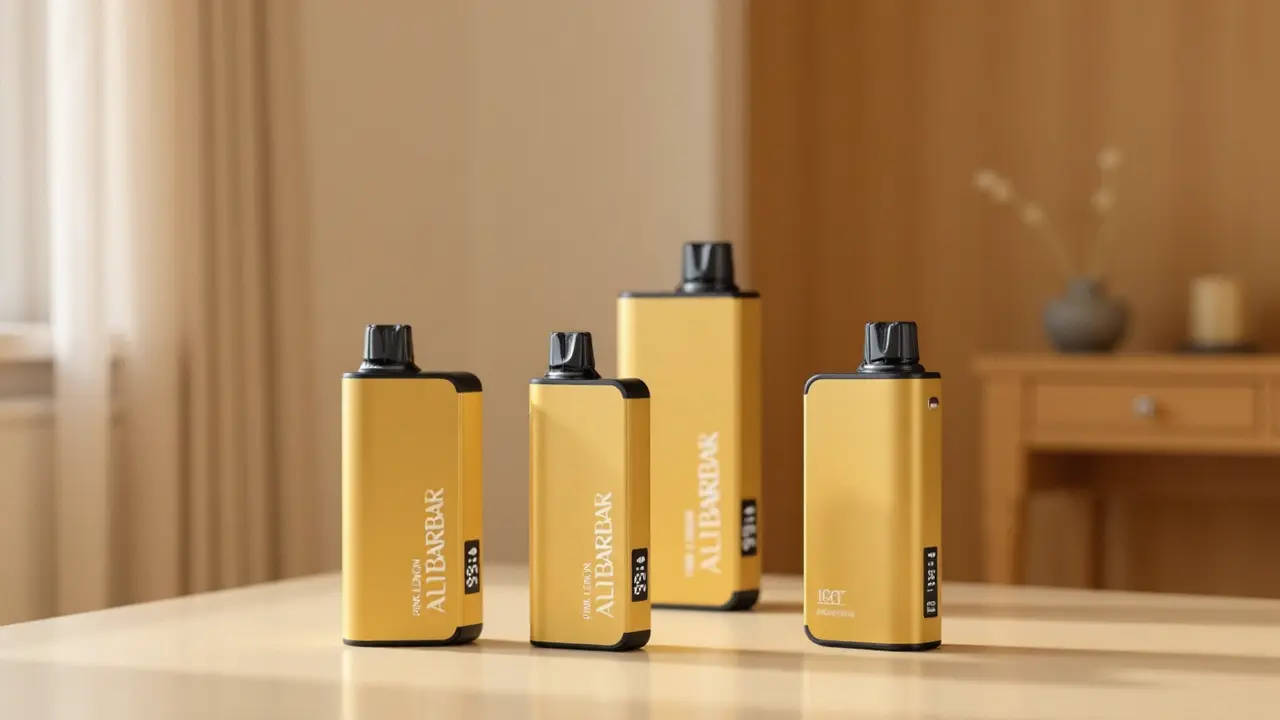
Error 3: Underestimating the social weight of handling. Every time you open a package, unscrew a pod, or wipe off leaked liquid, you perform a sequence that observers recognise. Sealed, all‑in‑one systems minimise these public maintenance rituals.
Error 4: Buying unverified inventory. A counterfeit device may leak, overheat, or emit an inconsistent vapour, turning a quietly managed draw into a notable incident. Genuine units are calibrated in controlled production environments; fakes are not.
From an industry standpoint, the clear trend among manufacturers who take public discretion seriously has been toward mesh‑coil platforms with adjustable airflow and sealed battery compartments. A few years ago, the market was flooded with button‑fired, leak‑prone pods that required constant tinkering. The current generation — ALIBARBAR included — reflects a mature understanding that the adult user who vapes in public spaces wants to be invisible, not to make a statement. That shift is observable across supply chains, with factories investing in precision‑welded housings and tighter quality‑control tolerances specifically because retailers report that leaks and device failures are among the top reasons for returns and customer dissatisfaction.
Frequently Asked Questions
Q: Is it illegal to vape in public in Australia?
A: There is no single yes‑or‑no answer. Each state and territory has laws that generally prohibit use in enclosed public areas, near entrances, at public transport stops, and in smoke‑free zones. Use where smoking is banned is almost always banned. Pocket laws vary, so check local signage and state health authority websites.
Q: Can I use a personal electronic device in a designated smoking area?
A: Typically yes, provided the area is intended for smoking and you are of adult age. However, some private venues restrict these areas to tobacco smoking only. Look for venue‑specific notices.
Q: What penalties could I face for using a device in a no‑smoking area?
A: Fines range from a few hundred dollars to over a thousand depending on the jurisdiction and whether it is a first or repeat offence. Enforcement is usually carried out by environmental health officers or transport police.
Q: How can I minimise the risk of confrontation even in a permissive area?
A: Choose a device with low vapour output and a quiet activation mechanism. Direct exhalation downwards, avoid use in crowded queues, and put the device away immediately after use. Be mindful of wind direction.
Q: Is it safe to carry a sealed device like an ALIBARBAR INGOT in my pocket all day?
A: Genuine ALIBARBAR units are built with leak‑resistant sealing and do not require external liquid storage. They are designed to be carried safely. If a device ever feels unusually warm, remove it and contact the retailer.
Q: How do I know I am buying an authentic ALIBARBAR device and not a counterfeit?
A: Purchase through a verifiably authorised channel. OZVAPE Shop sources directly from authorised distribution networks and each unit passes a documented verification check. Avoid marketplaces where supply chain integrity cannot be assured.
Q: What if I receive a device that doesn’t perform as described?
A: A trustworthy retailer will have a clear, responsive support process. At OZVAPE Shop, the post‑purchase assistance includes direct communication with staff who understand the products and can resolve issues without deflecting responsibility.
Q: Can I travel across multiple states with a device?
A: Interstate travel is generally fine, but the device must comply with the laws of the state you are visiting. If you are flying, follow airline regulations regarding battery‑powered items; all ALIBARBAR units fall within permitted battery capacities.
Q: Does the vapour smell cling to clothing?
A: The odour is significantly milder than tobacco smoke and dissipates quickly. However, if you use the device in a closed space like a car and then immediately enter a meeting, a faint scent may be noticeable. A simple window‑cracked period clears it.
Q: Are there devices specifically designed for public discretion?
A: Design language always evolves, but many manufacturers now explicitly factor in low‑key operation. The ALIBARBAR line, with its mesh coils, compact builds, and adjustable airflow, reflects a deliberate effort to serve adults who prefer not to draw attention. Always pair a discreet device with situational awareness.
Conclusion
The legality of public use is not a uniform rule but a web of location‑specific bans that demand your informed attention. No engineering, no matter how thoughtful, can override a “No Smoking” sign. However, once you have established that you are standing where the law permits, the difference between a frictionless experience and an uncomfortable one lies in your device. A unit that exhales a near‑invisible puff, slides silently out of a pocket, and requires no mid‑day rescue charging is a device that respects both your privacy and everyone else’s space.
The adult who chooses a device based on these real‑world considerations — vapour signature, odour, handling noise, leak‑proof reliability — is choosing to be in control of their own narrative. OZVAPE Shop provides a platform where that control can start with certainty about the product you are receiving: a genuine, factory‑certified unit that behaves as its specifications promise. The right device is not the one with the boldest marketing but the one that slides into your daily routine without ever announcing itself. That quiet integration is what turns a legal grey zone into a settled, private part of your day.