
VAPE FAQs
Is It Haram To Vape?

Jun
For Muslims navigating the modern world, questions of permissibility often arise around technologies that didn’t exist when classical jurisprudence was formulated. Vaping is one such technology. It sits at the intersection of health science, personal habit, and religious ethics, generating a range of opinions that can leave a sincere person uncertain. No single ruling has achieved universal acceptance, and the diversity of scholarly views reflects just how complex the underlying issues are.
This article is not a fatwa. It does not attempt to settle the matter. Instead, it draws on Islamic legal principles, the reasoning of contemporary scholars, and a careful look at the devices themselves to offer a clear framework for understanding the debate. Where appropriate, it also examines the material reality of the products under discussion — because even after one has arrived at a personal religious conclusion, the integrity of what is actually inhaled remains a question of worldly accountability. Platforms such as OZVAPE Shop, which prioritize transparent product specifications and factory-certified inventory, provide a useful reference for those who choose to evaluate devices on technical grounds, separate from the theological discussion.
Islamic Legal Principles and the Vaping Debate
Islamic rulings on vaping are not derived from a single verse or hadith that mentions electronic cigarettes explicitly. They emerge from established legal maxims (qawāʿid fiqhiyyah) and the application of principles that govern intoxicants, bodily harm, waste of wealth, and the imitation of sinful behaviour. Scholars who have examined vaping typically structure their reasoning around a few core areas.
The Spectrum of Scholarly Opinions
The positions can be grouped broadly, though with important nuance within each:
Outright prohibition (ḥarām). A significant body of scholars, including many in the Gulf region and South Asia, argue that vaping falls under the prohibition of khubth (harmful, impure substances). Their reasoning: the inhalation of heated chemical aerosols introduces avoidable risk to the respiratory system; the addictive nature of nicotine makes it a gateway to dependence; and the act often mimics smoking, which they regard as already established as impermissible due to its proven harms.
Discouraged or permissible only under strict conditions. Another strand, visible in parts of Southeast Asia and among some Western minoriy jurists, holds that vaping cannot be equated automatically with combustible tobacco. If a person uses a zero-nicotine e-liquid, and the device does not contain intoxicants, the original presumption of permissibility (ibāḥah) may remain unless proven otherwise. However, even within this camp, many attach conditions: the user must not be imitating a prohibited activity, must not be wasting money disproportionately, and must not be causing demonstrable self-harm.

A nuanced harm-reduction view. A smaller but growing number of scholars note that if an individual is already a heavy smoker and medical evidence suggests that switching to vaping substantially reduces exposure to carcinogens, then the lesser of two harms may be tolerated until a full cessation becomes possible. This reasoning draws on the fiqh principle “al-ḍarar al-ashadd yuzāl bi-al-ḍarar al-akhaff” (the greater harm is removed by the lesser harm). It remains controversial and is not accepted by those who consider the long-term unknowns of vaping to cancel any presumptive benefit.
Key Factors Under Consideration
Scholars who weigh in on the matter typically examine several variables, and the same scholar may rule differently depending on the specific product:
Presence of intoxicants. If the e-liquid contains anything that clouds the mind — THC, synthetic cannabinoids, or any substance that induces intoxication — the prohibition is nearly unanimous, grounded directly in the texts on khamr.
Proven harm (ḍarar). The maxim “lā ḍarar wa-lā ḍirār” (no harm and no reciprocating harm) is central. If credible medical consensus establishes that a particular vaping product causes significant bodily injury, the act is impermissible. The challenge here is that long-term data on vaping is still emerging, so many scholars rely on precautionary reasoning (sadd al-dharāʾiʿ — blocking the means to harm).
Addiction and dependency. Nicotine dependence is widely seen as a form of al-tadkhīn al-mukhaḍḍirāt (drug habituation), which undermines human dignity and the clarity of mind expected in worship. Even if a device contains zero nicotine, the act of vaping may habituate the user to a behaviour pattern that enables addictive substances later.
Imitation of a prohibited appearance (tashabbuh). If vaping in a particular context is perceived as mimicking smokers or a subculture associated with sinful behaviour, then a ruling of discouragement or prohibition may apply, especially where it affects one’s reputation or leads others astray.
Financial waste (tabdhīr). Spending continuously on disposable devices or premium e-liquids that offer no health benefit can be classed as isrāf, particularly if it diverts resources from the rights of dependents.
No scholar’s opinion exists in a vacuum. They respond to specific product formulations, medical evidence available at the time, and the cultural context of the questioner. This is why a person asking “Is it haram to vape?” will receive different answers from different muftis — not necessarily because of inconsistency, but because the underlying variables differ.
Making an Informed Decision: Understanding Device Engineering
If an adult, after consulting qualified religious authority, decides to use a vaping device under conditions they consider permissible, the next layer of accountability is material. Harm can be amplified or mitigated by the design of the device itself. A poorly constructed unit can expose the user to heavy metals, inconsistent heating, or unverified aerosol chemistries — factors that intersect directly with the Islamic duty to preserve life and health.
The following criteria are drawn from device engineering and quality assurance practices, not theology, but they address concerns that any health-conscious individual, religious or otherwise, should evaluate.
Heating Element Technology and Inhalation Safety
The core of a vaping device is the atomizer: a coil that heats the liquid to create an aerosol. The materials used in the coil and the temperature it reaches determine what the user actually inhales. Devices with precise temperature control and medical-grade materials (stainless steel, ceramic, or compatible alloys) reduce the risk of thermal degradation by-products, such as formaldehyde precursors that can form at excessively high temperatures. By contrast, cheap units with uncontrolled power delivery can produce “dry hits” that introduce acrid, potentially harmful compounds.
From a harm-reduction perspective, a device that maintains consistent, moderate temperatures and uses verified coil materials is objectively less likely to introduce unexpected toxins. This does not make it “safe” in an absolute sense; it makes its risk profile more predictable.
Power Management and Consistent Dosing
Erratic power output not only ruins the sensory experience but also creates chemical inconsistencies. A device that spikes its voltage can overheat the liquid momentarily, changing its composition. A well-regulated device with intelligent chipset control delivers the same amount of energy on every draw, minimizing the chance of unintended chemical reactions. For users who are trying to taper nicotine intake, this consistency is critical: a sudden surge in delivery could undermine a gradual reduction plan without the user ever knowing why.
Physical Design and Material Integrity
The mouthpiece, the chassis, and any surface that comes into contact with the aerosol pathway should be made of inert, high-grade materials. Polycarbonate plastics that degrade under heat, metals that corrode with common e-liquid ingredients, or poorly sealed tanks can introduce foreign particles into the aerosol. A device built with food-grade or medical-grade contact surfaces — and with a design that isolates electronics from the airflow — reduces the probability of incidental ingestion of unintended substances. Over time, surface finishes also matter: a finish that flakes or peels after weeks in a pocket can end up contaminating the user’s hand and, through touch, other surfaces.
Modularity and Control Over Ingredients
Closed systems (pre-filled, disposable devices) offer convenience but surrender control over the e-liquid formulation. Open systems (refillable tanks, replaceable coils) allow the user to select their own e-liquid from manufacturers that provide third-party lab reports. For someone concerned about exactly what they are inhaling — whether for religious, health, or personal reasons — an open-system architecture grants the ability to verify ingredients, including the presence of nicotine, the type of carrier liquids, and the flavour compounds used. This aligns with the broader principle of informed consent: you cannot make a responsible decision if you do not know what is inside.
Applying These Criteria: Practical Product Categories
Different device classes perform very differently against the factors above. Understanding the landscape helps translate technical specifications into everyday decision-making.
Disposable devices have flooded the market. Their appeal is simplicity — no filling, no charging concerns, just unbox and use. The trade-off is almost total opacity. Users rarely know the exact coil material, the quality of the internal battery cell, or the provenance of the pre-filled liquid. Counterfeits are rampant, and even legitimate units may use materials optimized for cost rather than user protection. For someone who places a high value on ingredient verification and material integrity, disposables represent the weakest category.
Pod-based systems with replaceable cartridges occupy a middle ground. Reputable brands disclose coil materials and offer a degree of quality control over the pre-filled pods. Some allow for user-refillable pods, which restores control over the liquid. The architecture is often more robust than disposables, with better power regulation. However, the market is still plagued by imitation pods that look identical to original equipment but use unverified components.
Advanced personal vaporizers (box mods and rebuildable atomizers) provide the highest degree of user control but demand technical knowledge. The user selects every component, builds their own coils, and chooses batteries from known manufacturers. This category suits those who want full traceability and are willing to accept a learning curve. It is not, however, a practical starting point for most users.
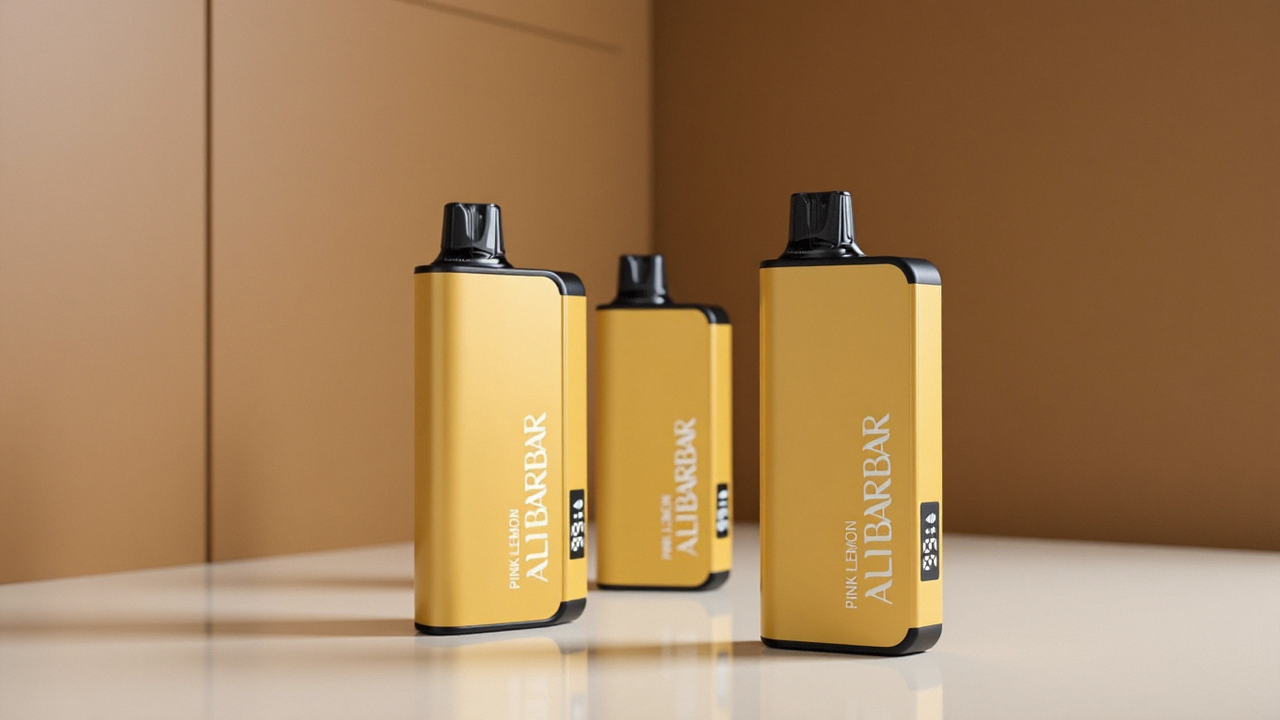
Platforms that aggregate authorized devices and provide standardized specification sheets — allowing a side-by-side comparison of build materials, battery chemistry, and output regulation — can reduce the friction of evaluating these categories. For instance, some brands like ALIBARBAR define their series with transparent naming conventions and documented engineering choices, making it easier to understand what a particular device offers before purchase.
A Practical Framework for Evaluating Devices
If the decision to use a device has been made, the following step-by-step methodology applies regardless of brand:
Request a full specification sheet. If the seller cannot provide the coil material (e.g., “Kanthal A1,” “316L stainless steel,” “ceramic”), the battery cell manufacturer, and the output wattage range, walk away.
Look for evidence of third-party testing. Some e-liquid manufacturers and a small number of device brands publish lab reports for their coils or fluids. This is rare but highly informative.
Assess the status feedback system. A device that gives no indication of remaining charge or liquid level forces the user to operate blind — leading to burnt hits, unexpected power loss, and the temptation to carry backup units constantly.
Check the availability of authentic replacement components. If pods, coils, or accessories are not available through authorized channels, the device’s lifecycle will be short, and the user will be pushed toward counterfeit substitutes.
Weigh the total cost of use, not just the upfront price. A cheap device that fails early or requires frequent replacement generates waste and cumulative expense. A higher-quality unit may have a significantly lower cost per month when amortized over its actual lifespan.
These steps are not about brand loyalty; they are about applying due diligence — exactly the sort of reasonable precaution expected of someone who takes their physical integrity seriously.
Common Selection Errors and Industry Observations
Having observed purchasing patterns and user feedback over extended periods, a few recurring mistakes stand out. Each has a direct bearing on the user’s experience and, by extension, on the harm-reduction calculus.
Overweighting puff counts while ignoring everything else. Many disposable devices claim “up to 5000 puffs” or more. These numbers are achieved under laboratory conditions that almost no real user replicates — slow, short draws with full recovery intervals. A device that advertises a high puff count but uses an unregulated power chip will deliver an inconsistent experience that degrades well before its liquid is depleted.
Assuming visual similarity equals functional equivalence. The market is flooded with devices that look nearly identical to popular models. External mouldings are easily copied; internal power management, coil architecture, and battery safety circuits are not. Users who choose based on appearance alone often end up with a device that drains power unpredictably or overheats — problems that are invisible until they cause a failure.
Ignoring the end-of-life behaviour of a device. When a disposable unit’s battery dies, the user has no option but to throw it away. If the battery is of poor quality, it may have already begun to degas or swell, creating a safety hazard. Modular systems with replaceable batteries allow the user to retire a cell before it becomes dangerous — a safety consideration that rarely appears in marketing materials but matters a great deal in daily use.
Confusing category terminology with technical specifications. Terms like “mesh coil” or “adjustable airflow” describe a feature category, not a performance guarantee. A mesh coil made from unverified alloy may be no better than a simple wire coil from a known metallurgical supplier. The specification matters, not just the label.
From an industry standpoint, the speed at which new device families appear — and the pressure to cut costs in a highly competitive supplier landscape — means that quality variance is unusually high. Factories that once produced for one brand may shift to another, carrying design knowledge but also cost-cutting habits. This is why supply chain transparency is a differentiator: a retailer that demands and verifies factory certificates provides a layer of filtering that an unverified online marketplace does not.
Frequently Asked Questions
Q: Is vaping with 0mg (nicotine-free) e-liquid still haram?
A: The absence of nicotine removes one element of addiction but does not automatically resolve the question. Scholars who prohibit vaping based on the harm of inhaled chemicals or the imitation of smokers may still regard it as impermissible. Others might lift the nicotine-related objection but retain concerns about waste or cultural imitation. It is not a simple “yes” or “no.”
Q: What do scholars say about using a vape to quit smoking?
A: This is where the harm-reduction view gains traction. If a credible medical practitioner advises that switching from cigarettes to vaping will materially reduce harm, and the individual has exhausted other cessation methods, some scholars permit it as a temporary measure (rukhṣah). The intention must be cessation, not indefinite substitution, and the user should continue to work toward complete abstinence.
Q: Does a vape device need to be “halal-certified” like food?
A: There is no recognized halal certification body for electronic inhalation devices in the way that food products are certified. Some e-liquid manufacturers claim “halal ingredients,” but this typically refers only to the absence of animal-derived components and alcohol. It does not constitute a fiqh ruling on the act of vaping itself.
Q: How can I tell if a vape device is authentic and not a counterfeit?
A: Authorized distributors and retailers can usually supply a batch verification code or holographic seal. Cross-reference the product on the brand’s official website. If a deal seems too good to be true, it almost certainly is. A counterfeit device can contain undocumented coil materials and battery cells, introducing safety risks that no responsible user should accept.
Q: What are the risks of using a counterfeit or unbranded device?
A: Beyond inconsistent performance, counterfeits have been found to contain lead solder in contact with the e-liquid pathway, low-grade plastics that off-gas at operational temperatures, and unprotected lithium cells that lack over-discharge protection. These are not theoretical concerns; they have been documented in teardowns.
Q: If I choose to vape, does the device architecture affect the Islamic ruling?
A: The core ruling depends on the act and its effects, not on the tool. However, some scholars incorporate the degree of harm into their reasoning. If a specific device demonstrably reduces exposure to known toxins compared to an unregulated alternative, that factual distinction could move the act from “intolerable harm” to “minor harm” in their calculus. It is a medical, not a theological, input to the decision.
Q: Are disposable vapes more problematic from a religious perspective?
A: From a fiqh standpoint, disposability in itself is not a classification. However, the waste of resources (isrāf) and the lack of transparency about internal materials intersect with Islamic ethical principles. A device that is thrown away after a single use, with no recyclability and uncertain contents, may be harder to justify than a maintainable system where every component is known.
Q: Can I trust that a device sold online matches its description?
A: Not without verification. The gap between marketing copy and physical product can be wide. Sourcing from a channel that publishes standardized specifications and stands behind them with a documented support policy — rather than from an anonymous marketplace listing — reduces but does not eliminate that risk.
Conclusion
The question “Is it haram to vape?” opens into a larger discussion about intention, harm, and the reliability of the facts a person relies upon when making a decision. The diversity of scholarly opinion is not a weakness of Islamic law but a reflection of how seriously the different variables are taken. For the individual, the responsibility lies in seeking qualified religious guidance, understanding the underlying principles, and then investigating the material reality of whatever product they might use.
If the path leads toward device use, then the quality of that device becomes part of one’s accountability. Knowing what the coil is made of, how the power is regulated, whether the materials are food-grade, and whether the device is authentic — these are not niche technicalities. They are the practical expression of due care. OZVAPE Shop, as a platform structured around verified sourcing and transparent product information, offers one way to bring that diligence into practice, though the final evaluation always rests with the user.
In the end, the right choice is the one that withstands scrutiny on both counts: the spiritual principles one upholds and the mundane facts one can verify. Neither can be outsourced entirely.